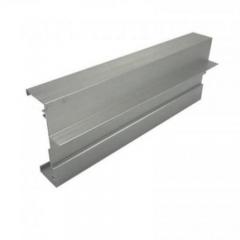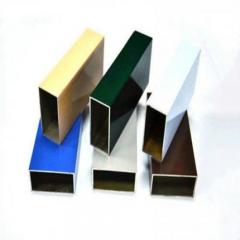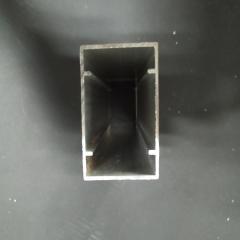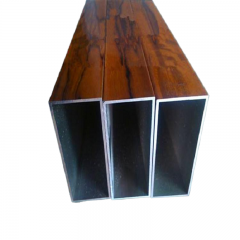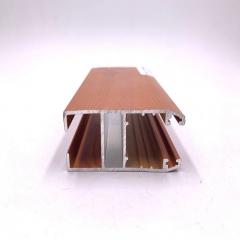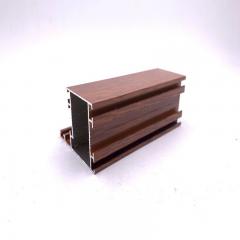
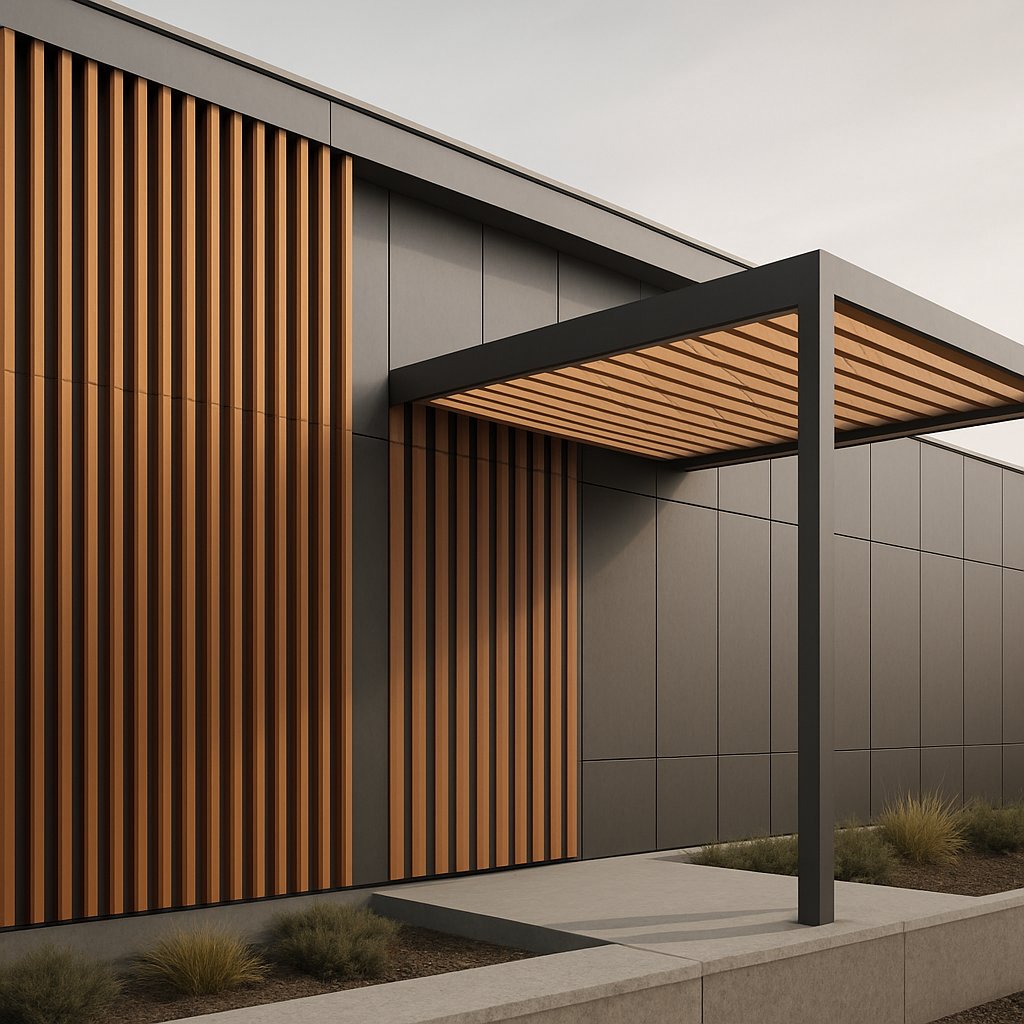
Supplier pages often blur the line between a finish and a product. In most cases, wood grain aluminium is not a separate metal category. It is aluminum with a decorative surface treatment that imitates timber, commonly applied to shaped components such as profiles or battens.
Wood grain aluminium usually means aluminum with a wood-look surface treatment. The wood pattern is the finish, while the aluminum remains the base material.
Definitions published by Sino Extrud describe wood grain aluminum as an aluminium profile finished with heat-transfer film to mimic natural wood. Domadeco uses similar language for timber-effect aluminium battens. That is why buyers will see phrases like wood grain aluminum, aluminum wood, and metal that looks like wood used almost interchangeably. They usually point to the same idea: a wood-look appearance applied to an aluminum substrate.
A simple way to decode supplier language is to separate the look from the shape.
Extrusions and profiles usually refer to shaped sections. Battens are one common profile family. Panels are a broader label and may describe flatter or system-based products sold with the same visual effect. The key takeaway is that wood describes the appearance, not the core metal. That distinction matters because two items can look similar online yet be built through different finishing routes, which affects consistency, texture, and where each product fits best.
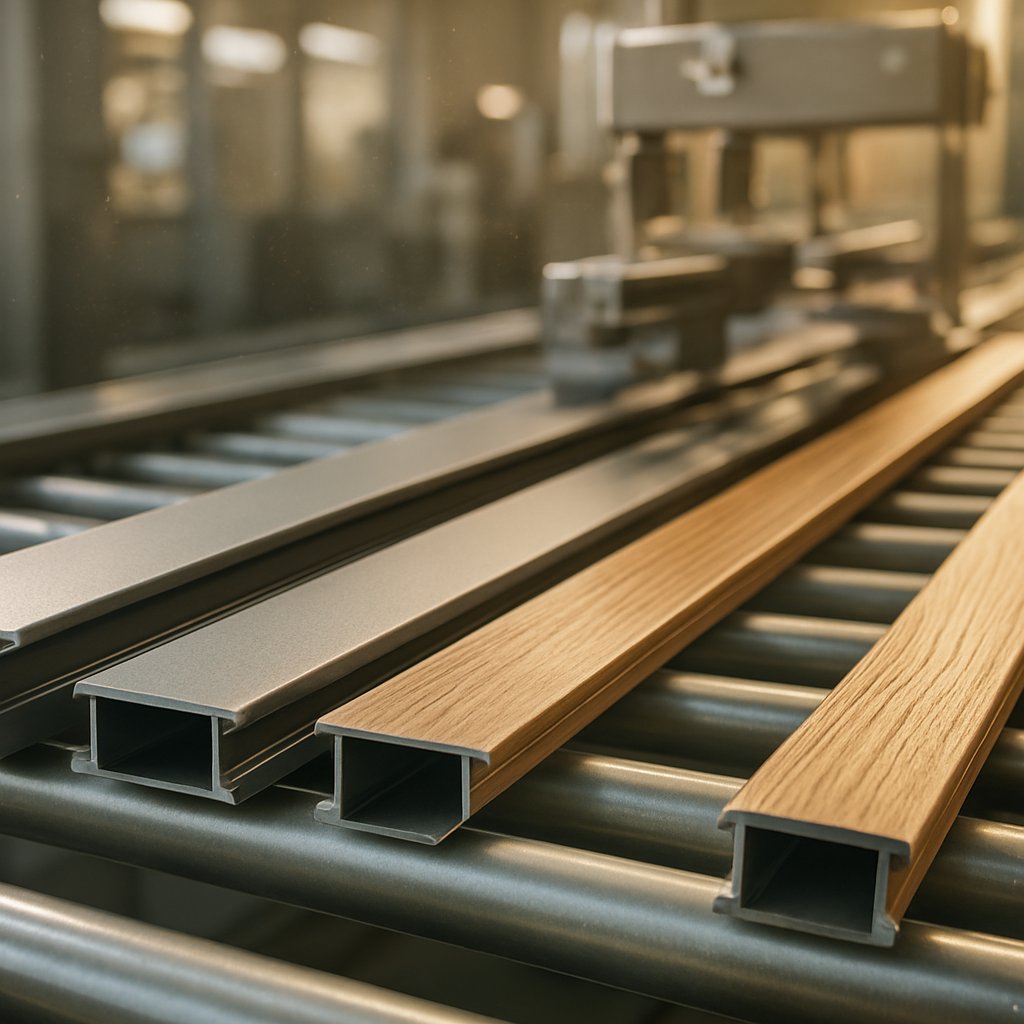
The timber effect does not come from the metal itself. It comes from a finishing sequence, and that sequence has a big influence on how realistic the surface looks and how well it performs outside. When buyers compare wood look aluminum products, the smarter question is not just which pattern is available. It is also how that pattern was created.
In many systems, powder coating is the base layer. It provides the background color, corrosion protection, and the coating film that later receives the decorative image. Linetec describes its wood-grain process as a combination of specialty powders, inks, and films. Published process guidance from XtraMetal shows a typical metal base coat at about 60 to 80 microns, cured around 180 to 200 C. That foundation matters. If preparation, coating thickness, or curing is inconsistent, later steps can suffer from weak adhesion, uneven color, or shorter service life.
To make aluminum that looks like wood, many manufacturers use heat transfer or dye sublimation. A printed film is placed against the powder-coated surface, then heat and pressure transfer pigment into the coating. XtraMetal outlines two common setups: vacuum transfer for flat or shaped parts, and roller transfer for long extrusions. This route is popular because it can produce crisp grain lines and strong visual realism, especially at close viewing distance. Some manufacturing routes also add a clear protective topcoat to improve scratch and weather resistance.
Searches for wood grain finishes metal often lump several coating routes into one label, but the route changes the result. AAF contrasts sublimation with powder-on-powder systems, where both the base color and the grain layer are powder coatings cured together. Their discussion highlights a practical difference: sublimation can deliver sharp pattern definition, while powder-on-powder is designed to reduce differential fading in direct sun. Linetec also notes that its specialty coatings meet AAMA 2604, which is relevant when exterior durability is part of the brief.
| Finish route | Visual realism | Typical use fit | Repair difficulty | Performance considerations |
|---|---|---|---|---|
| Powder base plus sublimation or heat transfer | Very sharp grain, often strongest up close | Profiles, battens, shaped parts, interior work, and some exterior uses | Spot repairs are hard to blend | Depends heavily on prep, cure, film contact, and UV exposure |
| Powder-on-powder woodgrain | Good wood effect, sometimes with more texture | Exterior applications with stronger sun exposure | Also difficult to repair invisibly | Can reduce fading mismatch because both layers are powder based |
That is why two products with a similar appearance can behave very differently in service. Before samples or quotes mean much, buyers should confirm both the finish route and the underlying product form.
A convincing finish still tells only half the story. The same timber effect can appear on an extrusion, a rainscreen board, a batten, or a wood grain aluminium sheet, and those formats are not interchangeable when you request samples or compare quotes. If the supplier only shows the color and not the substrate, important details are still missing.
Across supplier catalogs, one wood-look finish may be offered on several product forms. Extrusions are shaped aluminum sections. Battens are usually a narrower profile family used for linear detailing or screening. Sheet is flat material that may later be fabricated. Panels can mean anything from a formed aluminum face to a multi-part cladding system. Some ranges also use names such as aluminum boards for interlocking cladding profiles rather than literal structural boards.
The spread can be wide. Knotwood shows wood-look products across battens, boards, screens, ceilings, soffits, fencing, and panel batten systems. Its documented Panel Battens system is a good reminder that a product sold under a visual category may actually be an extrusion-based rainscreen assembly, not generic flat panel stock. That page lists 6063 T6 extruded aluminum alloy, interlocking boards, clip-in battens, and a stock length of 18.5'.
Before comparing finish samples, lock down the procurement basics. SAF's quotation checklist highlights the details that most often affect pricing, fabrication, and finish suitability.
Flat products deserve extra scrutiny because similar faces can hide different constructions. A listing for wood grain aluminum panels might refer to formed solid aluminum panels, while another may be a panel assembly with added backing or a core. A wood grain aluminium sheet may be sold unfinished for later fabrication, or already part of a finished system. Ask for the build-up early, not after drawings are underway.
Documentation matters just as much as dimensions. On its Panel Battens page, Knotwood publishes fire and performance references including ASTM E136, ASTM E84 Class A, NFPA 285, CAN/ULC-S114, ASTM B221-13/B221M-13, and AAMA 2604/05. SAF's finish specification also separates finish standards by coating type, including AAMA 2604 for powder coatings and AAMA 2605 for high-performance spray coatings. Treat those references as a model for what to request, not a universal rule for every product. The paperwork behind the quote often tells you as much about long-term service as the sample chip does, especially where sun, moisture, and routine cleaning are part of the real job.
The spec sheet only goes so far. Real performance shows up in sun, rain, salt, and routine cleaning. Wood grain aluminium can work outdoors on facades, screens, pergolas, and wood grain aluminum siding, but longevity depends on the finish system rather than the pattern alone. Sino Extrud notes that a UV protective layer helps outdoor life, while Keystone Koating highlights sunlight, salt water, humidity, and abrasive cleaning as common risks for powder-coated surfaces.
For exterior use, confirm that the wood-look finish was made for outdoor exposure. Aluminum itself is low maintenance, but not maintenance-free, a point stressed by Wagner. Coastal projects need extra attention because salt can build up and leave a chalky-looking surface. High sun, humidity, and temperature swings also add stress, so two products with a similar wood effect may not age the same way.
UV exposure is one of the biggest long-term issues. Keystone explains that sunlight can reduce adhesion between resin and pigment, leading first to fading and then to chalking. Surface wear often comes from abrasion rather than weather alone. Steel wool, scouring pads, wire brushes, harsh solvents, and aggressive pressure washing can all damage the finish. Some systems also use UV coating, which can improve resistance to scratches, moisture, and color loss.
Long service life depends on finish quality and installation details, not just a realistic wood pattern.
That is why aluminum siding wood grain should be judged against real service conditions, not showroom appearance alone. In some applications, the balance is excellent. In others, wood, PVC, steel, composite, or a simpler finish may fit the job better.
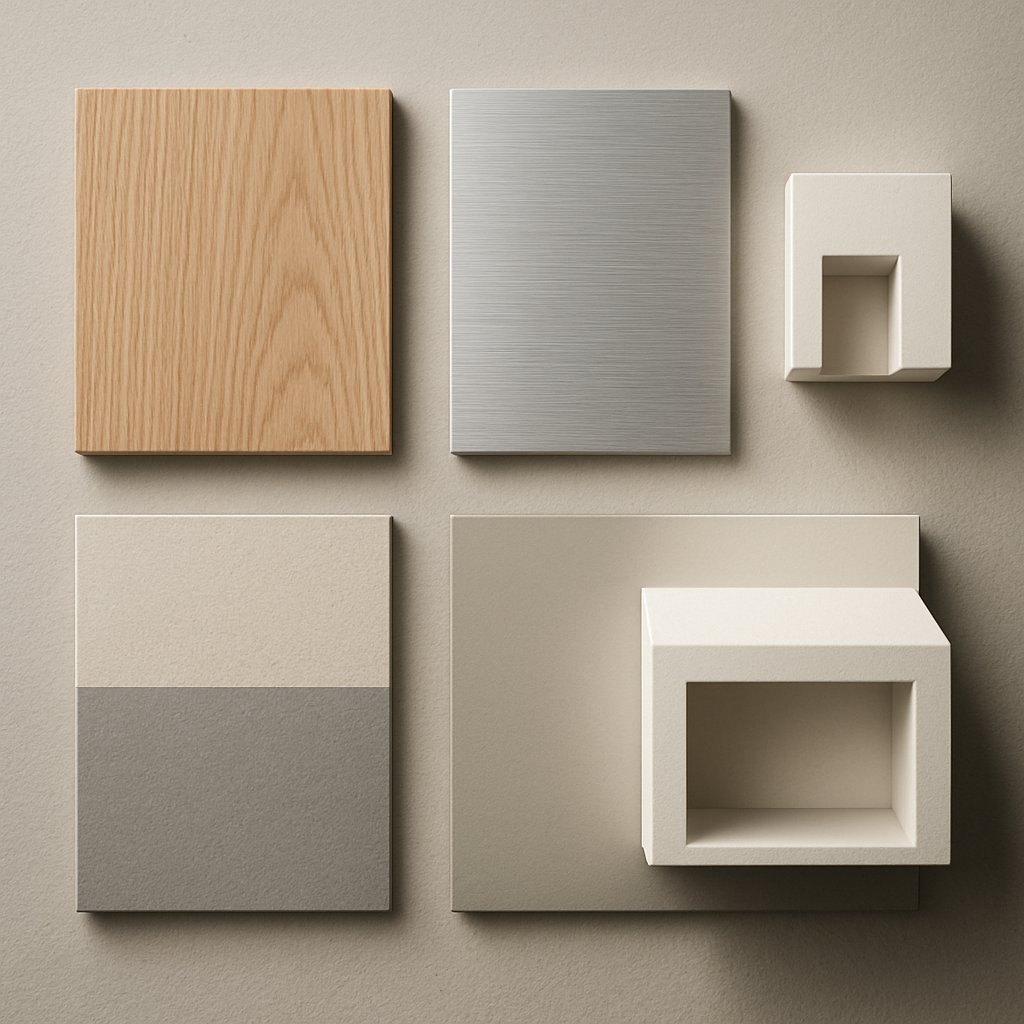
Appearance can be deceptive. A warm slatted facade or soffit may be real timber, composite, PVC, steel, or a coated aluminum profile. The visual gap is often small from a distance. The practical gap can be huge once weather, maintenance, and code review enter the picture. For many projects, the real question is not whether the finish looks good on day one. It is which material keeps making sense over time.
Real wood still sets the benchmark for tactile authenticity. It has natural variation, visible end grain, and a warmth that no printed surface fully duplicates at close range. But exterior performance often shifts the decision toward metal. A metal vs wood cladding guide notes that aluminum and steel resist moisture, UV exposure, and temperature swings better than wood, while untreated timber remains more vulnerable to warping, splitting, mold, and fire risk.
That tradeoff explains why the appeal of wood and aluminum is so strong. One offers material honesty and easier refinishing in some cases. The other offers a wood look metal surface with lower routine upkeep, no rot, and no insect damage. If the design depends on touch, smell, and natural aging, timber may still be the better fit. If the goal is a stable wood-like appearance with less seasonal maintenance, aluminum often has the advantage.
Other faux wood materials solve different problems. A railing material comparison describes vinyl as low-maintenance and resistant to rot, warping, and cracking, though it may read as more plastic in appearance. The same source describes composite as resistant to rot and insect damage, while steel is strong and durable but still needs maintenance to stay looking its best. In other words, each substitute comes with its own compromises.
| Material | Appearance | Maintenance burden | Moisture behavior | Repairability | Fire or code considerations | Typical application fit |
|---|---|---|---|---|---|---|
| Wood grain aluminium | Consistent timber effect, usually more uniform than real wood | Low to moderate, mostly cleaning and inspection | Aluminum does not rot or attract insects, but finish quality and detailing still matter | Spot repair can be difficult to blend invisibly | Aluminum substrate is non-combustible, but project-specific system documents still matter | Facades, battens, screens, soffits, pergolas, doors, fences |
| Real wood | Most authentic grain depth and natural variation | Higher, often needs sealing, staining, or board replacement over time | Can absorb moisture and may warp, split, rot, or mold | Often easier to sand, patch, or refinish locally | Combustibility and treatment requirements usually need closer review | Heritage work, high-touch interiors, projects prioritizing natural material character |
| PVC or vinyl faux wood | Uniform look, sometimes less natural up close | Low | Resists rot, warping, and cracking | Replacement is often easier than invisible repair | Varies by product and local code, so verify documents | Low-maintenance trims, railing parts, secondary exterior elements |
| Steel with wood-look finish | Clean lines and convincing wood effect on robust sections | Moderate, protective finish and corrosion control matter | Strong substrate, but damaged coating can expose corrosion risk | Touch-up may be possible, though color matching can remain visible | Steel is non-combustible, but assembly details still matter | Frames, doors, security-focused or heavy-duty exterior uses |
| Composite faux wood | Wood-like texture and color, usually more uniform than timber | Low to moderate | Resists rot and insect damage | Component replacement is often more practical than refinishing | Varies by formulation and assembly, so confirm test reports | Decking, railing, screens, areas where low upkeep matters most |
| Anodized or plain powder-coated aluminum | Clearly metal, not timber, with a cleaner contemporary look | Low | Good corrosion resistance when correctly specified | Finish-dependent, with anodized surfaces especially hard to patch invisibly | Aluminum substrate is non-combustible, and the simpler aesthetic may suit stricter design briefs | Window systems, minimalist facades, interiors, projects that do not need a wood cue |
Sometimes the best answer is to skip the wood effect altogether. Guidance on finished aluminum draws a useful distinction. Anodizing creates an integrated oxide layer and preserves a metallic look, which suits parts where clean edges, precise tolerances, and a refined metal finish matter. Plain powder coating offers broader opaque color options and more visual flexibility.
That makes simpler finishes a better fit when the architecture is intentionally modern, when touch-up visibility is a concern, or when a simulated timber pattern would feel forced. A black anodized frame, a bronze powder-coated batten, and a wood-look extrusion can all be correct choices. The right one depends less on trend and more on where the piece will be used, how close it will be seen, and what kind of service life the design expects.
Where this finish works best depends less on the pattern and more on the application. Linetec shows wood-look finishes used on interior and exterior aluminum, from flat sheets and extrusions to doors, windows, fencing, facades, and interior accents. PTSMAKE frames profile selection around load needs, environmental conditions, connection methods, and surface finish. Put together, the lesson is simple: choose the format for the job first, then judge the wood effect.
For wood look aluminum cladding, long sightlines make alignment and profile geometry easy to notice. Facades may use battens, extrusions, flat sheet, or full panel systems, and each creates a different visual rhythm. In practice, aluminium wood look cladding is often more successful when the product form matches the facade logic. Linear battens can create depth and shadow. Wider wood grain metal panels can reduce joints on broad surfaces. At this scale, profile stability, edge detailing, drainage paths, cleaning access, and exposure level matter as much as color.
These uses ask more from the substrate than a static wall feature. Linetec highlights doors, windows, fences, and pergolas because finished aluminum can deliver a wood-like appearance while avoiding the swelling or warping associated with real wood in changing weather. That makes product choice more functional here. Frame rigidity, connection method, scratch visibility on touch points, and weather exposure should all be reviewed before a finish sample is approved. A fixed fence infill and an operable door frame may share the same pattern but not the same performance priorities.
Indoors, people see the finish from much closer range. Linetec points to wall panels, column covers, and accents as common interior uses, and that close viewing distance changes what matters. Repeat patterns, sheen, cut edges, and lighting reflections become more noticeable. Slim extrusions can give ceilings and trims a crisp architectural look, while sheet or panel forms suit larger feature walls and calm, continuous surfaces. Cleaning ease also matters more than many buyers expect in lobbies, retail zones, and hospitality interiors.
| Application | Common product forms | Most important selection criteria |
|---|---|---|
| Cladding, battens, facades | Extrusions, battens, sheet, panel systems | Profile stability, grain realism at normal viewing distance, edge and joint detailing, cleaning access, exposure level |
| Doors, windows, fences, pergolas | Frames, slats, tubes, infill panels | Rigidity, connection method, touch-point wear, weather exposure, maintenance access |
| Interior ceilings, panels, furniture accents | Thin profiles, sheet, panels, column covers | Close-range realism, sheen consistency, edge finish, lighting response, easy cleaning |
The best answer is rarely to use the same product everywhere. One project may need stable extrusions. Another may work better with flat panel systems. And in some cases, a simpler finish or a different material makes more sense once budget, authenticity, bending needs, and code pressure are weighed together.
Some applications benefit from a timber effect. Others get more complicated, less convincing, or simply less efficient because of it. Wood grain aluminium can be an excellent fit for battens, screens, and framed elements, but it is not automatically the smartest specification for every facade or interior surface.
Real timber still has one advantage no coated metal fully copies: genuine material character. Arexco highlights wood's unique grain patterns and tactile warmth, which matter when people will see and touch the surface up close. In sheltered interiors, hospitality details, or projects built around natural aging and craftsmanship, real wood may deliver better value because the brief is about authenticity first, not just a wood-like appearance.
That choice becomes harder outdoors, where moisture, heat, and movement can work against timber. Still, if the client wants true variation and accepts ongoing care, wood remains a valid answer.
Some designs are not really asking for a timber expression at all. They are asking for large, smooth, flat surfaces. The MexyTech comparison describes aluminum composite panels as flexible, easier to manufacture, and common in facades, interior partitions, and signage. So if your concept depends on broad panelization rather than linear slats or profiles, an ACM route may fit better. Searches such as alucobond panel, alucobond panels, or alucobond acm usually sit in that flat-panel decision space.
Fire review also changes the conversation. NFPA 285 guidance stresses that safety is judged at the wall-assembly level, not by one panel alone. In some projects, a plain anodized or solid-color powder-coated finish is also more honest to the architecture than a simulated wood grain.
Those five checks can eliminate weak options early. And when the wood-look route still makes sense, the conversation shifts from material choice to supplier quality, sample control, customization, and lead times.
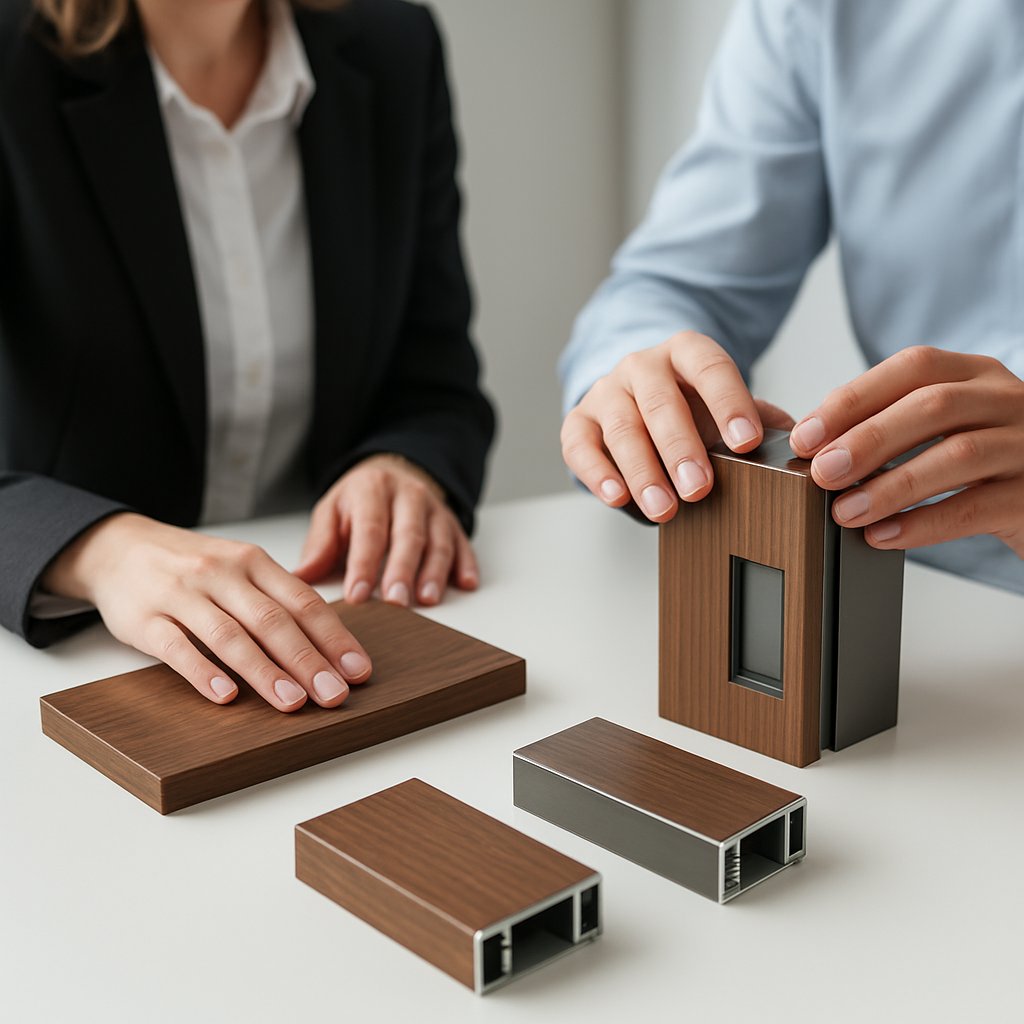
A well-chosen material can still disappoint if the supplier cannot repeat the same finish from sample to shipment. With wood grain aluminium, procurement risk often shows up in three places: uneven appearance, unclear customization limits, and optimistic delivery promises. That matters whether you are sourcing trim, battens, wood look aluminum siding, or larger wood look metal panels.
Your first inquiry should test process control, not just price. Audit guidance from Aluphant highlights surface finishing control, coating thickness checks, gloss uniformity, traceability, and inspection records as core qualification points.
Lead time should be broken into stages. Alu4All notes that design complexity, alloy choice, order quantity, raw material availability, die creation, post-processing, and shipping all affect the schedule. Its general guidance puts die creation at about 2 to 4 weeks, while post-processing can add days or weeks. Manufacturer-specific timelines may be shorter or longer. On Shengxin's wood grain pages, published examples mention about 1 week for mold development and roughly 15 to 20 days for some orders, while FAQ-style entries also note 20 to 30 days depending on complexity. The practical takeaway is simple: ask which timeline applies to your exact profile, finish, quantity, and destination.
Never approve a visible finish from a small color chip alone. Sample qualification guidance from Aluphant stresses dimensional accuracy against drawings, surface finish uniformity, mechanical compliance, coating adhesion, and packaging protection. Those checks become even more important for an aluminium wood panel assembly, mitered frame, or custom screen where edges and joints stay in view.
Ask for a cut sample from the actual product family, then request a mockup if the project is high-visibility. A supplier that can explain its process, share inspection evidence, and set realistic lead times is usually a safer choice than one offering the fastest quote with the fewest details. In this category, clarity up front saves more money than haggling later.
Wood grain aluminium usually means aluminum that has been finished to resemble timber. The wood look is the surface treatment, not a different metal. That finish can be applied to several product forms, including extrusions, battens, sheet, and panel systems. This is why two products with a similar appearance may behave very differently in use. Before buying, it is important to confirm both the aluminum substrate and the finishing method.
Most wood-look systems begin with surface preparation and a powder-coated base layer. After that base cures, the timber pattern is commonly added through heat transfer or sublimation, where the printed grain is bonded into the coating under heat and pressure. Some manufacturers use powder-on-powder routes instead. The sequence matters because it influences how sharp the grain appears, how even the color looks across batches, and how the finish stands up to weather and cleaning.
Yes, it can work well outdoors, but exterior performance depends on more than appearance. Sun exposure, salt, moisture, dirt buildup, drainage, and installation quality all affect how the finish ages. A realistic wood pattern does not guarantee long-term durability on its own. For exterior projects, ask whether the finish system is intended for outdoor use, what coating standard applies, and what cleaning routine is recommended. Regular gentle washing and sensible detailing usually matter more than most buyers expect.
It depends on the goal of the project. Real wood offers natural depth, touch, and variation that coated metal cannot fully reproduce at close range. Wood grain aluminium is often easier to live with where moisture resistance, dimensional stability, and lower routine upkeep are priorities. If the design relies on true material character and natural aging, timber may still be the better choice. If you want a wood-like look with less ongoing care, aluminium is often the more practical option.
Start with the essentials: alloy, product form, finish route, inspection process, batch traceability, packaging, sample policy, and lead time. Ask to see a sample from the actual profile or panel family, not just a small color chip. It also helps to check whether the supplier regularly handles wood-look extrusions or panel systems similar to your job. For profile-heavy projects, specialists such as Shengxin Aluminum may be worth reviewing because they focus on custom wood grain extrusion profiles and large-scale production, but the right choice still depends on your design, quantity, and logistics.



 خدمة الإنترنت
 0086 136 3563 2360
 sales@sxalu.com
 +86 136 3563 2360
 العربية
 English
 français
 Deutsch
 русский
 español
 português
 ไทย
ไทย Việt
Việt Українська