When you hear the term "round tube aluminum extrusions," what comes to mind? If you're picturing a simple hollow cylinder, you're on the right track—but there's much more beneath the surface. These precision-engineered profiles represent one of the most versatile and widely used forms of aluminum in manufacturing, construction, and DIY projects alike. Whether you're sourcing materials for aerospace components or building custom furniture, understanding how these tubes are made will help you make smarter purchasing decisions.
Not all aluminum tubes are created equal. The manufacturing method determines everything from structural integrity to dimensional precision. Round aluminum tubing produced through extrusion differs significantly from two common alternatives: drawn seamless tubes and rolled/welded pipes.
Drawn seamless tubes start as a solid billet that gets pierced and drawn through dies multiple times. While this creates a strong, weld-free product, the process limits size options and can be more expensive. Welded aluminum pipe, on the other hand, is made by rolling flat aluminum sheets into a cylinder and welding the edges together. This approach is cost-effective for larger diameters but introduces a potential weak point at the seam.
Extruded aluminum tube occupies a sweet spot between these methods. The aluminum tube extrusion process forces heated metal through a precision die, creating a seamless hollow profile in a single operation. This delivers several distinct advantages:
Imagine squeezing toothpaste through a shaped nozzle—that's essentially how aluminum round tubing gets its form, just with considerably more heat and pressure involved.
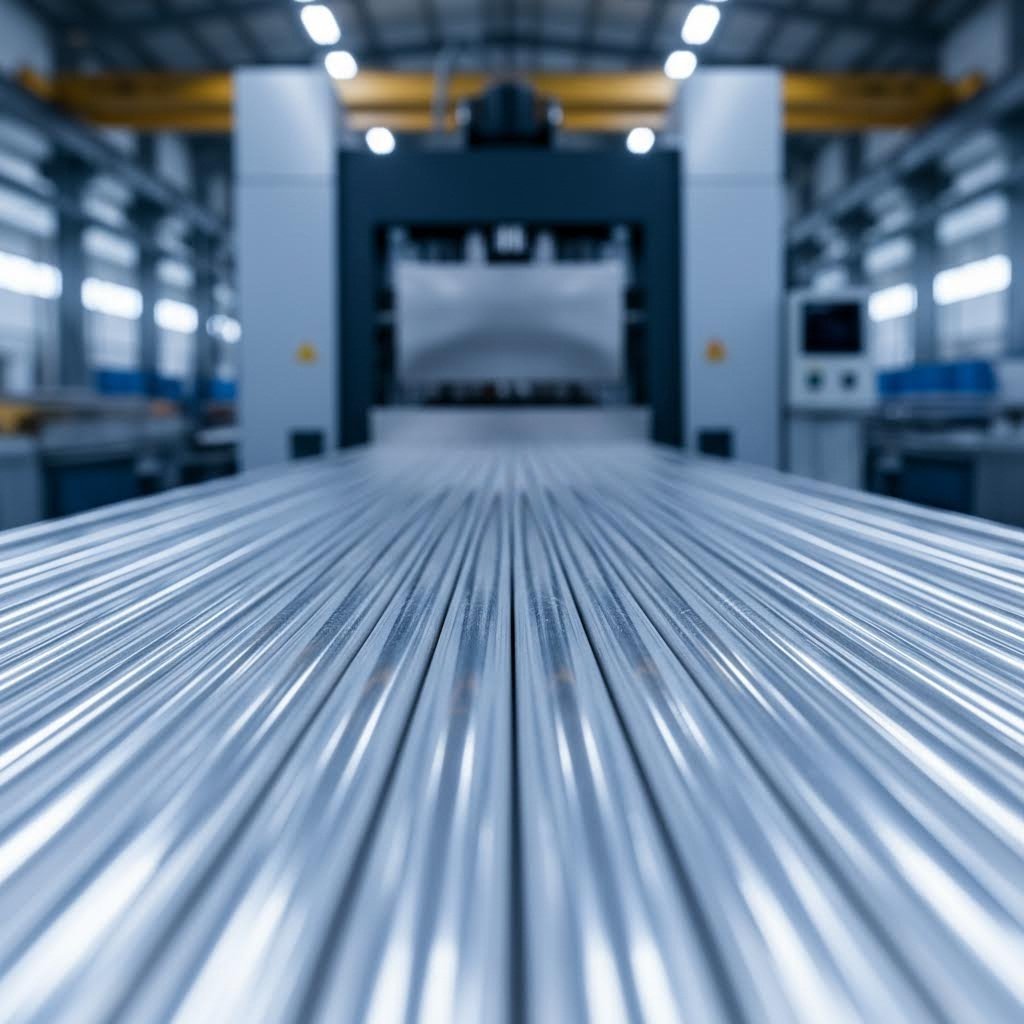
The journey begins with a cylindrical aluminum billet, typically cut from a longer log of material. This billet gets preheated in a furnace to temperatures between 400-500°C—hot enough to make the aluminum malleable without actually melting it. Meanwhile, the circular die (which determines the tube's shape) is preheated to 450-500°C to ensure even metal flow and extend the die's service life.
Once properly heated, the billet transfers to the extrusion press. Here's where things get impressive: hydraulic rams apply up to 15,000 tons of pressure, forcing the softened aluminum through the die opening. The material flows around a central mandrel that creates the hollow interior, emerging as a continuous extruded tubing aluminum profile with the exact cross-section designed into the die.
As the newly formed aluminum extrusion tube exits the press, it undergoes rapid cooling—called quenching—using water baths or cooling fans. This step is crucial for achieving the desired metallurgical properties. The profile then moves to a stretching table where any minor twists or bends are corrected, ensuring the finished product meets dimensional specifications.
Finally, the continuous extrusion gets cut to standard or custom lengths and may undergo additional heat treatment (aging) to achieve the final temper designation, such as T5 or T6. From raw billet to finished tube, this entire process delivers remarkable consistency—something that matters tremendously when you're building structures or assemblies that demand precision.
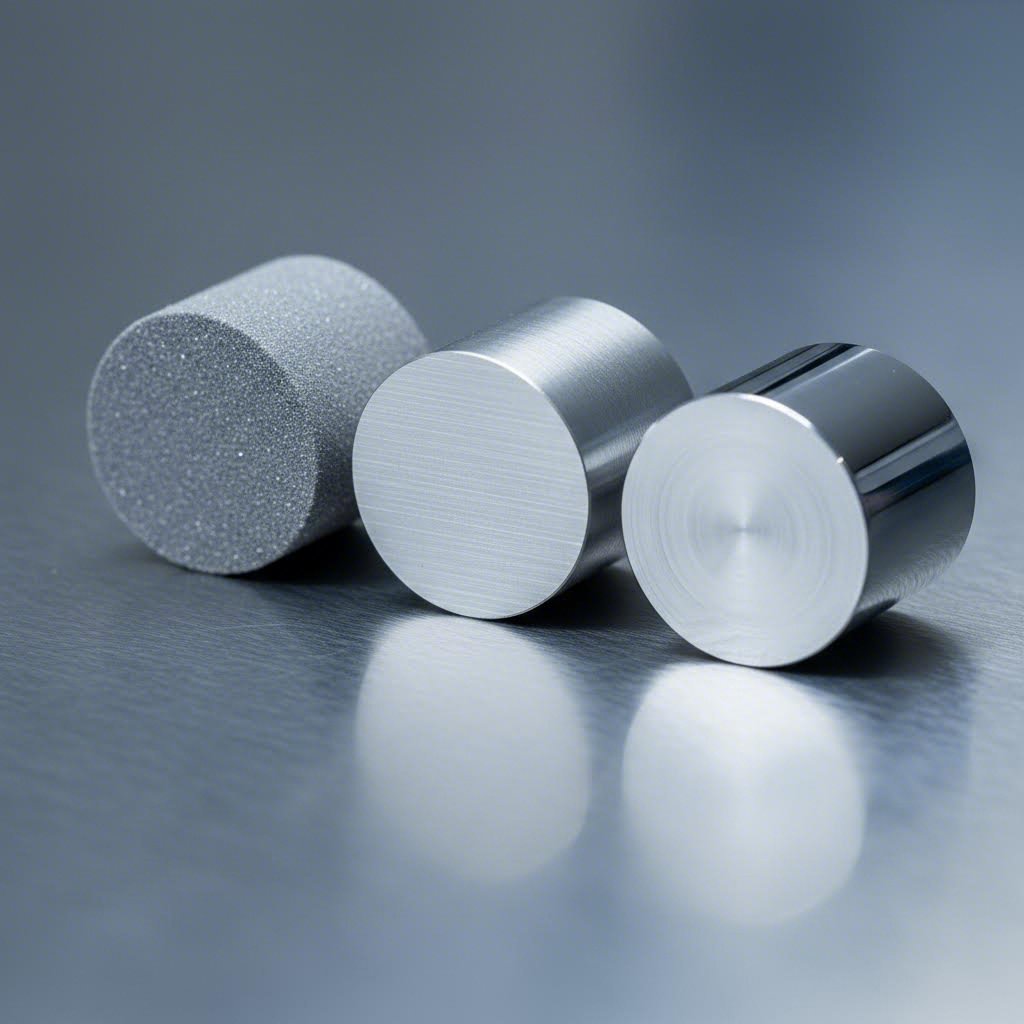
Now that you understand how round tube aluminum extrusions are manufactured, the next critical decision involves choosing the right alloy. Think of alloy selection like picking the right tool for a job—using a 6063 tube where you need 6061 strength is like bringing a butter knife to a steak dinner. The alloy you select directly impacts structural performance, surface finish quality, and even long-term project costs.
When shopping for extruded aluminum tubing, you'll encounter these two alloys more than any others. Both belong to the 6000 series, meaning silicon and magnesium serve as their primary alloying elements. However, subtle differences in composition create significantly different performance characteristics.
6063 aluminum is often called the "architectural alloy" for good reason. It extrudes beautifully, producing aluminum round tube profiles with exceptionally smooth surfaces that accept anodized finishes remarkably well. This makes 6063 the go-to choice when visual appeal matters—think window frames, door hardware, handrails, and decorative trim. According to Eagle Aluminum, 6063 is the preferred material for custom extrusion solutions because it enables complex shapes with smooth surfaces suitable for premium visible elements.
6061 aluminum trades some of that surface refinement for raw structural muscle. When your aluminum tubing needs to bear significant loads or handle demanding mechanical stress, 6061 steps up. It's the workhorse behind bicycle frames, small utility boats, scaffolding components, and structural applications where failure isn't an option.
Here's where the numbers tell the story. In the T6 temper, 6061 delivers an ultimate tensile strength of at least 42,000 psi and yield strength of 35,000 psi. Compare that to 6063-T6, which offers around 28,000 psi ultimate tensile strength and 23,000 psi yield strength. That's roughly a 50% strength advantage for 6061—a difference that matters when structural integrity is paramount.
Sometimes even 6061's impressive strength isn't enough. Enter 7075 aluminum—the aerospace-grade performer that pushes tensile strength into another league entirely. With ultimate tensile strength reaching 83,000 psi in the T6 temper, 7075 aluminium extruded tubes deliver nearly double the strength of 6061.
Why doesn't everyone just use 7075? Cost and workability. This premium alloy commands higher prices and proves more challenging to weld and machine. It's the right choice for aerospace components, high-performance sporting goods, and military applications—but overkill for most standard projects. The aluminium extrusion tube you need for a handrail system doesn't require fighter jet specifications.
| Alloy Type | Tensile Strength (T6) | Corrosion Resistance | Machinability | Weldability | Best Applications |
|---|---|---|---|---|---|
| 6063 | 28,000 psi | Excellent | Good | Excellent | Architectural trim, window frames, furniture, decorative elements |
| 6061 | 45,000 psi | Good | Good | Good | Structural frames, marine components, automotive parts, bicycle frames |
| 7075 | 83,000 psi | Moderate | Fair | Poor | Aerospace structures, high-stress components, firearms, performance equipment |
So when should you upgrade alloys? Start by honestly assessing your project requirements. If your extruded aluminum application involves visible architectural elements where aesthetics take priority, stick with 6063. When structural demands increase—load-bearing frames, marine environments, or mechanical assemblies—6061 becomes the practical choice. Reserve 7075 for situations where weight savings at maximum strength justify the premium cost, such as aerospace applications or high-performance sporting equipment.
Understanding these distinctions puts you ahead of most buyers who simply order "aluminum tubing" without considering how alloy selection affects project success. With the right alloy matched to your application, the next step involves decoding the dimensional specifications that determine whether that perfect tube actually fits your design.
You've selected your alloy—now comes the measurement puzzle. Staring at a specification sheet filled with numbers like "1.050 OD x 0.113 Wall" can feel overwhelming, but these dimensions hold the key to project success or failure. Understanding aluminum tube dimensions isn't just about matching numbers; it's about translating specifications into real-world performance, accurate cost estimates, and assemblies that actually fit together.
Every aluminum round tube specification revolves around three interconnected measurements: outer diameter (OD), wall thickness, and inner diameter (ID). Once you grasp how these relate, you'll read spec sheets like a seasoned engineer.
Outer Diameter (OD) measures across the widest point of the tube—from the outside of one wall to the outside of the opposite wall. This is typically the first number you'll see because it determines how the tube fits within your structure, how it looks aesthetically, and how it interfaces with fittings or mounting hardware.
Wall Thickness refers to the material thickness between the outer and inner surfaces. This dimension directly impacts strength, weight, and cost. According to Speciality Metals, a thicker wall generally results in a stronger tube that can resist bending, pressure, and external forces—but it also adds weight and material cost.
Inner Diameter (ID) is calculated using a simple formula:
ID = OD – (2 × Wall Thickness)
For example, if you're working with a tube that has a 2-inch OD and 0.154-inch wall thickness:
ID = 2.375" – (2 × 0.154") = 2.067"
This calculation matters tremendously when you need to run wiring, cables, or fluids through the tube, or when inserting internal components like sleeves or plugs. Ignoring ID specifications leads to frustrating discoveries during assembly—like realizing your 1-inch dowel won't fit inside a tube you assumed would accommodate it.
Aluminium tube sizes follow standardized schedules that balance availability with practical utility. Here's a reference table covering popular aluminum round tube sizes based on industry-standard pipe schedules:
| OD (inches) | Wall Thickness | ID (inches) | Weight (lbs/ft) | Typical Applications |
|---|---|---|---|---|
| 0.840 | 0.109 (Sch 40) | 0.622 | 0.294 | Light furniture frames, handrails, small fixtures |
| 1.050 | 0.113 (Sch 40) | 0.824 | 0.391 | Grab bars, railing systems, DIY projects |
| 1.315 | 0.133 (Sch 40) | 1.049 | 0.581 | Standard handrails, structural supports, telescoping assemblies |
| 1.660 | 0.140 (Sch 40) | 1.380 | 0.786 | Industrial railings, machinery guards, moderate load-bearing |
| 1.900 | 0.145 (Sch 40) | 1.610 | 0.940 | Scaffolding components, structural frameworks |
| 2.375 | 0.154 (Sch 40) | 2.067 | 1.264 | Heavy-duty railings, HVAC supports, roll cages |
| 3.500 | 0.216 (Sch 40) | 3.068 | 2.621 | Structural columns, heavy machinery, large-diameter conduit |
Notice how aluminium pipe sizes progress through a logical sequence. The weight-per-foot column proves especially valuable for project planning—multiply by your total length requirement to estimate shipping costs and ensure your support structures can handle the load.
Here's where aluminum tube shapes get interesting from an engineering perspective. Increasing wall thickness doesn't just add strength linearly—it significantly impacts the tube's moment of inertia, which determines resistance to bending and deflection.
Consider a 2-inch OD tube. Moving from Schedule 5 (0.065" wall) to Schedule 40 (0.154" wall) more than doubles the wall thickness. But the strength increase is even more dramatic because material farther from the center contributes disproportionately to bending resistance. However, the trade-off is real:
That Schedule 80 tube weighs more than three times its Schedule 5 counterpart. For a project requiring 100 feet of tubing, you're looking at 55.5 pounds versus 173.7 pounds—a difference that affects everything from shipping costs to installation labor.
Choosing the right wall thickness is fundamentally a balancing act between structural requirements and material costs. Over-specifying wastes money on unnecessary material and weight; under-specifying risks structural failure. Calculate your actual load requirements first, then select the thinnest wall that provides adequate safety margins.
When you order aluminum round tubes, the delivered dimensions won't match specifications exactly—and that's normal. Manufacturing tolerances define acceptable variation ranges. Standard aluminum extrusion tolerances typically allow ±0.012" on wall thickness and ±0.024" on OD for most tube sizes.
Why does this matter? Imagine designing a telescoping assembly where one tube slides inside another. If your outer tube has a 1.049" ID and your inner tube has a 1.050" OD—both within tolerance—you've got a problem. The inner tube won't fit. Precision assemblies require either tighter-tolerance specifications (which cost more) or designs that accommodate standard tolerance stack-up.
For critical fit applications, always communicate your tolerance requirements upfront and consider adding clearance allowances to your design. A well-planned 0.030" clearance eliminates most interference issues while still providing acceptable assembly fit.
With dimensions decoded, you're ready to explore where these specifications translate into real-world applications—and you might be surprised by the range of industries relying on these versatile profiles.
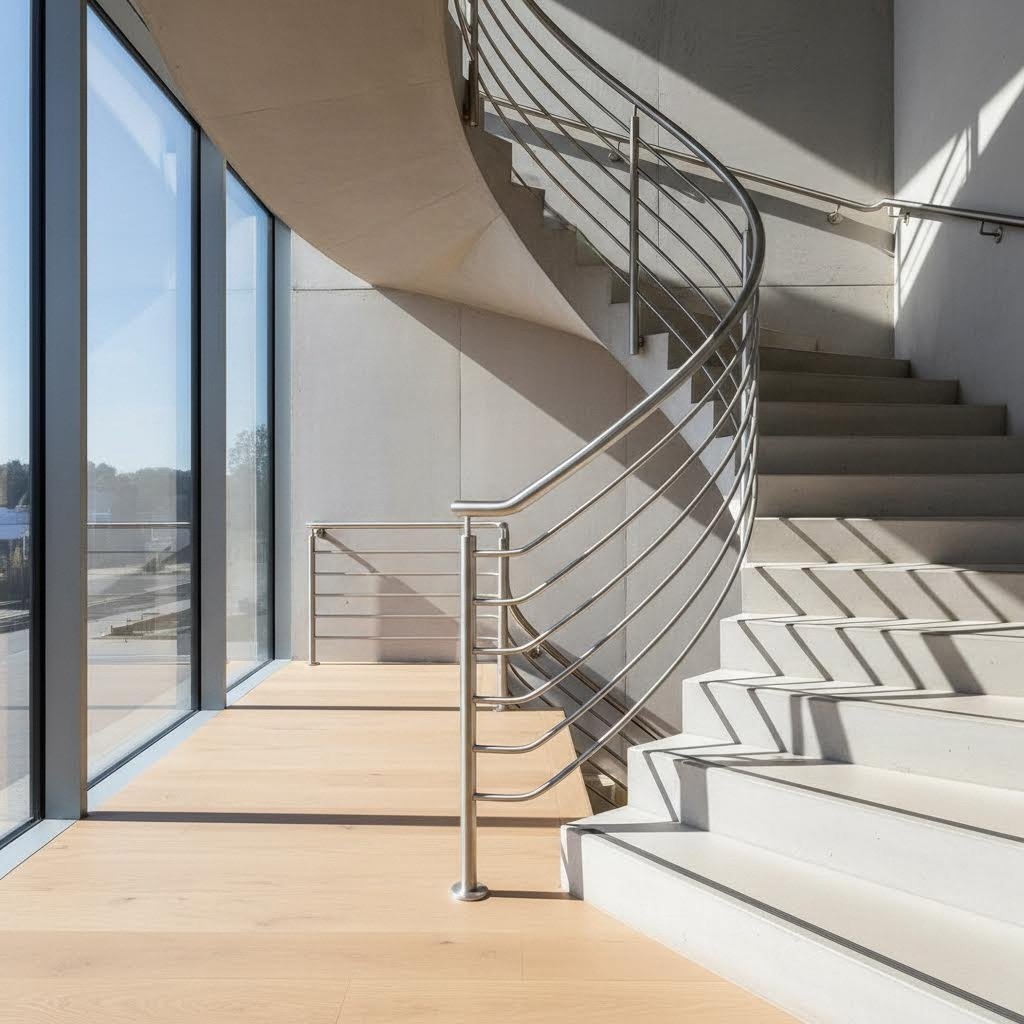
So you've got the alloy knowledge and dimensional specifications down—now what do you actually build with round tube aluminum extrusions? This is where things get exciting. Unlike square or rectangular profiles that excel in flat-surface connections, round aluminum tube offers unique advantages that make it the preferred choice across surprisingly diverse applications. Let's explore what professionals and hobbyists alike are creating with these versatile profiles.
Round aluminum tubing shines in applications where aesthetics meet engineering requirements. The circular cross-section provides natural torsional strength—resistance to twisting forces—that outperforms other shapes when loads aren't applied in predictable directions. This makes round aluminum tube ideal for structures experiencing multi-directional stresses.
Architectural and Construction Uses:
Aerospace Applications:
When every gram matters, aluminum tubes deliver structural performance at a fraction of steel's weight. According to industry sources, aluminum extrusion tubes have emerged as key components in aerospace due to their strength-to-weight ratio and design versatility.
Automotive Applications:
The automotive industry increasingly relies on round aluminum extrusion profiles as manufacturers pursue lighter vehicles for improved fuel economy and electric vehicle range.
Marine Applications:
Saltwater environments destroy most metals quickly, but aluminum's natural oxide layer provides built-in corrosion protection—especially when enhanced with anodizing.
Here's where round tube aluminum extrusions really democratize manufacturing. You don't need an aerospace contract to benefit from these materials—the same properties that make them attractive to Boeing also make them perfect for your weekend project.
Industrial and Commercial Uses:
DIY and Hobbyist Projects:
According to fabrication experts, aluminum tubing is incredibly versatile for making frames, structures, and countless DIY projects. Small aluminum tubing especially appeals to makers and hobbyists for several reasons:
What makes round aluminum tubes the right choice over square or rectangular alternatives? Four key characteristics drive the decision:
Before ordering, work backward from your project requirements. Building a lightweight photography backdrop? Small aluminum tubing in 6063 alloy with thin walls provides adequate strength while minimizing weight. Fabricating a roll cage for track use? You'll need 6061-T6 in thicker walls with proper certification documentation.
Need something beyond standard dimensions? Many manufacturers offer custom aluminum tube profiles when standard sizes don't match your design. Custom extrusion dies become cost-effective at moderate volumes, opening possibilities for proprietary shapes that give your product a competitive edge.
With applications spanning from billion-dollar aircraft to backyard furniture, round aluminum tubes prove their versatility daily. But the raw extrusion is just the starting point—surface treatments can dramatically extend service life and open new aesthetic possibilities.
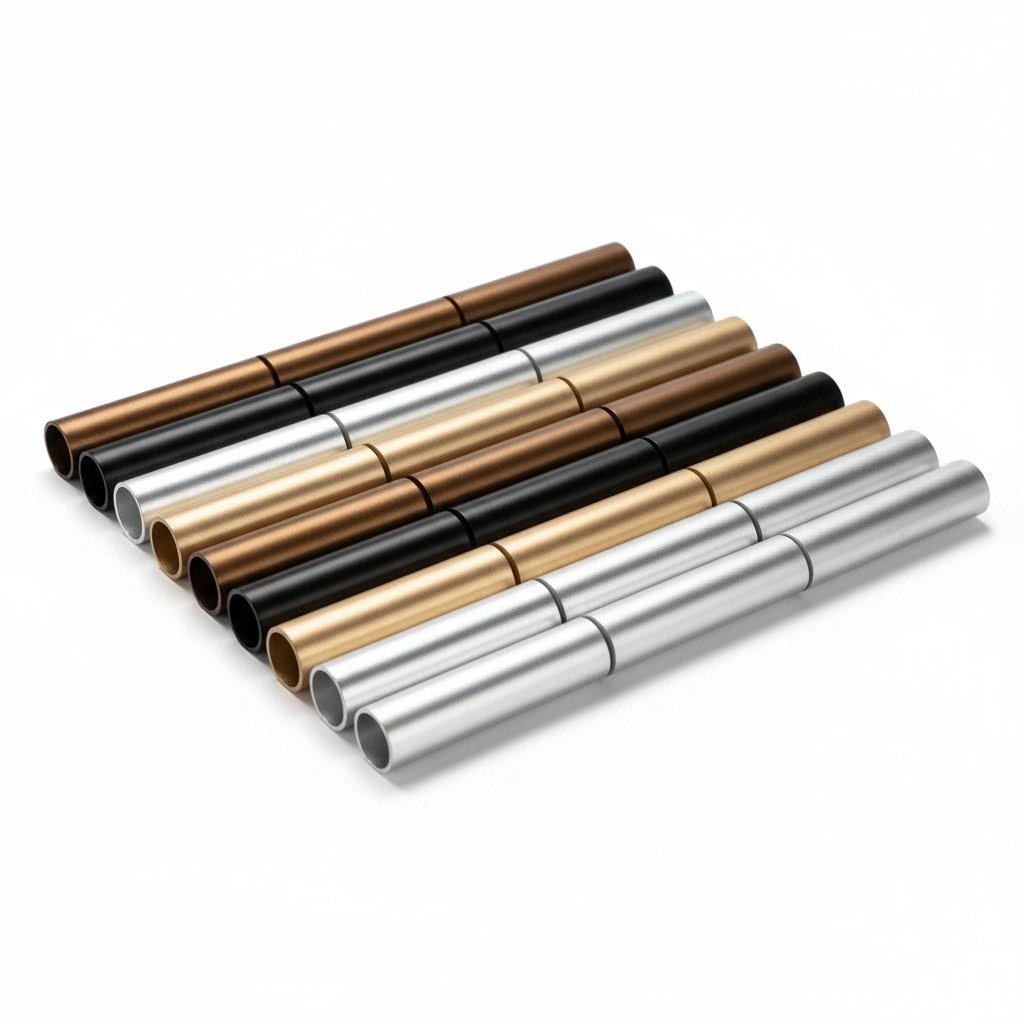
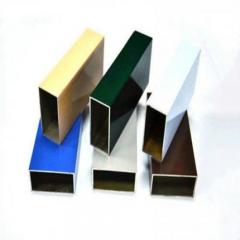
Your aluminum round tube arrives from the extrusion press with what's called a "mill finish"—a dull, somewhat rough surface showing die marks and natural oxidation. While perfectly functional for hidden structural applications, this raw state rarely meets the demands of architectural projects, outdoor installations, or consumer-facing products. Surface treatments transform ordinary aluminium tubes into durable, visually striking components that can last decades with minimal maintenance.
Think of surface finishing as protective armor with aesthetic benefits. The right treatment shields your aluminum from environmental attack while delivering exactly the appearance your project demands—whether that's a brushed metallic sheen, a vibrant custom color, or a weathered bronze patina.
Unlike paints that sit on top of metal surfaces, anodizing actually transforms the aluminum itself. According to SAF, this electrochemical process stimulates the naturally-occurring aluminum oxide layer into growing thicker, creating an integral protective coating that cannot peel or flake because it's literally part of the metal.
The process creates millions of tiny hexagonal pores in the oxide layer—and here's where things get interesting. These pores can absorb dyes before being sealed, allowing anodized aluminum tube surfaces to display colors ranging from subtle champagne and bronze tones to vivid reds, blues, and blacks. The thickness of the anodic coating directly determines durability: Class I anodizing (0.7 mils) lasts roughly twice as long as Class II (0.4 mils) in exterior applications.
What makes anodizing particularly attractive for aluminium tubes in high-traffic areas? Superior abrasion resistance. Industry experts note that anodizing will outlast paint on door stiles, kick-plates, and handrails—anywhere surfaces experience regular physical contact. Plus, anodized finishes are "renewable": when they appear to have failed after years of service, cleaning with mild detergent and light abrasion often reveals a fresh surface underneath.
When your project demands specific colors that anodizing can't achieve, organic coatings enter the picture. But which type performs best for your situation?
Powder coating applies dry paint powder electrostatically, then bakes the coating into a tough, even finish. It's environmentally friendly—no VOC emissions during curing—and available in hundreds of stock colors. According to coating specialists, powder coating typically achieves film thickness of 60-120μm with a service life of 7-8 years. The trade-off? It's generally better suited for indoor applications or protected outdoor environments.
PVDF (Polyvinylidene Fluoride) coatings represent the premium choice for exterior architectural applications. These resin-based liquid coatings deliver exceptional UV resistance, color retention, and chemical resistance. PVDF coatings achieve 35-60μm thickness with service life exceeding 20 years—nearly three times the longevity of standard powder coating. Major manufacturers like Arkema (Kynar 500) and Solvay (Hylar 5000) produce PVDF resins specifically for demanding architectural applications.
For extreme durability requirements, micro-arc oxidation (also called plasma electrolytic oxidation) creates ceramic-like surface layers significantly harder than standard anodizing. This advanced treatment suits applications facing severe abrasion or extreme temperatures.
| Treatment Type | Durability Rating | Color Options | Best Environment | Cost Level |
|---|---|---|---|---|
| Mill Finish | Low (1-3 years exterior) | Natural aluminum only | Hidden/temporary applications | $ |
| Clear Anodize | High (15-20+ years) | Natural metallic tones | Indoor/outdoor architectural | $$ |
| Color Anodize | High (15-20+ years) | Limited palette (bronze, black, gold, red, blue) | Architectural, high-traffic areas | $$-$$$ |
| Powder Coating | Moderate (7-8 years) | Hundreds of colors, custom matching | Indoor, protected outdoor | $$ |
| PVDF Coating | Very High (20+ years) | Wide palette, excellent consistency | Exterior curtain wall, roofing | $$$$ |
| Micro-arc Oxidation | Extreme | Limited | Severe abrasion, extreme temps | $$$$$ |
Selecting a surface finish isn't simply about picking a color you like. Consider these factors when making your decision:
When sourcing anodized aluminum tubing suppliers, verify they offer Class I thickness for exterior applications and can provide color range samples before committing to large orders—color variation is normal with anodizing, and approval panels prevent installation surprises.
The finishing capabilities available from your supplier directly impact what's achievable for your project. Manufacturers like Shengxin Aluminium offer comprehensive surface treatment options including custom-color anodizing (champagne, rose gold, and other specialty finishes), powder coating, PVDF application, and micro-arc oxidation—all under one roof. This single-source approach ensures consistent quality from raw extrusion through final finishing.
With surface treatment options clarified, the next step involves translating all these specifications—alloy, dimensions, and finish—into a coherent purchasing decision that matches your project requirements without overspending.
You've absorbed the fundamentals—alloys, dimensions, finishes. Now comes the moment of truth: translating all that knowledge into an actual purchase order. This is where many buyers stumble, either over-engineering their specifications and burning budget unnecessarily, or under-specifying and facing project failure down the road. Let's walk through a systematic approach that gets you exactly the aluminum tubing round profiles you need—nothing more, nothing less.
Selecting the right aluminum tube round specifications isn't about picking numbers from a catalog—it's about reverse-engineering from your actual application demands. Here's a proven decision process that experienced engineers follow:
Following this sequence prevents the common mistake of selecting dimensions based on what "looks right" rather than what your application actually requires.
Even experienced buyers fall into predictable traps when specifying round tube aluminum extrusions. Here are the costly errors you'll want to sidestep:
Over-specifying (wasting money):
Under-specifying (risking failure):
The sweet spot in specification selection lies not in maximizing every parameter, but in matching each specification precisely to your actual requirements. Over-engineering wastes money on capabilities you'll never use; under-engineering invites premature failure. Calculate your true needs, add appropriate safety factors, then resist the temptation to add "just a little extra" across every dimension.
How you communicate specifications to suppliers directly impacts the accuracy and competitiveness of quotes you receive. According to metal industry experts, providing complete specifications upfront prevents costly back-and-forth and ensures you're comparing apples to apples across vendors.
Include these elements in every quote request:
Should you work with what's available in aluminum tubing stock, or invest in a custom die? This decision significantly impacts both cost and lead time.
Standard stock sizes make sense when:
Custom extrusion dies become cost-effective when:
According to Profile Precision Extrusions, custom extrusion dies typically cost between $1,250 and $1,950 depending on complexity, with lead times of 3-5 weeks. This includes sample extrusions for approval before full production. When you calculate the per-piece die cost across your total volume, custom tooling often proves economically attractive for orders exceeding a few thousand feet.
For thick wall aluminum pipe or specialized profiles not available in distributor stock, custom extrusion may actually be your only option. In these cases, partnering with a manufacturer capable of producing your specific requirements from the start eliminates the frustration of searching for non-existent stock items.
With your specifications dialed in, the next critical decision involves evaluating supplier capabilities—because even perfect specifications mean nothing if your manufacturer can't execute them consistently.
You've nailed your specifications on paper—but here's an uncomfortable truth: those perfect dimensions mean nothing if your supplier can't consistently deliver them. The aluminum extrusion industry spans everything from commodity producers churning out basic shapes to precision manufacturers serving aerospace and medical applications. Understanding what separates these tiers helps you identify partners capable of meeting your actual quality requirements.
What makes one extruded tube fundamentally different from another when they share identical alloy designations and dimensions? The answer lies in manufacturing capabilities, process controls, and the attention to detail that separates good enough from genuinely excellent.
When evaluating aluminum pipe manufacturers, look beyond glossy brochures to the operational details that actually determine output quality. According to Profile Precision Extrusions, quality control in precision aluminum extrusion manufacturing isn't optional—it's the foundation of success. Every critical dimension, tolerance, surface finish, and alloy specification must meet customer specifications.
Here are the quality checkpoints that distinguish reliable suppliers from risky ones:
Quality-focused manufacturers issue material certifications with every order stating actual chemical composition, specifications used during production, and lot numbers traceable back to raw material origins. If a supplier can't provide this documentation, consider it a red flag.
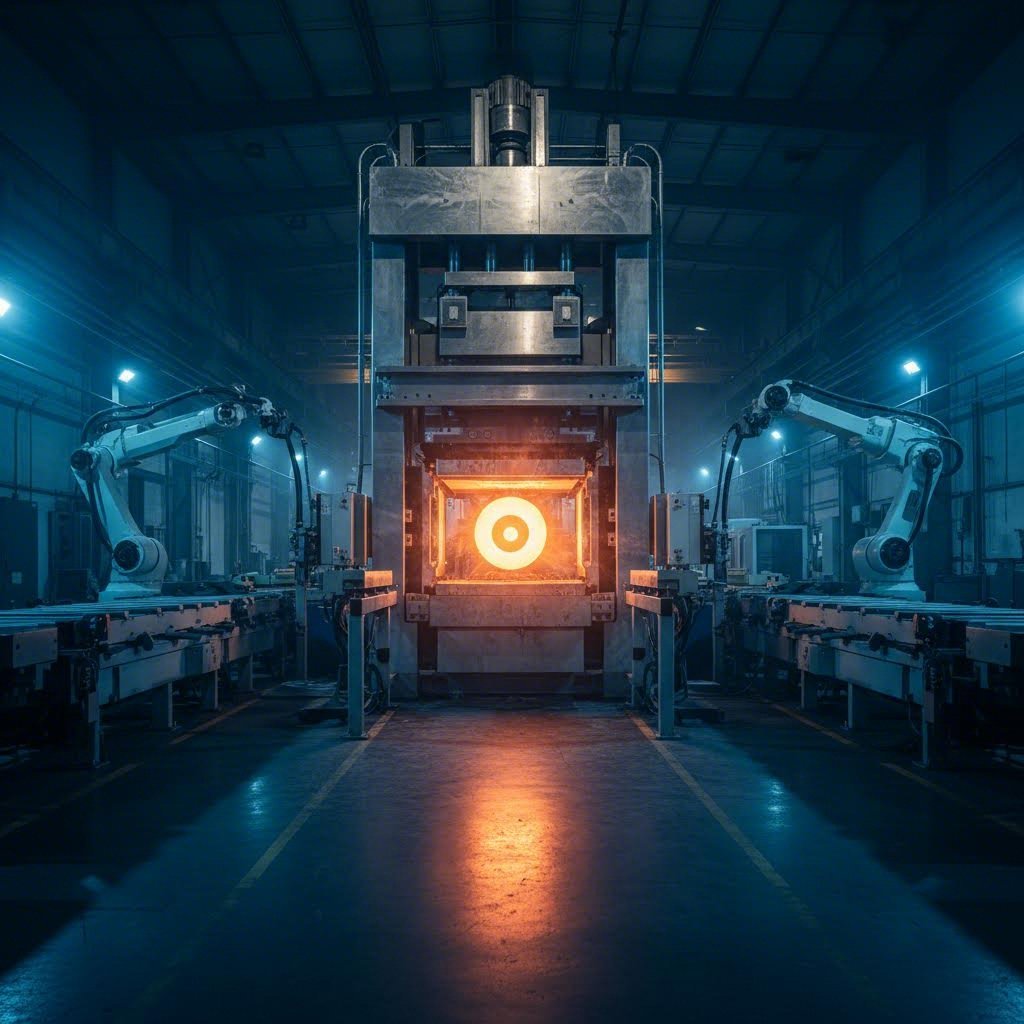
Ever wonder why some manufacturers can produce large diameter aluminum pipe while others max out at smaller profiles? The answer comes down to extrusion press tonnage—the brute force that transforms heated billets into finished shapes.
According to industry sources, press tonnage directly determines three critical capabilities:
Hydraulic rams in extrusion presses apply pressures typically ranging from 1,000 to 15,000 tons. To put this in perspective: it takes about 300 tons to crush an average pickup truck. A 15,000-ton press could crush 50 trucks simultaneously. That's the force shaping your extruded tubing.
Using an underpowered press for demanding profiles results in incomplete die filling, poor surface finish, and potential die damage. Manufacturers with diverse press fleets—ranging from smaller presses for precision work to high-tonnage equipment for large structural profiles—can match the right press to each job's specific demands.
The extrusion die is arguably the most crucial component in the entire process. As Gemini Group explains, effective die design directly impacts quality, efficiency, and cost-effectiveness. Dies require precision engineering to ensure uniform material flow, optimal bearing lengths, and proper thermal management.
Temperature control throughout the process proves equally critical:
Operators at quality-focused facilities continuously monitor these parameters. Real-time monitoring systems identify deviations before they affect finished products—a capability that commodity suppliers often lack.
Not all extruded aluminium tube sources are created equal. Understanding where different suppliers fall on the capability spectrum helps you match partners to project requirements.
Commodity suppliers typically offer:
Precision manufacturers provide:
For architectural handrails or basic structural framing, commodity suppliers often deliver adequate quality at attractive prices. But when your application demands consistent tolerances, certified material properties, or complex secondary operations, precision manufacturers justify their premium through reduced scrap, fewer assembly problems, and documented compliance.
Raw extrusions rarely go directly into final assemblies. Value-added processing transforms basic profiles into installation-ready components, and suppliers offering these services in-house provide significant advantages.
Look for these secondary capabilities when evaluating potential partners:
According to industry experts, manufacturing software used by leading extrusion companies plans each order with parameters for every manufacturing step—from heating billets to packaging instructions. This systematic approach ensures consistency across high-volume production runs.
Suppliers offering comprehensive secondary processing under one roof eliminate coordination headaches, reduce shipping between vendors, and maintain quality accountability from raw billet through finished component. When evaluating sources for your next project, these capabilities often matter as much as the extrusion quality itself.
You've dialed in your specifications and understand what separates quality manufacturers from commodity suppliers. Now comes the practical question every buyer faces: where do you actually buy aluminum tubing that meets your requirements? The answer depends on your project's unique combination of volume, timeline, and customization needs. Let's break down your sourcing options so you can make the smartest purchasing decision for your specific situation.
When you're ready to buy aluminum tube profiles, two fundamentally different paths exist. Each comes with distinct trade-offs that dramatically affect your project's cost, timeline, and final outcome.
Stock distributors maintain warehouses filled with common aluminum tubing stock in popular sizes and alloys. When you need aluminum tube for sale quickly—perhaps for a prototype, repair, or small project—these distributors deliver fast. According to Paramount Extrusions, stock extrusions work best for prototyping, small projects, replacement parts, or simple structural use.
The trade-off? Limited selection and higher per-unit pricing. Stock distributors carry what sells most frequently, meaning your ideal dimension might not exist in their inventory. If you're searching for aluminium pipes for sale in non-standard sizes, you'll likely come up empty.
Custom manufacturers produce extrusions using dies designed specifically for your requirements. According to KMC Aluminium, tooling lead time typically runs 2-4 weeks to create a custom die before production even begins. However, custom extrusions deliver exact specifications and superior per-unit economics at volume.
| Factor | Stock Distributors | Custom Manufacturers |
|---|---|---|
| Lead Time | Days to 1-2 weeks | 4-8 weeks (including tooling) |
| Size Selection | Limited to common profiles | Unlimited—your exact specifications |
| Per-Unit Cost | Higher (distributor markup) | Lower at volume (factory-direct) |
| Minimum Order | Often single pieces | Typically 500-2,000 lbs minimum |
| Tooling Investment | None required | $1,250-$1,950+ for dies |
| Secondary Processing | Limited or outsourced | Often available in-house |
| Best For | Prototypes, small runs, emergencies | Production volumes, unique profiles |
If you're wondering where to buy aluminum extrusion for custom projects, you'll quickly encounter minimum order quantities (MOQs) that can surprise first-time buyers. These aren't arbitrary hurdles designed to frustrate small customers—they reflect real economic and technical realities.
According to industry experts, several factors drive MOQ requirements:
Lead times break down into three distinct phases. Tooling lead time covers die creation—typically 2-4 weeks depending on complexity. Extrusion lead time includes scheduling, trial runs, production, and heat treatment. Fabrication lead time adds additional processing like cutting, drilling, or surface finishing. Complex orders requiring multiple finishing steps may add weeks to delivery.
When your project demands more than stock aluminum tubes for sale can provide, partnering directly with a manufacturer unlocks significant advantages. The key lies in finding a supplier capable of supporting your project from concept through delivery.
What should you look for in a custom extrusion partner?
For complex projects requiring this level of end-to-end support, manufacturers like Shengxin Aluminium serve as single-source partners—handling custom die creation, extrusion on appropriately-sized presses, precision CNC machining, and surface treatments including custom-color anodizing and PVDF coating. This integrated approach ensures consistent quality while eliminating the complexity of coordinating multiple vendors.
How do you decide between buying aluminum pipes for sale from distributors versus investing in custom manufacturing? Consider these decision points:
Choose stock distributors when:
Choose custom manufacturers when:
According to Paramount Extrusions, the question of where to buy aluminum extrusions doesn't have a one-size-fits-all answer. It comes down to balancing cost, lead time, and performance. By knowing when to choose domestic versus import and custom versus stock, you'll set up your project for success.
Work with a supplier who can walk you through both standard and custom options—and help you determine whether quick-ship stock or custom-manufactured extrusions represent the smarter choice for your specific application and volume requirements.
Whether you're sourcing a few feet of standard round tubing for a weekend project or developing custom profiles for ongoing production, understanding these sourcing dynamics puts you in control. Armed with the knowledge from this guide—alloy characteristics, dimensional specifications, surface treatments, quality indicators, and now sourcing strategies—you're equipped to make informed purchasing decisions that balance performance requirements with practical budget and timeline constraints.
Standard aluminum round tube sizes follow industry pipe schedules, with common ODs ranging from 0.840 inches to 3.500 inches. Popular sizes include 1.050" OD with 0.113" wall (Schedule 40) for handrails and DIY projects, 1.315" OD for standard railings, and 2.375" OD for heavy-duty structural applications. Wall thicknesses vary from Schedule 5 (thin wall) to Schedule 80 (heavy duty), affecting both strength and weight per foot.
6063 aluminum is the 'architectural alloy' offering excellent surface finish and anodizing response—ideal for visible applications like handrails and window frames. 6061 aluminum provides roughly 50% higher tensile strength (45,000 psi vs 28,000 psi in T6 temper), making it better for structural load-bearing applications like bicycle frames, marine components, and roll cages. Choose 6063 when aesthetics matter; select 6061 when strength is paramount.
You have two main sourcing options: stock distributors and custom manufacturers. Stock distributors like metals supply stores offer quick delivery (days to 1-2 weeks) for common sizes but at higher per-unit costs. For custom specifications or larger volumes (2,000+ lbs), working directly with manufacturers like Shengxin Aluminium provides factory-direct pricing, exact specifications, and integrated services including CNC machining and surface treatments.
Pricing varies based on alloy type, dimensions, quantity, and finishing requirements. Stock distributor pricing runs higher per unit but requires no tooling investment. Custom manufacturing involves die costs of $1,250-$1,950 but offers lower per-unit pricing at volume. Factors affecting cost include wall thickness, alloy selection (6063 costs less than 6061 or 7075), and surface treatments—anodizing adds moderate cost while PVDF coating commands premium pricing.
Common finishes include mill finish (raw, lowest cost), clear anodize (15-20+ year durability), color anodize (bronze, black, gold options), powder coating (hundreds of colors, 7-8 year lifespan), and PVDF coating (20+ year exterior durability). Anodizing creates an integral protective layer that won't peel, making it ideal for high-touch areas. For extreme durability, micro-arc oxidation produces ceramic-like hardness suitable for severe environments.



 خدمة الإنترنت
 0086 136 3563 2360
 sales@sxalu.com
 +86 136 3563 2360
 العربية
 English
 français
 Deutsch
 русский
 español
 português
 ไทย
ไทย Việt
Việt Українська