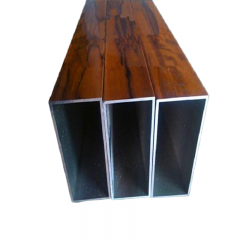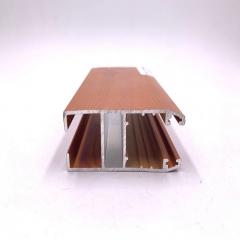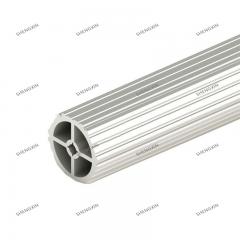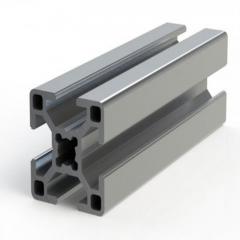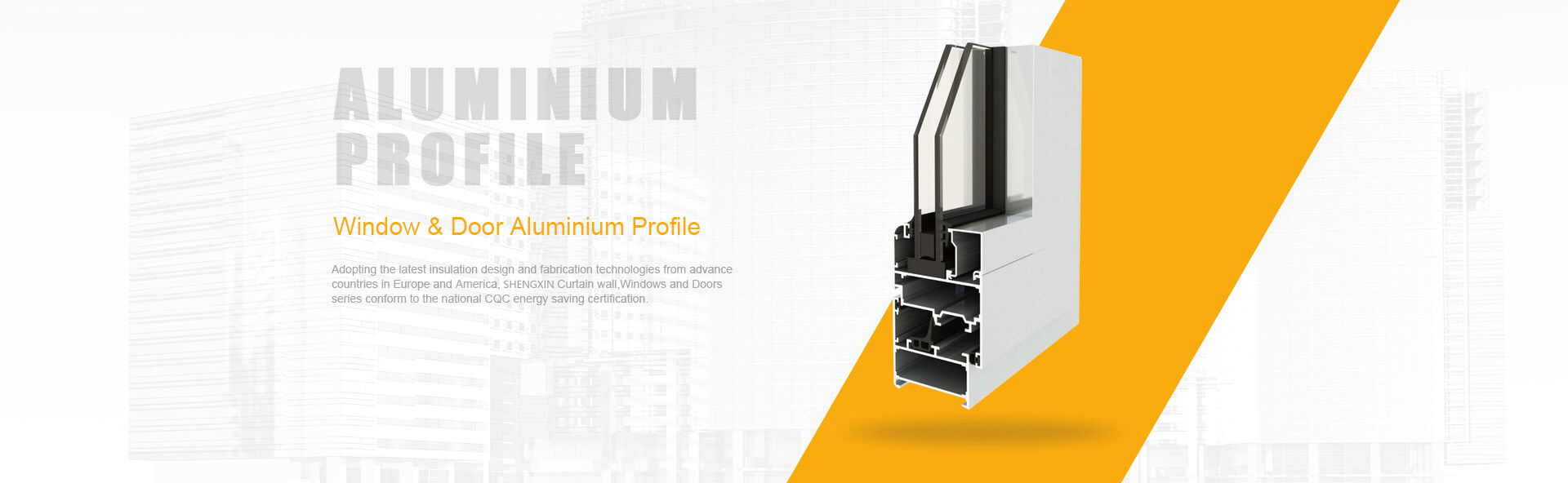
When you start researching aluminum extrusion tube options for your project, you'll quickly notice something frustrating: nobody agrees on what "large diameter" actually means. One supplier calls 150mm large, while another reserves that term for profiles exceeding 600mm. This lack of standardization creates confusion during the specification process and can lead to costly miscommunications with manufacturers.
So what truly qualifies as a large diameter aluminum extrusion? Let's establish clear technical parameters that will help you communicate effectively with suppliers and understand your manufacturing options.
Industry professionals generally recognize large diameter aluminum extrusions as those with an outer diameter starting at approximately 200mm (roughly 8 inches). However, the more precise measurement that determines manufacturing feasibility is the circumscribing circle diameter, commonly abbreviated as CCD.
The CCD represents the diameter of the smallest circle that will entirely enclose the profile's cross-section. According to the Aluminum Extruders Council, most common profiles fall under 12 inches (approximately 305mm) in CCD, while specialized extruders can produce profiles with CCDs as large as 32 inches (approximately 813mm). This measurement matters because it directly determines which extrusion presses can manufacture your aluminium extrusion profile and what tooling costs you'll encounter.
For truly large-scale industrial applications, extruded aluminum sizes can reach 1600mm or beyond, though these require specialized vertical extrusion equipment and significantly higher capital investment.
Understanding where your aluminum extrusion dimensions fall within industry classifications directly impacts project economics. The Aluminum Extruders Council notes that extrusions are most economical when they fit within a CCD between one and ten inches, with profiles below 8 inches offering the most significant cost reductions.
Here's how the industry typically categorizes aluminum extrusion sizes:
When specifying large diameter profiles, remember that CCD is just one factor. Weight-per-foot also significantly affects press operation and production economics. A balanced approach considers both the circumscribing circle and the profile's mass to ensure your design can be manufactured efficiently on available equipment.
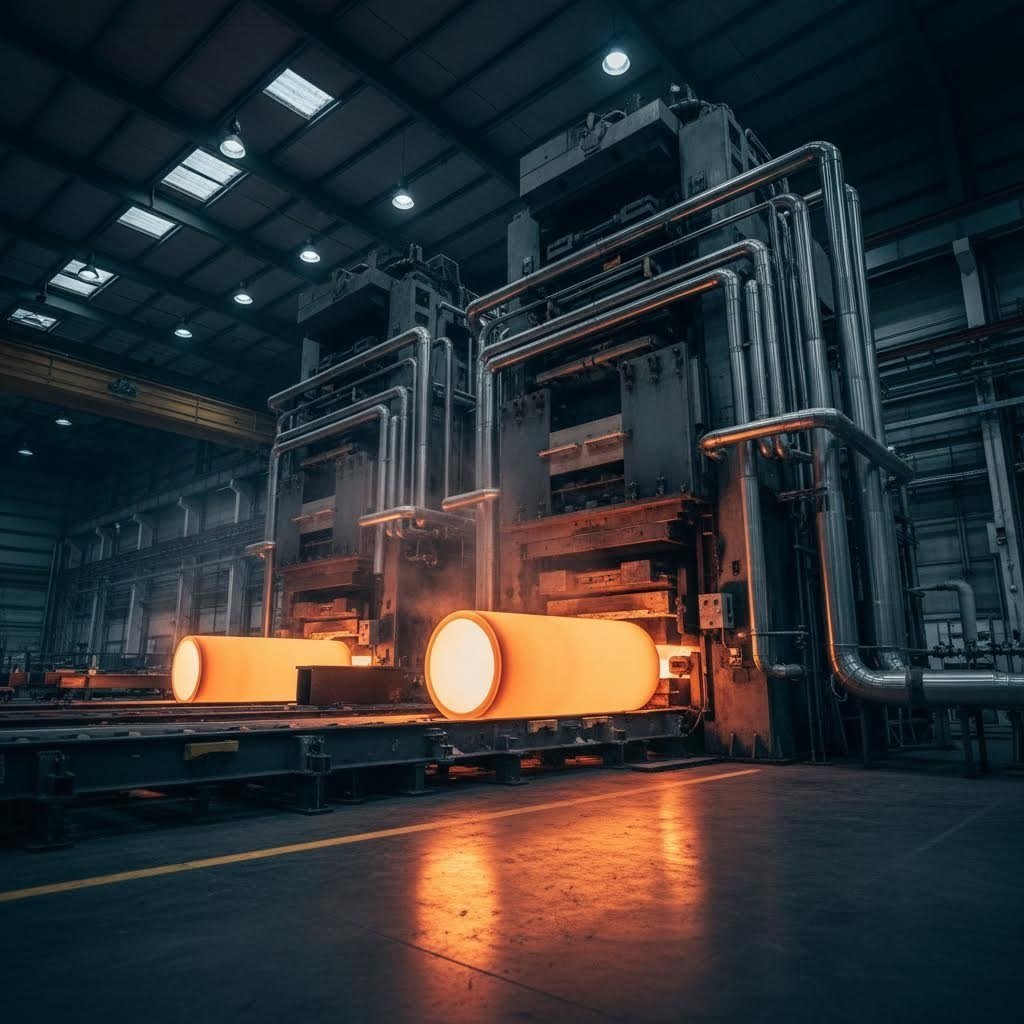
Now that you understand what qualifies as a large diameter profile, you're probably wondering: how do manufacturers actually produce these massive aluminum shapes? The process involves far more than simply scaling up standard extrusion equipment. Creating extruded aluminum at large diameters requires specialized machinery, precise thermal management, and careful selection of extrusion methods.
Let's walk through the manufacturing process that transforms solid aluminum billets into the large-scale profiles your project demands.
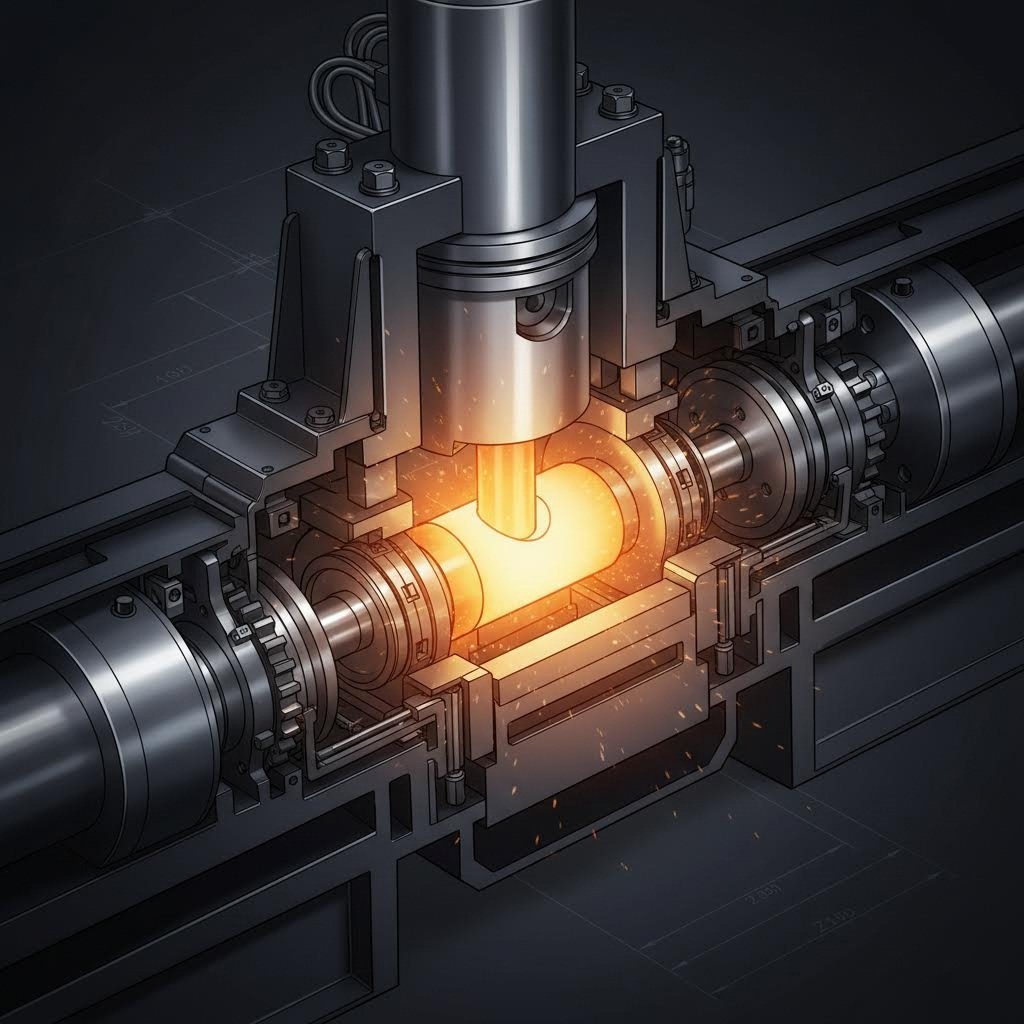
Think of an aluminum extrusion press machine as a massive hydraulic system that forces heated aluminum through a shaped die opening. The tonnage rating represents the extrusion pressure the machine can generate—and this directly determines the maximum profile size achievable.
Here's why tonnage matters so much for large diameter applications: as the circumscribing circle diameter increases, the force required to push metal through the die opening grows exponentially. According to industry engineering data, the relationship between press capacity and achievable CCD follows predictable patterns that experienced manufacturers use for production planning.
The extrusion ratio—calculated as the billet cross-sectional area divided by the total profile cross-sectional area—provides another critical constraint. Industry guidelines recommend maintaining this ratio between 8 and 12 for optimal metal flow. When extruding aluminum at large diameters, maintaining proper extrusion ratios requires correspondingly larger billets and higher tonnage presses.
| Press Tonnage Range | Maximum CCD Capability | Typical Applications |
|---|---|---|
| 600T - 1000T | Up to 200mm (8 inches) | Architectural profiles, standard industrial shapes |
| 1100T - 1450T | 200-300mm (8-12 inches) | Window/door systems, mid-size structural components |
| 1800T - 2500T | 300-450mm (12-18 inches) | Heavy industrial profiles, transportation components |
| 3000T - 4000T | 450-600mm (18-24 inches) | Large structural tubes, marine applications |
| 4500T - 5500T+ | 600mm+ (24 inches+) | Aerospace structures, extra-large industrial tubes |
A 2025 survey of extrusion plants in Asia indicates that 1100T to 1450T presses represent the most common range for architectural profiles, while industrial extrusion aluminum applications typically require 1800T to 2500T machines. For your large diameter project, understanding this tonnage-to-size relationship helps you identify which suppliers can realistically manufacture your specifications.
When you aluminum extrude profiles, two fundamental process methods are available: direct and indirect extrusion. Each offers distinct advantages for large diameter manufacturing.
Direct extrusion pushes the heated billet through a stationary die using a hydraulic ram. The billet moves in the same direction as the ram, making this the more common and cost-effective approach. According to manufacturing process research from Alumac Industries, direct extrusion offers lower initial equipment costs and simpler operation—advantages that explain why most aluminium extrusion press installations worldwide use this method.
However, direct extrusion creates higher friction as material passes through the container and die. For large diameter profiles, this friction can cause uneven metal flow and surface quality variations.
Indirect extrusion reverses the relationship: the die moves toward a stationary billet. This configuration significantly reduces friction since the billet doesn't slide against the container walls. The result? Smoother extrusion with more consistent material flow—critical factors when producing large diameter tubes requiring tight tolerances.
For large diameter applications, the trade-offs become clear:
What happens when your application requires seamless tubes at diameters exceeding horizontal press capabilities? This is where vertical extrusion technology enters the picture.
Vertical extrusion presses orient the entire process perpendicular to the ground, with gravity assisting metal flow rather than fighting it. This configuration offers unique advantages for producing seamless large diameter tubes: uniform wall thickness distribution, elimination of weld lines, and the ability to create profiles with exceptionally consistent concentricity.
The process works by forcing aluminum upward or downward through a mandrel-and-die assembly. Because gravity acts uniformly on the emerging profile, the wall thickness remains remarkably consistent around the entire circumference—something horizontal presses struggle to achieve at large diameters where the weight of the profile itself can cause deformation.
While vertical extrusion requires significantly higher capital investment and specialized facilities, it remains the preferred method for critical applications in aerospace, defense, and high-pressure piping where seamless construction and precise tolerances are non-negotiable requirements.
Understanding these manufacturing fundamentals positions you to have informed conversations with potential suppliers. But selecting the right production method is only part of the equation—choosing the optimal alloy for your large diameter application presents its own set of engineering challenges.
You've determined your project requires a large diameter profile, and you understand the manufacturing process. Now comes a decision that many engineers overlook until it's too late: which aluminum alloy should you specify? The wrong choice can mean compromised structural integrity, poor surface finish, or manufacturing headaches that inflate your costs.
Here's the reality: aluminum extrusion alloys behave differently as diameters increase. An alloy that performs beautifully in a 50mm profile may create significant challenges at 400mm or beyond. Let's break down the critical property trade-offs so you can match the right alloy to your large diameter application.
When specifying aluminum extrusions for large diameter projects, you'll encounter 6063 and 6061 more frequently than any other alloys. Both belong to the 6000 series—aluminum-magnesium-silicon alloys known for their excellent balance of strength, corrosion resistance, and workability. But their subtle differences become magnified at large diameters.
6063 aluminum is often called "architectural aluminum" for good reason. According to Metal Supermarkets' alloy comparison guide, this alloy offers superior extrudability, which becomes increasingly important as profile dimensions grow. When you're pushing metal through a die opening exceeding 300mm, smoother material flow translates directly to better dimensional consistency and surface quality.
Why does 6063 extrude more easily? It contains slightly less copper, chromium, and silicon than 6061, with up to 3.5% more aluminum content. This composition allows it to flow through complex die geometries without the internal stresses that can cause distortion during cooling. For extruded aluminum profiles requiring thin walls or intricate cross-sections at large diameters, 6063 often proves the safer choice.
6061 aluminum delivers roughly 30% higher tensile strength than 6063, with a Brinell hardness of 95 compared to 73 for its counterpart. When your large diameter application involves structural loads—think aerospace frames, heavy equipment, or load-bearing architectural elements—this strength advantage matters.
However, 6061's higher alloy content creates greater resistance during extrusion. At large diameters, this means higher press tonnage requirements, increased die wear, and potentially longer lead times. You'll also notice 6061 provides slightly less corrosion resistance than 6063, though both perform admirably in most environments.
What happens when even 6061's strength isn't enough? Aerospace and defense applications often demand aluminum extruded profiles with exceptional strength-to-weight ratios, pushing engineers toward 7000 series alloys like 7075 or 2000 series options like 2024.
7075 aluminum delivers tensile strengths approaching 83,000 psi in T6 temper—nearly double what 6061 offers. This zinc-alloyed material excels in applications where weight reduction is critical and loads are substantial. Aircraft structural components, high-performance sporting equipment, and military hardware frequently specify this alloy.
But here's what engineers often miss: 7075 is significantly harder to extrude than 6000 series alloys, especially at large diameters. The metal flows less readily, requires higher extrusion temperatures, and places greater stress on tooling. For aluminium extrusion profiles exceeding 200mm CCD, finding suppliers with 7075 experience becomes challenging, and costs escalate accordingly.
2024 aluminum occupies a middle ground—stronger than 6061 but more extrudable than 7075. This copper-alloyed material offers excellent fatigue resistance, making it popular for repetitive-load applications. However, its corrosion resistance falls short of 6000 series alloys, often requiring protective coatings or anodizing for outdoor applications.
Consider 6005 aluminum as a compromise between 6063's extrudability and 6061's strength. This alloy provides approximately 10-15% higher strength than 6063 while maintaining good workability at large diameters. Rail car structures and heavy-duty architectural applications frequently use 6005 when 6063 doesn't quite meet structural requirements.
| Alloy | Tensile Strength (T6) | Corrosion Resistance | Weldability | Large Diameter Extrudability |
|---|---|---|---|---|
| 6063 | 30,000 psi | Excellent | Excellent | Excellent |
| 6005 | 38,000 psi | Very Good | Good | Very Good |
| 6061 | 45,000 psi | Good | Good | Good |
| 2024 | 68,000 psi | Fair | Poor | Fair |
| 7075 | 83,000 psi | Fair | Poor | Challenging |
Selecting an alloy is only half the equation—temper designation determines the final mechanical properties your aluminum alloy extrusion will deliver. For large diameter applications, understanding the difference between T5 and T6 tempers helps you balance performance against manufacturing complexity.
T5 temper indicates the profile was cooled from the extrusion temperature and then artificially aged. This process is simpler and faster, making it the standard choice for 6063 profiles where maximum strength isn't critical. T5 temper typically delivers adequate hardness for architectural and general industrial applications while minimizing production costs.
T6 temper adds a solution heat treatment step before aging, pushing mechanical properties to their maximum. For 6061 and other structural alloys, T6 is often the default specification. However, this additional processing adds cost and can introduce slight dimensional changes that require compensation in die design—something to discuss with your supplier when specifying tight tolerances on large diameter profiles.
The relationship between alloy selection and manufacturing feasibility becomes increasingly important as diameters grow. An alloy that's marginally acceptable at 200mm may become impractical at 500mm due to flow characteristics, press requirements, or cooling constraints. Working with an experienced supplier helps you navigate these trade-offs before tooling investment locks you into a suboptimal choice.
With your alloy selected, the next critical consideration involves understanding what dimensional tolerances are realistically achievable—and how diameter size affects your quality expectations.
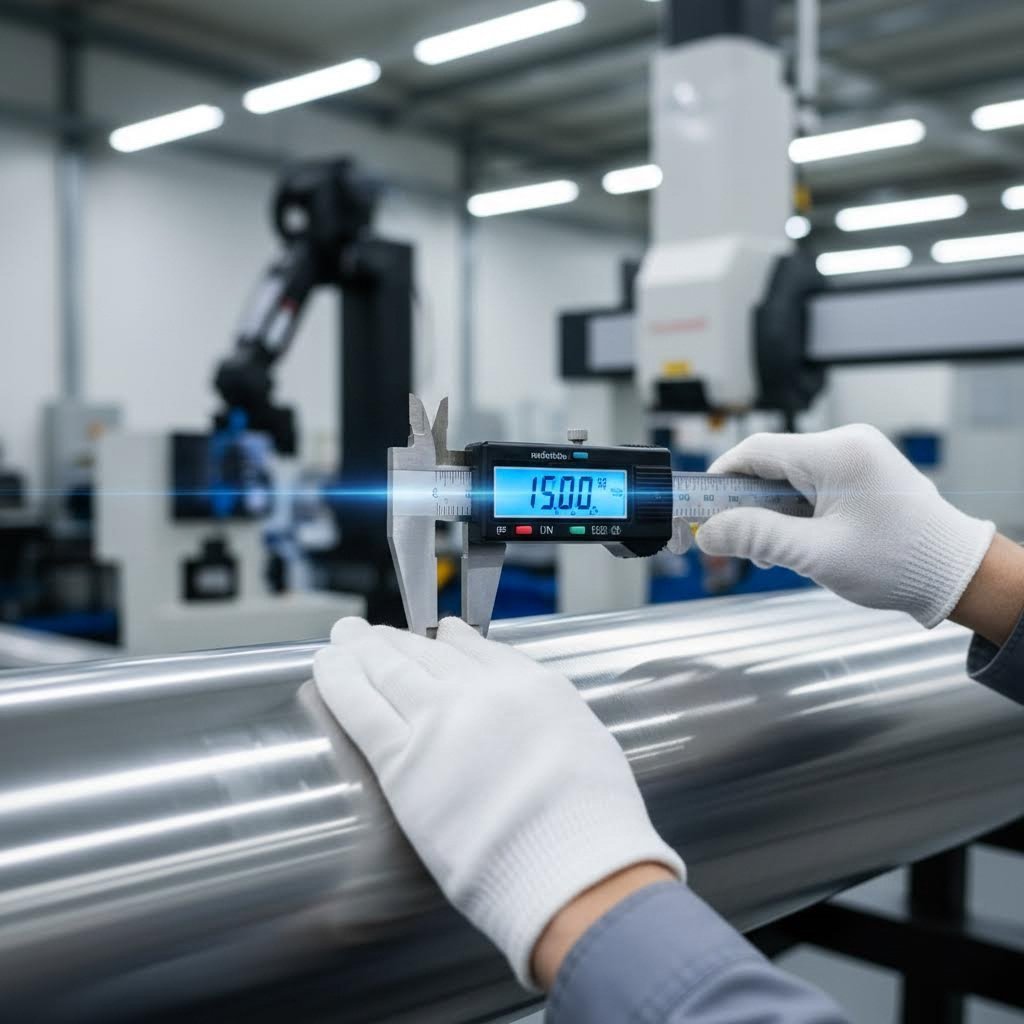
You've selected your alloy and understand the manufacturing process. Now comes a question that separates successful projects from costly failures: what tolerances can you realistically expect from large diameter aluminum extrusions? Here's what most suppliers won't tell you upfront—tolerances that are routine at smaller diameters become significantly more challenging as profiles grow larger.
Understanding these limitations before finalizing your design prevents frustrating conversations later when your extruded aluminum tube arrives with more variation than anticipated. Let's examine the critical tolerance parameters and what industry standards actually specify.
When specifying aluminium tubes at large diameters, four primary tolerance parameters demand your attention: straightness, wall thickness variation, ovality, and concentricity. Each behaves differently as diameter increases, and understanding these relationships helps you set realistic expectations.
Straightness tolerances define the allowable deviation from a perfectly straight line along the profile's length. According to the Aluminum Association's standard tolerance tables, profiles with circumscribing circle diameters from 1.500 to 2.999 inches allow 0.5 degrees of deviation per foot of measured length, while those 3.000 inches and over permit only 0.25 degrees per foot. For large diameter applications, gravity's influence during cooling and handling creates additional straightness challenges that require careful process control.
Wall thickness variation represents the difference between the thickest and thinnest points around a tube's circumference. Industry standards typically control this within ±10% of the nominal value for seamless aluminium tube products. However, at large diameters, achieving consistent wall thickness becomes increasingly difficult due to uneven material flow through the die and differential cooling rates around the profile's circumference.
Dimensional tolerances for aluminum tubing sizes vary based on diameter range and manufacturing method. According to seamless tube manufacturing guidelines, outer diameter tolerances can range from ±0.002 inches to ±0.015 inches depending on specific application requirements, while inner diameter tolerances typically range from ±0.001 inches to ±0.005 inches.
| Diameter Category | Straightness (per ft) | Wall Thickness Variation | Typical OD Tolerance |
|---|---|---|---|
| Medium-Large (200-400mm) | 0.50° per ft | ±8-10% | ±0.005" to ±0.010" |
| Large (400-800mm) | 0.25° per ft | ±10-12% | ±0.010" to ±0.015" |
| Extra-Large (800mm+) | 0.25° per ft (max 3°) | ±12-15% | By agreement |
Imagine cutting through a large diameter tube and examining the cross-section. In a perfect world, you'd see a perfectly round circle with the inner bore precisely centered within the outer wall. Reality, unfortunately, delivers something less ideal—and understanding acceptable deviations helps you specify appropriately.
Ovality measures how much a nominally round profile deviates from true circularity. It's typically expressed as the difference between the maximum and minimum diameters at any given cross-section. For thick wall aluminum tubing applications, ovality becomes increasingly problematic as diameter grows because the profile's own weight during cooling can cause slight flattening. Most industry standards allow ovality up to 1% of the nominal diameter for standard profiles, though critical applications may require tighter control.
Concentricity describes how well the inner bore aligns with the outer diameter's center. Poor concentricity means the wall thickness varies around the circumference—thicker on one side, thinner on the other. For thick wall aluminium tube applications in structural or pressure-containing service, concentricity directly affects load-carrying capacity and must be carefully controlled.
The Aluminum Association standards specify that surface flatness tolerances range from 0.004 to 0.016 inches depending on surface width and metal thickness forming the surface. For hollow profiles, these tolerances increase slightly—a factor to consider when specifying aluminum tube dimensions for precision assemblies.
When your application demands the tightest possible tolerances on large diameter profiles, seamless tube manufacturing offers distinct advantages over welded alternatives. Understanding why helps you make informed sourcing decisions.
A seamless aluminium tube is extruded as a single piece without any longitudinal weld seam. This manufacturing approach eliminates several tolerance-related concerns:
The trade-off? Seamless manufacturing at large diameters requires specialized equipment—particularly vertical extrusion presses—and typically commands premium pricing. For applications where tolerance consistency justifies the investment, seamless construction remains the gold standard.
Beyond manufacturing tolerances, structural applications require careful consideration of minimum wall thickness relative to diameter. Too thin a wall relative to the diameter creates buckling risks under compressive loads, while excessive wall thickness adds unnecessary weight and cost.
General engineering guidelines suggest minimum wall-to-diameter ratios of 1:20 to 1:30 for structural tube applications, though specific requirements depend on loading conditions, alloy selection, and safety factors. For pressure-containing applications, ASME and other codes provide detailed calculation methods that account for material properties, temperature, and design pressure.
When specifying aluminum tube dimensions for your project, discuss both tolerance requirements and structural wall thickness needs with your supplier early in the design process. Some combinations of tight tolerances and thin walls may prove difficult or impossible to manufacture reliably at large diameters, requiring design modifications before tooling investment.
With tolerance expectations properly calibrated, you're ready to evaluate whether large diameter extrusions actually represent the best manufacturing approach for your specific application—or whether alternative methods might serve you better.
You've done the research. You understand the manufacturing process, alloy options, and tolerance limitations. But here's a question many engineers skip until it's too late: should you even use a large diameter aluminum extrusion for your application? The answer isn't always yes.
Understanding what are aluminum extrusions best suited for—and equally important, when alternative manufacturing methods outperform them—saves you from costly tooling investments that don't deliver expected returns. Let's build a practical decision framework that helps you choose wisely.
Large diameter aluminum extrusions compete against several established manufacturing approaches. Each offers distinct advantages depending on your specific requirements, production volumes, and budget constraints.
Roll forming presents a compelling alternative for certain profiles. According to Zetwerk's manufacturing comparison, this continuous bending operation excels at producing long lengths of consistent cross-sections from aluminum sheet. Roll forming offers flexibility in profile adjustments mid-production and handles thinner gauges more economically than extrusion in many cases.
However, roll forming has limitations. It works best with open profiles or shapes that can be progressively bent from flat sheet. Creating true hollow sections—like custom extruded aluminum tubes—requires welding, which introduces seams and potential weak points. For structural large diameter applications demanding seamless construction, extrusion maintains clear advantages.
Welded tube construction starts with flat aluminum sheet, forms it into a cylinder, and joins the edges through welding. This approach accommodates extremely large diameters that exceed even the largest extrusion press capabilities. When your project requires tubes beyond 1600mm diameter, welded construction may be your only practical option.
The trade-off? Welded tubes carry inherent limitations in wall thickness consistency, introduce heat-affected zones that alter material properties, and require post-weld inspection to ensure joint integrity. For pressure-containing or fatigue-critical applications, seamless extruded tubes typically outperform welded alternatives.
Machined components offer ultimate flexibility—any shape you can draw, a CNC machine can theoretically produce. For one-off prototypes or extremely low-volume production, machining from solid billet or plate stock eliminates tooling investment entirely. Custom extrusion aluminum profiles, by contrast, require die development before any production begins.
But machining becomes economically impractical for production quantities. Removing material from solid stock wastes aluminum, generates significant scrap, and consumes substantial machine time. Once volumes exceed a few dozen pieces, the economics typically favor extrusion despite tooling costs.
Making the right manufacturing choice requires understanding the true cost structure of custom aluminum extrusions versus alternatives. Several factors deserve careful analysis before committing to any approach.
Die and tooling investment represents the primary barrier to entry for custom extrusions. According to Gabrian International's cost analysis, tool costs for standard architectural and industrial applications typically range from $400 to $1,000. However, large diameter profiles requiring high-tonnage presses (2,000-4,000 tons) can push die costs as high as $2,000 or more.
Here's what many buyers miss: some manufacturers refund tool costs when stipulated purchase volumes are reached within a defined period, often two years. Additionally, replacement dies after the original's useful life frequently carry no charge if orders continue. Ask about these policies before assuming tooling represents a sunk cost.
Minimum order quantities directly impact per-piece economics. Extrusion presses require setup time regardless of run length, making extremely small orders disproportionately expensive. For custom extrusions, practical minimums typically start at several hundred pounds of material, though exact thresholds vary by supplier and profile complexity.
Lead times affect project planning significantly. Custom die development requires 3-4 weeks under normal conditions, with production following within a week after sample approval. Factor these timelines into your schedule, particularly for prototype development or time-sensitive projects where machining's immediate availability might prove advantageous despite higher per-piece costs.
Material costs fluctuate based on global aluminum markets. Raw aluminum has varied anywhere from $1,500 to $3,500 per metric ton in recent years, according to LME valuations. For large volume projects, some extruders offer metal price lock-in programs that provide cost predictability over extended production runs.
When should you confidently specify large diameter extrusions? When should you explore alternatives? Use these guidelines to match your project characteristics to the optimal manufacturing approach.
Scenarios favoring extrusion:
Scenarios favoring alternative methods:
The decision often comes down to total cost of ownership rather than piece price alone. A custom extrusion might cost more per foot than a welded alternative, but if it eliminates secondary machining operations, reduces assembly time, or improves end-product performance, the higher material cost pays dividends downstream.
With your manufacturing method selected, understanding the specific industrial applications where large diameter extrusions deliver maximum value helps refine your design and specification approach.
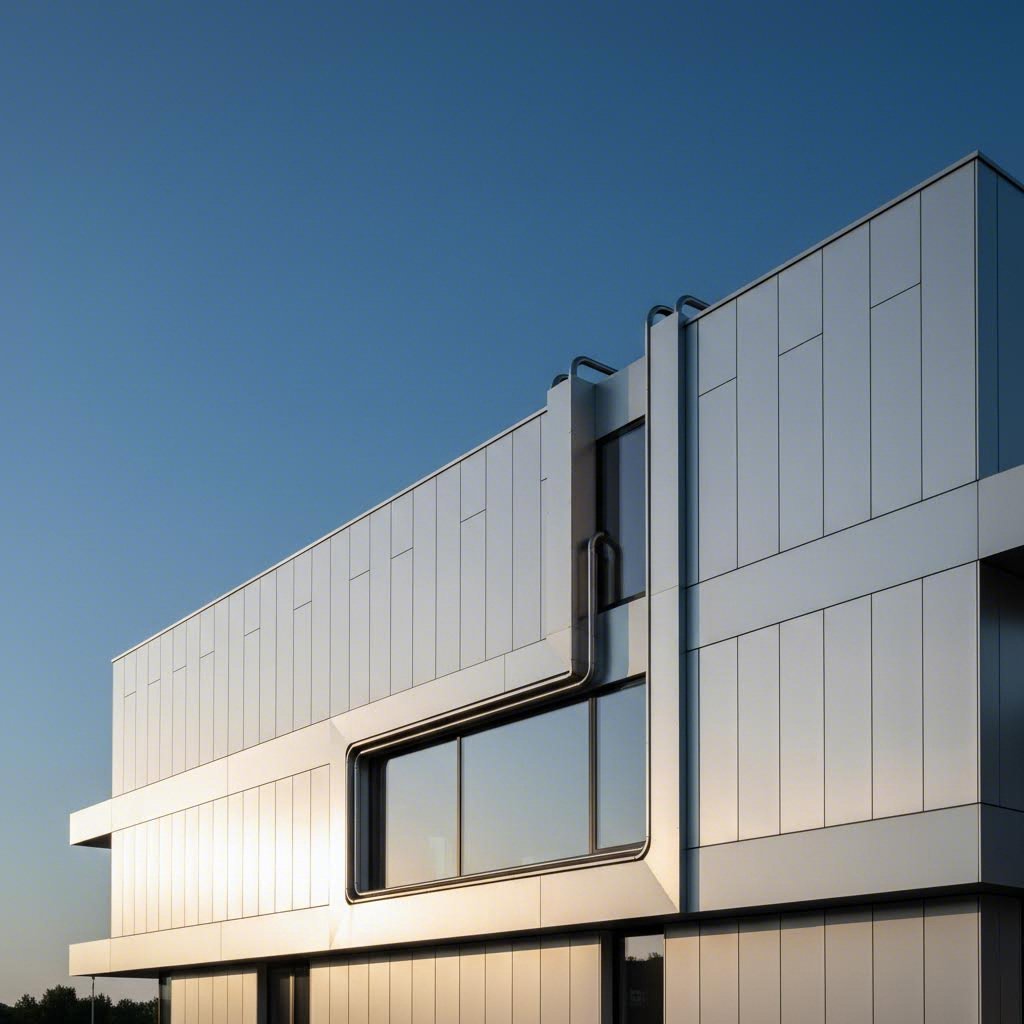
You've determined that large diameter aluminum extrusions fit your manufacturing strategy. Now comes the exciting part: understanding exactly where these profiles deliver exceptional performance. From aircraft fuselages to bridge decking, high-performance aluminum extrusions industrial applications span virtually every sector demanding lightweight structural solutions.
What makes large diameter profiles so versatile? Their unique combination of strength-to-weight ratio, corrosion resistance, and design flexibility creates opportunities that traditional materials simply cannot match. Let's explore the industries driving demand for these specialized components—and the joining technologies that extend their capabilities even further.
Architectural aluminum extrusions have transformed modern construction, enabling designs that would be impossible with steel or concrete alone. Large diameter profiles specifically address applications where structural performance meets aesthetic requirements.
Building infrastructure increasingly relies on aluminum's durability and low maintenance characteristics. According to Chalco Aluminum's application data, large extruded aluminum formwork profiles commonly reach widths of 400-600mm and lengths up to 6 meters. These profiles support concrete forming systems, curtain wall structures, and architectural facades where traditional framing proves too heavy or corrosion-prone.
Bridge construction represents a growing application for large aluminum profiles. Modern bridge deck systems feature anti-slip surface plates manufactured from extruded aluminum with multi-chamber hollow sections. These profiles, available in alloys including 5083, 6005, 6061, and 6082, offer wall thicknesses from 5-40mm with widths reaching 600mm. The lightweight construction reduces dead load on supporting structures while maintaining excellent fatigue resistance under repetitive traffic loading.
Here's a breakdown of applications by industry sector:
The transportation sector particularly benefits from large aluminum profiles. Custom interlocking aluminum floors for trailers now reach widths of 750mm and lengths up to 25 meters (82 feet), demonstrating the scale achievable with modern extrusion technology. These lightweight, durable floors suit trailers, semi-trailers, box trailers, and truck applications where payload capacity directly affects profitability.
What happens when your application requires profiles larger than any single extrusion press can produce? Friction stir welding offers a solution that maintains the integrity advantages of extruded construction while enabling virtually unlimited assembly sizes.
Friction stir welding is a solid-state joining process that creates bonds without melting the parent material. A rotating tool thrusts between two aluminum components, generating friction heat that elevates temperatures while remaining below the melting point. Under high pressure, the weld interfaces are stirred together, forming a homogeneous, defect-free bond.
Why does this matter for large diameter applications? Traditional fusion welding creates heat-affected zones that weaken the material, introduces distortion that compromises tolerances, and risks cracking in high-strength alloys. Friction stir welding aluminum eliminates these concerns through its unique metallurgical benefits:
Friction stir welding applications span the same industries using large extrusions. In marine applications, FSW joins fish freezer panels, helicopter landing platform deck sections, and amphibious assault ship components. Aerospace applications include fuselage structures, fins, and wing assemblies requiring high-strength aluminum alloys. The automotive industry uses fs welding for engine cradles, suspension struts, and exhaust gas recirculation coolers.
The railway industry has particularly embraced this technology. According to Taber Extrusions, FSW creates roof and floor panels while also producing heat sinks for cooling high-power locomotive electronics. The process's ability to be easily automated makes it ideal for industrial manufacturing at scale.
Large diameter profiles often serve in harsh conditions where bare aluminum wouldn't survive. Surface treatment options dramatically extend service life while adding aesthetic or functional properties.
Anodizing creates a protective oxide layer through electrochemical conversion. Available in clear, silver, black, and brown finishes, anodized surfaces resist corrosion, improve hardness, and provide excellent bases for subsequent coating if needed. For applications like hydrogen storage cylinders or chemical tanks, anodizing provides critical protection.
Powder coating offers unlimited color options with excellent durability for architectural and transportation applications. RAL color standards and metallic finishes accommodate virtually any design specification while providing superior weather resistance.
PVDF coatings deliver premium performance for architectural facades exposed to intense UV radiation and atmospheric pollution. These fluoropolymer finishes maintain color stability and surface integrity for decades in demanding exterior environments.
Electrophoretic coating provides uniform coverage on complex geometries, making it ideal for bridge profiles and structural components with intricate cross-sections. The electrodeposition process ensures consistent film thickness even in recessed areas that spray coating might miss.
The growing demand for lightweight structural solutions continues driving adoption of large aluminum profiles across transportation and infrastructure sectors. As sustainability requirements intensify and fuel efficiency regulations tighten, engineers increasingly specify aluminum where steel or concrete once dominated. Understanding how to properly document your requirements ensures suppliers deliver profiles that meet your performance expectations.
You've selected your alloy, understand tolerance limitations, and confirmed that extrusion fits your manufacturing strategy. Now comes the step that separates successful projects from frustrating delays: documenting your requirements in a way that suppliers can actually execute. A poorly written specification leads to misquoted jobs, rejected samples, and costly redesigns. A well-crafted one streamlines communication and gets your aluminum extrusion parts into production faster.
Whether you're an engineer finalizing design details or a procurement professional preparing RFQs, this practical guidance helps you create specifications that leave no room for misinterpretation.
Think of your specification document as a contract between you and your supplier. Every critical requirement needs explicit documentation—assumptions lead to disputes. According to Profile Precision Extrusions, starting with either a basic sketch or detailed CAD file forms the foundation, but your specification must extend well beyond geometry.
Here's a step-by-step checklist for complete specification documentation:
When reviewing an extruded aluminum shapes catalog from potential suppliers, compare their standard offerings against your requirements. Sometimes modifying your design to match existing dies eliminates tooling costs entirely—a conversation worth having early in the specification process.
Specifying quality requirements upfront prevents disputes during delivery. Your specification should address three verification categories: material certification, dimensional inspection, and surface quality acceptance criteria.
Material certification typically includes mill test reports confirming alloy composition and mechanical properties meet specification. For structural applications, request certificates traceable to specific production lots. Standard aluminum tube sizes and profiles from reputable suppliers routinely include basic certification, but specialized testing—hardness verification, conductivity testing, or ultrasonic inspection—requires explicit specification.
Dimensional inspection protocols should define which measurements require verification, acceptable measuring equipment, and sampling rates for production quantities. According to ALLWIN Hardware's B2B guide, manufacturers often use advanced measuring systems to verify dimensional accuracy and maintain repeatability across production batches. For critical dimensions, consider requiring first-article inspection reports before approving full production runs.
Surface quality standards should reference applicable visual inspection criteria. Define acceptable defect levels for scratches, die lines, handling marks, and coating imperfections. For anodized profiles, specify acceptable color variation ranges—particularly important when matching existing architectural installations.
The most critical specification consideration: clearly distinguish between mandatory requirements and preferences. Suppliers price to requirements—ambiguous "nice-to-haves" written as requirements inflate costs unnecessarily.
Accurate material estimation supports both budgeting and logistics planning. For standard aluminum tube sizes and custom profiles alike, weight-per-foot calculations follow straightforward principles.
The basic formula multiplies cross-sectional area by material density (aluminum averages 0.098 pounds per cubic inch or 2.7 grams per cubic centimeter). For hollow tubes, calculate the solid circle area minus the hollow core area, then multiply by length and density.
Most suppliers provide weight-per-foot data for their standard profiles. For custom designs, CAD software calculates cross-sectional area directly, simplifying the estimation process. When requesting quotes, provide your calculated weights so suppliers can verify understanding of your geometry—discrepancies often reveal drawing interpretation issues before they become production problems.
Lead time planning deserves equal attention. Custom die development typically requires 3-4 weeks according to industry sources, with production following within a week after sample approval. Factor these timelines into project schedules, and discuss expedite options with suppliers if your timeline is compressed. Some manufacturers maintain die inventories for common profile configurations, potentially reducing lead time for designs matching existing tooling.
With your specification complete and quality requirements documented, evaluating supplier capabilities becomes the final step in securing reliable large diameter extrusion production.
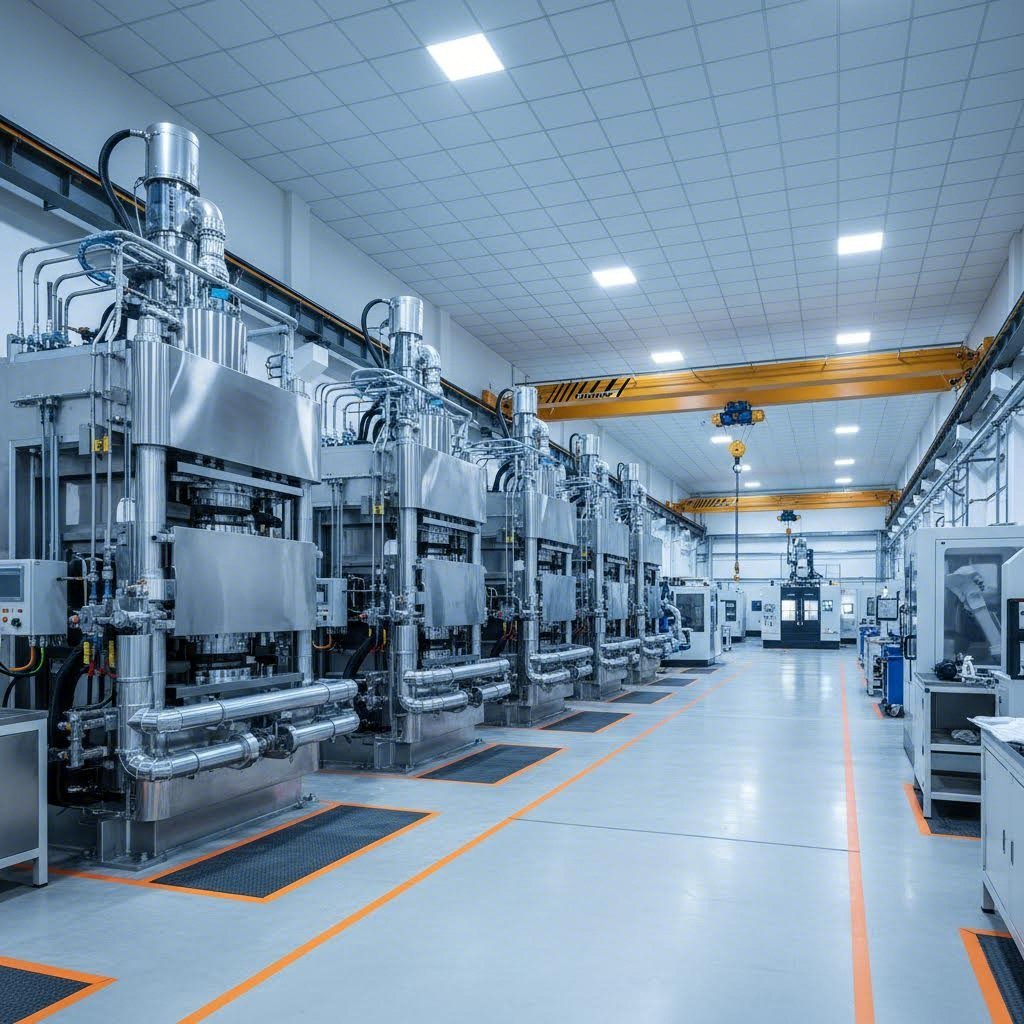
You've completed your specification. You understand the manufacturing process, selected your alloy, and defined tolerance requirements. Now comes a decision that will determine whether your project succeeds or stumbles: choosing the right aluminum extrusion suppliers for your large diameter needs.
Here's what many procurement professionals discover too late—not all extruders can handle large diameter profiles, and those that claim they can vary dramatically in actual capability. Evaluating suppliers for large aluminium extrusions requires looking beyond marketing claims to assess concrete manufacturing infrastructure. Let's examine the critical capability checkpoints that separate reliable partners from risky gambles.
When sourcing large aluminum extrusions, press tonnage isn't just a specification—it's the fundamental constraint determining whether a supplier can manufacture your profile at all. As we explored earlier, larger circumscribing circle diameters demand proportionally higher press forces. But here's what matters for supplier evaluation: facilities with diverse press ranges offer flexibility that single-press operations simply cannot match.
Consider the practical implications. Your current project might require a 400mm CCD profile producible on a 2500T press. But what happens when your next design iteration pushes to 550mm? Or when a smaller component in your assembly needs cost-effective production on appropriately sized equipment? Suppliers operating multiple press sizes accommodate evolving project requirements without forcing you to qualify new vendors.
For example, Shengxin Aluminium operates 35 extrusion presses ranging from 600T to 5500T, representing the kind of comprehensive infrastructure that supports diverse project requirements. This range means profiles from medium architectural sections through extra-large industrial tubes can all source from a single qualified supplier—simplifying your supply chain and ensuring consistent quality standards across your product family.
When evaluating custom aluminum extruders, ask these specific questions about press capabilities:
Beyond press tonnage, investigate die-making capabilities. According to industry supplier evaluation guidance, top-tier suppliers assist with die design and prototyping, ensuring manufacturability from the design stage. In-house die production typically means faster turnaround and better design optimization compared to outsourced tooling.
Imagine receiving your large diameter extrusions only to discover they need secondary machining, drilling, cutting to length, and surface treatment—each operation requiring a different vendor, separate logistics, and additional quality control handoffs. This fragmented approach multiplies coordination costs, extends lead times, and introduces quality risks at every transition.
Smart procurement professionals increasingly seek suppliers offering integrated deep processing capabilities that transform raw extrusions into finished components ready for assembly. These value-added services consolidate your supply chain while improving consistency.
CNC machining centers enable precision cutting, drilling, tapping, and milling operations directly on extruded profiles. For custom aluminum extrusion applications requiring tight-tolerance features—mounting holes, mating surfaces, or complex end preparations—in-house machining eliminates the dimensional variations that occur when profiles travel between facilities. According to Precision Steel Services, advanced 5-axis CNC equipment expedites fabrication of custom extrusions without increasing costs, handling operations including precision cutting, mitering, holes and slots, notching, internal threading, and CNC routing.
Cutting and sawing operations seem straightforward until you need consistent lengths across thousands of pieces. Production saws with automated feeding and measurement systems maintain length tolerances that manual operations cannot match. For large diameter profiles where material costs per piece are significant, minimizing waste through optimized cutting patterns directly impacts your bottom line.
Bending and forming capabilities extend design possibilities beyond straight profiles. Large diameter tubes bent to specific radii serve applications from architectural curves to equipment frames. Not all suppliers offer bending for large sections—the equipment investment is substantial—making this capability a meaningful differentiator.
Surface treatment options complete the value-added picture. Suppliers like Shengxin Aluminium offer comprehensive finishing including anodizing (with custom colors like champagne and rose gold), powder coating, PVDF coatings, and micro-arc oxidation for superior durability. Having these capabilities under one roof eliminates handling damage risks and ensures coating specifications match extrusion quality.
When determining where to buy aluminum extrusion for large diameter projects, systematic evaluation prevents costly mistakes. Use this structured approach to assess potential suppliers:
| Evaluation Category | Key Questions | Red Flags |
|---|---|---|
| Press Capacity | Maximum tonnage? Number of presses in required range? Billet sizes stocked? | Single press facility; outsourced large diameter production |
| Processing Services | In-house CNC? Cutting accuracy? Bending capabilities? Surface treatment options? | Multiple subcontractors for basic operations |
| Quality Systems | ISO certifications? In-house testing equipment? Inspection protocols? | No documented quality management system |
| Experience | Years in business? Similar project references? Industry-specific expertise? | Cannot provide relevant case studies or references |
| Technical Support | Engineering assistance available? Die design support? Material recommendations? | Sales-only contact without technical backup |
Experience matters significantly for large diameter applications. Suppliers with decades of history have encountered and solved the manufacturing challenges that newer operations are still learning. Shengxin Aluminium's 30+ years in the industry exemplifies the institutional knowledge that translates to reliable production and efficient problem-solving when issues arise.
According to Ya Ji Aluminum's supplier selection guide, evaluating production scale and technical capability should include reviewing extrusion press tonnage, die library, and machining centers. For B2B clients with fluctuating demand, capacity planning proves critical—confirm that suppliers can scale output or introduce new dies without excessive lead times.
Don't overlook logistics and supply chain resilience. Suppliers with diversified material sources, automated tracking systems, and responsive customer service teams handle demand fluctuations and supply disruptions more reliably than smaller operations. Ask about inventory policies, typical lead times, and how they manage rush orders when evaluating potential partners.
The comparison between custom aluminum extruders and larger operations like hydro aluminum extrusions facilities often comes down to flexibility versus standardization. Smaller custom shops may offer more personalized attention, while larger integrated manufacturers provide comprehensive capabilities and supply chain stability. Your optimal choice depends on project complexity, volume requirements, and how much coordination you're willing to manage.
With supplier capabilities thoroughly evaluated, you're positioned to make confident sourcing decisions. The final step involves consolidating everything you've learned into actionable next steps for your specific large diameter project.
You've absorbed substantial technical information throughout this guide—from CCD calculations and alloy comparisons to tolerance specifications and supplier evaluation criteria. Now it's time to consolidate these insights into a clear action plan for your large diameter aluminum tube or large diameter aluminum pipe project.
The difference between successful projects and frustrating ones often comes down to preparation. Engineers who approach large diameter aluminum extrusions with complete specifications and realistic expectations consistently achieve better outcomes than those who rush into production with incomplete requirements.
Before contacting suppliers or finalizing designs, review these critical decision factors that determine project success:
Size requirements and CCD calculations: Confirm your profile fits within available press capabilities. Remember that most economical production occurs with CCDs between one and ten inches, while profiles exceeding 800mm require specialized equipment and typically command premium pricing. Document your exact aluminum pipe dimensions and verify they align with supplier capabilities before investing in tooling.
Alloy selection based on application demands: Match material properties to performance requirements. For custom aluminum tube applications prioritizing extrudability and surface finish, 6063 remains the go-to choice. When structural loads demand higher strength, 6061 delivers approximately 30% better tensile performance despite slightly reduced extrudability at large diameters. High-strength applications may justify 7075, but expect longer lead times and higher costs.
Tolerance specifications: Set realistic expectations based on diameter category. Wall thickness variations of ±10-12% and straightness tolerances of 0.25° per foot represent typical capabilities for large diameter extruded aluminum pipe. Tighter requirements demand explicit specification and may require seamless manufacturing methods.
Supplier capability verification: Prioritize facilities with diverse press ranges, integrated processing services, and documented quality systems. Single-press operations create bottlenecks; integrated manufacturers offering CNC machining, surface treatments, and cutting under one roof streamline your supply chain.
The most important specification consideration: distinguish mandatory requirements from preferences, document all critical dimensions explicitly, and verify supplier capabilities against your specific aluminum pipe sizes before committing to tooling investment.
Ready to transform your large diameter aluminium pipe specifications into production reality? Here's your actionable path forward:
Start with complete documentation. Prepare CAD files with all critical dimensions, specify alloy and temper requirements, define tolerance thresholds, and identify surface treatment needs. The more complete your initial specification, the more accurate your quotes and the faster your production timeline.
Request technical consultation. Reputable suppliers offer engineering support that optimizes your design for manufacturability. This collaboration often identifies cost-saving modifications or performance improvements before tooling investment locks in your design.
Evaluate total cost of ownership. Compare not just piece prices, but tooling costs, lead times, secondary processing requirements, and supply chain complexity. An integrated supplier charging slightly more per foot may deliver lower total project costs through eliminated handling, reduced logistics, and consistent quality.
For engineers and procurement professionals seeking a comprehensive partner for custom large diameter projects, Shengxin Aluminium offers the end-to-end capabilities this guide emphasizes. With 35 extrusion presses spanning 600T to 5500T, in-house CNC machining centers, and comprehensive surface treatment options including anodizing, powder coating, and PVDF, their infrastructure supports everything from custom 6063 aluminum tubes to complex industrial profiles.
Their technical team provides support from die development through mass production, backed by over 30 years of industry experience. Factory-direct pricing eliminates intermediary markups, while integrated processing services—cutting, drilling, bending, and finishing—consolidate your supply chain under one qualified roof.
Whether your project involves architectural structural components, transportation applications, or specialized industrial equipment, approaching large diameter aluminum extrusions with the knowledge you've gained positions you for success. Document your requirements thoroughly, evaluate suppliers systematically, and partner with manufacturers whose capabilities genuinely match your project demands.
Industry professionals generally classify large diameter aluminum extrusions as those with an outer diameter starting at approximately 200mm (8 inches). The more precise measurement is the circumscribing circle diameter (CCD), which determines manufacturing feasibility. Medium-large profiles range from 200-400mm, large profiles span 400-800mm, and extra-large profiles exceed 800mm, requiring specialized vertical extrusion equipment.
The maximum achievable size depends on press tonnage and equipment type. Standard horizontal presses with 4500T-5500T+ capacity can produce profiles with CCDs exceeding 600mm (24 inches). For truly large-scale applications, vertical extrusion technology enables seamless tubes reaching 1600mm or beyond. Some manufacturers can produce square tubes up to 1200x1200mm in a single extrusion process.
6063 aluminum is ideal for applications prioritizing extrudability and surface finish, while 6061 offers approximately 30% higher tensile strength for structural demands. For high-strength aerospace applications, 7075 delivers superior performance but presents greater manufacturing challenges at large diameters. Consider 6005 as a compromise offering 10-15% more strength than 6063 while maintaining good workability.
Large diameter aluminum tubes are produced through extrusion, where heated aluminum billets are forced through shaped dies using hydraulic presses rated from 600T to 5500T+. Direct extrusion is most common and cost-effective, while indirect extrusion reduces friction for better dimensional consistency. Vertical extrusion technology produces seamless large tubes with uniform wall thickness and superior concentricity.
Tolerances become more challenging as diameters increase. For large profiles (400-800mm), expect straightness tolerances of 0.25° per foot, wall thickness variations of ±10-12%, and outer diameter tolerances of ±0.010" to ±0.015". Seamless manufacturing methods offer tighter tolerance control. Extra-large profiles (800mm+) typically require negotiated specifications based on specific application requirements.



 خدمة الإنترنت
 0086 136 3563 2360
 sales@sxalu.com
 +86 136 3563 2360
 العربية
 English
 français
 Deutsch
 русский
 español
 português
 ไทย
 Việt
 Українська