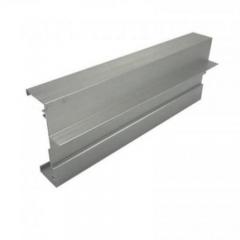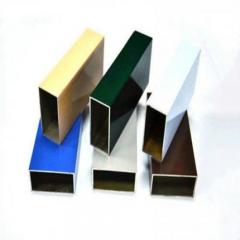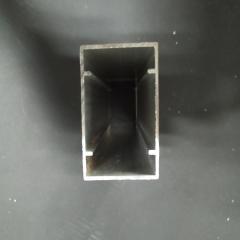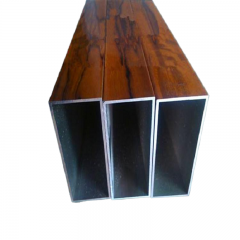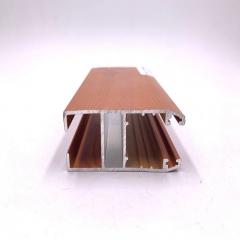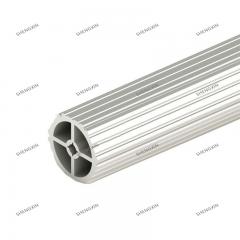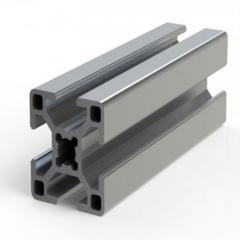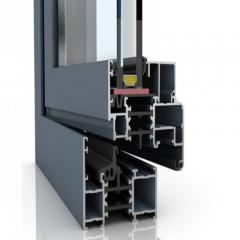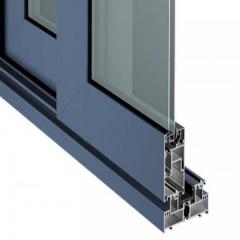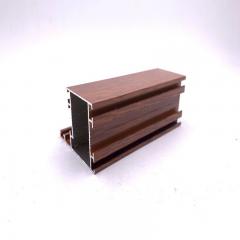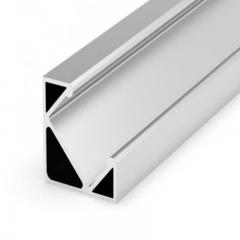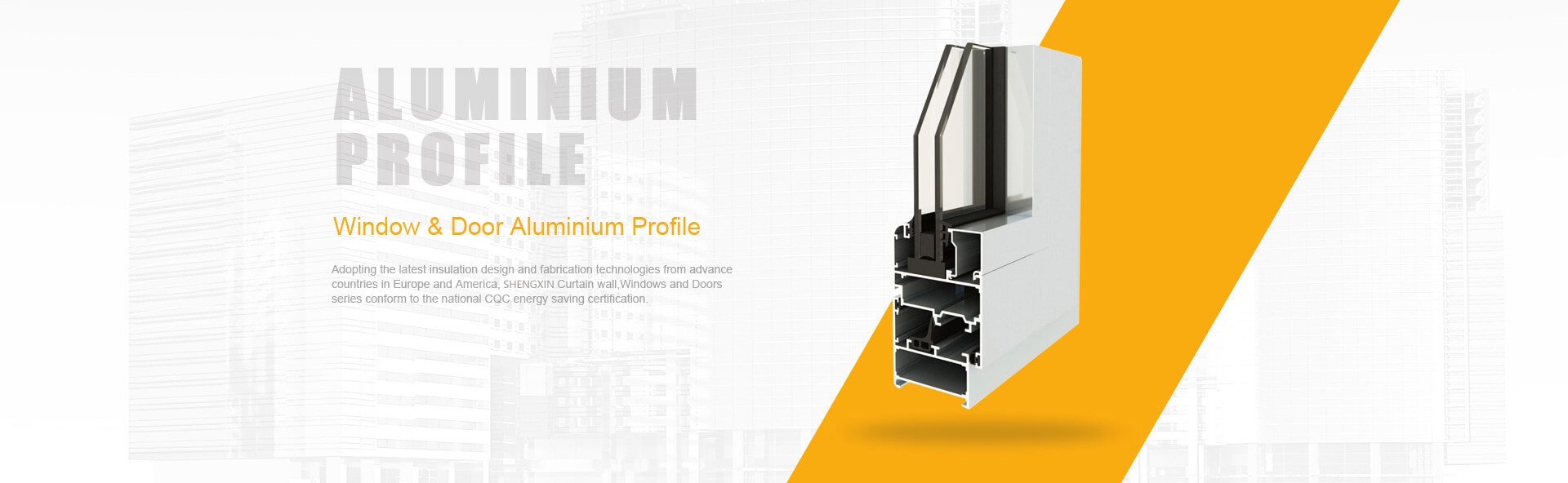
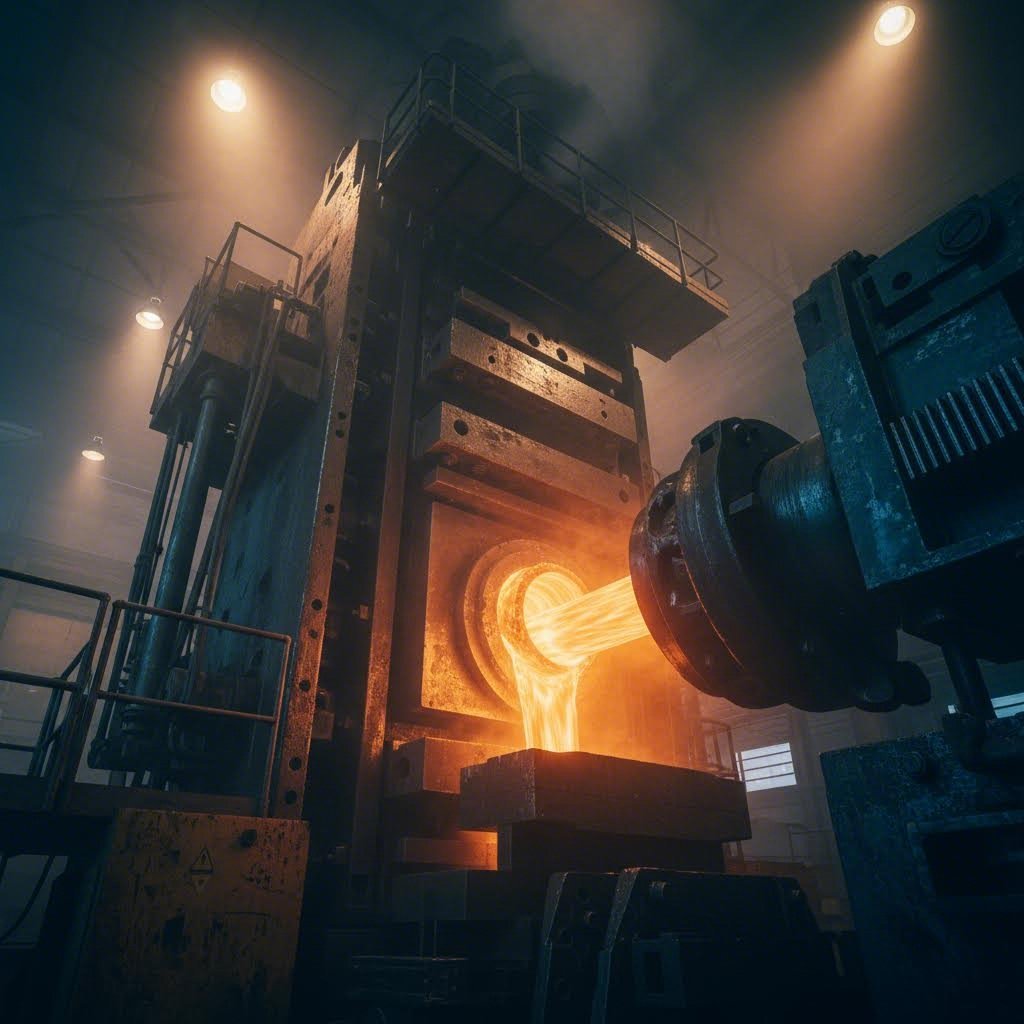
When you need structural components that deliver strength without unnecessary weight, understanding hollow aluminum extrusion becomes essential. This manufacturing process transforms heated aluminum billets into profiles with internal cavities - creating everything from simple round tubes to complex multi-void industrial sections.
Hollow aluminum extrusion is a manufacturing process where pre-heated aluminum billets are forced through specialized tooling containing mandrels and bridges, allowing the metal to flow around internal supports and weld back together to form profiles with enclosed void spaces.
Unlike simpler solid extrusion methods, creating hollow profiles requires the aluminum to split, flow around mandrel supports, then rejoin seamlessly in a welding chamber before exiting the die. This sophisticated process enables manufacturers to produce hollow aluminum rods, tubes, and complex alu profile shapes that would be impossible to achieve otherwise.
Imagine squeezing play-dough through a shaped opening - that's essentially how solid extrusions work. Hollow profiles, however, demand far more complex engineering. The tooling must incorporate mandrels that define internal voids while bridges or legs provide structural support to withstand pressures that can reach up to 15,000 tons during the extrusion process.
The fundamental difference lies in structural efficiency. Solid aluminum sections contain more material in their cross-section, providing excellent compressive strength. However, hollow profiles consist of hollow tubes which provide support through their outer walls carrying most of the load. This engineering principle delivers remarkable weight-to-strength ratios that solid profiles simply cannot match.
Consider this practical comparison: a hollow tubular beam can offer equivalent bending and torsional resistance to a solid bar while using significantly less material. This translates directly to lighter components, reduced material costs, and easier handling during installation.
The physics behind hollow extrusion centers on controlled metal flow and precise rejoining. When aluminum enters the die, it encounters mandrel supports (called legs or bridges) that split the material stream. The separated aluminum flows around these supports, then converges in the welding chamber where temperature and pressure conditions force the metal streams to fuse into a continuous, seamless shell.
This rejoining process is critical. If the tooling design or process parameters are incorrect, weak weld lines form where the metal streams meet - or worse, the internal cavity may collapse entirely. Successful hollow extrusion depends on:
For engineers and product designers, this understanding matters because it directly influences what hollow shapes are achievable, what wall thicknesses are practical, and how internal geometry affects final profile quality. The more complex the internal void or the thinner the walls, the more challenging - and expensive - the tooling becomes.
Understanding how aluminum extrusion is made goes beyond knowing the basic concept - it requires grasping the precise sequence of operations that transform raw aluminum into seamless hollow profiles. Each manufacturing stage directly impacts the structural integrity, dimensional accuracy, and surface quality of your finished components.
The journey from solid aluminum log to finished hollow profile follows a carefully orchestrated sequence. Here's exactly how the process unfolds:
So how does extrusion work when precise parameters are so critical? The answer lies in understanding why each variable matters specifically for hollow profile quality.
Temperature control is paramount. According to Impol's technical documentation, aluminum alloys require heating between 300-595°C (572-1103°F) depending on the alloy and desired shape. For hollow profiles, this temperature window is even more critical because:
Pressure requirements for hollow sections exceed those for solid profiles. The aluminum must not only flow forward - it must split, navigate around internal supports, then rejoin under sufficient pressure to create metallurgical bonds. Extrusion presses ranging from 12.5 to 55 MN (approximately 1,400 to 6,200 tons) generate the force needed to achieve complete fusion in the welding chamber.
Quenching speed directly affects hollow profile performance. Every surface of the extrusion - both external and internal cavity walls - must cool uniformly and rapidly. For hollow sections, this presents unique challenges since internal surfaces cool differently than external ones. Impol notes that achieving the fastest possible quenching rate produces the best combination of strength, toughness, and microstructure - particularly important for hollow profiles where weld line integrity depends on proper cooling.
The relationship between these parameters explains why hollow extrusion demands more sophisticated process control than solid profiles. Temperature affects flow behavior, flow behavior affects weld quality, and weld quality determines whether your hollow profile performs as a seamless structural component or fails at hidden internal seams.
With these manufacturing fundamentals established, the next critical question becomes: which die type should you specify for your particular hollow profile application?
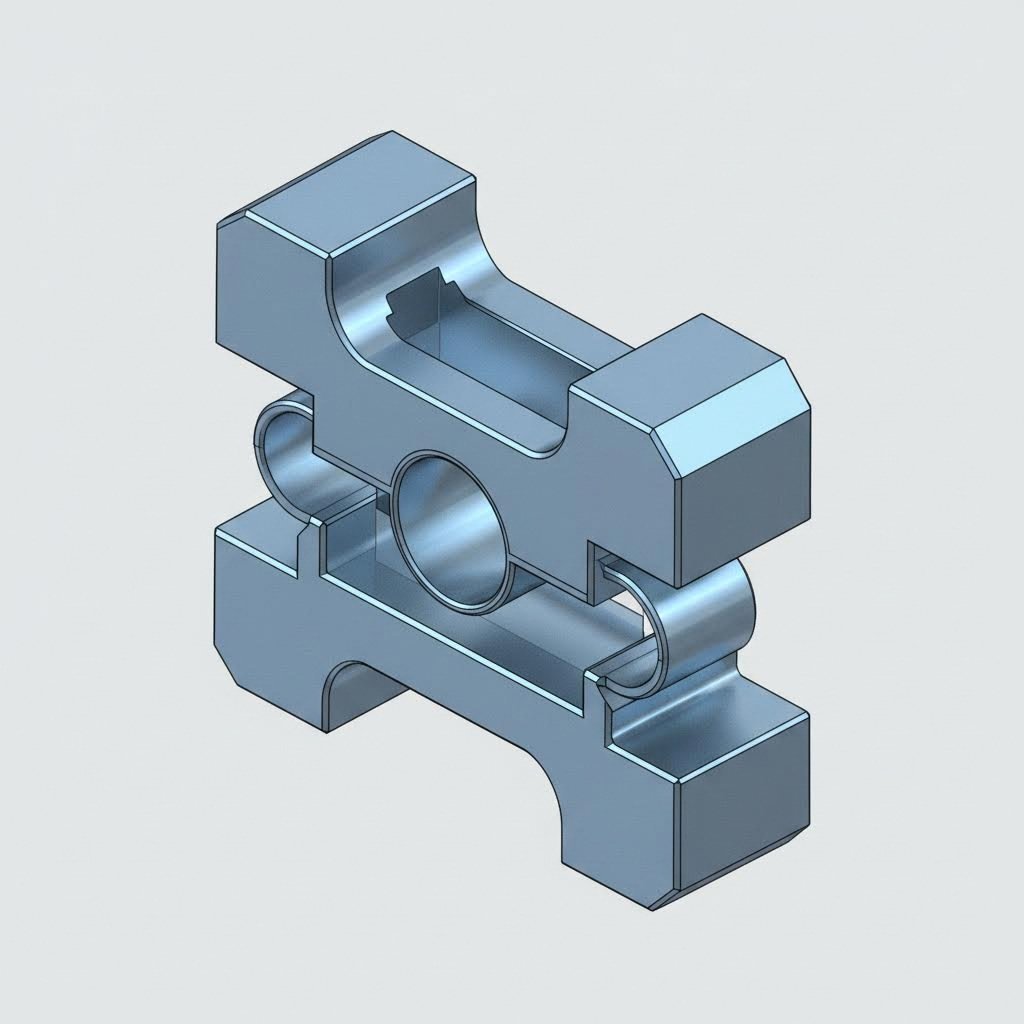
Here's something your supplier probably won't explain upfront: the die type selected for your hollow aluminum extrusion directly determines weld line quality, dimensional accuracy, and ultimately, your project's success or failure. While most buyers focus on alloy selection or surface finishes, experienced engineers know that die design separates mediocre aluminum extruded profiles from exceptional ones.
Unlike solid extrusion dies - which are essentially flat steel disks with shaped openings - hollow extrusion dies require sophisticated two-piece assemblies. According to Gabrian's technical documentation, these assemblies consist of a mandrel (which forms internal features) and a cap (which shapes external contours). The mandrel contains multiple portholes separated by webs or legs that support the die structure against pressures reaching up to 15,000 tons.
Three primary die architectures dominate hollow profile production: porthole dies, bridge dies, and spider dies. Each creates extruded shapes through fundamentally different approaches to metal flow management and internal support geometry.
Porthole dies represent the workhorse solution for most hollow aluminum applications. Their design philosophy centers on splitting incoming aluminum through multiple entry channels (portholes) arranged around the mandrel's support legs. The separated metal streams then converge in a welding chamber, where temperature and pressure conditions force complete metallurgical bonding before the profile exits through the die bearing.
What makes porthole dies particularly versatile? Their ability to produce both simple single-void tubes and intricate multi-void sections. Research published in the Advances in Science and Technology Research Journal demonstrates how porthole design optimization - particularly bridge geometry - significantly impacts stress distribution, die deflection, and extrusion load requirements.
The study found that porthole dies with curved bridges offer optimum process conditions compared to sharp-cornered designs, reducing maximum stress values from approximately 122.8 MPa to 85.2 MPa. This translates directly to longer die life and more consistent extruded shape quality throughout production runs.
Key characteristics of porthole dies include:
When should you specify a bridge die versus a spider die? The answer depends on your profile's void geometry, required tolerances, and production economics.
Bridge dies feature solid, bar-like supports connecting the mandrel to the die's outer structure. These substantial supports handle high extrusion pressures effectively but create distinct weld lines where aluminum flows rejoin. Bridge dies excel for profiles requiring robust structural integrity where visible weld seams are acceptable - think industrial tubing, structural framework components, and heavy-duty transport applications.
Spider dies utilize thinner, web-like supports radiating from a central mandrel. This design minimizes material disruption during flow, producing less pronounced weld lines. However, the delicate spider legs are more susceptible to deflection under extreme pressure, potentially affecting dimensional accuracy on tight-tolerance applications.
Consider your application requirements carefully:
| Die Type | Best Applications | Complexity Level | Weld Line Characteristics | Cost Implications |
|---|---|---|---|---|
| Porthole Die | Multi-void profiles, t-slots, complex architectural sections | High - requires precise mandrel/cap alignment | Multiple weld lines; quality depends on welding chamber design | Higher initial tooling cost; longer die life with curved bridges |
| Bridge Die | Round tubes, square tubes, heavy structural sections | Medium - substantial support structure simplifies design | Visible weld lines; excellent mechanical strength at joints | Moderate tooling cost; good durability under high-pressure operation |
| Spider Die | Thin-walled tubes, appearance-critical profiles, precision components | Medium-High - delicate supports require careful engineering | Minimal weld line visibility; may have reduced joint strength | Moderate tooling cost; shorter die life due to support deflection |
The distinction between single-void and multi-void dies extends beyond simply counting internal cavities. Each void in a multi-void profile requires its own mandrel section, and every mandrel section needs adequate support structure. This compounds complexity exponentially.
For single-void profiles (standard round or rectangular tubes), die design focuses on uniform wall thickness and concentricity. The aluminum flows around one central mandrel, rejoining at one welding zone. Process control is relatively straightforward.
Multi-void profiles - such as industrial t-slot framing or multi-channel heat sink sections - demand sophisticated metal flow balancing. Each cavity must receive proportional aluminum volume, and multiple welding zones must achieve complete fusion simultaneously. According to Tri-State Aluminum's extrusion guide, dies are typically machined from H13 steel at 47 to 51 Rockwell hardness to withstand these demanding conditions.
Practical guidance for die selection:
The die selection decision cascades through your entire project. Choose incorrectly, and you'll face weld line defects, dimensional inconsistencies, or premature die failure that halts production. Choose wisely, and your aluminum extruded profiles emerge with consistent quality, predictable tolerances, and cost-effective production efficiency.
With die architecture understood, the next consideration becomes profile geometry itself - understanding which hollow shapes suit which applications.
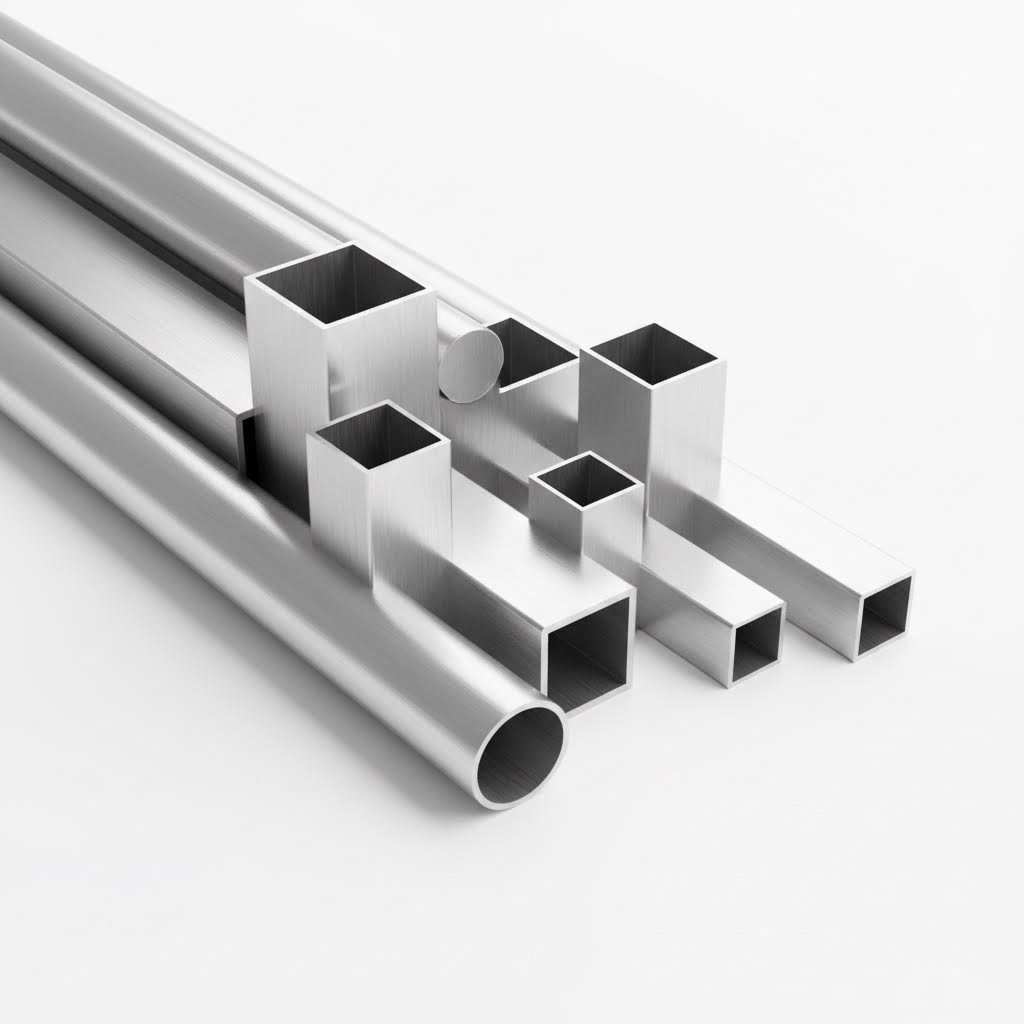
You've selected the right die architecture for your project - but which profile geometry actually delivers the performance you need? The answer isn't always obvious. While round aluminum tube shapes dominate certain applications, square and rectangular aluminium sections outperform in others. Understanding these differences separates engineers who specify correctly from those who discover problems during installation.
The extrusion process can produce virtually unlimited hollow geometries, yet four primary configurations account for most industrial applications: round tubes, square tubes, rectangular tubes, and custom hollow profiles. Each shape exhibits distinct structural behavior, manufacturing constraints, and application advantages that directly impact your project outcomes.
Sounds complex? It doesn't have to be. The fundamental difference comes down to how each shape distributes stress under load.
Round tubes offer superior structural efficiency when comparing equivalent weights. According to Orange Aluminum's technical analysis, the cylindrical shape distributes pressure evenly throughout the material, making round tubing incredibly strong and durable. This even distribution means round profiles excel under torsional loading - the twisting forces that cause square sections to deform more readily.
Consider these practical implications:
Square tubes sacrifice some structural efficiency for practical advantages that matter in many applications. The 90-degree right angles unevenly distribute stress, with torsional twisting being a greater concern under pressure. However, square profiles deliver benefits that often outweigh raw structural metrics:
Here's a critical distinction that Wiley Metal emphasizes: when purchasing aluminum tubing, sizes reference outside diameter (OD) and wall thickness - not inside diameter. This differs from pipe specifications, which reference internal dimensions. Confusing these measurements creates costly ordering errors.
| Shape Type | Structural Properties | Common Applications | Design Considerations |
|---|---|---|---|
| Round Tube | Superior torsional resistance; even stress distribution; highest strength-to-weight ratio | Pneumatic systems, handrails, roll cages, pressure applications, curved structures | Difficult to mount flat; requires specialized brackets; welding follows curved path |
| Square Tube | Good compressive strength; corners create stress concentrations; susceptible to torsional deformation | Structural framing, furniture, machine guards, architectural frameworks, equipment enclosures | Corner radii affect strength; flat surfaces simplify mounting; easier cutting operations |
| Rectangular Tube | Directional strength properties; stronger along major axis; versatile load orientation | Trailer frames, door frames, window sections, directional load applications | Orient major axis to resist primary loads; wall thickness may vary between sides |
| Custom Hollow | Optimized for specific load cases; integrated features reduce assembly; application-specific geometry | Heat sinks, t-slot framing, specialized structural members, multi-function profiles | Higher tooling investment; minimum order quantities; longer lead times for die production |
When you specify extruded parts for structural applications, wall thickness and tolerance values determine whether components fit together and perform under load. Standard tolerances published by the Aluminum Association provide the baseline specifications every engineer should understand.
For hollow profiles, wall thickness tolerances depend on multiple factors:
According to industry standard tolerances for round extruded tubes, the allowable deviation of mean wall thickness from specified values ranges from ±0.006 inches for tubes under 0.047-inch wall thickness up to ±0.173 inches for walls between 3.500-4.000 inches. The practical implication? Always specify nominal dimensions with tolerance awareness - your 0.125-inch wall might legitimately measure 0.116 to 0.134 inches.
Minimum wall thickness limitations vary by profile complexity:
Corner radii significantly impact both structural performance and manufacturing feasibility. Sharp internal corners concentrate stress and resist metal flow during extrusion. Standard practice calls for minimum internal radii of 0.020 to 0.040 inches for smaller profiles, increasing proportionally with wall thickness and overall section size.
Imagine eliminating three assembly steps by integrating mounting features directly into your aluminum profile. That's the value proposition of custom hollow extrusions - geometry optimized for your specific application rather than forcing your design to accommodate standard shapes.
Custom profiles justify their higher tooling investment when:
However, custom hollow shapes introduce constraints that standard profiles avoid. Multi-void custom sections require complex porthole dies with extended lead times - typically 4-8 weeks for die fabrication. Minimum wall thicknesses increase with geometric complexity, and asymmetric designs may require specialized handling to prevent distortion during cooling.
Maximum size constraints also apply. Most extrusion presses limit profiles to circumscribing circles between 10-14 inches for standard operations, though specialized presses can accommodate larger sections. Your extruder's press capacity, container diameter, and die stack configuration ultimately determine what's achievable.
Understanding shape selection sets the foundation - but the alloy you specify interacts directly with these geometric decisions, affecting everything from minimum achievable wall thickness to surface finish quality.
You've specified the perfect hollow geometry and selected appropriate die architecture - but which aluminum alloy actually flows through that die? This decision affects far more than material cost. Your alloy choice directly determines minimum achievable wall thickness, surface treatment compatibility, and whether your finished profiles meet structural performance requirements.
Here's what most suppliers won't explain: not all 6000-series alloys behave identically during hollow extrusion. The subtle differences in magnesium, silicon, and trace element content create dramatically different outcomes when aluminum splits around mandrel supports and rejoins in welding chambers. Understanding how extruded aluminum is made at the metallurgical level reveals why certain alloys dominate specific applications.
Walk through any aluminum extrusion facility producing hollow profiles, and you'll find 6063 running on most presses. According to American Douglas Metals, the 6063 alloy is the most popular for aluminum extrusions, particularly for applications requiring thin walls and architectural features.
What makes 6063 the default choice for stock aluminium extrusion profiles? The answer lies in its chemical composition:
For architectural applications - window frames, curtain wall sections, door profiles - 6063 delivers the surface aesthetics and corrosion resistance that exposed components demand. Orange Aluminum notes that 6063 is known as the "architectural" alloy because it's the most extrudable and easily anodized, with anodization further increasing corrosion resistance.
However, 6063's advantages come with trade-offs. Its tensile strength reaches only 186 MPa (26,977 psi) in T6 temper - adequate for many applications but insufficient when structural loading demands maximum performance.
So how does aluminum extrusion work when you need properties that 6063 can't deliver? You select alternative alloys - but each choice affects your hollow profile's manufacturability.
6061 aluminum offers significantly higher strength at 310 MPa tensile strength, making it the structural workhorse of the 6000-series. The alloy contains approximately 0.28% copper, which enhances strength but slightly reduces corrosion resistance compared to 6063. For hollow profiles, 6061 presents challenges: it's less extrudable than 6063, meaning thinner walls and complex geometries become more difficult to achieve consistently.
6005 aluminum bridges the gap between 6063's extrudability and 6061's strength. With yield strength around 260 MPa, it handles structural applications that 6063 cannot while remaining easier to extrude than 6061. This makes 6005 particularly suitable for hollow tubing used in furniture, rail profiles, and modular structural systems.
6082 aluminum delivers the highest strength in the 6000-series at approximately 350 MPa tensile strength. However, its high manganese content (0.4-1.0%) makes extrusion significantly more difficult. Hollow profiles in 6082 typically require thicker walls and simpler geometries - the alloy performs best for load-bearing structural applications where surface finish matters less than mechanical performance.
| Alloy | Extrudability Rating | Strength Properties | Surface Finish Quality | Ideal Applications |
|---|---|---|---|---|
| 6063-T6 | Excellent - best for thin walls and complex shapes | Tensile: 270 MPa; Yield: 240 MPa | Excellent - superior anodizing response | Architectural profiles, window frames, decorative tubes, exposed components |
| 6061-T6 | Moderate - requires thicker minimum walls | Tensile: 310 MPa; Yield: 276 MPa | Good - acceptable for functional applications | Structural frameworks, automotive components, aerospace fittings, CNC-machined parts |
| 6005-T6 | Good - easier than 6061, manageable for structural profiles | Tensile: 310 MPa; Yield: 260 MPa | Good - suitable for painted or powder-coated finishes | Rail profiles, modular framing, furniture tubing, construction components |
| 6082-T6 | Difficult - better for thick, simple hollow sections | Tensile: 350 MPa; Yield: 340 MPa | Moderate - functional rather than decorative | Heavy structural members, marine applications, steel-replacement components |
| 6463-T6 | Excellent - optimized for bright finishing | Tensile: 245 MPa; Yield: 220 MPa | Superior - mirror-like polishing capability | Decorative trim, bright anodized components, visible architectural details |
When specifying hollow profiles, your alloy choice cascades through every manufacturing parameter:
Wall thickness minimums: 6063's superior flow characteristics allow walls as thin as 0.040 inches in simple tube configurations. Switching to 6061 or 6082 typically increases minimum wall requirements by 25-50% to ensure complete metal flow and proper weld line formation.
Surface treatment compatibility: Alloys containing copper (like 6061) produce less uniform anodized finishes. If your application requires Class I architectural anodizing or bright-dip processing, 6063 or 6463 become mandatory choices regardless of strength requirements.
Weld line integrity: Softer alloys form more complete metallurgical bonds where split aluminum streams rejoin. For hollow profiles under cyclic loading or fatigue conditions, 6063's weld characteristics often outperform stronger alloys despite lower bulk strength properties.
For marine environments, 6082 is preferred; for decorative outdoor use, 6463 and 6063 are better.
Practical decision guidance based on application category:
The alloy decision ultimately balances performance requirements against manufacturing realities. Specifying 6082 for a thin-walled architectural profile guarantees production difficulties and quality issues. Conversely, choosing 6063 for a structural member supporting heavy loads invites premature failure. Understanding these relationships ensures your hollow aluminum extrusion specifications align with both application demands and manufacturing capabilities.
With alloy selection clarified, the next logical question emerges: when do hollow profiles actually outperform solid alternatives, and how do you make that determination for your specific application?
You've specified alloy, geometry, and die type - but have you validated that a hollow profile is actually the right choice for your application? This fundamental decision deserves more than gut instinct. Understanding how is extruded aluminum made in both hollow and solid configurations reveals why one consistently outperforms the other in specific scenarios.
The core engineering principle is straightforward: hollow profiles leverage the area moment of inertia by moving material away from the neutral axis and distributing it to outer edges. According to FONIRTE's technical analysis, this design achieves a much higher stiffness-to-weight ratio than a solid profile of the same weight. But "better" depends entirely on what you're optimizing for.
Imagine comparing a solid rod and a hollow tube with identical outer diameters and weights. The hollow tube delivers:
This isn't theoretical - it's why bicycle frames, aircraft components, curtain wall mullions, and machine guard rails almost universally use hollow sections. The weight savings translate directly into practical benefits across the entire project lifecycle.
Alumag Aluminum's comparison research confirms that hollow profiles weigh significantly less than solid sections of comparable size due to their cavity design. This weight reduction cascades through multiple project phases:
However, solid aluminum delivers advantages that hollow sections cannot match. The dense, continuous cross-section provides superior compressive strength and resistance to deformation - making solid profiles ideal for parts subject to intense loads and impact forces.
How are aluminum extrusions made when cost optimization matters? The answer involves understanding both direct material costs and indirect manufacturing implications.
From a raw material perspective, hollow profiles use significantly less aluminum while maintaining similar external dimensions. This translates to lower production costs that become substantial in large-scale projects like commercial buildings, transportation systems, or industrial equipment.
Yet Boyd Metals' cost analysis reveals a counterintuitive finding: solid shapes are actually more cost effective than hollow ones in terms of extrusion processing. The simpler dies required for solid profiles reduce tooling investment and maintenance costs.
The complete cost equation involves:
| Factor | Hollow Profiles | Solid Profiles | Decision Guidance |
|---|---|---|---|
| Weight per Linear Foot | 30-60% lighter than equivalent solid sections | Maximum material density throughout cross-section | Choose hollow when weight reduction improves performance or reduces shipping costs |
| Raw Material Cost | Lower aluminum consumption per unit length | Higher material cost due to dense cross-section | Hollow profiles provide cost advantage in high-volume applications |
| Die/Tooling Cost | Higher - requires complex mandrel/cap assemblies | Lower - simpler die geometry reduces tooling investment | Solid profiles more economical for low-volume or prototype runs |
| Bending Resistance | Superior stiffness-to-weight ratio; excellent for beams and spans | Good absolute strength but less efficient material use | Hollow sections excel in long-span structural applications |
| Torsional Rigidity | Excellent resistance to twisting forces | Moderate - material concentrated at center contributes less | Hollow profiles mandatory for torsion-critical applications |
| Compressive Strength | Good but wall buckling possible under extreme loads | Superior - continuous material resists deformation | Solid profiles preferred for intense impact or compression loads |
| Machining Accessibility | Internal cavity limits some machining operations | Full access for drilling, tapping, detailed machining | Choose solid when extensive CNC machining is required |
| Internal Routing Capability | Cavity accommodates wires, fluids, thermal breaks | Requires external conduit or secondary components | Hollow profiles reduce assembly complexity for routed systems |
| Fabrication Simplicity | Welding follows profile perimeter; cutting straightforward | Easier clamping; simpler drilling and tapping | Application-specific - evaluate based on required operations |
Based on engineering principles and real-world application data, hollow profiles deliver measurable advantages in these specific scenarios:
Conversely, solid profiles remain the superior choice when:
For a simple mounting angle or trim piece, a solid profile is cost-effective and perfectly adequate. For a window mullion that must resist wind load over 4 meters, a multi-chambered hollow profile is essential.
The decision framework ultimately reduces to this: if your application benefits from stiffness, reduced weight, or internal routing capability, hollow profiles almost always deliver superior value despite higher die costs. If your application demands maximum density, extensive machining, or operates at production volumes too low to amortize tooling investment, solid sections provide the practical choice.
With the hollow versus solid decision resolved, the next consideration becomes application-specific: which industries leverage hollow aluminum extrusions most effectively, and what performance characteristics matter in each sector?

Walk into any modern building, step aboard a passenger train, or examine industrial equipment - hollow aluminum profiles surround you. But why do engineers across such diverse sectors consistently choose these lightweight structural members? Understanding the specific properties that make hollow aluminum tubing applications successful in each industry transforms generic material selection into strategic competitive advantage.
The answer extends beyond simple weight reduction. Each sector leverages different combinations of hollow profile characteristics - corrosion resistance, thermal performance, structural efficiency, or design flexibility - to solve application-specific challenges that solid sections cannot address economically.
When you look at a modern glass curtain wall or operate a smooth-gliding aluminum window, you're experiencing hollow extrusion engineering at its finest. According to LA Metals' industry guide, construction applications like doors, windows, and building components all feature hollow aluminium extrusions because their versatility makes them useful across a wide variety of applications.
But what specific properties drive this dominance in architectural aluminum extrusion uses?
Design considerations unique to architectural applications include finish durability, thermal performance ratings, and compliance with building codes governing structural glazing. Industrial aluminum profiles for construction typically require Class I or Class II anodizing, AAMA 2604/2605 powder coating specifications, or PVDF fluoropolymer finishes that maintain appearance over 20+ year service lives.
Beyond buildings, hollow extrusions solve engineering challenges across manufacturing, transportation, and infrastructure sectors. The Eleanor Aluminium technical analysis confirms that aluminum extrusion tubes have emerged as a key component due to their strength-to-weight ratio, corrosion resistance, and design versatility in automotive and aerospace applications.
Transportation sector applications:
Industrial equipment applications:
Specialty applications leveraging unique hollow profile properties:
Each application category demands specific design considerations. Transportation components require crash energy absorption calculations and fatigue life analysis. Industrial frameworks need load capacity verification and safety factor compliance. Architectural systems must satisfy thermal performance standards and aesthetic requirements simultaneously.
The common thread across all these applications? Hollow aluminum extrusions deliver performance characteristics that alternative materials - steel, solid aluminum, plastics - cannot match at equivalent weight and cost. Understanding which properties matter most in your specific application guides both profile geometry selection and the specification process when working with suppliers.
You understand hollow profile geometry, alloy properties, and application requirements - but translating that knowledge into a supplier specification that produces exactly what you need? That's where many projects encounter unexpected delays and costly revisions. The gap between engineering intent and manufacturing reality closes only when your specification documents communicate complete, actionable requirements.
Experienced aluminum profile suppliers can guide specification development, but they cannot read minds. The more precisely you define requirements upfront, the faster you receive accurate quotes, appropriate die designs, and profiles that integrate seamlessly into your application. Let's examine exactly what information enables successful custom aluminum extrusion ordering.
When you contact an extrusion manufacturer, incomplete specifications trigger back-and-forth clarification requests that extend lead times unnecessarily. According to Alumaster Group's specification guide, giving clear drawings and details when you ask for prices helps you avoid problems and get the best results for your project.
Your specification package should address these critical elements:
The difference between transactional suppliers and true manufacturing partners becomes apparent during specification development. Partners invest in understanding your application requirements and proactively identify opportunities to improve manufacturability, reduce costs, or enhance performance.
What should you expect from an experienced extrusion partner? Technical teams that provide end-to-end support from die development through mass production. This includes design-for-manufacturability feedback, material selection guidance, tolerance optimization recommendations, and surface treatment compatibility verification.
Manufacturers with comprehensive capabilities simplify your supply chain significantly. For example, Shengxin Aluminium's deep processing services combine extrusion with precision secondary operations - their facility houses 35 extrusion presses ranging from 600T to 5500T capacity alongside CNC machining centers for precise cutting, drilling, and bending. This integration means your profiles arrive ready for assembly rather than requiring additional vendor coordination.
When evaluating aluminum extrusion supplier requirements, consider these capability indicators:
Your surface treatment selection affects both appearance and performance - and must be specified correctly to avoid costly rework. According to SAF's finishing guide, the application and desired appearance dictate the finish selected, with each option offering distinct advantages.
Anodizing creates an integral aluminum oxide layer that cannot peel or flake. The coating thickness determines durability - Class I anodizing (0.7 mils) lasts approximately twice as long as Class II (0.4 mils) in exterior applications. Anodizing excels for storefronts, handrails, and applications requiring abrasion resistance. Colors are achieved through dyeing, though exact Pantone or RAL matching is not possible with anodized finishes.
Powder coating provides a tough, corrosion-resistant finish available in virtually unlimited colors. Coating thickness typically ranges from 0.006" to 0.012", and colors can be matched to specific RAL or Pantone codes. Powder coating performs well in harsh outdoor environments, though it may chip under severe impact. Polyester TGIC powders offer good color retention, while PVDF-based powders meet the stringent AAMA 2605 specification for architectural applications.
PVDF coatings (fluoropolymer finishes) deliver superior weather resistance and color stability, dominating curtain wall and metal roofing markets. These coatings require factory application with chrome-based pretreatment for maximum adhesion and longevity. PVDF provides excellent chemical resistance and UV stability but costs more than standard powder coating.
When specifying surface treatments, include:
Manufacturers offering comprehensive finishing capabilities - such as anodizing in custom colors, powder coating, PVDF application, and specialized treatments like micro-arc oxidation - provide flexibility to match finish specifications precisely to application requirements.
Complete, well-organized specifications accelerate the quotation process, reduce revision cycles, and establish clear quality expectations. But even perfect specifications cannot prevent all quality challenges - understanding common issues and prevention strategies ensures your hollow profiles meet performance requirements consistently.

You've specified the right alloy, selected appropriate die architecture, and communicated requirements clearly to your supplier - yet quality issues still emerge during production or after delivery. Why? Because hollow aluminum extrusion introduces unique quality challenges that solid profiles simply don't face. Understanding these issues before they occur transforms reactive troubleshooting into proactive prevention.
The welding zones where split aluminum streams rejoin, the internal cavity surfaces hidden from view, and the complex metal flow patterns around mandrel supports all create opportunities for defects. Research published in the Journal of Manufacturing Processes confirms that welding defects are of particular concern in hollow extrusions, as they can significantly compromise the structural integrity and aesthetic appeal of the final product.
Experienced engineers know that preventing quality problems costs far less than correcting them after production. Let's examine the four most common hollow profile defects and the specific aluminum extrusion quality control measures that prevent each.
Weld Line Visibility and Weakness
When aluminum splits around mandrel supports, the separated streams must rejoin completely in the welding chamber. Incomplete fusion creates visible seams on exterior surfaces or, worse, structural weak points that fail under load. According to the research, inadequate material flow caused by low pressure decreases the quality of welds and leads to product failures.
Dimensional Inconsistencies
Hollow profiles face dimensional challenges that solid sections avoid. Wall thickness variations around the perimeter, out-of-round conditions in tubes, and inconsistent cavity dimensions all stem from uneven metal flow or die deflection under extreme extrusion pressures.
Surface Defects
Die lines, pick-up deposits, tears, and blisters degrade the appearance and performance of hollow profiles. These defects originate from die condition, billet quality, or process parameters - and prevention starts before extrusion begins.
Wall Thickness Variations
For hollow profiles, wall thickness consistency directly impacts structural performance. Thin spots reduce load capacity while thick areas waste material and add unnecessary weight. Hollow profile defects prevention requires attention to both die design and process control.
Beyond preventing defects, smart design decisions reduce manufacturing costs while maintaining or improving quality. These optimization strategies apply specifically to hollow aluminum profiles.
Simplify internal geometry where possible. Every internal feature requires mandrel support, and complex multi-void sections demand sophisticated die assemblies. Before specifying intricate internal chambers, verify they provide functional value that justifies the tooling investment.
Standardize wall thickness. Uniform walls extrude more consistently, require less die correction, and produce higher first-pass yields. When structural analysis permits, specify a single wall thickness throughout the profile rather than optimized variations.
Optimize corner transitions. According to Aluminum Extruders Council design guidelines, smooth transitions should be streamlined by generous radii at any thick-thin junction. Blending corners reduces stress concentration in dies and improves material flow, extending die life and reducing per-piece tooling amortization.
Consider circumscribing circle diameter. Profiles that fit within smaller circles require less press capacity and use smaller containers - both factors that reduce extrusion cost. If your design permits dimensional adjustments, optimizing the circumscribing circle can yield meaningful savings at volume.
Integrate functional features. Rather than extruding simple tubes and machining them extensively, incorporate screw bosses, mounting channels, or alignment features directly into the profile. The additional die complexity often costs less than secondary machining operations.
Even perfect specifications cannot overcome supplier capability gaps. The manufacturer you select determines whether aluminum extrusion quality control happens systematically or inconsistently.
Look for these capability indicators when evaluating potential partners:
The research evidence is clear: proper die design, process parameter control, and systematic quality management prevent the defects that compromise hollow profile performance. When you partner with manufacturers offering state-of-the-art facilities, experienced technical teams, and comprehensive processing capabilities, quality becomes a predictable outcome rather than a hopeful aspiration.
Your hollow aluminum extrusion project succeeds when every decision - from alloy selection through supplier partnership - aligns with quality objectives. The specifications you write, the die architecture you approve, and the manufacturer you trust all contribute to profiles that perform exactly as designed.
Hollow aluminum tubes are created using specialized two-piece dies containing mandrels and caps. The heated aluminum billet (800-925°F) is forced through the die, splitting around mandrel supports called bridges or legs. The separated metal streams then converge in a welding chamber where temperature and pressure conditions force complete metallurgical bonding. The rejoined aluminum exits as a seamless hollow profile. This process requires precise control of temperature, pressure (up to 15,000 tons), and die geometry to achieve quality weld lines and consistent wall thickness.
Porthole dies split aluminum through multiple entry channels and are ideal for complex multi-void profiles with good weld quality. Bridge dies feature solid bar-like supports that handle high pressures effectively, creating visible but strong weld lines - best for structural applications. Spider dies use thinner web-like supports that minimize weld line visibility, making them preferred for appearance-critical profiles. Die selection depends on your profile complexity, structural requirements, surface finish needs, and production economics.
6063-T6 dominates hollow extrusion applications due to its excellent extrudability, superior anodizing response, and consistent weld line quality. It allows thinner walls and more complex geometries than stronger alloys. For higher strength requirements, 6061-T6 offers 310 MPa tensile strength but requires thicker minimum walls. 6005-T6 bridges the gap between extrudability and strength. 6082-T6 provides maximum strength (350 MPa) but is difficult to extrude. Your choice depends on balancing structural needs, surface finish requirements, and manufacturing feasibility.
Choose hollow extrusions when you need superior stiffness-to-weight ratio, reduced material costs, or internal routing capability for wires and fluids. Hollow profiles excel in structural frames spanning long distances, transportation components where weight affects fuel economy, architectural applications requiring thermal breaks, and modular systems needing cable management. Select solid profiles when maximum compressive strength, extensive CNC machining, or impact resistance is critical, or when production volumes are too low to justify hollow die tooling costs.
Prepare detailed cross-section drawings with all dimensions, wall thicknesses, and corner radii. Specify tolerance requirements (standard vs. precision), alloy and temper designation, finished lengths, and surface treatment needs (anodizing type, powder coating color codes). Include quantity requirements, application context describing loads and environmental conditions, and any secondary operations like CNC machining or bending. Experienced manufacturers like Shengxin Aluminium offer technical support from die development through mass production, with comprehensive deep processing services including precision cutting, drilling, and multiple surface treatment options.



 خدمة الإنترنت
 0086 136 3563 2360
 sales@sxalu.com
 +86 136 3563 2360
 العربية
 English
 français
 Deutsch
 русский
 español
 português
 ไทย
ไทย Việt
Việt Українська