When you're sourcing aluminum extrusion profiles for critical applications, how do you separate exceptional manufacturers from average ones? The difference between a reliable partner and a problematic supplier often comes down to quality benchmarks that many buyers struggle to identify upfront.
A high quality aluminum extrusion manufacturer isn't simply defined by competitive pricing or fast turnaround times. Instead, excellence emerges from a combination of technical capabilities, rigorous quality control systems, and industry-specific expertise that ensures every aluminium extruded profile meets precise specifications.
Quality in aluminum extrusion manufacturing begins long before metal meets die. According to Profile Precision Extrusions, comprehensive quality control spans the entire process — from billet selection through final inspection. This systematic approach ensures consistency across every order, whether you need custom aluminum extrusions for aerospace applications or standard aluminum profiles for architectural projects.
The stakes are significant. In industries like aerospace, defense, and healthcare, a fraction of a millimeter can determine performance and safety. That's why leading aluminum extrusion companies invest heavily in AS9100 registration, coordinate measuring machines, and real-time process monitoring.
What separates top aluminum supply sources from the rest? Consider these distinguishing factors:
Throughout this guide, you'll learn how to evaluate manufacturers across technical capabilities, certification requirements, alloy selection, finishing options, and total cost of ownership. Whether you're specifying your first extrusion project or refining your supplier qualification process, these ten essential points will equip you with a practical framework for making informed procurement decisions.
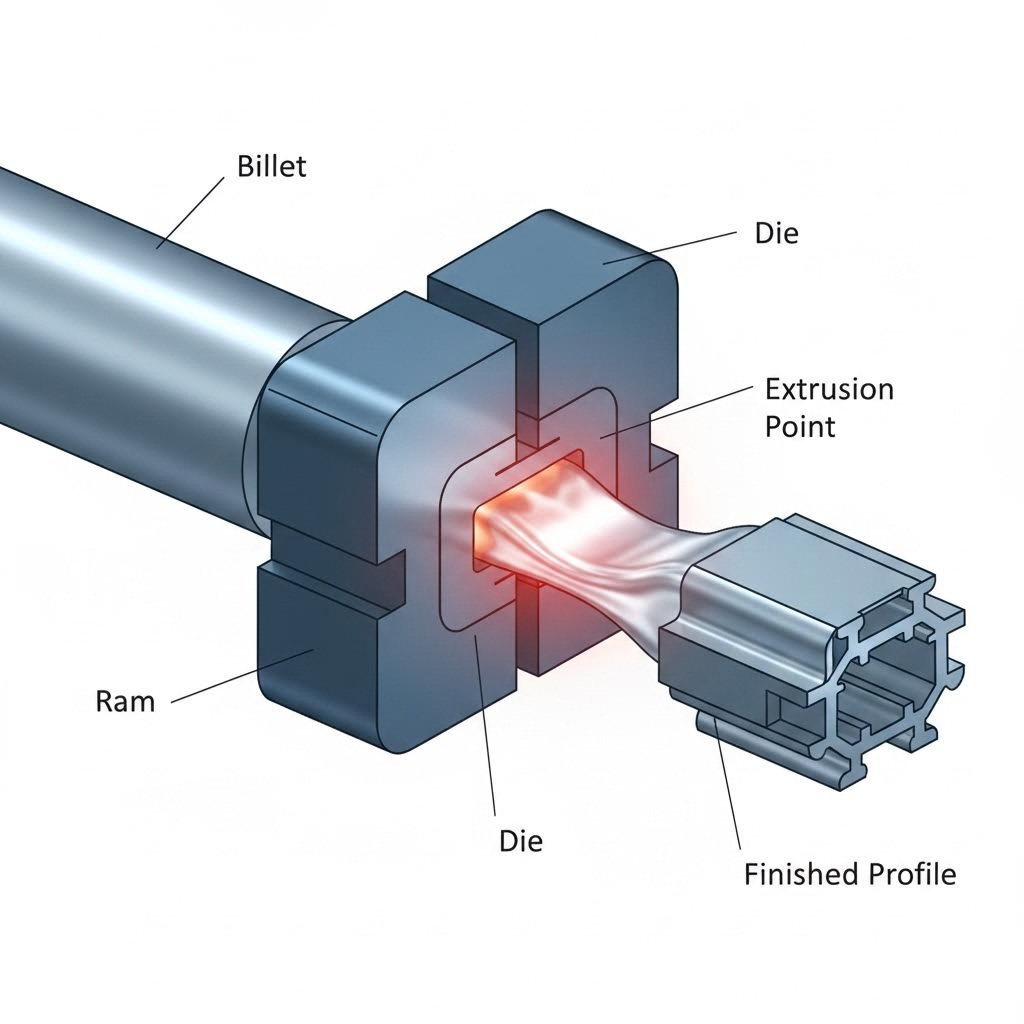
Ever wondered how extruded aluminum is made? Imagine squeezing toothpaste from a tube — that's the basic concept. But when you're evaluating a manufacturer's capabilities, understanding the nuances of each production stage becomes essential. The aluminium extrusion process transforms raw aluminum billets into precision profiles through carefully controlled steps, and quality at each stage directly impacts the final product you receive.
The journey to extrude aluminum begins with proper material preparation and tooling. Before any metal moves through the aluminum extrusion line, manufacturers must complete two critical preparatory steps that set the foundation for everything that follows.
First, alloy selection determines the profile's strength, corrosion resistance, and machinability. Second, die development — the creation of the specialized tool that shapes your profile — requires precision engineering. According to Star Extruded Shapes, modern manufacturers use specialized design software like AutoCAD or SolidWorks to create digital models that enable faster quoting, streamlined prototyping, and reduced time to market.
Once preparation is complete, the actual extrusion aluminum process unfolds through a precise sequence. Here's how each step impacts the quality of your finished profiles:
Press tonnage directly affects what a manufacturer can produce. Higher capacity presses enable larger, more complex profiles — including curved aluminum extrusion and intricate hollow shapes — while smaller presses suit simpler, lighter sections.
Each stage introduces variables that affect tolerances, surface quality, and mechanical performance. A manufacturer's ability to control these variables — through calibrated equipment, trained operators, and rigorous monitoring — distinguishes premium suppliers from average ones. Understanding this process helps you ask the right questions when evaluating potential partners and ensures your specifications align with manufacturing realities.
Now that you understand how extrusions are made, here's the next critical decision: which aluminum alloy should you specify? The alloy you choose fundamentally shapes your aluminum profile's performance, cost, and suitability for its intended application. Yet many buyers default to whatever their supplier recommends without understanding why certain aluminum extrusion shapes perform better in specific environments.
Think of alloy selection like choosing the right tool for a job. A hammer works great for nails but fails miserably with screws. Similarly, specifying 7075 aluminum for architectural trim wastes money, while using 6063 for aircraft components compromises safety. Let's break down the most common extrusion alloys and when each makes sense.
Aluminum alloys consist predominantly of aluminum combined with varying amounts of elements such as copper, magnesium, manganese, silicon, and zinc. According to American Douglas Metals, these elements are added in specific proportions to achieve desired characteristics, making aluminum alloys versatile across aerospace, construction, and automotive industries.
Here's what you need to know about the three most common extrusion alloys:
6063 Aluminum — The Architectural Standard
When you see aluminum window frames, door frames, or curtain walls, you're likely looking at 6063 aluminum. This alloy dominates architectural applications for good reason: it offers excellent extrudability, superior surface finish quality, and responds beautifully to anodizing. As noted by Keneng Hardware, 6063 provides high wind pressure resistance, assembly performance, corrosion resistance, and decorative performance — exactly what building facades demand.
6061 Aluminum — The Structural Workhorse
Need more muscle? 6061 aluminum delivers higher strength while maintaining good formability, weldability, and machinability. With a density of 2.7 g/cm³, it's slightly denser than standard aluminum but excels in applications requiring structural integrity. You'll find 6061 extruded aluminum profiles in aerospace device molds, automotive components, marine applications, and industrial machinery frames.
7075 Aluminum — Aerospace-Grade Performance
For applications where strength-to-weight ratio is paramount, 7075 aluminum stands apart. This cold-treated forging metal offers exceptional strength — far superior to mild steel — making it the go-to choice for aircraft structural parts and highly stressed components. Its compact structure provides good corrosion resistance, though it's less formable than 6000-series alloys.
| Property | 6063 Aluminum | 6061 Aluminum | 7075 Aluminum |
|---|---|---|---|
| Primary Use | Architectural profiles | Structural applications | Aerospace components |
| Relative Strength | Medium | High | Very High |
| Corrosion Resistance | Excellent | Good | Good (with treatment) |
| Machinability | Good | Excellent | Good |
| Weldability | Excellent | Good | Limited |
| Surface Finish | Excellent (anodizes well) | Good | Moderate |
| Extrudability | Excellent | Good | Moderate |
| Relative Cost | Lower | Moderate | Higher |
Beyond these three, you'll encounter other notable alloys. The 6005 aluminum extrusion profile offers higher strength than 6063 with better extrusion characteristics than 6082 — ideal for tubing, furniture, and rail profiles. Meanwhile, 2024 aluminum delivers high fatigue resistance for aerospace applications requiring repeated stress cycles.
Selecting the right alloy is only half the equation. The temper designation — that T5 or T6 suffix — tells you how the aluminum was heat-treated and directly impacts mechanical properties.
Here's how the process works, according to Engineering Express: Heat treatment raises the alloy temperature to about 980°F, dissolving all alloying elements in a solid solution. The alloy is then quenched in water to prevent elements from precipitating during cooling. Subsequent aging at 325-400°F causes alloying elements to form ordered arrays called GP zones, which strengthen the aluminum considerably.
T5 Temper: Profiles are cooled directly from the extrusion press (while still hot) and then artificially aged. This process minimizes internal stress, produces a smaller deformation coefficient, and results in stronger mechanical properties with less brittleness. T5 is the standard for most architectural and industrial aluminum extrusion shapes.
T6 Temper: Profiles undergo separate solution heat treatment after extrusion, by quenching and artificial aging. This produces higher hardness and strength but increases the deformation coefficient and brittleness. T6 is preferred when maximum strength is required.
For most applications, T5 temper offers the best balance of strength, workability, and cost. Reserve T6 for projects where enhanced mechanical properties justify the additional processing and potential for distortion.
So when should you choose standard specifications versus custom alloy formulations? Consider these factors:
Alloy selection also affects downstream processes. Certain flextrude aluminum shapes and alum extrusion shapes respond better to specific finishing treatments. For instance, 6063's excellent anodizing response makes it ideal for decorative applications, while 6061's machinability suits profiles requiring extensive secondary operations.
Understanding these distinctions helps you communicate effectively with manufacturers and ensures your aluminum extrusion profile specifications align with actual performance needs. With alloy fundamentals covered, let's explore how surface finishing options can further enhance your profiles' performance and appearance.
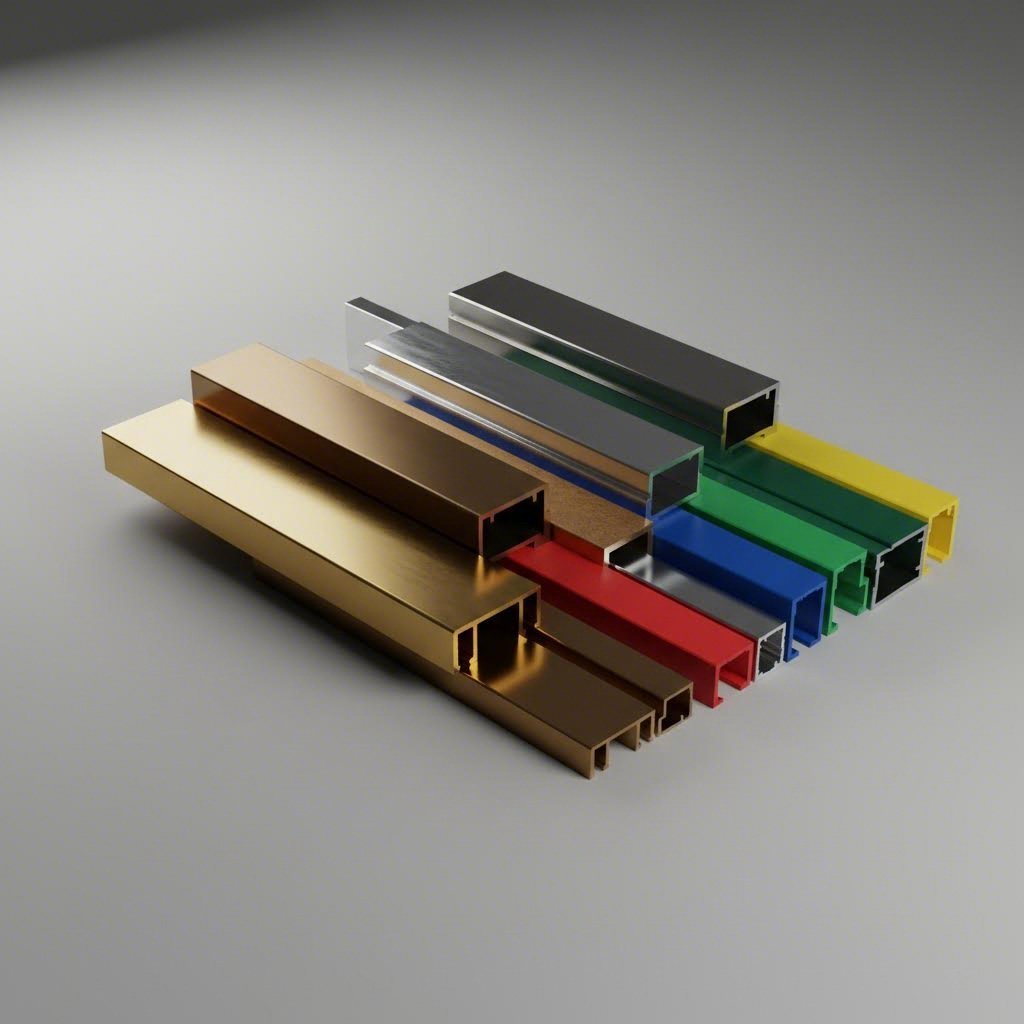
You've selected the perfect alloy for your project. But here's something you should keep in mind: a raw "mill finish" aluminum extruded profile is vulnerable to scratches, stains, and oxidation. The surface finish you choose ultimately defines your product's quality, durability, and aesthetic appeal. Understanding your options helps you specify the right treatment — and evaluate whether a manufacturer can deliver it.
Quality aluminum extrusion manufacturers distinguish themselves through comprehensive finishing capabilities. While some suppliers outsource surface treatments, creating supply chain complexity and quality control challenges, premium partners handle finishing in-house. Let's explore the treatments that transform raw profile aluminum into finished custom aluminum products.
When evaluating finishing options, you'll encounter three leading technologies: anodizing, PVDF coating, and powder coating. Each has unique strengths depending on your application environment and performance requirements.
Anodizing — The Integrated Protection
First, you must understand that anodizing is not a paint or coating. According to Minh Dung Holdings, it's a unique electrochemical process that submerges aluminum in an acid bath while passing electric current through it. This forms a super-hard, protective layer of aluminum oxide that's fully integrated with the metal itself.
Anodizing offers several distinct advantages:
However, anodizing has limitations. Color options are narrower than paint finishes, and costs typically run higher for complex profiles. It's best suited for high-end electronics, architectural facades, premium window frames, and precision mechanical parts.
The effectiveness of anodizing comes down to coating thickness and sealing quality. As noted by Southern Aluminum Finishing, Class I anodizing (0.7 mils or thicker) is recommended for exterior architectural applications, while Class II (0.4 mils or more) suits interior projects. Proper sealing locks in dyes and keeps out contaminants — poor sealing leads to fading, chalking, or pitting over time.
PVDF Coating — The Exterior Gold Standard
For monumental architecture and building facades, PVDF (Polyvinylidene Fluoride) coatings — often known by trade names like Kynar 500 — represent the premium choice. This high-performance liquid paint system delivers incredible resilience against UV exposure, weathering, and environmental pollutants.
PVDF coatings excel in these areas:
The tradeoff? PVDF coatings require specialized application facilities and command higher costs than powder coating. They're ideal for curtain walls, aluminum extrusion trim, metal roofing, and projects in coastal or industrial environments where long-term appearance matters.
Powder Coating — Versatile and Economical
Unlike liquid PVDF, powder coating uses dry powder that's electrostatically charged and sprayed onto grounded aluminum parts. The part then enters an oven where powder melts into a smooth, durable finish. This method offers compelling advantages for many applications:
Powder coating suits window and door frames, fencing, furniture, automotive parts, and industrial components. For extruded aluminum trim and aluminium extrusion trim applications, it provides excellent durability with design flexibility.
The requirements for aluminum extrusions differ significantly between exterior and interior applications. For outdoor uses like cladding and architectural panels, finishes must withstand weather, UV rays, and airborne pollutants. According to Aplank, exterior finishes undergo rigorous testing such as accelerated weathering and salt spray tests (ASTM B117) to ensure they maintain strength and appearance over years of exposure.
Interior applications focus more on appearance, feel, and texture since they're protected from harsh conditions. Decorative mechanical finishes — including brushed, polished, and bead-blasted treatments — often suffice without heavy-duty protective coatings.
Specialty Finishes for Unique Requirements
Beyond the three primary treatments, quality manufacturers offer specialized options:
Color Matching and Custom Development
When your project demands specific colors — whether matching corporate branding or coordinating with other building materials — a capable manufacturer offers custom color development. Quality suppliers maintain spectrophotometer equipment to ensure color consistency across production runs, typically holding variation to within 2-5 Delta E depending on finish type.
Ask potential suppliers about their color matching process, sample lead times, and how they maintain consistency across orders. This capability becomes especially important for architectural projects where color discrepancies are immediately visible.
The right finish isn't just about appearance — it directly affects maintenance requirements, lifespan, and total project cost. Matching finish capabilities to application demands separates premium manufacturers from basic extruders.
With surface treatment options clarified, understanding how quality certifications validate a manufacturer's finishing processes — and overall capabilities — becomes your next evaluation criterion.
You've identified the right alloy and finish for your project. But how do you verify that a manufacturer can actually deliver consistent quality? Certifications provide third-party validation that suppliers maintain documented processes, trained personnel, and systematic controls. Yet many buyers struggle to understand what different certifications actually guarantee — and which ones their specific applications require.
When evaluating aluminum extrusion suppliers, certifications serve as your first filter. They don't guarantee every part will be perfect, but they confirm that a manufacturer has invested in quality infrastructure and submits to regular external audits. Understanding these credentials helps you qualify suppliers efficiently and avoid costly quality escapes downstream.
Different industries demand different quality standards. A manufacturer serving automotive clients needs different credentials than one focused on architectural applications. Here's what the major certifications require and guarantee:
ISO 9001 — The Foundation of Quality Management
ISO 9001 establishes baseline quality management requirements applicable to any industry. This certification confirms that a manufacturer has implemented systematic processes for document control, training, inspection, corrective action, and continuous improvement. However, for aluminum extrusion applications requiring enhanced traceability or specialized testing, ISO 9001 alone is often insufficient.
Think of ISO 9001 as the minimum threshold — necessary but not sufficient for demanding applications. It demonstrates organizational commitment to quality but lacks industry-specific requirements for material traceability, configuration management, or specialized testing protocols.
AS9100 — The Aerospace Standard
For aerospace applications, AS9100 certification is essential. According to NSF International, AS9100 builds upon ISO 9001 with additional requirements designed to address safety, reliability, and regulation specifically within the aviation, space, and defense industries. First published in 1999 and updated in 2016, it's operated by the International Aerospace Quality Group (IAQG).
What makes AS9100 different? The standard requires organizations to take a high-level strategic view of every aspect of their operation, with quality management and continual improvement as key drivers. Certified organizations must demonstrate:
Manufacturers certified to AS9100 are listed on the Online Aerospace Supplier Information System (OASIS) database, enabling easy verification of certification status. The certification follows a three-year cycle with annual surveillance audits.
IATF 16949 — Automotive Excellence
The automotive industry operates under IATF 16949, which emphasizes defect prevention, reduction of variation, and waste elimination across the supply chain. This standard requires advanced quality planning tools including Production Part Approval Process (PPAP), Failure Mode Effects Analysis (FMEA), and Statistical Process Control (SPC).
For profile precision extrusions destined for automotive applications, IATF 16949 certification confirms that a manufacturer can meet the industry's demanding requirements for process capability, production consistency, and continuous improvement.
ASTM Standards for Aluminum Extrusions
While management system certifications verify organizational processes, ASTM standards define material requirements. According to Elkamehr, ASTM B221M is the primary standard governing aluminum and aluminum-alloy extruded bars, rods, wire, profiles, and tubes. This comprehensive specification covers:
When your purchase order references ASTM B221M, you're legally requiring the supplier to meet every requirement in the standard — making specification accuracy critical.
| Certification | Industry Application | Key Requirements | Audit Frequency |
|---|---|---|---|
| ISO 9001 | General manufacturing | Quality management system, document control, corrective action | Annual surveillance, 3-year recertification |
| AS9100 | Aerospace, space, defense | Full traceability, configuration management, risk management, OASIS listing | Annual surveillance, 3-year recertification |
| IATF 16949 | Automotive | PPAP, FMEA, SPC, defect prevention, supplier development | Annual surveillance, 3-year recertification |
| NADCAP | Aerospace special processes | Process-specific accreditation (heat treatment, NDT, etc.) | 12-18 month cycles based on merit rating |
| ASTM B221M | Material specification | Chemical composition, mechanical properties, dimensional tolerances | Per-lot testing and certification |
Understanding the practical difference between certified and non-certified manufacturers helps you assess actual risk. Here's what certification really means for your projects:
Process Control
Certified manufacturers must maintain documented procedures for every critical process — from aluminium extrusion die design through final inspection. These procedures specify equipment calibration requirements, operator qualifications, in-process checks, and acceptance criteria. Non-certified suppliers may have informal practices that work well when experienced personnel are present but break down during personnel changes or production pressure.
Documentation and Traceability
Quality certifications require comprehensive documentation. Every aluminum extrusion should be traceable to its raw material heat, processing parameters, inspection results, and shipping records. According to Allstar Metal, aerospace applications demand records be retained for "life of part plus 10 years minimum" — potentially 30-50 years for aircraft structures.
Material Test Reports from certified American aluminum extrusion suppliers include:
Continuous Improvement
Certification audits evaluate whether organizations actively identify and address quality issues. Extruded aluminum corporation facilities maintaining AS9100 must demonstrate systematic root cause analysis, corrective action implementation, and effectiveness verification. This culture of improvement typically results in declining defect rates over time.
Defense applications often require credentials beyond standard commercial certifications. Manufacturers supplying military programs may need:
When sourcing for defense applications, verify that potential suppliers understand these requirements and can provide appropriate documentation. The aluminium extrusion dies and production processes used for military components often require additional controls beyond standard aerospace requirements.
Certifications verify systems and processes — not individual products. Even certified suppliers require incoming inspection and ongoing monitoring. Use certifications as qualification criteria, not as substitutes for your own quality verification.
With certification requirements clarified, understanding how different industries apply these standards — and what sector-specific demands mean for manufacturer selection — becomes your next consideration.
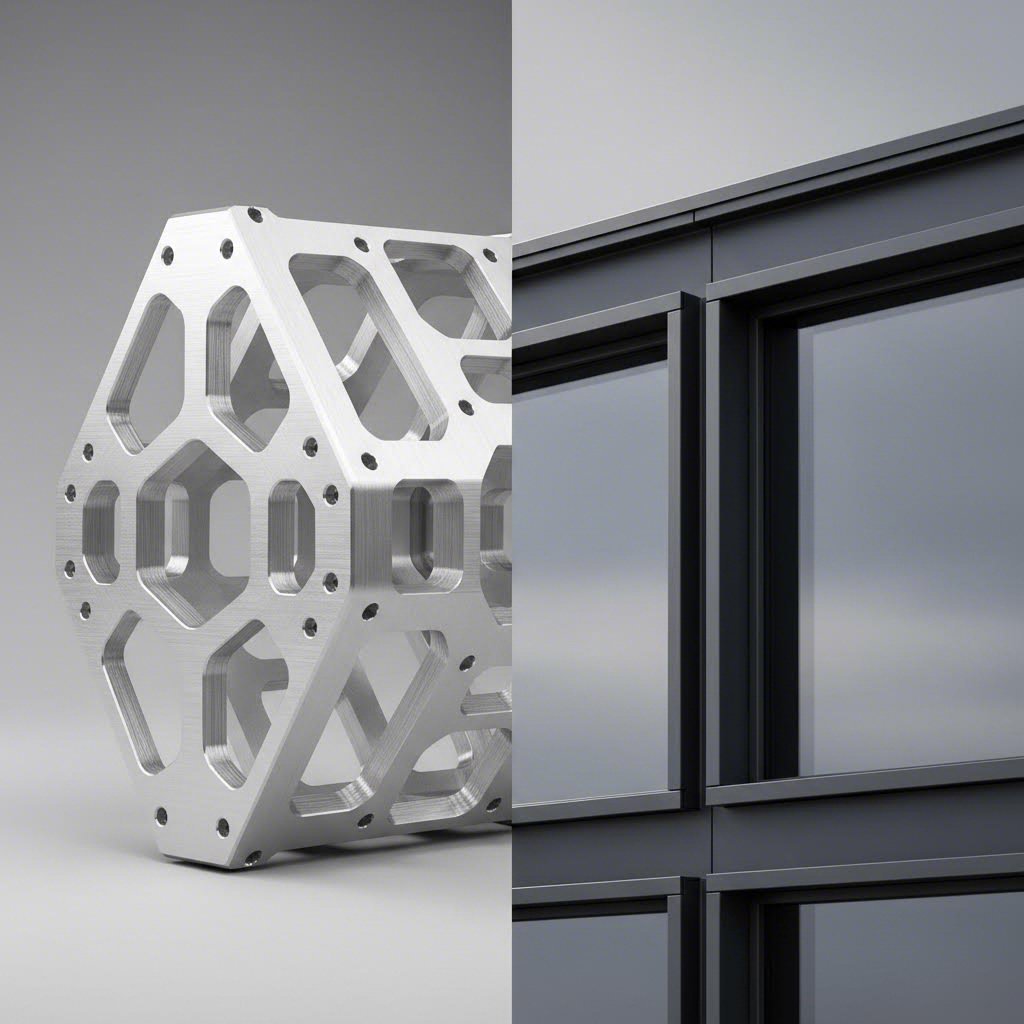
Certifications tell you a manufacturer has quality systems in place. But here's the critical question: does that manufacturer understand the specific demands of your industry? A supplier excelling in architectural profiles may struggle with aerospace aluminum extrusions — and vice versa. Each sector imposes unique requirements for tolerances, testing, documentation, and performance that directly impact whether your custom extrusions will succeed or fail.
Understanding these sector-specific demands helps you identify manufacturers with relevant experience. When you're evaluating potential partners, asking about their track record in your specific industry reveals far more than general capability statements ever could.
Let's break down what makes extrusion requirements fundamentally different across major industries. Each sector has evolved its own standards based on application demands, failure consequences, and regulatory oversight.
Aerospace — Where Precision Is Non-Negotiable
Aerospace applications represent the most demanding environment for custom extruded aluminum. According to European Business Review, a dimensional variance of just 0.005 inches can mean the difference between a part that fits perfectly and one that gets scrapped. When you're working with aluminum extrusions for aircraft structures, landing gear components, or fuel system parts, tolerance integrity isn't just a quality metric — it's a safety requirement.
What makes aerospace so challenging? The operating conditions most industrial parts never experience:
Tolerance requirements for aerospace aluminum extrusion services often reach ±0.001 inches or tighter. Achieving these specifications requires exceptional control over billet temperature (typically 700°F to 900°F with just 20-degree variance affecting dimensions by several thousandths), ram speed (5 to 30 feet per minute for complex profiles), and die design that compensates for material flow characteristics.
Manufacturers serving aerospace must also demonstrate complete material traceability. Every extrusion must be traceable to its original billet, with documented processing parameters, inspection results, and testing data. First article inspection reports, process capability studies showing Cpk values of 1.33 or higher, and AS9100 certification are essentially mandatory for entering this market.
Automotive — High Volume, Tight Tolerances, Zero Defects
Automotive custom extrusions operate in a different but equally demanding environment. While aerospace deals with low-volume, high-complexity parts, automotive manufacturers need consistent quality across millions of units. A single tolerance deviation that causes assembly line stoppages can cost hundreds of thousands of dollars per hour.
Key requirements for automotive aluminum extrusion services include:
Automotive suppliers must demonstrate mastery of advanced quality tools including Failure Mode Effects Analysis (FMEA), measurement system analysis, and control plans. The IATF 16949 certification validates these capabilities, but automotive OEMs typically conduct their own supplier audits as well.
Architectural — Aesthetic Consistency Meets Weathering Performance
Architectural applications prioritize visual consistency and long-term durability over extreme precision. When your extrusions form building facades visible from street level, color matching, surface finish uniformity, and weathering performance become paramount.
Architectural aluminum extrusion requirements focus on:
According to Southern Aluminum Finishing, AAMA specifications define coating performance across multiple categories. AAMA 2603 covers basic coatings suitable for interior use, AAMA 2604 provides intermediate performance, and AAMA 2605 represents the gold standard for monumental architectural applications requiring maximum durability.
Industrial — Structural Integrity and Custom Profiles
Industrial applications span the widest range of requirements — from machine frames and conveyor systems to heat sinks and enclosures. What unifies this sector is the need for custom extrusions engineered to specific functional requirements rather than standardized specifications.
Industrial extrusion requirements typically include:
Industrial buyers often require manufacturers who can partner on design optimization — suggesting profile modifications that reduce weight, improve strength, or simplify assembly while maintaining required performance.
Why does sector experience matter so much? Because manufacturers develop specialized capabilities, equipment, and expertise aligned with their primary markets. Consider the differences:
| Capability Area | Aerospace Focus | Automotive Focus | Architectural Focus | Industrial Focus |
|---|---|---|---|---|
| Typical Tolerances | ±0.001" to ±0.005" | ±0.005" to ±0.010" | ±0.010" to ±0.020" | Application-specific |
| Volume Orientation | Low-volume, high-mix | High-volume, repetitive | Medium-volume, project-based | Variable |
| Documentation Depth | Comprehensive traceability | Statistical process records | Finish certifications | As specified |
| Testing Requirements | Mechanical testing, NDT | Dimensional, capability studies | Weathering, salt spray | Functional validation |
| Key Certifications | AS9100, NADCAP | IATF 16949 | AAMA certified applicator | ISO 9001 minimum |
A manufacturer excelling in architectural work has invested in finishing capabilities, color matching equipment, and relationships with coating suppliers. Their quality systems emphasize visual inspection and weathering performance. Asking them to produce aerospace aluminum extrusions requiring coordinate measuring machine verification and full material traceability may expose capability gaps — not because they lack competence, but because their systems weren't designed for those demands.
Conversely, an aerospace-focused manufacturer may quote architectural work at premium prices because their quality systems generate documentation the architectural market doesn't require or value.
When evaluating manufacturers, ask specifically about their experience in your industry. Request references from similar applications. A track record of successful projects in your sector provides confidence that the manufacturer understands your unique requirements — from prototype aluminum extrusions through production volumes.
Understanding industry-specific requirements helps you ask better questions during supplier qualification. With sector demands clarified, the next consideration becomes whether your project calls for standard catalog profiles or justifies investment in custom die development.
You've identified your industry requirements and understand what certifications matter. Now comes a pivotal decision: should you specify standard catalog profiles or invest in custom aluminum extrusion tooling? This choice affects your project budget, timeline, and ultimately the performance of your finished product. Yet many buyers default to custom dies without fully evaluating the economics — or dismiss custom extrusion as too expensive without understanding the long-term value.
The truth? Both approaches have their place. Understanding when each option makes financial sense separates strategic procurement from costly guesswork.
Standard catalog profiles offer immediate availability and zero tooling investment. Major distributors stock thousands of aluminum extruded shapes — angles, channels, tubes, and T-slots — ready for quick shipment. If a standard profile meets your functional requirements, you avoid die costs entirely and benefit from competitive pricing driven by high-volume production.
But here's the tradeoff: standard profiles force design compromises. You're adapting your product to available shapes rather than optimizing the shape for your application. That extra wall thickness you don't need? You're paying for it in every foot of extrusion. Those assembly brackets required because the profile lacks integrated features? Additional cost, weight, and failure points.
Custom profile extrusions flip this equation. According to the Aluminum Extruders Council, the extrusion process provides the unique ability to create a shape with metal placed exactly where required for aesthetic, structural, or functional purposes. Custom dies let you integrate mounting features, optimize wall thicknesses, reduce assembly operations, and create signature designs impossible with catalog profiles.
| Factor | Standard Catalog Profiles | Custom Die Development |
|---|---|---|
| Upfront Tooling Cost | $0 | $300–$5,000+ depending on complexity |
| Lead Time to First Parts | Days (stock availability) | 2–4 weeks for die, plus extrusion scheduling |
| Minimum Order Quantity | Often 1 piece or small quantities | Typically 1,000–2,000 lbs per shape |
| Design Flexibility | Limited to available shapes | Unlimited within extrusion constraints |
| Per-Foot Cost | Competitive for common shapes | Optimized for your specific application |
| Assembly Implications | May require additional brackets/hardware | Can integrate features, reducing assembly |
What does custom extrusion tooling actually cost? According to Ya Ji Aluminum, die costs vary significantly based on profile complexity:
The Aluminum Extruders Council notes that extrusion tooling for presses with 7 to 10-inch circle size often costs between $1,000 and $2,000 for solid shapes and $1,200 to $4,000 for hollows, with typical lead times of 2 to 3 weeks. Compare this to rolled steel tooling exceeding $30,000 with 3-month lead times — custom aluminum extrusion offers remarkable accessibility.
The profile custom extrusions process from concept to production-ready tooling typically follows this timeline:
How do you determine whether custom profile extrusion justifies the investment? Consider amortizing die costs across your expected production volume. According to Ya Ji Aluminum, a simple calculation reveals the true impact:
Die cost = $2,000 | Expected lifetime = 40,000 kg | Amortized cost = $0.05 per kg
At just five cents per kilogram, tooling becomes negligible for production volumes. But there's more to the equation than die amortization. Custom extrusion typically makes financial sense when:
As the Aluminum Extruders Council emphasizes, the relatively low cost and quick availability for extrusion tooling not only preserves budgets but permits full-scale prototyping with little penalty for subsequent revision.
Who owns the die after you pay for it? Practices vary by manufacturer, but typically the customer owns tooling they've funded. However, dies usually remain at the extruder's facility for practical reasons — storage, maintenance, and immediate availability for production runs.
Key considerations for die management include:
For critical applications, discuss die backup strategies. Some buyers fund duplicate dies upfront to ensure production continuity if primary tooling requires repair.
The custom die development decision ultimately balances upfront investment against lifetime value. When your application demands optimized performance, integrated features, or differentiated design, custom profile extrusion delivers returns far exceeding tooling costs.
With die development economics clarified, understanding how to evaluate manufacturers' overall capabilities — and identify warning signs of problematic suppliers — becomes essential for making your final selection.
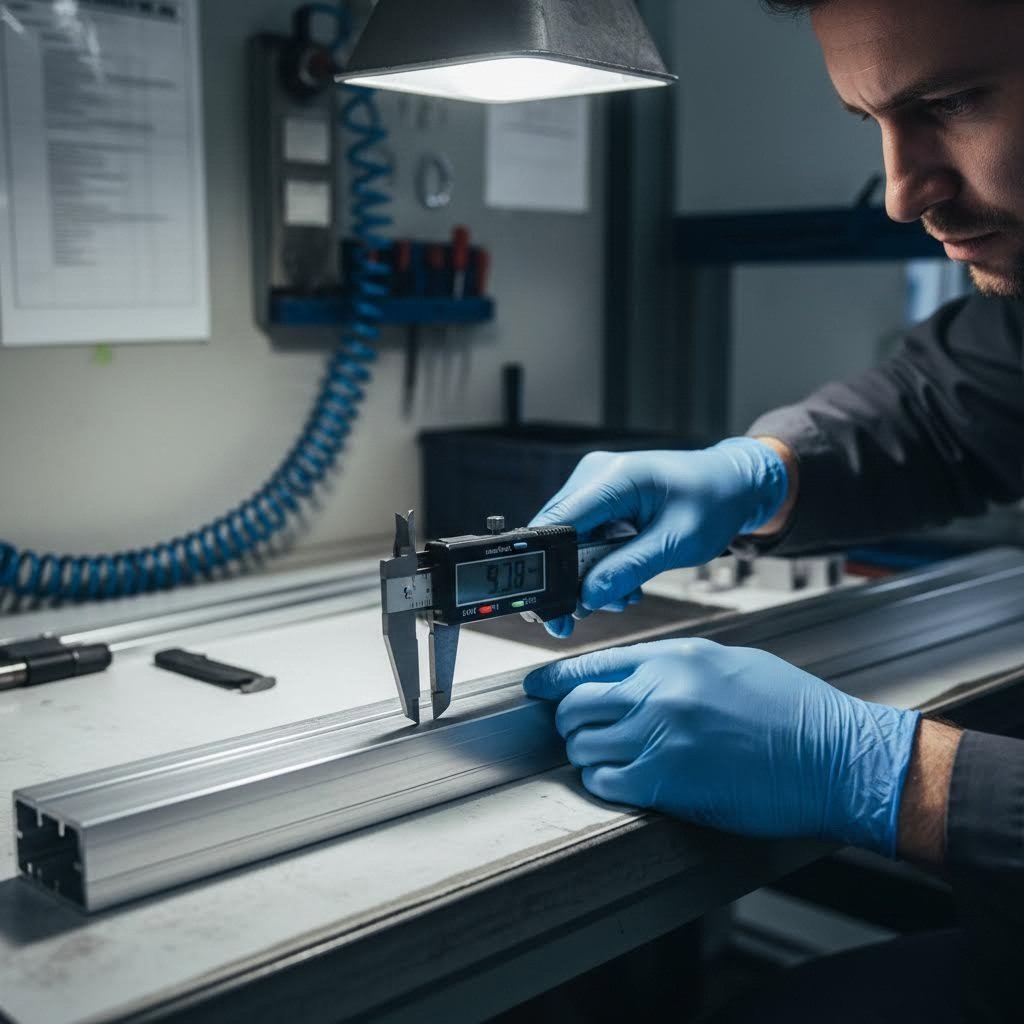
You've determined your alloy requirements, finishing needs, and whether custom tooling makes sense. Now comes the most consequential decision: which manufacturer deserves your business? Selecting the wrong partner leads to quality escapes, missed deadlines, and projects that cost far more than quoted. Yet many buyers lack a systematic framework for separating exceptional custom aluminum extruders from those who overpromise and underdeliver.
After evaluating countless aluminum profile extrusion suppliers, patterns emerge. The best manufacturers share common traits — and problematic ones display warning signs visible during qualification if you know where to look. This evaluation framework helps you assess potential partners objectively before committing purchase orders.
Before diving into positive selection criteria, let's address what should trigger immediate concern. According to DAA Vietnam, recognizing these warning signs early prevents costly mistakes downstream:
Quality Indicators That Demand Attention
Business Practices That Raise Concerns
Beyond product quality, certain business behaviors should trigger caution:
Now let's build your positive evaluation framework. When qualifying a profile custom extrusion company, assess capabilities across these critical dimensions:
Equipment Capabilities
Technical Support Quality
Quality Control Systems
According to Kimsen Global, a comprehensive quality assessment should verify:
Lead Time Reliability and Capacity
Communication Responsiveness
Documentation and certifications establish baseline qualification, but nothing replaces firsthand observation. Facility visits reveal operational realities that paperwork cannot capture:
If physical visits aren't feasible, request virtual factory tours, detailed facility photos, or video walkthroughs. Many certified aluminum suppliers for custom products now offer comprehensive virtual audit capabilities.
Sample evaluation provides tangible evidence of capability. Before committing to production volumes, request:
The decision between domestic and offshore sourcing involves tradeoffs beyond unit price. Each approach offers distinct advantages depending on your priorities:
According to Altraco, when working with offshore manufacturers, critical additional steps include: comprehensive NDAs before sharing proprietary information, manufacturing agreements explicitly defining IP ownership, financial due diligence to verify stability, and clear export documentation for customs compliance.
The lowest quote rarely represents the lowest total cost. Factor in quality-related expenses, logistics complexity, communication overhead, and supply chain risk when comparing domestic versus offshore options.
With a comprehensive evaluation framework in hand, understanding how manufacturer capabilities affect total project cost — beyond simple unit pricing — becomes your final consideration before making selection decisions.
You've identified qualified manufacturers and understand how to evaluate their capabilities. But here's where many procurement decisions go wrong: focusing exclusively on quoted piece prices while ignoring the costs that actually determine project success. The manufacturer quoting $2.50 per foot may ultimately cost you far more than the one quoting $3.25 — once you account for tooling, quality failures, logistics delays, and supply chain complexity.
Understanding total cost of ownership transforms how you evaluate extrusion profiles from potential suppliers. This framework reveals why the cheapest quote rarely delivers the lowest actual cost — and helps you identify manufacturers whose capabilities genuinely reduce your total project investment.
According to Ya Ji Aluminum, the complete aluminum extrusion cost breakdown follows a straightforward formula:
Total Cost = Die Cost + Raw Material + Production + Finishing + Shipping
Each component interacts with the others in ways that aren't immediately obvious from a simple quote comparison. Let's break down what really drives your total investment — and where manufacturer selection creates hidden cost differences.
Tooling Costs — The Investment That Keeps Giving
We covered die development economics earlier, but tooling costs extend beyond initial investment. Consider the full picture:
A manufacturer offering "free tooling" may simply be burying die costs in inflated piece prices — costing you more over the project lifetime than transparent tooling charges.
Raw Material Costs — More Variable Than You Think
Aluminum pricing fluctuates based on global commodity markets, with the London Metal Exchange setting baseline prices that affect every manufacturer. However, raw material costs vary between suppliers based on:
The costs that don't appear on quotes often determine whether a project succeeds financially. Here's what experienced buyers watch for:
Quality-Related Costs
When extruded profiles arrive out of specification, your costs multiply rapidly:
According to AngleLock, maintenance and quality issues accumulate dramatically over time. Their analysis showed that a structural framing system with ongoing maintenance needs could cost over $5,650 across 10 years compared to just $477 for a higher-quality alternative — despite similar initial pricing.
Logistics and Lead Time Costs
Sourcing decisions affect more than piece prices:
As Ya Ji Aluminum notes, buyers should evaluate total landed cost — not just ex-works pricing. Local or regional suppliers may offer faster delivery, lower shipping costs, and easier quality resolution that offset higher base prices.
Supply Chain Risk Costs
Recent years have demonstrated the true cost of supply chain disruption. Risk-related costs include:
Here's where manufacturer capabilities create significant cost advantages. When a single supplier handles extrusion plus secondary operations, you eliminate handoffs that add cost, time, and quality risk.
Integrated Finishing Services
Manufacturers with in-house anodizing, powder coating, and specialized treatments offer:
Fabrication and Machining Integration
For both large aluminum extrusions and small aluminum extrusions requiring secondary operations, in-house CNC machining capabilities reduce total project cost through:
Consider how manufacturers with comprehensive capabilities reduce supply chain complexity. For example, Shengxin Aluminium's deep processing services encompass end-to-end capabilities from die development through mass production, including CNC machining, precise cutting, drilling, and bending. This integrated approach — available from facilities operating 35 extrusion presses ranging from 600T to 5500T — eliminates the coordination overhead of managing multiple suppliers while maintaining quality accountability under one roof.
Assembly and Kitting Services
Some extrusion products arrive ready for immediate installation, further reducing your costs:
When comparing manufacturers, build a comprehensive cost model that captures these elements:
| Cost Category | Elements to Include | Often Overlooked? |
|---|---|---|
| Quoted Price | Per-unit cost, tooling charges, setup fees | Rarely |
| Quality Costs | Inspection labor, rejection rate history, rework probability | Frequently |
| Logistics Costs | Freight, customs, insurance, packaging requirements | Sometimes |
| Inventory Costs | Safety stock requirements, carrying costs, warehouse space | Frequently |
| Risk Costs | Supply disruption probability, qualification of alternatives | Usually |
| Administrative Costs | PO management, supplier communication, dispute resolution | Usually |
| Secondary Operations | Finishing, machining, assembly — internal or outsourced | Sometimes |
Request itemized quotes that break down each cost component. Suppliers offering only lump-sum pricing make accurate comparison impossible and may be hiding unfavorable cost structures.
The manufacturer delivering lowest total cost often isn't the one with the lowest piece price. Comprehensive capabilities, proven quality, and reliable delivery create value that far exceeds modest price premiums.
With total cost of ownership framework established, you're equipped to make informed manufacturer selection decisions. The final step is developing your action plan for engaging potential partners and launching your extrusion project successfully.
You've now assembled a comprehensive framework for evaluating manufacturers — from understanding extrusions and alloy selection through quality certifications, industry requirements, and total cost of ownership. But knowledge without action delivers no results. The difference between successful procurement and frustrating supplier relationships comes down to how effectively you execute your selection process.
Ready to move from research to results? Let's translate everything you've learned into a clear action roadmap that positions your project for success from the first supplier conversation through production launch.
Before sending your first RFQ, invest time in proper preparation. According to Aluminum Processing Hub, buyers who develop clear specifications and evaluation criteria before engaging suppliers consistently achieve better outcomes than those who rush into quotation requests.
Here's your sequential action framework:
Technical consultation early in your project delivers outsized returns. As noted by Ya Ji Aluminum, experienced engineers can identify opportunities to optimize wall thicknesses, integrate features that eliminate assembly operations, and select alloys that balance performance with cost. These conversations often reduce total project cost by 10-20% compared to simply quoting your original design.
When evaluating potential partners, prioritize manufacturers demonstrating:
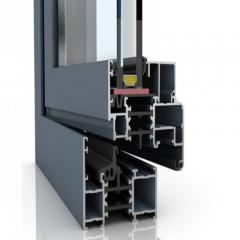
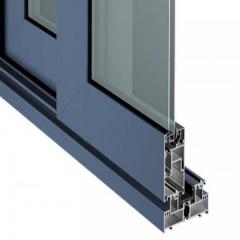
For buyers seeking a high quality aluminum extrusion manufacturer with proven capabilities, Shengxin Aluminium represents a strong option worth exploring. With over 30 years of industry experience, their facility operates 35 extrusion presses ranging from 600T to 5500T — providing flexibility for everything from small precision profiles to large structural sections. Their end-to-end capabilities span die development through mass production, including CNC machining and diverse surface treatments such as anodizing in custom colors, powder coating, PVDF, and micro-arc oxidation.
Whether you need custom 6063 aluminum tubes, architectural window frames, or complex industrial profiles, their technical team provides support throughout your project lifecycle. Factory-direct pricing eliminates intermediary markups, while comprehensive processing services — cutting, drilling, bending, and finishing — consolidate your supply chain under one accountable partner.
The manufacturer you select becomes an extension of your production capability. Choose partners who invest in understanding your application, proactively solve problems, and deliver consistent quality — not just the lowest quoted price.
Your aluminum extrusion project deserves a partner committed to your success. Start by developing clear specifications, engaging manufacturers in technical consultation, and evaluating capabilities against the comprehensive framework this guide provides. The investment in proper supplier selection pays dividends across every production run — in quality, delivery reliability, and total project cost.
Ready to explore what a full-service extrusion partner can deliver? Contact Shengxin Aluminium's technical team to discuss your custom extrusion requirements and discover how integrated capabilities from die design through finished profiles can streamline your next project.
Start by verifying industry certifications like ISO 9001, AS9100 for aerospace, or IATF 16949 for automotive applications. Evaluate their press capabilities, in-house finishing options, and track record in your specific industry. Request references, conduct facility visits when possible, and obtain sample extrusions before committing to production volumes. Manufacturers like Shengxin Aluminium offer 30+ years of experience with 35 extrusion presses and comprehensive services from die development to mass production.
Custom die costs typically range from $300-$800 for solid profiles, $800-$1,500 for semi-hollow designs, and $1,000-$5,000+ for complex hollow or multi-cavity dies. Lead times average 2-4 weeks. When amortized across production volumes, tooling often adds just pennies per unit. For example, a $2,000 die spread across 40,000 kg of production equals only $0.05 per kilogram—making custom extrusion economically viable for most projects.
The optimal alloy depends on your application. 6063 aluminum excels in architectural applications with excellent surface finish and anodizing response. 6061 provides higher strength for structural components, automotive parts, and marine applications. 7075 delivers aerospace-grade strength for critical components where weight-to-strength ratio matters most. Most manufacturers recommend 6063 or 6061 in T5 or T6 temper for general applications due to their balance of properties and cost-effectiveness.
Essential certifications vary by industry: ISO 9001 provides baseline quality management for general manufacturing; AS9100 is mandatory for aerospace applications requiring full traceability and configuration management; IATF 16949 covers automotive requirements including PPAP and statistical process control. Material compliance with ASTM B221M ensures aluminum meets chemical composition and mechanical property standards. Always verify certifications are current and audit frequency is maintained.
Domestic suppliers offer shorter lead times, easier communication, simplified logistics, and stronger IP protection—ideal for time-sensitive or proprietary projects. Offshore manufacturers may provide lower unit costs and access to large-scale capacity. However, factor in total landed cost including freight, customs, inventory requirements, and supply chain risk. Many buyers find that domestic or regional suppliers deliver lower total cost of ownership despite higher piece prices.



 خدمة الإنترنت
 0086 136 3563 2360
 sales@sxalu.com
 +86 136 3563 2360
 العربية
 English
 français
 Deutsch
 русский
 español
 português
 ไทย
ไทย Việt
Việt Українська