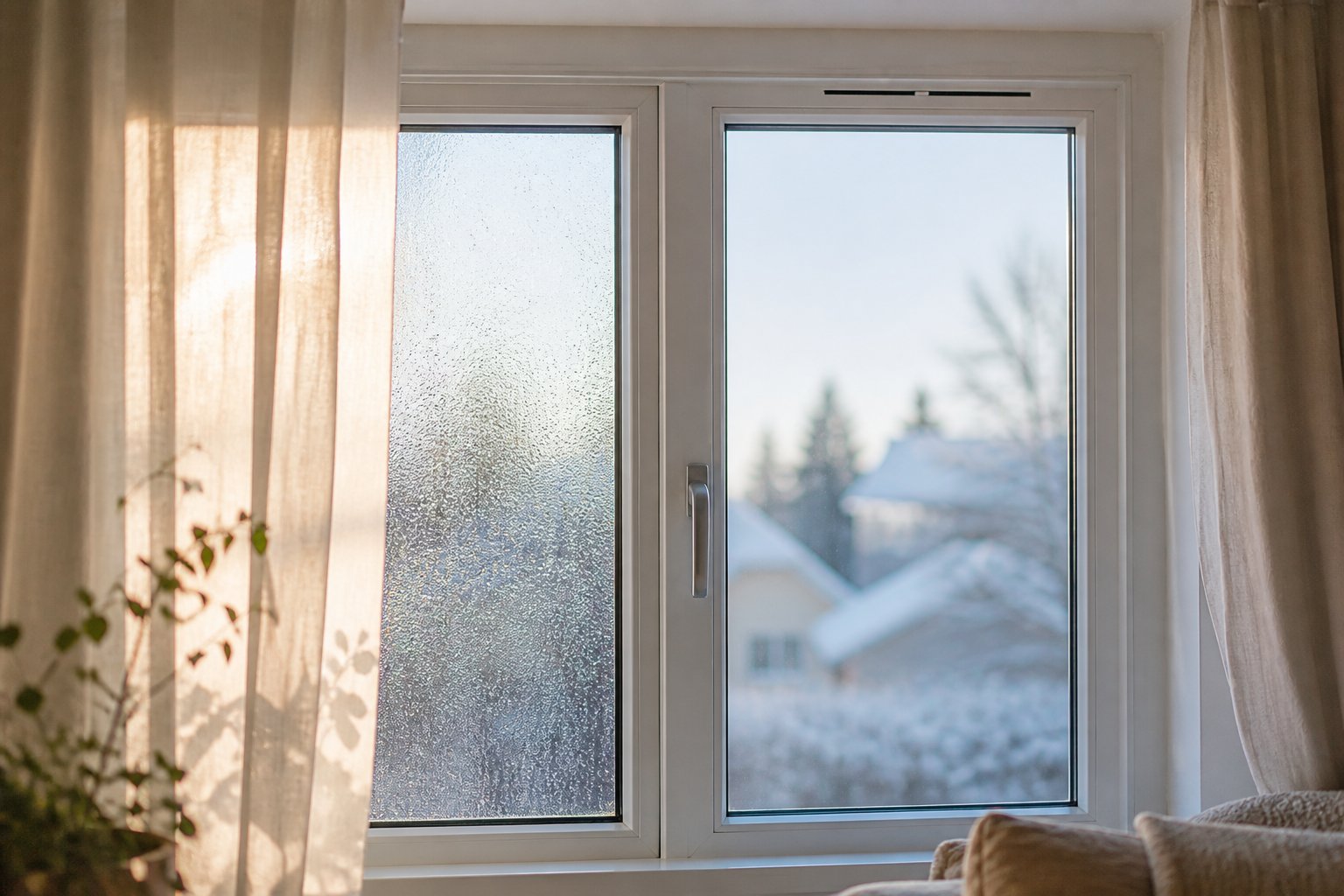
Yes, trickle vents do stop condensation in most homes by allowing a continuous, controlled flow of fresh air that prevents indoor humidity from building up to the point where moisture settles on cold glass. They are not, however, a magic fix for every situation - they work best as part of a broader moisture management approach that also addresses ventilation habits and moisture sources.
If you have ever woken up to water streaming down your windows on a cold morning, you are far from alone. Condensation on windows is the single most common ventilation complaint in modern homes. And ironically, the better your home is insulated and sealed, the more likely you are to experience it.
Here is the paradox many homeowners face. Energy-efficient double glazing, draught-proofing, and improved wall insulation are all designed to keep warmth in and energy bills down. They do that job well. But they also create an unintended side effect: they trap the moisture you generate every single day through cooking, showering, breathing, and drying laundry. As Dynamic Fenestration explains, older homes "breathed" by accident through gaps and cracks, but modern homes must be taught how to breathe - intentionally, continuously, and correctly. Without that deliberate airflow, humidity accumulates indoors, and condensation becomes inevitable.
Trickle vents address this problem at its root. These small openings in the window frame allow a gentle exchange of indoor and outdoor air even when your windows are fully closed and locked. That steady background ventilation keeps relative humidity low enough that moisture no longer condenses on glass surfaces - especially during winter, when the temperature gap between warm indoor air and cold window panes is at its widest.
Trickle vents significantly reduce condensation in most homes by maintaining continuous background airflow, but they are one part of a whole-house moisture management strategy that includes extract fans, behavioral habits, and addressing moisture at its source.
Whether you are a homeowner trying to figure out the best way to reduce window condensation at home, a renter wondering why your double glazed windows are dripping wet every morning, or a window installer looking for clear guidance to share with clients, this guide is built for you.
In the sections ahead, you will find a thorough breakdown of the science behind condensation - why it forms, where it appears, and what the dew point actually means in plain language. You will learn exactly how trickle vents work mechanically, the different types available, and which ones are most effective at tackling moisture. You will also get an honest look at whether trickle vents make your home colder and how they compare against other solutions like PIV units, MVHR systems, and dehumidifiers. For those dealing with persistent damp, there is a practical action plan for situations where trickle vents alone are not enough.
The goal is straightforward: give you the complete, impartial picture so you can make a confident decision about how to stop condensation on double glazed windows - without wasting money on solutions that do not match your problem.
That complete picture starts with understanding exactly what is happening on the surface of your glass when those water droplets appear.

Those water droplets clinging to your windows on a cold morning are not random, and they are definitely not a sign that your glass is leaking. What you are actually seeing is a straightforward physical process - one that plays out every time warm, moisture-carrying air meets a surface cold enough to force that moisture out of the air and back into liquid form.
Understanding why condensation forms on the inside of windows is the essential first step toward knowing whether trickle vents, or any other solution, can solve your specific problem. The science is simple once you strip away the jargon.
Imagine the air inside your home as a sponge. Warm air is a large sponge - it can absorb and hold a significant amount of water vapor. Cool air is a much smaller sponge. It holds far less moisture before it becomes fully saturated.
The dew point is the exact temperature at which that air-sponge reaches maximum capacity. Drop the temperature any further, and the air has no choice but to release its excess moisture as liquid water. That released water is condensation.
Here is where your windows come in. Glass is always one of the coldest surfaces in any room during winter. Even while your living room sits comfortably at 20°C, the inner surface of a window pane can be significantly colder - sometimes cold enough to hit the dew point of the room's air. The moment that happens, water vapor from the air contacts the glass and transforms into the visible droplets you wipe away each morning.
Relative humidity measures how close your indoor air is to its saturation point, expressed as a percentage. At 100% relative humidity, the air is fully saturated and condensation is guaranteed on any surface at or below the air temperature. In a typical home during winter, indoor relative humidity between 40% and 60% is considered healthy. Push above that range, and window condensation becomes increasingly likely, especially overnight when glass temperatures drop further.
So what causes condensation on double glazed windows? The same physics. If indoor humidity climbs high enough - from cooking, showering, drying laundry, or simply breathing overnight in a closed bedroom - even the relatively warm inner pane of a double-glazed unit can fall below the dew point. The glass is not faulty. The balance between moisture and temperature has simply tipped.
Not all window condensation tells the same story. Where the moisture appears reveals a lot about what is actually going on - and whether ventilation solutions like trickle vents can help.
Internal condensation forms on the room-side surface of the glass. This is the most common type homeowners encounter, and it is almost always a ventilation or humidity problem rather than a window defect. Warm, moist indoor air reaches the cold glass, the surface temperature sits below the dew point, and water droplets appear. Trickle vents, extractor fans, and behavioral changes all target this type effectively because they reduce the moisture load in the indoor air.
Condensation between the panes is a different matter entirely. If you notice a cloudy, misty appearance trapped inside the sealed unit that you cannot wipe away from either side, the hermetic seal between the glass panes has failed. Moist air has entered the cavity, and no amount of ventilation will fix it. As the Glass and Glazing Federation notes, sealed unit failure is one of the most common reasons homeowners seek window replacements - and it is entirely separate from surface condensation management. The only remedy is replacing the sealed glazing unit itself.
External condensation - moisture forming on the outside surface of the outer pane - is the one type you should actually welcome. It means your window is doing its job well. High-performance glazing keeps so much heat inside that the outer pane stays cold, sometimes cold enough for outdoor air moisture to condense on it. This typically occurs on still, clear mornings when outdoor humidity is high and disappears as the air temperature rises. No action is needed.
The type of glazing in your windows plays a major role in how likely internal condensation is to form. It all comes down to how warm the inner pane stays relative to the room's dew point.
Single-glazed windows offer almost no insulating barrier. The inner pane temperature closely tracks the outdoor temperature, dropping dramatically during cold weather. That creates a massive temperature differential between the heated room air and the glass surface - exactly the condition that makes condensation nearly unavoidable.
Double-glazed windows introduce an insulating gas cavity between two panes. This keeps the inner pane significantly warmer, raising it well above the dew point in most normal conditions. Condensation still occurs when indoor humidity is unusually high or during severe cold snaps, but the risk is substantially lower.
Triple-glazed windows add a third pane and a second insulating cavity, pushing the inner pane temperature even closer to room temperature. They reduce the likelihood of condensation further, but they do not eliminate it entirely. Extremely high indoor humidity combined with inadequate ventilation can still produce moisture on even the best-performing glass.
| Glazing Type | Typical Inner Pane Surface Temperature (when outdoor temp is around 0°C) | Internal Condensation Risk | External Condensation Risk |
|---|---|---|---|
| Single Glazed | 1°C - 5°C | Very High - glass stays close to outdoor temperature | Low - heat escapes through, warming outer pane |
| Double Glazed | 11°C - 15°C | Moderate - forms mainly when indoor humidity exceeds 50-60% | Moderate - outer pane stays cooler |
| Triple Glazed | 16°C - 18°C | Low - inner pane stays close to room temperature | Higher - excellent insulation keeps outer pane very cold |
You will notice an interesting trade-off in the table above. As glazing performance improves and internal condensation risk drops, external condensation risk actually increases. That is the hallmark of a well-insulated window - so little heat escapes that the outer pane behaves almost like an outdoor surface.
The key takeaway from all of this is that condensation is not a glass problem. It is the visible result of a relationship between indoor moisture levels, air temperature, and surface temperature. Windows simply happen to be the coldest surface where that relationship plays out first. And that is precisely why controlling the airflow and moisture inside your home - through mechanisms like trickle vents - matters so much more than the glass itself.
Controlling moisture and surface temperature is one half of the condensation equation. The other half is managing what moves the moisture around in the first place - the air itself. Trickle vents are engineered to do exactly that, but their simplicity often leads homeowners to underestimate the physics happening inside a small slot in the window frame.
So how do trickle vents work on windows? At their core, they exploit natural pressure differences between the inside and outside of your home to draw a continuous trickle of fresh air through a narrow opening - no fans, no electricity, no moving parts in most designs. Understanding that mechanism helps explain why they are so effective at keeping condensation at bay.
Imagine your home as a sealed box sitting in a breeze. Wind hitting the exterior walls creates slightly higher pressure on the windward side and lower pressure on the sheltered side. At the same time, warm air inside your home naturally rises toward the ceiling and upper floors, creating what engineers call the stack effect - a vertical column of buoyant air that generates its own subtle pressure differences between the bottom and top of the building.
These two forces - wind pressure and stack effect - work together to create a small but persistent pressure gap between the indoor and outdoor environments. A trickle vent provides a controlled pathway for air to flow through that gap. Fresh outdoor air enters through the vent slot, mixes with the indoor air, and stale, moisture-laden air is displaced outward through other openings or exhaust points in the home.
Research conducted at Riga Technical University confirmed this relationship by testing factory-built trickle vents across pressure differences ranging from 5 Pa to 100 Pa. The results showed a clear, linear correlation: as the pressure difference increases, so does the airflow through the vent. Even at a modest pressure differential of 20 Pa - typical for a ground-floor room in cold weather - the vents delivered measurable and consistent airflow without any mechanical assistance.
The stack effect also means that trickle vents on lower floors tend to draw in more air than those on upper floors, where the driving pressure diminishes. In cold climates, first-floor pressure differentials can reach around 20 Pa or higher, while upper floors in a multi-story building may see only 3 to 5 Pa. That difference matters when sizing ventilation for a specific room, but in a typical one- or two-story house, the natural pressure is usually sufficient to keep air moving through the vents continuously.
If you have ever shopped for trickle vents, you will have encountered a specification called the equivalent area (EA) rating, measured in square millimeters (mm²). Sounds technical? It is actually a straightforward concept.
The EA rating represents the effective open area of the vent through which air can pass. Think of it as the size of the "breathing hole" in your window frame. A higher EA number means a larger effective opening and greater ventilation capacity. A vent rated at 5,000 mm² allows substantially more airflow than one rated at 2,500 mm² under the same pressure conditions.
Typical trickle vents on the market range from approximately 3,000 to 8,000 mm² per vent, with common residential units sitting in the 4,000 to 5,000 mm² range. Building regulations often specify minimum EA values depending on the room type:
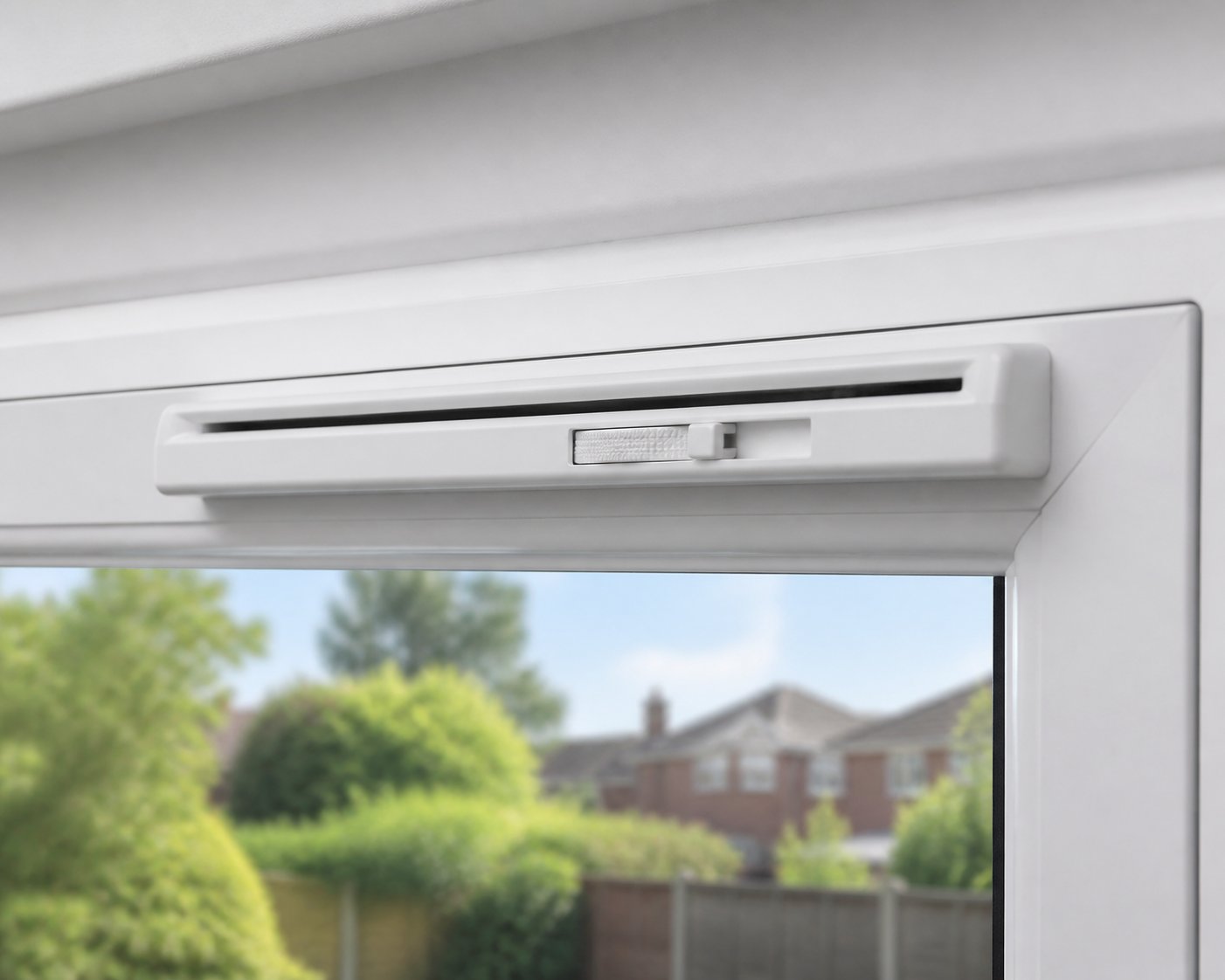
These targets can be met with a single high-capacity vent or a combination of smaller units. The physical construction is consistent across most designs: a narrow slot is routed into the head (top rail) of the window frame, and both an internal canopy and an external canopy are fitted over it. The external canopy deflects rain and insects while still allowing air through. The internal canopy often includes adjustable slats so you can regulate airflow - or close the vent entirely if needed, though keeping it open is almost always the better choice for condensation control.
What about real-world airflow numbers? Laboratory testing of two vent designs showed that at a 20 Pa pressure difference, individual units delivered between roughly 12 and 18 m³/h of air, depending on their cross-sectional area. Vents with larger openings consistently outperformed narrower designs at every pressure level tested, reinforcing the principle that EA rating directly predicts how much airflow a vent provides under real conditions.
Here is where the condensation argument becomes especially compelling. Many homeowners try to manage indoor moisture by throwing open a window for ten or fifteen minutes a few times a day - a practice sometimes called "burst ventilation" or "purge ventilation." It works in the moment. You feel the rush of cold air, the room clears out, and for a short time humidity drops.
But here is the problem: moisture generation in your home never stops. You breathe out water vapor all night. The shower runs every morning. The kettle boils. Laundry hangs on a drying rack. Between those brief window-opening sessions, humidity steadily climbs back up, and by 3 AM - when no one is cracking a window - the indoor air is saturated enough for condensation to form on glass surfaces once again.
Trickle vents solve this by providing background ventilation without opening windows. The airflow is small and constant rather than large and intermittent. That steady exchange prevents humidity from accumulating in the first place. Instead of repeatedly letting moisture build to a tipping point and then flushing it out, you maintain an equilibrium where indoor humidity stays below the level that would trigger condensation on your windows.
Think of it like a bathtub with the faucet trickling. If the drain is slightly open all the time, the water level never rises high enough to overflow. Close the drain and only open it periodically, and you are constantly racing to empty the tub before it spills over. Trickle vents are that always-open drain for moisture in your home's air.
This principle is especially critical during winter months, when opening a window feels deeply impractical. On a freezing January morning, the last thing anyone wants to do is invite near-zero air into a bedroom. Trickle vents bypass that reluctance entirely. They exchange just enough air - typically at rates between 5 and 10 liters per second per meter of window length - to keep humidity in check without creating noticeable drafts or significant heat loss.
The mechanical simplicity is also worth appreciating. No electricity, no filters to replace in standard models, no controls to program. A well-installed trickle vent works passively, year after year, using nothing more than the natural pressure forces your home already generates. That reliability is precisely why building regulations in many regions now mandate their inclusion when replacement windows are fitted - a subject that raises its own set of important questions about vent types, materials, and how different designs handle condensation with varying degrees of effectiveness.
Not all trickle vents are created equal. While the underlying physics - pressure-driven airflow through a narrow opening - stays the same across every design, the way different vent types handle condensation, noise, and user control varies significantly. Choosing the best type of trickle vent for condensation depends on your home's specific challenges: how much moisture you generate, how noisy your street is, what your window frames are made from, and whether you want to adjust the vent yourself or let it respond automatically.
Here is a quick overview of the main categories and how each one performs at controlling moisture on your windows:
Each category deserves a closer look, because the differences matter more than most homeowners realize.
The standard manually operated trickle vent is the workhorse of residential ventilation. You have almost certainly seen one - a slim rectangular unit fitted into the head of a window frame with a small slider or flap that lets you open or close the airflow path. The construction is straightforward: a routed slot through the frame, an external canopy to deflect rain and insects, and an internal cover with an adjustable mechanism.
These vents do an excellent job of reducing condensation when left in the open position. The continuous background airflow they provide prevents indoor humidity from accumulating to the levels where moisture starts settling on cold glass. For a household with average moisture generation - a couple of occupants, regular cooking and bathing, no indoor laundry drying - a properly sized standard vent on each window is often all it takes to keep condensation under control.
The catch? They rely entirely on you. If you slide the vent closed on a cold evening because you think it is letting heat escape - a temptation most homeowners face at some point - the airflow stops and humidity starts climbing again. By morning, condensation is back. Standard vents work brilliantly, but only when they are actually open. That human variable is their one real weakness in the fight against window moisture.
If you live near a busy road, under a flight path, or in a bustling city center, the idea of keeping a slot permanently open in your window frame might make you wince. Standard vents allow air through, and sound travels with it. This is exactly the problem acoustic trickle vents are engineered to solve.
An acoustic vent incorporates internal baffles or sound-dampening foam linings that break up sound waves as they pass through the ventilation channel. The air still flows - condensation control remains effective - but the noise that would normally ride in with it gets absorbed before reaching your room. Specialist models like the Glidevale Acoustic Low Profile range can achieve sound reduction up to 42dB, which makes a meaningful difference for properties on streets where traffic noise regularly exceeds 70dB. For homeowners in urban areas, acoustic vents are not a luxury - they are often the reason people feel comfortable leaving their vents open at all, which is ultimately what makes condensation control work.
Humidity-controlled trickle vents take a different approach entirely. Instead of relying on you to decide when to open and close the vent, they make that decision themselves - based on the very thing you are trying to manage. Inside the unit, hygroscopic nylon strips expand as indoor humidity rises and contract as the air dries out. That expansion physically opens the vent wider, allowing more moist air to escape. When humidity drops back to a comfortable level, the strips contract and the vent partially closes, reducing unnecessary heat loss.
Why does this matter for condensation? Because the vent responds in real time to the conditions that cause the problem. When you run a hot shower and steam pours into the hallway, the humidity-sensitive vent in the bathroom window opens wider automatically - no intervention needed. At 3 AM, when everyone is asleep and moisture generation is low, the vent dials itself back. This targeted, automatic response makes humidity-controlled vents particularly effective at preventing condensation without wasting heat, and it eliminates the human error factor that limits standard manual vents.
The trade-off is cost. Humidity-sensitive vents carry a higher price point than standard models, and acoustic versions sit somewhere in between. But when you weigh that upfront cost against persistent condensation damage - mold remediation, repainting, and potential health concerns from prolonged damp - the investment often pays for itself quickly.
Beyond the operating mechanism, the material your trickle vent is made from needs to work with the window frame it sits in - both structurally and visually. The two most common material categories in the residential market are uPVC and aluminium, and each has distinct characteristics worth understanding.
uPVC trickle vents are the most widely used option across UK homes. They are lightweight, durable, and affordable, with excellent resistance to temperature fluctuations and UV exposure. Because the vast majority of residential windows in the UK use uPVC frames, compatibility is rarely an issue. Standard over-frame uPVC vents fit neatly into routed slots and are available in a wide range of colors - white, brown, black, grey, and woodgrain finishes - so matching your existing frame is straightforward. For condensation control, uPVC vents perform identically to their aluminium counterparts at the same EA rating; the material does not affect airflow performance.
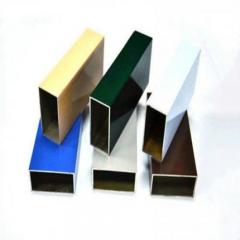
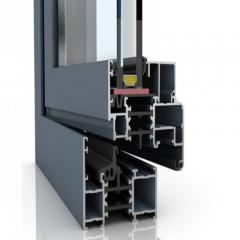
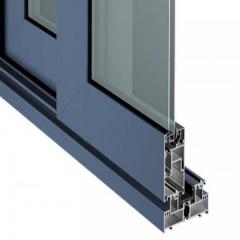
Aluminium trickle vents are the go-to choice for contemporary and commercial installations. Aluminium frames are prized for their slim sightlines and modern aesthetic, and a bulky plastic vent bolted onto a sleek aluminium profile would undermine the entire design. Slimline aluminium vents or frame-integrated options preserve that clean look while delivering the same background ventilation. They are also exceptionally durable - corrosion-resistant and capable of maintaining structural integrity over decades, even in exposed or coastal locations. Many aluminium vents come with a polyester powder-coated finish that can be color-matched to virtually any RAL number.
For timber windows, the priority shifts to visual integration. Timber vents are available with real wood veneers or can be color-matched to blend with natural grain finishes, ensuring the vent does not disrupt the traditional character of the frame. Timber is also the easiest material to rout when retrofitting vents to existing windows - a practical advantage that aluminium and uPVC frames share to varying degrees.
Ultimately, the right choice comes down to four factors: your noise environment, your budget, your frame material, and whether you want manual or automatic humidity response. A standard uPVC vent handles condensation perfectly well in a quiet suburban home. An acoustic aluminium model suits a city apartment on a main road. And a humidity-sensitive vent makes the strongest case in any property where occupants are unlikely to manage ventilation manually - rental properties, bedrooms, and busy family homes where no one remembers to adjust the slider.
Whichever type you choose, one question tends to follow immediately: if these vents let air through, do they also let your expensive heating escape? The concern is understandable - and the answer is more reassuring than most homeowners expect.
Let's be honest. Do trickle vents let cold air in? Yes, they do - that is literally their job. They create a controlled pathway between the warmer air inside your home and the cooler air outside. A small volume of heated indoor air escapes, and a small volume of unheated outdoor air enters. There is no way around that basic exchange.
But here is the part most people miss: the thermal loss from a correctly sized trickle vent is remarkably small, and it pales in comparison to the financial and structural damage that unchecked condensation inflicts over time. The real question is not whether trickle vents cost you heat. It is whether the heat they cost you is worth paying.
Picture a typical winter evening. You notice a faint whisper of cool air near the top of your bedroom window and instinctively slide the trickle vent shut. The room feels marginally warmer, you feel like you have done something sensible, and you go to bed satisfied. By morning, the inside of the glass is dripping wet. Within weeks, black mold speckles appear in the window reveal. Within months, the silicone seal at the frame edge starts to darken. Within a year or two, the timber sub-frame - if your home has one - begins to soften with rot.
That cascade is not hypothetical. It plays out in thousands of homes every winter, and the remediation costs are steep. Professional mold treatment for a single room can run into hundreds of pounds. Redecorating after moisture damage adds more. Replacing a rotted window frame pushes the bill higher still. And none of that accounts for the health implications: prolonged exposure to mold spores is linked to respiratory problems, allergic reactions, and worsened asthma symptoms - costs that never show up on a bill but are very real nonetheless.
Compare that to the energy cost of keeping the vent open. HVAC professionals consistently describe the heat loss from trickle vents as minimal. As Josh Mitchell, an HVAC technician quoted by Homes & Gardens, puts it: "The airflow from open trickle vents is minimal but essential. It helps keep your home's air clean and healthy." Kevin Goude, another experienced HVAC expert featured in the same piece, reinforces this by noting that trickle vents help "reduce your home's humidity and prevent mold growth, even in winter. Closing them may lead to stale air and condensation inside windows, which can affect both your home and health."
Homeowners who close trickle vents to save a few pounds on heating often end up spending hundreds - sometimes thousands - on mold remediation, redecorating, and window frame repairs caused by the very condensation those vents were designed to prevent.
The math simply does not favor closing them. A trickle vent introduces air at a rate of roughly 5 to 10 liters per second. Your heating system barely registers the difference. But your windows, walls, and lungs absolutely register the difference when that airflow stops.
Here is the counterintuitive truth that trips up so many homeowners: the more energy-efficient your home is, the more likely you are to suffer from condensation - unless you actively manage ventilation.
Think about what happens when you upgrade to high-performance double or triple glazing, seal every draft, insulate your walls, and fit a new front door with compression seals. You have essentially wrapped your home in a thermal blanket. Heat stays in, energy bills drop, and everything feels like a success - until moisture starts appearing on cold mornings.
The reason is straightforward. Older, drafty homes "breathed" through gaps around windows, under doors, through floorboards, and via poorly sealed loft hatches. That accidental ventilation was terrible for energy efficiency, but it did one thing well: it allowed moisture to escape. A typical household generates between 10 and 15 liters of water vapor every single day through cooking, bathing, breathing, and drying laundry. In a leaky old house, much of that moisture drifted out through the cracks before it could cause problems.
Seal those cracks with modern construction standards, and suddenly all that moisture has nowhere to go. It accumulates in the indoor air, pushing relative humidity higher and higher. As Green & Healthy Maine Homes explains, "a well-sealed home that fails to include mechanical ventilation will likely suffer from moisture issues and a buildup of unwanted contaminants, resulting in an unhealthy interior environment." The article emphasizes that airtightness and ventilation must go hand in hand - you cannot have one without the other and expect a healthy home.
This is exactly why airtight homes get more condensation. The insulation is doing its job. The windows are performing as designed. But without a deliberate air exchange strategy, the building traps moisture like a sealed jar. Trickle vents restore that missing ventilation pathway without undoing the thermal improvements you have invested in. They let the house breathe in a controlled way rather than forcing you to choose between energy efficiency and dry windows.
Should you close trickle vents in winter? Almost never. The instinct to shut them makes emotional sense - you can feel the cool air, and every fiber of your being says "stop the draft." But the data tells a different story.
As BWS Windows puts it bluntly: "Trickle vents aren't installed to save on energy bills, but to eliminate health and building problems: moisture leading to mould, stuffiness causing headaches, high CO₂ concentration reducing concentration." They exist to protect your home's fabric and your family's health. Expecting them to also be thermally invisible is asking them to do something they were never designed for.
That said, the heat loss they introduce is genuinely modest. Unlike opening a window - which creates a large, uncontrolled gap that dumps heat rapidly - a trickle vent channels air through a narrow, calibrated slot. The volume of air exchanged is a fraction of what even a slightly cracked window allows. You are trading a very small amount of warmth for a very large amount of moisture protection. If the slight temperature difference concerns you, practical countermeasures like draft stoppers at door thresholds, improved loft insulation, or simply keeping interior doors closed in high-moisture rooms will more than compensate.
The misconception that modern energy-efficient homes do not need additional ventilation is perhaps the most expensive myth in home maintenance. Your well-insulated, tightly sealed home needs ventilation more than the drafty house it replaced - not less. Trickle vents provide that ventilation at the lowest possible energy cost, and the trade-off between a marginal increase in heating demand and the prevention of costly, unhealthy condensation damage is not even close.
Understanding this trade-off naturally raises a follow-up question: how do trickle vents stack up against other condensation solutions that promise to solve the same problem in different ways?
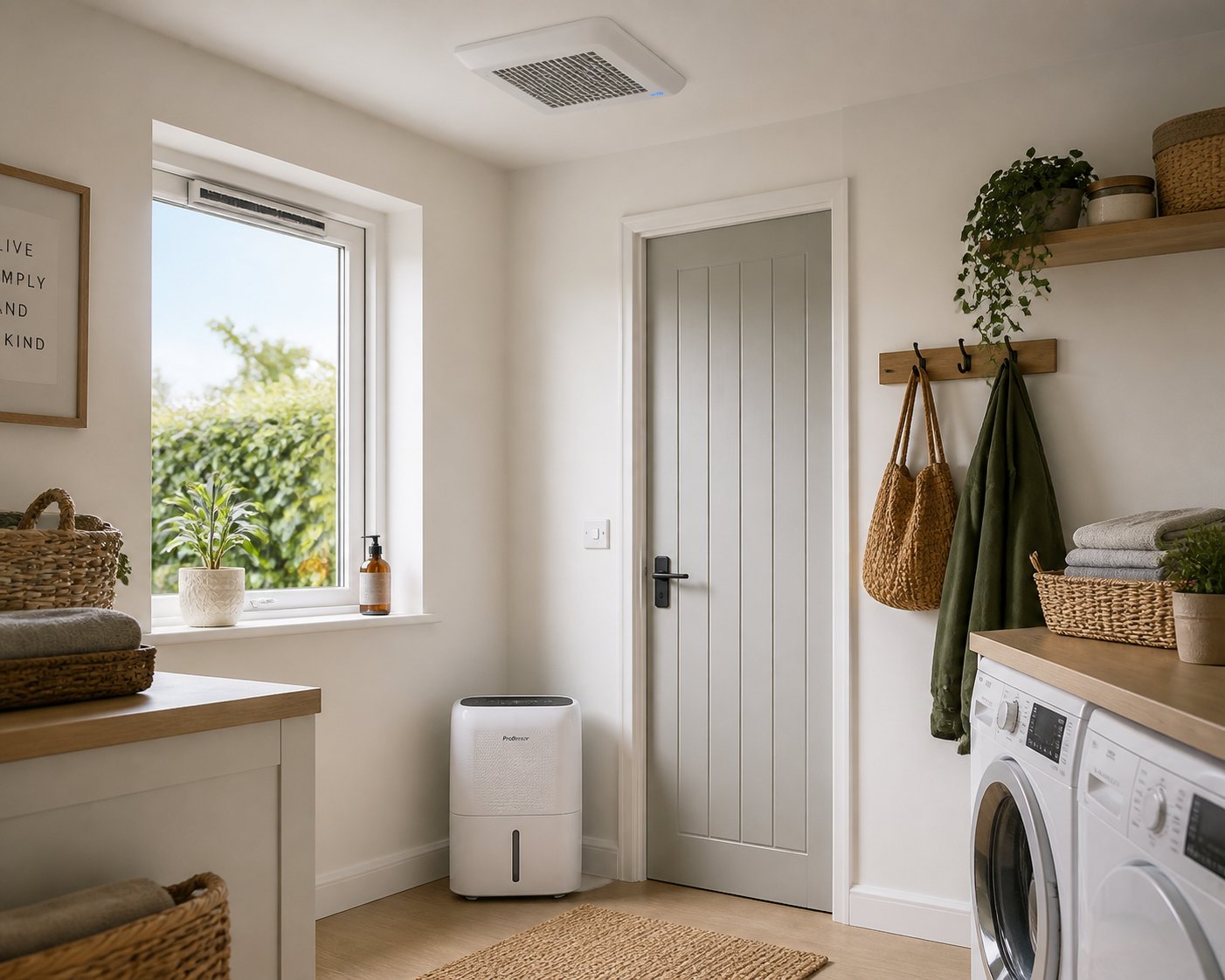
Trickle vents are far from the only weapon in the fight against window condensation. Extractor fans, whole-house mechanical systems, and standalone dehumidifiers all claim to solve the same problem - and each one genuinely does, in its own way. The real question is which approach fits your home, your budget, and the severity of your moisture issue. Comparing them side by side reveals where trickle vents sit in the hierarchy and why they remain the go-to baseline for most properties.
If trickle vents are the always-on background hum of ventilation, extractor fans are the targeted bursts. Mounted in kitchen and bathroom walls or ceilings, an extractor fan pulls moisture-laden air directly out of the room where it is generated - right at the point where steam from cooking or showering would otherwise drift through the house and settle on cold windows.
Most modern extractor fans include a boost mode that ramps up extraction speed when humidity spikes, such as during a hot shower or while boiling pasta. Some models activate automatically via built-in humidity sensors, while others rely on a pull-cord or wall switch. Running costs are negligible - Mouldex estimates an extractor fan at around 1.2W continuous draw costs roughly £2.56 per year in electricity. For localized condensation control in wet rooms, they are extremely effective and affordable.
Mechanical Extract Ventilation (MEV) takes that concept further. Instead of individual fans in each room, a single central unit - typically installed in the loft - connects to extract valves in every wet room via small-bore ducting. The unit runs continuously at a low trickle speed, providing constant background extraction, and boosts automatically when moisture levels rise. Fresh replacement air enters the home through trickle vents in the windows.
This pairing - MEV plus trickle vents - is actually one of the approved ventilation strategies under UK Building Regulations Part F (System 3). The MEV handles active extraction while trickle vents supply the replacement air. It is a reliable, mid-cost solution that works well in older and moderately airtight homes. The trade-off? Every cubic meter of warm air the MEV extracts gets replaced by cold, unfiltered air coming in through those trickle vents. There is no heat recovery, so you are paying to reheat that incoming air all winter long.
Positive Input Ventilation (PIV) flips the extraction model on its head. Instead of pulling stale air out, a PIV unit pushes fresh air in. A compact fan mounted in the loft draws relatively clean, dry air from the loft space, filters it, and gently feeds it into the home through a ceiling diffuser - usually on the landing. This creates a slight positive pressure indoors, which displaces moist, stale air outward through the building's natural gaps and leakage points.
PIV is remarkably effective in older, naturally leaky properties. It has been installed in over two million UK homes, largely driven by social housing programs tackling damp and mold. Running costs sit at approximately £38 per year, and installation is fast - often completed in under two hours. For a Victorian terrace or a 1930s semi plagued by condensation, a PIV unit can transform conditions within weeks.
The catch? PIV relies on the home being drafty enough for the pressurized air to escape. In a modern, well-sealed new build with tight air permeability, there simply are not enough gaps for the system to function properly. Pressure builds, the fan stalls against back-pressure, and ventilation rates plummet. This is why PIV is rarely specified in new construction and does not satisfy Building Regulations as a standalone ventilation strategy for airtight homes.
At the top of the hierarchy sits Mechanical Ventilation with Heat Recovery (MVHR). This is the most comprehensive system available. MVHR simultaneously extracts stale air from wet rooms and supplies fresh, filtered air to habitable rooms through two separate duct networks. The extracted warm air passes through a counter-flow heat exchanger, transferring up to 90-95% of its heat to the incoming cold air - without the two air streams ever mixing. You get continuous ventilation, filtered air supply, and dramatically reduced heat loss all in one package.
MVHR is the gold standard for modern, airtight homes. It addresses condensation by controlling both moisture removal and air supply temperatures. Incoming air arrives pre-warmed, so cold surfaces are less likely to drop below the dew point, while moisture-laden air is continuously extracted at the source. For anyone with allergies or asthma, the F7-grade filtration that captures pollen, dust, and diesel particulates is an additional benefit no other system matches.
The downside is cost and complexity. Installation involves running two full duct networks throughout the house, and the upfront investment is significantly higher than any other option on this list. For a retrofit in an existing home, the disruption can be substantial. MVHR makes the strongest case in new builds or deep renovations where ducting can be integrated during construction.
Where does a standalone dehumidifier fit? Think of it as a short-term, room-level intervention rather than a ventilation strategy. A dehumidifier draws humid air across cold coils, condenses the moisture into a collection tank, and returns drier air to the room. It is effective at pulling moisture out of the air quickly - useful after a leak, during renovations, or as a stopgap in a rental property where modifying windows is not an option. But at around £469 per year in running costs, a dehumidifier is by far the most expensive option to operate continuously. It also does nothing to introduce fresh air - it simply recirculates and dries what is already in the room.
Putting all these options side by side clarifies why trickle vents remain the foundational layer of residential condensation control:
| Solution | How It Works | Condensation Effectiveness | Cost Tier | Installation Complexity | Ongoing Maintenance | Coverage |
|---|---|---|---|---|---|---|
| Trickle Vents | Passive airflow through a slotted opening in the window frame, driven by natural pressure differences | Good - prevents moisture buildup in most homes with average humidity loads | Low | Low - routed into window frame head | Minimal - occasional wipe clean | Localized per window, but collectively provides whole-house background ventilation |
| Extractor Fans | Mechanically extracts humid air from kitchens and bathrooms, venting it outside | Very good in wet rooms - targets moisture at the source | Low | Low to moderate - requires wall or ceiling penetration and external vent | Low - periodic cleaning of grilles and filters | Localized to the room where installed |
| MEV (Mechanical Extract Ventilation) | Central fan unit continuously extracts from all wet rooms via ducting; replacement air enters through trickle vents | Very good - continuous extraction prevents humidity buildup | Medium | Moderate - central unit plus ducting to each wet room | Low to moderate - annual valve cleaning, periodic unit servicing | Whole-house extraction, but relies on trickle vents for supply air |
| PIV (Positive Input Ventilation) | Fan in loft pushes filtered air into the home, displacing moist air outward through natural gaps | Very good in older, leaky properties; poor in modern airtight homes | Low to medium | Low - loft-mounted unit with single ceiling diffuser | Low - filter replacement every 6-12 months | Whole-house in suitable properties |
| MVHR (Mechanical Ventilation with Heat Recovery) | Balanced supply and extract through two duct networks with heat exchanger recovering up to 95% of outgoing warmth | Excellent - controls both moisture removal and incoming air temperature | High | High - full ducted system through the entire home | Moderate - filter changes every 6-12 months, annual servicing recommended | Whole-house, balanced ventilation |
| Dehumidifier | Draws room air across cold coils to condense and collect moisture; recirculates drier air | Good for rapid moisture removal; does not introduce fresh air or address ventilation | Low (purchase) but high (running costs) | None - plug in and use | Moderate - empty water tank regularly, clean filters | Single room only |
A few patterns jump out from this comparison. Trickle vents are the only solution on the list that requires zero energy consumption, zero mechanical maintenance, and zero ongoing cost beyond the initial installation. They are the lowest-commitment, lowest-risk starting point for any home dealing with condensation. For the majority of households with moderate moisture generation - a couple of occupants, extract fans in the kitchen and bathroom, sensible habits around drying laundry - trickle vents alone handle the job.
When comparing trickle vents vs positive input ventilation for condensation, the distinction is clear: PIV is a more powerful intervention that actively pushes air through the building, but it requires electricity, occasional filter changes, and a suitable loft space. It also works poorly in tightly sealed modern homes. Trickle vents have none of those limitations. Similarly, when weighing up trickle vents or a dehumidifier for window condensation, the dehumidifier wins on immediate moisture removal but loses badly on long-term running costs and the fact that it does not ventilate the space at all - it just dries recirculated air.
In practice, the most effective condensation strategy is rarely a single solution. It is a layered approach: trickle vents providing continuous background ventilation across every room, targeted extractor fans in the kitchen and bathroom handling peak moisture events, and behavioral habits - like using pan lids and venting tumble dryers outside - reducing the moisture load at its source. Homes with exceptionally high humidity demands may layer a PIV or MVHR system on top of that foundation, but for most properties, the trickle-vent-plus-extractor-fan combination delivers reliable, low-cost condensation prevention year after year.
That layered approach raises a practical question for the millions of homeowners whose existing windows were installed without trickle vents in the first place: can you add them after the fact, and what does the process actually involve?
The good news is straightforward: yes, you can add trickle vents to existing windows in nearly all cases. The process is well established, the tools are accessible, and the results - when done properly - are indistinguishable from factory-fitted vents. The slightly more nuanced reality is that how you retrofit depends on the window frame material, the available headroom in the frame profile, and whether reinforcement or structural elements sit in the path of the routed slot.
Understanding the process before picking up a router - or picking up the phone to call an installer - saves time, money, and potentially the integrity of your window frame.
Retrofitting a trickle vent to double glazed windows follows a consistent sequence regardless of frame material. A narrow channel is cut into the head (top rail) of the window frame using a router, and internal and external canopy covers are then fitted over the slot to complete the assembly. The external canopy deflects rain and insects while allowing air to pass through. The internal canopy provides the user-facing control - typically a slider or flap that opens and closes the airflow path.
Here are the key steps involved in a typical retrofit installation:
Is this a feasible DIY project? It can be - for confident DIYers who own a router and are comfortable working with precision tolerances on an installed window. The routing itself is not complex, but the margin for error is thin. Cut too deep and you risk breaking through into the glazing rebate or damaging the sealed unit. Cut in the wrong position on a uPVC frame and you may strike a steel reinforcement bar, which is extremely difficult to correct. For these reasons, professional fitting is recommended by most industry specialists to avoid compromising the frame seal or the glazing unit.
Different frame materials respond differently to the routing process. Timber frames are the easiest to work with - the wood routes cleanly, accepts screws readily, and minor imperfections can be sealed or filled. uPVC frames are generally straightforward, provided you identify the position of internal steel reinforcement before cutting. Most modern uPVC profiles leave adequate space above the reinforcement for a standard vent slot, but checking first is essential. Aluminium frames require appropriate tooling and greater care. The metal is harder to route than uPVC or timber, and the slimmer profile dimensions of many aluminium windows leave less room for error. That said, as Colin's Sash Windows notes, the limitation with aluminium is "usually a design choice, not feasibility" - slimline frame-fitted vents or glazed-in alternatives can accommodate most aluminium profiles.
When frame space is genuinely too restricted for a through-frame slot - due to reinforcement, shallow profiles, or decorative constraints - a second method exists. Glazed-in trickle vents bypass the frame entirely. The existing sealed unit is replaced with a slightly smaller pane, and the vent is fitted into the gap between the glass edge and the frame rebate. This approach is particularly useful for aluminium windows with minimal headroom and timber windows where preserving the frame's appearance is a priority.
Many homeowners think of trickle vents as optional accessories. In England, they are frequently a legal requirement. UK Building Regulations Part F - specifically Approved Document F Volume 1: Dwellings (2021 edition), which took effect from 15 June 2022 - sets out clear rules for background ventilation when replacement windows are installed.
The regulation is built around a simple principle: replacing windows in an existing dwelling is likely to increase the home's airtightness, which can reduce beneficial ventilation. To prevent this, the regulations require that adequate background ventilation is maintained or improved whenever windows are changed. Here is how that works in practice:
Two common misconceptions are worth clearing up. First, a window locked on its night-latch is not an acceptable substitute for trickle vents - LABC guidance explicitly states that a night-latch position does not provide adequate security to serve as permanent background ventilation. Second, you cannot sign a disclaimer opting out of trickle vents or promising to install them later. All ventilation requirements must be met at the time of installation for the work to comply with Building Regulations.
These rules apply whether the installation is handled by a Competent Person Scheme installer who self-certifies compliance, or by a builder who submits a formal Building Regulations application. Either way, the outcome is the same: if you are fitting replacement windows, trickle vents are almost certainly not optional. They are part of the regulatory framework designed to protect both building fabric and occupant health.
With the legal requirements clear, the practical question becomes which vent to choose for a retrofit project. Compatibility is the first filter. The vent must physically fit the routed slot in your frame, match the EA rating required by Building Regulations, and integrate with your frame material without looking like an afterthought.
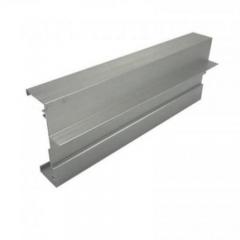
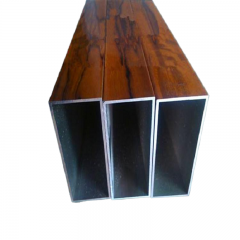
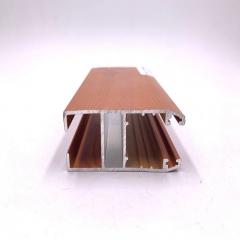
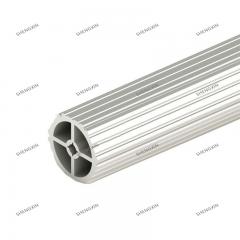
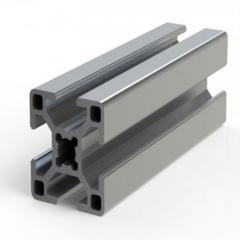
Most retrofit trickle vents on the market are designed around standardized slot dimensions, which means a well-made vent from a reputable manufacturer will drop into a correctly routed channel without modification. Products like the Shengxin uPVC Window Trickle Vent are designed to fit standard routed slots in both aluminium and uPVC frames, making them a practical option for retrofit projects and replacement-window compliance alike. This dual-material compatibility is particularly useful for installers and fabricators working across mixed frame types on a single project.
Beyond compatibility, consider the EA rating relative to your room. A habitable room requiring 8,000 mm² of background ventilation may need two vents if individual units are rated at 4,000 mm² each. Factor in noise requirements - if the window faces a busy road, an acoustic variant with internal baffles will deliver the same airflow with significantly less sound transmission. And think about maintenance: a low-maintenance uPVC vent body resists UV degradation and temperature cycling, which matters on south-facing elevations where direct sun exposure is highest.
For window fabricators and installers, the retrofit market represents a growing opportunity. Millions of homes across the UK have double glazed windows installed before the 2022 regulation changes - windows that perform well thermally but lack any background ventilation. Every one of those windows is a potential retrofit candidate, and homeowners dealing with persistent condensation are increasingly seeking solutions that do not involve full window replacement.
Retrofitting vents to existing frames is, however, only half the condensation battle. Some homes generate so much moisture - or have underlying issues so severe - that even correctly fitted and permanently open trickle vents cannot fully eliminate the problem on their own.

Still getting condensation with trickle vents open? You are not imagining things, and you are not doing anything wrong. Trickle vents are remarkably effective at managing moisture in the majority of homes, but they have limits - and some properties push past those limits every single day.
The reality is that trickle vents provide a fixed, passive airflow. They cannot ramp up when your household generates more moisture than that airflow can carry away. In homes with very high moisture loads - large families, frequent indoor laundry drying, missing extract fans, or underlying damp issues - background ventilation through window-frame slots reduces condensation but may not eliminate it entirely. Recognizing when you have crossed that threshold is the difference between solving the problem and endlessly battling its symptoms.
A few clear warning signs tell you that your moisture problem has outgrown what background ventilation alone can handle. If any of the following apply to your home, supplementary action is needed:
Any one of these signals means trickle vents are doing their part, but the total moisture equation in your home needs more intervention. The question is where to start - and the answer follows a clear priority order.
When you need to stop condensation and trickle vents are not enough on their own, working through the following hierarchy from top to bottom gives you the biggest impact for the least effort and cost. Each step builds on the previous one, so resist the temptation to skip straight to buying equipment before addressing the fundamentals.
This step-by-step plan to reduce condensation at home works because it targets the problem in order of cost and complexity. Most households find that steps one through four resolve the issue completely. Steps five and six handle the stubborn cases. Step seven is reserved for the minority of homes where moisture loads are exceptionally high or where structural ventilation is fundamentally inadequate.
If you are dealing with condensation on windows in a rented property, the frustration is compounded by limited control. You probably cannot install trickle vents, replace extractor fans, or commission a ventilation system without your landlord's involvement. But that does not mean you are powerless.
Start with what you can control. Every behavioral change in step three above applies to you just as much as it applies to a homeowner - and those habits alone can make a significant difference. Close the kitchen and bathroom doors when generating steam. Dry laundry outside whenever possible, or use a vented dryer. Crack a window during and after cooking or showering, even if just for ten minutes.
A portable dehumidifier is your strongest tool as a renter. It requires no installation, no landlord permission, and you can take it with you when you move. Place it in the room with the worst condensation - usually a bedroom - and set it to run overnight. The reduction in morning window moisture is often noticeable within a day or two.
If you are seeing persistent mold growth or condensation on walls and ceilings, contact your landlord promptly. In England, the Energy Saving Trust advises renters to speak to their landlord in the first instance, especially when dealing with damp or mold problems. Landlords have a legal responsibility to ensure rental properties meet basic health and safety standards, which includes adequate ventilation. Trickle vents must be fitted to new windows under Building Regulations, and if your landlord replaces windows, those regulations apply regardless of whether you or they requested the work.
Document the problem with photographs and humidity readings if you have a hygrometer. A clear record of persistent condensation and its consequences - mold growth, peeling paint, damp odors - strengthens your position if the issue escalates to a formal complaint or disrepair claim.
Whether you own or rent, the underlying principle is identical: trickle vents are a powerful first line of defense against condensation, but they work within a system. When the moisture load exceeds what passive ventilation can handle, supplementary measures - behavioral, mechanical, or both - close the gap. The final piece of the puzzle is knowing exactly what to look for when choosing the right vent and building a strategy that keeps your windows dry for the long term.
Every section of this guide has circled back to the same core truth: trickle vents significantly reduce - and in many homes effectively stop - condensation by maintaining continuous background ventilation that prevents indoor humidity from reaching dew-point levels on glass surfaces. They are passive, low-cost, zero-energy devices that quietly solve a problem affecting millions of properties. They are not infallible, and they are not a substitute for extract fans or sensible moisture habits. But as the foundation of a whole house condensation prevention strategy, nothing else offers such a reliable return for so little investment.
If you take just three things away from everything covered above, let them be these:
Keep your trickle vents open at all times - including winter. Combine them with working extract fans in kitchens and bathrooms. And reduce indoor moisture at the source by using pan lids, venting dryers outside, and closing wet-room doors during and after showers.
That combination handles condensation in the vast majority of homes. For the minority of properties where moisture loads are exceptionally high - large households, frequent indoor laundry drying, or structural damp - a dehumidifier or whole-house mechanical system fills the remaining gap. But the trickle vents stay. They are always the first layer, never the one you remove.
You now understand the full picture. Condensation is not a window fault - it is a humidity and airflow problem. Glass is simply the coldest surface where the imbalance shows up first. Trickle vents address that imbalance at its root by ensuring your home breathes continuously, even when every window is locked shut on the coldest night of the year.
Here is what matters most when putting that knowledge into action:
How do you choose the right trickle vent for condensation control? The selection is simpler than it appears once you filter by a few practical criteria. Not every vent suits every window, and mismatching the product to the frame wastes money and compromises performance.
Before you buy, run through this checklist:
For fabricators, installers, and homeowners exploring a reliable background ventilation solution that ticks these boxes across frame types, the Shengxin uPVC Window Trickle Vent is worth a close look. It integrates with both aluminium and uPVC frame systems, fits common routed slots for straightforward retrofit and new-build installation, and delivers low-maintenance condensation control backed by durable construction. For projects that span multiple frame materials or require a consistent product specification across an entire dwelling, that dual compatibility eliminates the need to source separate vent lines for different window types.
Condensation on windows is solvable. It is not mysterious, and it does not require expensive or complicated interventions in most homes. A correctly chosen trickle vent, left permanently open, combined with working extract fans and a few mindful habits around moisture - that is the formula. It is simple, it is proven, and it works every winter without a single watt of electricity or a moment of your attention. Your windows, your walls, and your lungs will thank you for it.
Keep them open all winter long. Closing trickle vents traps moisture indoors, causing humidity to rise and condensation to form on cold glass surfaces overnight. The heat loss from an open trickle vent is minimal - far less costly than repairing mold damage, redecorating moisture-stained walls, or replacing rotted window frames that result from persistent condensation. HVAC professionals consistently recommend leaving vents open year-round to maintain healthy indoor air quality and protect your home's fabric.
Yes, trickle vents can be retrofitted to most existing double glazed windows. The process involves routing a narrow slot into the head of the window frame and fitting internal and external canopy covers over it. Timber frames are easiest to work with, uPVC frames are generally straightforward provided you avoid internal steel reinforcement, and aluminium frames require specialist tooling but remain feasible. Products such as the Shengxin uPVC Window Trickle Vent are designed to fit standard routed slots in both aluminium and uPVC frames, simplifying retrofit projects. Professional installation is recommended to avoid damaging the glazing unit or frame seal.
Trickle vents provide a fixed, passive airflow that handles average household moisture levels effectively. However, homes with unusually high moisture loads - large families, frequent indoor laundry drying, missing kitchen or bathroom extract fans, or structural damp issues - can overwhelm that airflow capacity. If condensation persists, check that all extract fans are functioning, adopt moisture-reducing habits like using pan lids and venting dryers outside, and consider adding a portable dehumidifier or a whole-house ventilation system such as PIV or MVHR to supplement your trickle vents.
Under UK Building Regulations Approved Document F (2021 edition, effective from June 2022), trickle vents are required in most replacement-window installations. If the original windows had trickle vents, replacements must include vents with at least the same equivalent area. If the originals lacked vents, the new windows should provide a minimum of 8,000 mm squared EA per habitable room and 4,000 mm squared per wet room, unless an alternative mechanical ventilation system is in place. A window on its night-latch position does not count as a substitute for trickle vents.
Humidity-sensitive (demand-controlled) trickle vents are arguably the most effective type for condensation prevention. They use hygroscopic nylon strips that automatically open the vent wider when indoor humidity rises and close it down when moisture levels drop. This real-time response targets the exact condition that causes condensation without wasting heat during dry periods. Standard manual vents are also highly effective when left permanently open. Acoustic vents suit noisy urban locations where sound reduction encourages occupants to keep vents open consistently. The right choice depends on your noise environment, budget, and whether you prefer manual or automatic control.



 خدمة الإنترنت
 0086 136 3563 2360
 sales@sxalu.com
 +86 136 3563 2360
 العربية
 English
 français
 Deutsch
 русский
 español
 português
 ไทย
ไทย Việt
Việt Українська