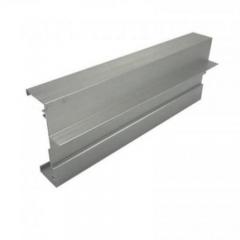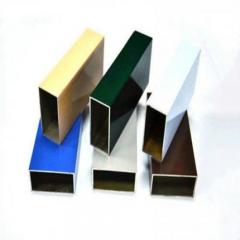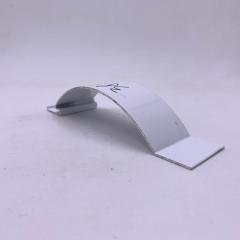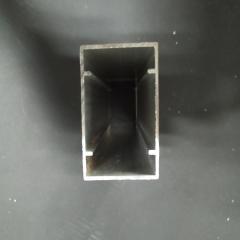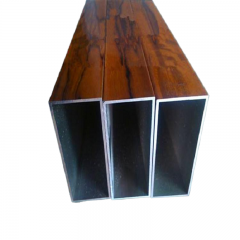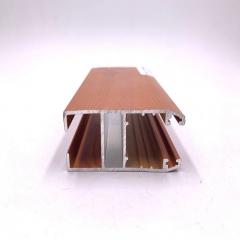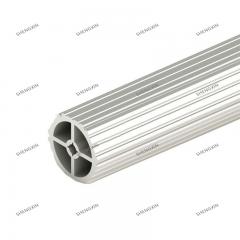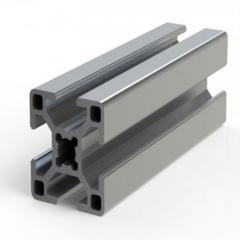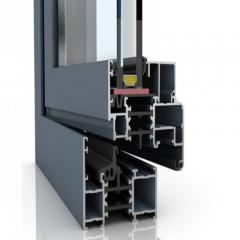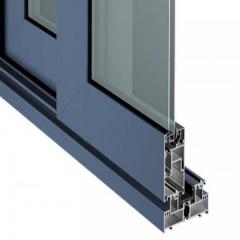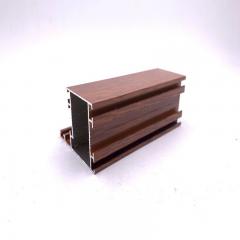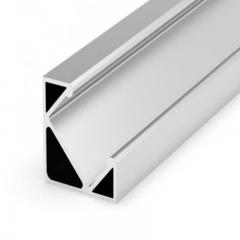
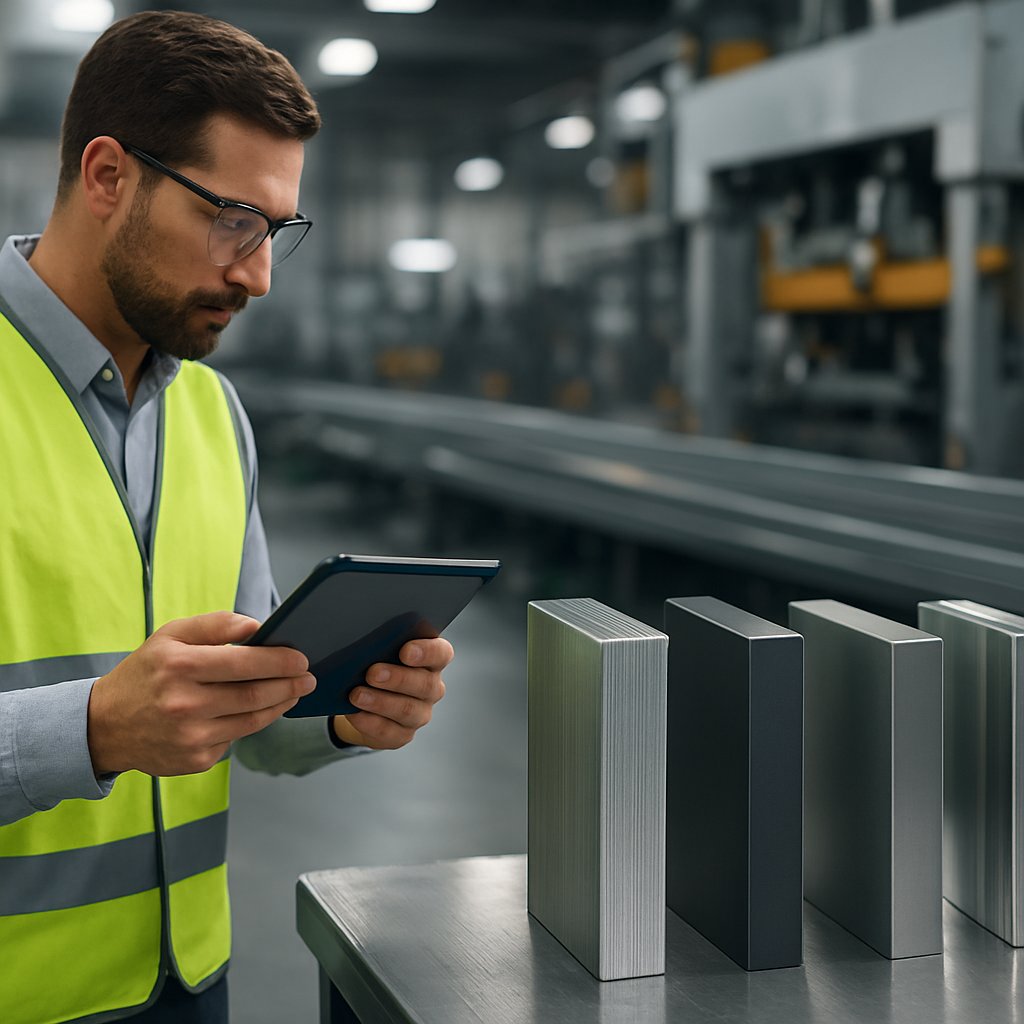
A stock angle or tube can look workable on paper, yet still create extra brackets, machining, or visible inconsistencies later. That is usually the point where a custom aluminium profile becomes worth considering.
A custom aluminium profile is an aluminum extrusion made to a project-specific cross-section rather than a standard stock shape.
In practice, that means the part is formed through a dedicated die created for one product or assembly. Instead of adapting the design to whatever is already on the shelf, buyers shape the section around the job itself. This is why custom aluminum extrusions are often chosen for lighter structures, better corrosion resistance, cleaner lines, and fewer assembled parts. A well-planned aluminum profile can also integrate channels, fins, or fastening features that would otherwise require separate components.
Stock profiles use common, shared die shapes such as basic angles, channels, rods, or tubes. They are usually easier to source and avoid upfront tooling. Custom sections require more design review and dedicated tooling, but they offer a closer fit to the application. That difference matters when buyers want better assembly efficiency, more visual consistency, or geometry tuned for strength without unnecessary weight. Many aluminum extrusion profiles deliver value not because the raw shape is exotic, but because they reduce compromise across the whole product.
Because aluminum extrusions combine low weight, formability, finish flexibility, and natural resistance to weathering, they appear in a wide mix of products and systems.
Seen this way, a custom aluminium profile is less a specialty item and more a design tool. The real question is not whether a unique cross-section looks good in CAD, but whether it can be extruded cleanly, consistently, and economically once the process begins.
A cross-section can look efficient in CAD and still become difficult to produce at scale. That is why, for any custom aluminium profile, the manufacturing route matters almost as much as the drawing. In buyer terms, an aluminum extrusion profile is not formed in one instant. It comes from a chain of steps that affect shape quality, straightness, finish potential, and overall feasibility.
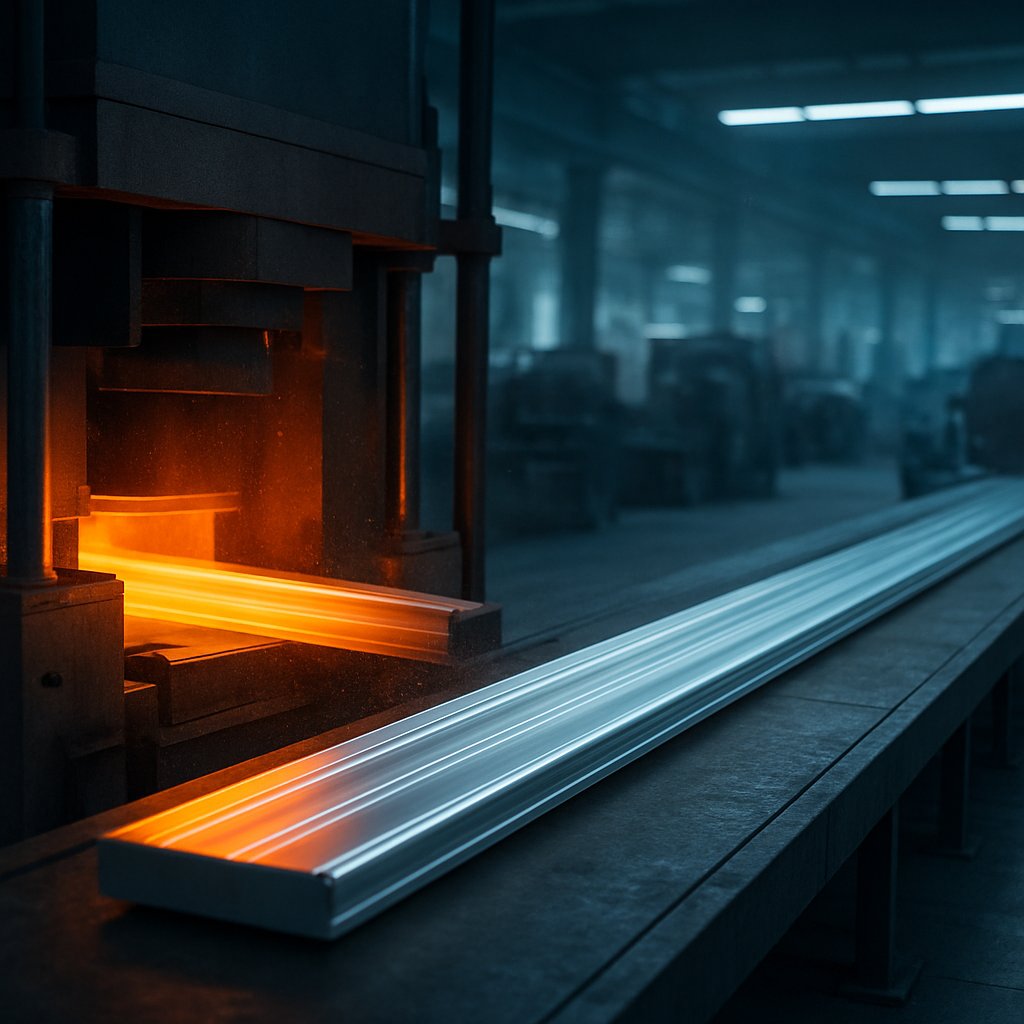
In simple language, the extrusion of aluminium starts with a cylindrical billet and a purpose-built aluminum extrusion die. The billet and tooling are preheated so the metal becomes workable while remaining solid. As AEC shows, a hydraulic ram then forces that softened billet through the die opening, and the metal exits in the required cross-section.
The shape is only the beginning. After leaving the press, the profile is cut off from the die, quenched or otherwise cooled, and mechanically treated to improve straightness. It is then cut to length and aged, either naturally or in an oven, to develop the desired properties. Only after that do many extrusion profiles move into machining, bending, anodizing, painting, or assembly.
Direct extrusion pushes the billet toward a stationary die. Indirect extrusion moves the die relative to the billet instead. Material from RD Material notes that indirect extrusion can reduce friction, which may help with more complex shapes or stronger cosmetic demands. Direct extrusion remains common because it works well for many repeatable, practical sections.
Solid profiles have no fully enclosed void, so the die design is more straightforward. Hollow sections require a more complex tool with internal supports or a mandrel. Both AEC and Yida describe how the metal flow splits, passes around the internal features, and rejoins under heat and pressure before exiting as a hollow shape.
| Category | Option | Design implications | Typical use cases | Manufacturing tradeoffs |
|---|---|---|---|---|
| Process | Direct extrusion | Well suited to profiles with more straightforward metal flow and repeat production needs. | Channels, rails, trims, support members, general industrial shapes. | Versatile and widely used, but billet-to-container friction is part of the process. |
| Process | Indirect extrusion | Can be helpful when the section is more demanding or surface appearance matters more. | More complex cross-sections and parts with tighter cosmetic expectations. | Lower friction can aid flow, but suitability depends on press setup and project requirements. |
| Section type | Solid profile | Simpler to review and tool, with fewer internal flow challenges. | Open channels, fins, bars, brackets, heat-management shapes. | Lower die complexity, but less ability to build enclosed stiffness or internal routing into the section. |
| Section type | Hollow profile | Allows enclosed voids for stiffness, cable paths, or integrated enclosure features. | Tubes, framed housings, multi-void architectural and equipment parts. | More complex dies and metal flow, so manufacturability depends more heavily on geometry. |
Two drawings may look similar and still behave very differently in the press. That is where material choice starts to matter, because alloy and temper influence how easily a profile runs and how it performs after aging and finishing.
The same cross-section can perform very differently once alloy and temper are locked in. For any custom aluminium profile, that choice affects corrosion resistance, finish quality, machining behavior, weldability, and how easily the section runs through the press. Most buyers start with the 6000 series, where magnesium and silicon create a practical balance of extrudability, heat treatability, and durability.
In real projects, no alloy wins every category. Notes on extrusion alloys show a clear pattern. 6063 is the common pick for smooth surfaces, corrosion resistance, and architectural appearance. 6005 shifts toward structural work such as rails, ladders, and frames. 6463 is chosen when the profile will be seen, because it is especially suitable for bright, decorative finishes. 6061 usually moves up the list when the part will be machined, welded, or incorporated into fabricated aluminum assemblies. You see that tradeoff most clearly in high-performance aluminum extrusions industrial applications, where finish, strength, and post-processing all matter at once.
| Alloy | Best fit | Anodizing suitability | Fabrication considerations |
|---|---|---|---|
| 6063 | Architectural profiles, trim, tubing, consumer-facing shapes | Very good for clean, uniform anodized finishes | Excellent extrudability, good corrosion resistance, weldable, often chosen when appearance leads |
| 6005 | Structural members, handrails, ladders, transport and support frames | Good for clear or colored anodizing | Better suited to medium-strength structural use, weldable, practical for parts that need both extrusion and later fabrication |
| 6463 | Decorative trim, shower and mirror frames, visible interior details | Excellent, especially for bright dip and mirror-like finishes | Selected for surface beauty more than heavy structural demand |
| 6061 | Machined parts, industrial frames, enclosures, structural components | Adequate, though appearance is usually not its main advantage | Strong, machining-friendly, weldable, often preferred when the extrusion becomes a more complex fabricated part |
The temper states matter just as much as the alloy. T4 means solution treated and naturally aged, so the profile stays softer and easier to bend or reform later. T5 means the shape is cooled after extrusion and then artificially aged, giving higher hardness with some remaining formability. T6 means full artificial aging for a harder condition used where strength demands are higher. For custom extruded aluminum, that decision affects whether the part is easier to form first or ready for service sooner. It also changes how anodized extruded aluminum and custom 6063 aluminum extrusions fit into downstream cutting, bending, and assembly.
That is why the best alloy is rarely just the strongest or the prettiest. It is the one that matches the profile's job, finish expectations, and secondary operations. Small geometry details can still overturn a smart material choice, especially when wall thickness, hollows, and tolerances start pushing manufacturability limits.
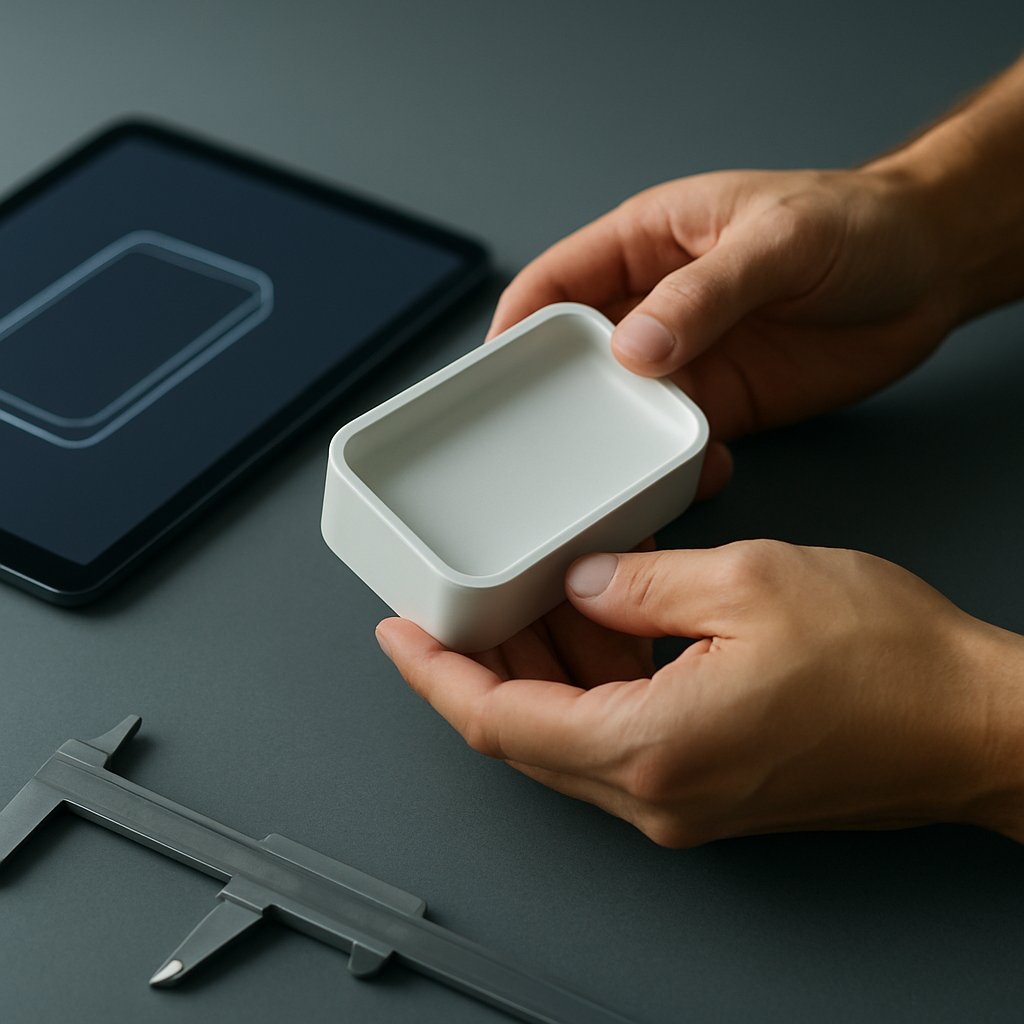
A smart alloy choice does not rescue a section that fights metal flow. Many problems appear only during die trials, when a drawing that looked efficient starts twisting, streaking, or drifting out of tolerance. In real-world custom extrusion design, the goal is not just to create interesting geometry. It is to create a shape the press can fill evenly, cool predictably, and hold with practical consistency.
Wall consistency is one of the biggest drivers of manufacturability. The DFM guidance from Ya Ji Aluminum recommends keeping wall variation to about a 2:1 ratio when possible, because thick regions let metal flow faster than thin ones. That imbalance can lead to distortion, surface tearing, or waviness. Sharp internal corners make the problem worse. Engineers Edge notes that sharp corners are not optimal and that larger radii reduce die stress. In practice, many aluminum extrusion shapes run better when thick areas taper gradually into thinner ribs and when corners are blended instead of squared off.
If a groove, slot, or thread feature is narrow and non-critical to the extrusion itself, pause before building it into the die. Some extruded aluminum shapes are easier to produce, inspect, and finish when small details are added later by machining rather than forced into the as-extruded section.
Thin fins, deep slots, and semi-hollow gaps create another risk: delicate die tongues. In simple terms, the more slender and unsupported that die steel becomes, the harder it is to maintain slit width, surface quality, and die life. That is why solids are usually the easiest sections, semi-hollows are harder, and multi-void hollows are the most demanding. Asymmetry adds its own challenge because unbalanced flow increases the chance of bow, twist, and uneven cooling.
Size matters too. The circumscribing circle diameter, or CCD, is the smallest circle that encloses the cross-section. The same Ya Ji guide notes that many general-purpose presses prefer profiles at or below about 203 mm, while larger sections may require bigger presses and tooling. For custom profile extrusions, a large CCD can narrow the supplier pool before pricing is even discussed. In some cases, two simpler custom extruded profiles that assemble together are more practical than one oversized hollow.
| Geometry factor | Why it matters | Risk if ignored | Question to ask a supplier |
|---|---|---|---|
| Wall consistency | Balanced wall thickness helps metal flow at a similar rate across the section. | Twist, sink, tearing, and unstable dimensions. | Where are the thick-to-thin transitions, and should any area be thinned or reinforced differently? |
| Internal corners and radii | Radii reduce die stress and improve flow into junctions. | Stress on the die, visible flow lines, and weak corner fill. | Are any sharp internal corners likely to need larger fillets for reliable production? |
| Asymmetry | Balanced sections cool and straighten more predictably. | Bow, twist, slower run speeds, and harder die correction. | Does this profile need flow-balancing features or a more symmetrical layout? |
| Solid vs. hollow design | Closed voids need more complex tooling and tighter flow control. | Higher tooling complexity, lower yield, and more straightness challenges. | Is a hollow truly necessary, or could a solid or semi-hollow plus assembly achieve the same function? |
| Tongue ratio and narrow gaps | Thin unsupported die tongues are harder to keep stable. | Gap variation, die wear, broken tongues, and cosmetic defects. | Are any slots, fins, or lips too narrow to hold consistently as-extruded? |
| CCD limit | CCD affects press selection, die size, speed, and availability. | Fewer capable suppliers and higher tooling cost. | What press range fits this CCD, and would splitting the section improve feasibility? |
| Tolerances and straightness | Extrusion tolerances depend on size, wall thickness, alloy, and profile type. | Overspecification, slow production, extra scrap, and unnecessary secondary work. | Which dimensions can be held as-extruded, and which should be machined or controlled after cutting? |
| Die complexity vs. secondary machining | Some features are cheaper to machine than to force through a complex die. | Longer die development, unstable quality, and repeated redesign. | Which details would you recommend moving to machining, drilling, or assembly instead of extrusion? |
Extrusion is efficient, but it is not a machining process. Engineers Edge lists typical values such as straightness around 0.0125 in per foot, twist about 0.5 degrees per foot, flatness about 0.004 in per inch of width, and wall thickness tolerance around plus or minus 10 percent, with actual results affected by profile type, size, alloy, and application. Those numbers are a useful reminder to tighten tolerances only where function truly demands it. Good buyers also dimension from real metal surfaces whenever possible, because those are easier to inspect than theoretical centerlines or empty space.
That is where many custom profile extrusions either become practical or expensive. A profile does not need to do everything in the die to succeed. It needs to do the right things in the die, then leave room for the finishing and fabrication choices that shape the final part.
A profile can pass die review and still become expensive later. Holes, bends, cosmetic faces, and coating plans all change what the cross-section should look like. In practice, finish planning is part of design, not cleanup after approval.
DFM guidance for extrusions shows that some details are better handled after extrusion than forced into the die. Very narrow slots, deep decorative grooves, and tight slit dimensions can slow metal flow or make the section harder to hold straight. Early planning also makes later aluminum extrusion fabrication more predictable.
That matters even more on visible aluminum extrusion trim, where saw marks, burrs, or hole placement can become appearance issues.
Surface finish changes how much cosmetic discipline the profile needs. As-extruded parts can show die lines and flow marks. Anodizing tends to reveal substrate scratches and surface variation, while powder coating can hide fine die lines more effectively. That is why an anodized aluminum extrusion usually needs clearer rules for show faces, handling, and masking from the start.
Anodizing
Powder coating or paint systems
A simpler die often produces a more reliable part. Extrusion DFM guidance specifically recommends moving non-functional grooves, blind pockets, or very tight features to light machining when they would stress the die or reduce yield. Common secondary steps such as sawing, deburring, punching, CNC work, and assembly can be part of smart custom aluminium fabrication, not a sign of poor design.
For one project, that may mean keeping a show face clean and machining hidden fastening points later. For another, it may mean extruding a stable base shape and adding only the critical fit features after cutting. Those choices affect more than geometry. They also influence scrap risk, finish consistency, and how much time a buyer spends waiting on corrections.
For a custom aluminium profile, cost rarely sits in one neat line item. A quote usually blends three different buckets: tooling cost, production cost, and total landed cost. Tooling covers the die and setup required to create the section. Production covers metal, press time, labor, finishing, and fabrication. Landed cost adds packaging, freight, duties, and handling. That breakdown makes aluminum extrusion cost easier to read, especially when one quote looks lower only because key services are excluded.
Die complexity is often the first price driver buyers underestimate. For common architectural and industrial profiles, extrusion tooling often falls around $400 to $1,000, while larger press applications can reach about $2,000. Complex geometry, asymmetry, and larger circumscribing circles can push cost and lead time higher because the die takes more engineering effort and may need more correction during trials.
| Cost driver | Cost bucket affected | Practical impact on the quote | Buyer question to ask |
|---|---|---|---|
| Die complexity | Tooling | More intricate shapes usually need more engineering time, more careful die work, and sometimes more trial adjustments. | Can any feature move from the die to machining or assembly? |
| Order volume | Tooling and production | Small runs carry more die and setup cost per part. Larger runs spread fixed costs across more units. | What does first-run pricing look like versus repeat-order pricing? |
| Alloy choice | Material and production | Less common or more demanding alloys may require special stock, different processing, or added heat treatment. | Is the specified alloy essential, or is it stronger than the application really needs? |
| Secondary machining | Production | Drilling, tapping, CNC work, and bending add setup, labor, and inspection steps. | Can operations be combined, simplified, or reduced through profile changes? |
| Finishing | Production | Anodizing, powder coating, and specialty finishes add handling, line time, and cosmetic control requirements. | Which surfaces are cosmetic, and what finish standard actually matters? |
| Packaging | Landed cost | Interleaving, crates, moisture barriers, and custom packaging for aluminum extrusions can reduce damage but raise labor and freight volume. | What level of surface protection is necessary for shipping and receiving? |
| Shipping | Landed cost | Freight mode, container availability, duties, and insurance can erase savings from a lower factory price. | Are you comparing ex-works pricing or true delivered cost? |
Volume changes the math quickly. The same die burdened across a short run can make the custom aluminum extrusion cost look high, while repeat production spreads that fixed expense more efficiently. Raw aluminum is another major variable. Industry pricing referenced by Gabrian has ranged roughly from $1,500 to $3,500 per metric ton in recent years, and Ya Ji Aluminum notes that alloy selection and regional surcharges can further change the base material cost. Finishing matters too. Gabrian places anodizing and powder coating around $1,200 to $1,400 per metric ton, while simple drilling can add about $200 to $300 per metric ton. In custom aluminum manufacturing, the cheapest profile on day one is not always the cheapest part after finishing, fabrication, and delivery.
Lead time follows the same logic. Speed usually drops as geometry, approvals, and downstream requirements increase. One industry reference from Gabrian notes normal tool turnaround of 3 to 4 weeks, with production following within about a week of sample approval. Actual schedules vary with design complexity, press capacity, and post-processing load.
Quotes become much easier to compare when each stage is visible. The same applies to sourcing. A supplier can only price accurately if the request includes the details that drive cost, risk, and approval time.
Many quote problems start before pricing ever begins. A supplier cannot judge feasibility, tooling risk, or lead time if the RFQ leaves key details open to interpretation. That is why buyers often get cleaner results when they build a sourcing packet first, especially when comparing several custom aluminum extrusion companies for the same part.
A practical enquiry checklist from Custom Profiles and a buying process overview from Sinoextrud point to the same pattern: better inputs lead to more reliable quotes. Send the latest drawing or 3D file with the full cross-section, finished length, key dimensions, and only the tolerances that truly affect fit or function. Add the alloy and temper, plus finish notes such as mill finish, anodizing, or powder coating.
If the part needs drilling, tapping, machining, bending, trimming, or assembly, list each step clearly instead of assuming it will be inferred from the drawing. Include expected prototype volume, repeat order estimates, packaging preferences, cosmetic standards, and any required material certificates or inspection reports. If the section will be surface treated later, say so. A capable custom aluminum extrusion manufacturer needs that context to separate die cost from fabrication and finishing cost.
Marketing language is easy to copy. Process control is not. A structured supplier audit from Aluphant shows what buyers should verify before trusting capability claims from custom aluminum extrusions suppliers. Start with production fit: supported profile sizes, alloy range, and whether machining, anodizing, powder coating, assembly, and packaging are handled in house or through outside partners.
Then check evidence. Ask for examples of material certs, dimensional reports, finish inspection records, traceability methods, and sample inspection reports with photos or measurement charts. If your project needs formal approval gates, confirm whether the supplier can support FAI or PPAP-style documentation. Good custom aluminum extruders also give useful DFM feedback. They should flag risky tolerances, finish-sensitive faces, awkward packaging needs, or unnecessary geometry instead of simply echoing the print back to you.
With that groundwork in place, supplier catalogs and capability pages become far easier to read. The real comparison shifts from vague promises to concrete fit, which is exactly where smart sourcing decisions start to separate themselves.
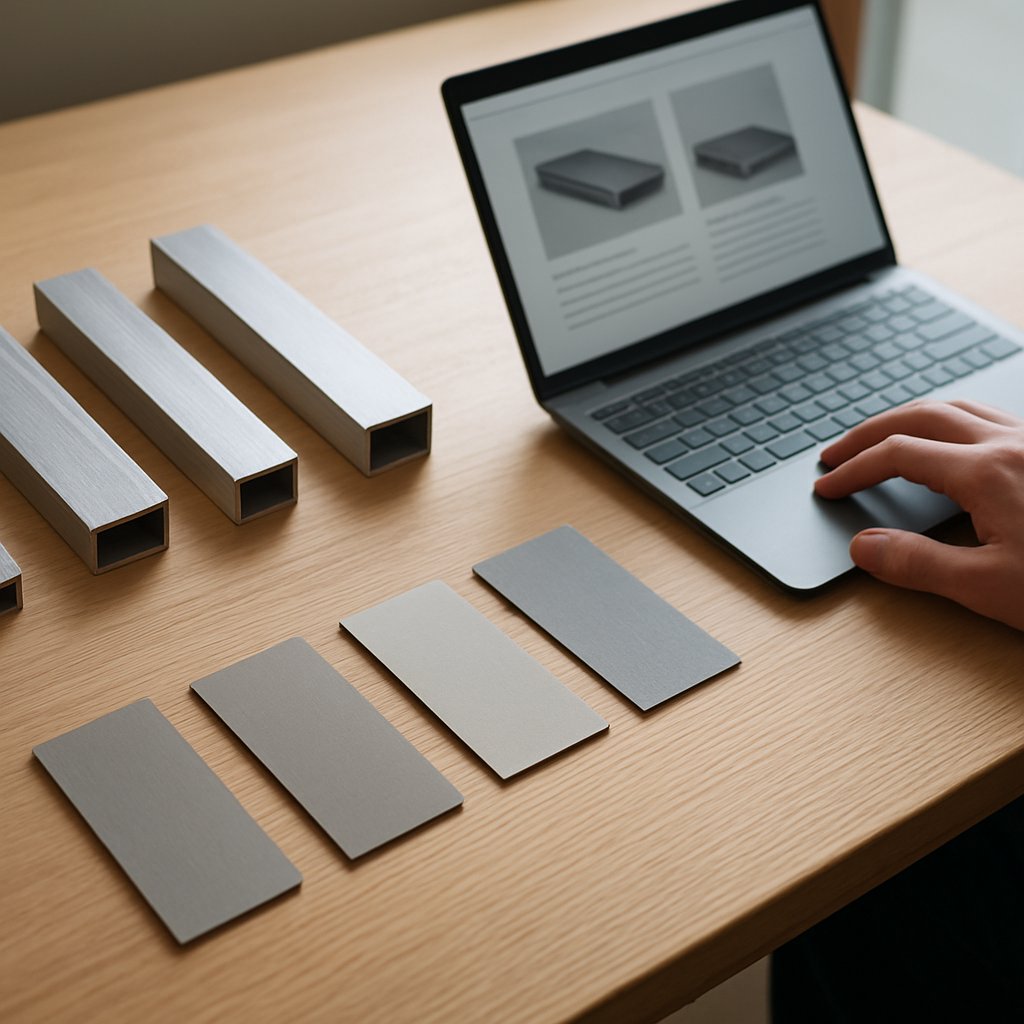
A complete RFQ makes catalogs much more useful. Instead of judging a supplier by photos alone, you can check whether its published range matches your section size, finish needs, fabrication plan, and approval requirements. For a custom aluminum profile project, the best fit is rarely the broadest catalog. It is the catalog that matches the job with the least guesswork.
Guidance from Xinhe Aluminium emphasizes product quality, customization range, delivery reliability, and technical support. A broader market overview shows why catalogs differ so much by sector. Some focus on architectural systems, some on solar frames, and others on industrial machining or large-section work. That is why any aluminum profile supplier should be reviewed by application fit, not catalog size alone.
| Catalog resource | Profile range | Finishing options | Fabrication support | Best application fit | Documentation to review |
|---|---|---|---|---|---|
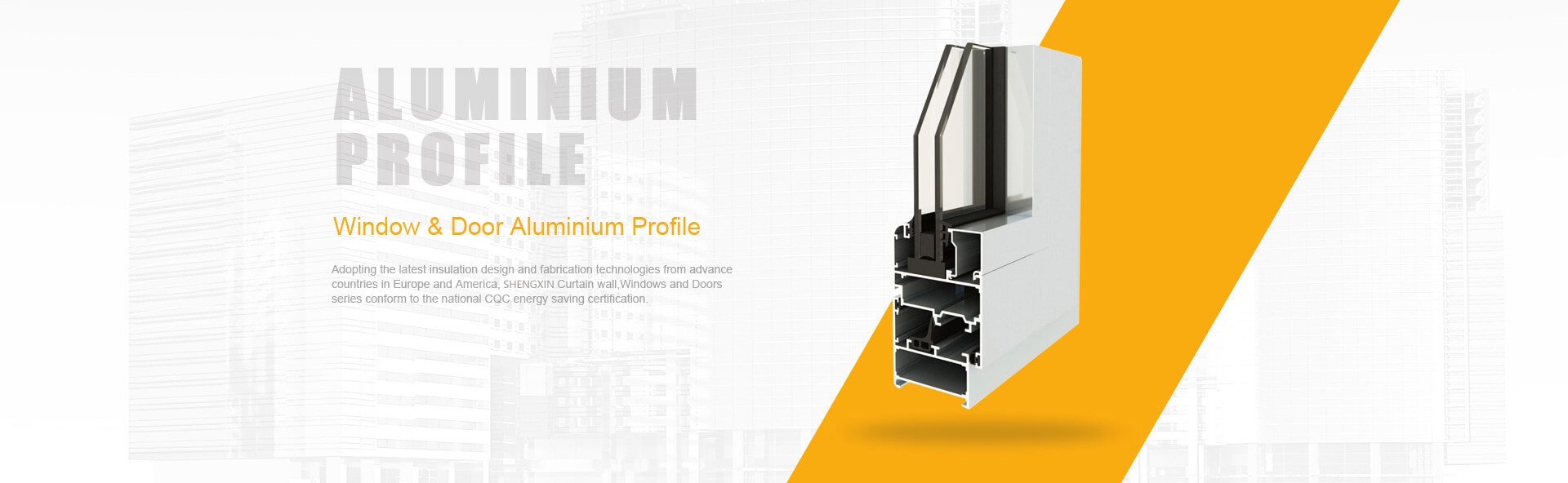
| Shengxin Aluminium | Custom aluminum extrusion profiles, architectural frames, industrial and solar uses | Anodizing and multiple finishes listed for flexible project requirements | Custom manufacturing support; confirm machining and secondary steps during review | Building facades, decorative building elements, and custom machinery parts | Drawing review, finish samples, inspection expectations, and application notes |
| Architectural specialist catalog | Window, door, trim, curtain wall, and decorative aluminium extrusion profiles | Anodizing, powder coating, electrophoretic coating | Cutting and assembly support may be available | Visible building systems and finish-sensitive parts | Show-face standards, color consistency, and coating specifications |
| Industrial and CNC-focused catalog | T-slot sections, heat sinks, machine frames, custom aluminum profiles | Usually mill finish plus selected anodized options | CNC machining, drilling, tapping, and deep processing | Equipment frames, enclosures, and support structures | Tolerance reports, machining capability, and inspection format |
If the aluminium extrusion profiles will be exposed outdoors or used on visible faces, finish support matters early. Material from Sinoextrud notes that anodizing improves corrosion resistance, durability, and aesthetic flexibility. That makes finish depth especially important for facade parts, trim, and other custom aluminum profiles where color consistency and surface appearance affect approval.
As one practical resource, Shengxin Aluminium's catalog can help buyers benchmark what a capable aluminium profile manufacturer actually shows in public: application range, finish options, and profile categories. Treat it as a research starting point rather than a final answer. Then compare that level of clarity against every other aluminum profile supplier on your shortlist. The strongest sourcing decisions usually come from that side-by-side discipline, not from the first catalog that looks impressive.
A custom aluminium profile is an extrusion made to a project-specific cross-section instead of a standard off-the-shelf angle, tube, or channel. It usually makes sense when a stock shape would force extra brackets, welding, machining, or visible compromises. Buyers often choose custom geometry when they want to combine several functions into one section, improve appearance, reduce assembly steps, or remove unnecessary weight. In short, the value of a custom profile is often found in the full assembly, not just the raw extrusion.
There is no single best option for every project. Many buyers begin with 6000 series alloys because they balance extrudability, corrosion resistance, and heat-treatability well. If surface quality and anodizing matter most, 6063 or 6463 are common starting points. If the part will see more structural demand, machining, or welding, 6005 or 6061 may be more suitable. Temper also matters: T4 helps when later forming is needed, while T5 and T6 are more relevant when the profile needs higher in-service hardness and strength.
The biggest trouble spots are uneven wall thickness, very sharp internal corners, narrow gaps, deep fins, large hollows, and highly unbalanced shapes. These features can disrupt metal flow, increase die stress, and make straightness or surface quality harder to control. Very tight as-extruded tolerances can also create unnecessary cost if the critical feature would be better finished by machining. A practical review question is this: should the function stay in the die, or would a simpler extrusion plus secondary work produce a more stable part?
Pricing changes because a custom extrusion quote includes more than metal weight. Tooling complexity, alloy choice, order volume, machining, anodizing or coating, packaging, and shipping can all move the number. Two quotes may look similar but still cover very different scopes, especially if one supplier excludes finishing, inspection, or protective pack-out. The best way to compare pricing is to separate die cost, production cost, and true landed cost, then check what approvals, secondary operations, and delivery terms are actually included.
Start with a complete RFQ package: current drawing or model, profile cross-section, finished lengths, functional tolerances, alloy, temper, finish, secondary operations, volume expectations, packaging needs, and quality documents. Then compare suppliers by real fit, not broad claims. Check whether they support your profile type, finish requirements, fabrication steps, and inspection documentation. Published catalogs can help at the research stage. For example, a resource such as Shengxin Aluminium's catalog is useful for benchmarking profile range, anodizing support, and finish flexibility for architectural and industrial applications before you narrow a shortlist.



 خدمة الإنترنت
 0086 136 3563 2360
 sales@sxalu.com
 +86 136 3563 2360
 العربية
 English
 français
 Deutsch
 русский
 español
 português
 ไทย
ไทย Việt
Việt Українська