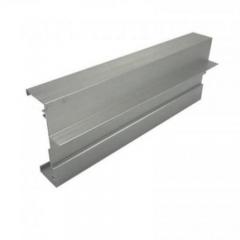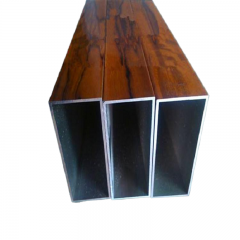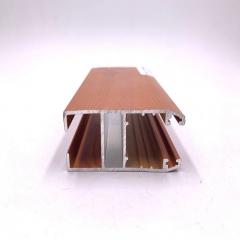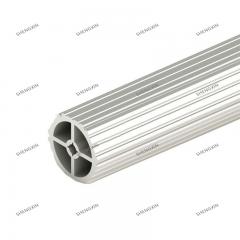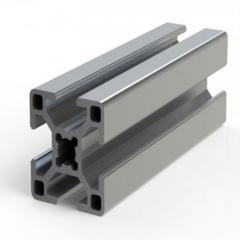
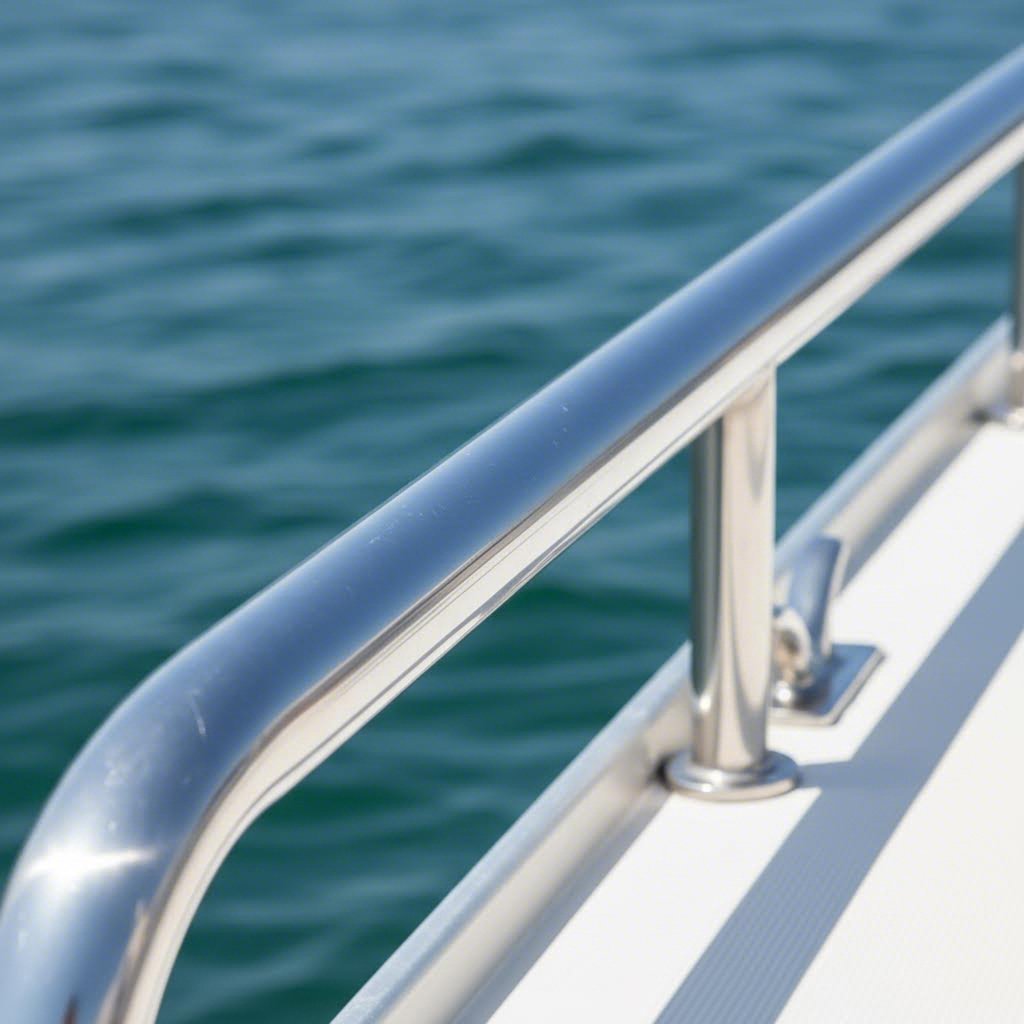
Ever wondered what keeps you from sliding overboard when your sailboat heels at 20 degrees? That slim, unassuming strip running along your deck edge does far more than you might realize. An aluminum toe rail extrusion is a continuous metal profile that runs along both port and starboard sides of your vessel, serving as the critical boundary between safety and a cold swim.
Simply put, a toe rail on a boat is a raised barrier positioned at the junction where your deck meets the hull. Think of it as your vessel's first line of defense against the unexpected. When rough seas toss your boat around, this component gives your feet something to brace against. When you're securing dock lines or attaching fenders, it provides reliable anchor points.
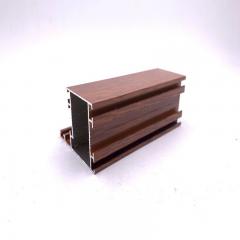
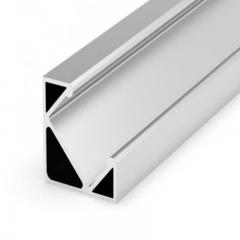
But here's where it gets interesting. Unlike cast or welded alternatives, an extruded aluminum profile is created through a specialized manufacturing process. Heated aluminum alloy is pushed through a precisely shaped die, much like squeezing toothpaste through a tube, but with far more pressure and precision. This process creates consistent cross-sectional profiles that can stretch 8 to 24 feet in length before being cut to your specifications. The result? A boat toe rail with uniform strength characteristics along its entire length.
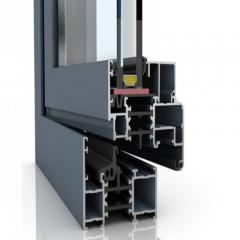
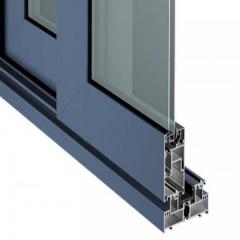
Your toe rail isn't just a simple strip of metal. It's an engineered component with specific design features. The profile typically includes a flat mounting base that sits flush against your deck, a vertical rise that creates the actual "toe" barrier, and often an integrated slot or mounting surface for accessories. Some designs even accommodate headlinings and interior trim connections below deck.
What distinguishes a toe rail from other deck hardware? Location and function. While cleats, winches, and stanchion bases serve specific purposes at fixed points, your toe rail provides continuous protection and functionality across the entire deck perimeter. It's the foundation that ties many other components together.
Whether you sail a compact weekender or a bluewater cruiser, understanding what your toe rail actually does helps you appreciate why material and design choices matter so much. Here are the primary functions this component serves:
The beauty of aluminum extrusion lies in its versatility. After the basic profile emerges from the die, it can undergo heat treatment to enhance tensile strength, receive various surface finishes like anodizing or powder coating for corrosion protection, and be machined with precise mounting holes for your specific vessel. This flexibility is why aluminum has become the material of choice for modern production boats and custom refits alike.
Understanding these fundamentals prepares you for the bigger decision ahead: should you choose a slotted profile for maximum versatility, or opt for a solid design that prioritizes clean aesthetics? That choice, as many sailors discover, isn't as straightforward as it first appears.
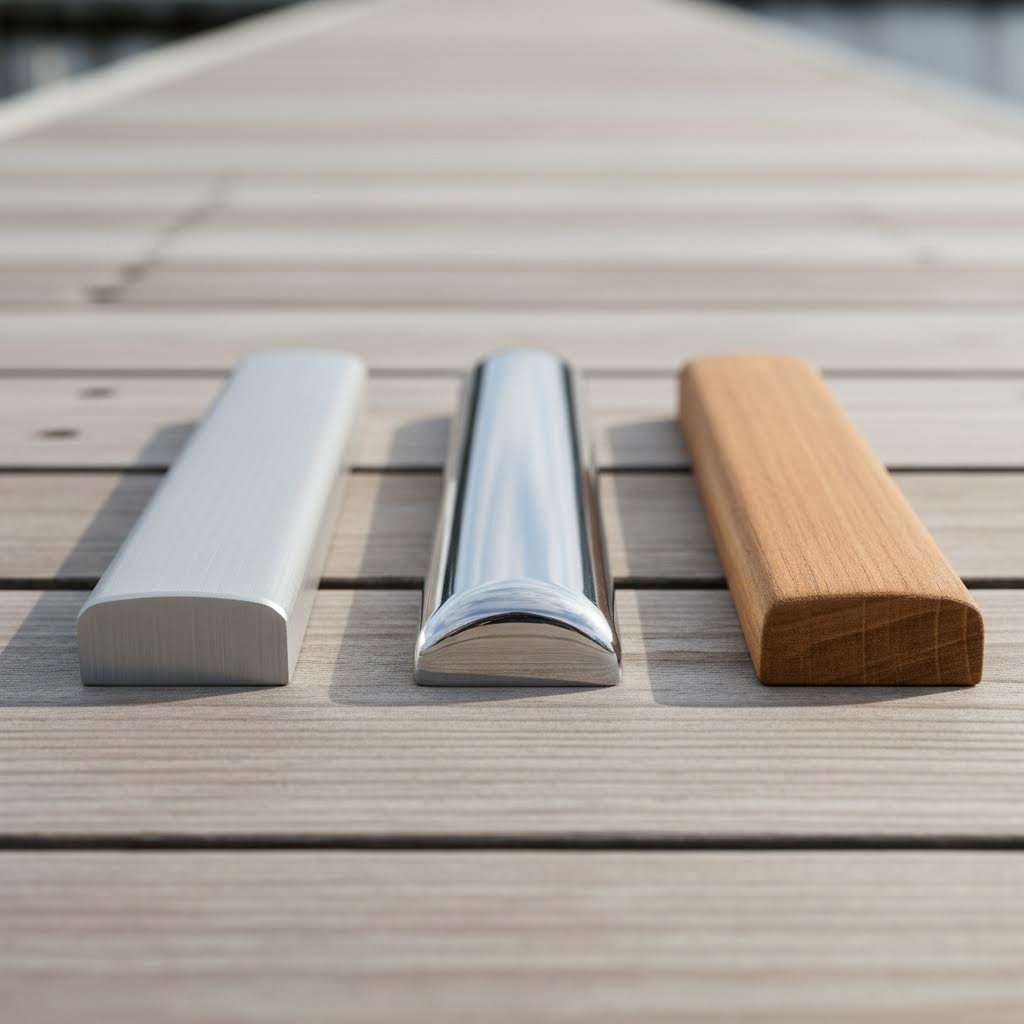
Before you commit to any toe rail material, you need to understand what you're really choosing between. Aluminum, stainless steel, and teak each bring distinct advantages to the deck edge. But does stainless steel rust in marine environments? Can traditional teak still compete with modern metals? Let's break down the real differences so you can make an informed decision.
Here's a question that surprises many boat owners: can stainless steel rust? The short answer is yes, it absolutely can. While stainless steel contains chromium that forms a protective oxide layer, prolonged exposure to saltwater eventually breaks down this protection. The debate between 304 vs 316 stainless steel centers on this very issue. Grade 316 contains molybdenum, which significantly improves resistance to chlorides found in seawater. Grade 304, while adequate for freshwater applications, will eventually show corrosion in high-salt marine environments.
But here's where aluminum gains ground. Marine-grade aluminum alloys like 6063 aluminum offer excellent corrosion resistance without the weight penalty. According to marine industry specifications, 6063 aluminum is a low-alloyed Al-Mg-Si high-plasticity alloy that's ideal for extrusions. Its mechanical properties make it perfect for the continuous profiles needed in toe rail applications.
Weight matters enormously on sailboats. Every pound saved topside improves stability and performance. Stainless steel, while incredibly durable, creates stress points in fiberglass and can cause fractures when mounted high on the vessel. Aluminum helps keep weight down and prevents boats from becoming top-heavy, which is precisely why it's preferred for topside applications.
Teak toe rails have graced classic sailboats for generations. Their warm appearance and traditional appeal remain undeniable. However, maintaining teak requires regular applications of teak oil or specialized sealers to prevent weathering, graying, and eventual deterioration. This ongoing commitment contrasts sharply with aluminum's set-and-forget durability.
When fiberglass and aluminum combine in modern boat construction, the result is a low-maintenance partnership. Aluminum extrusions require occasional cleaning and inspection but won't check, crack, or require refinishing like wood. For sailors who prefer time on the water over time with sandpaper, this difference proves decisive.
Choosing the right material requires understanding how each performs over years of marine service. The following comparison captures the essential differences:
| Property | Aluminum (6063) | Stainless Steel (316) | Teak |
|---|---|---|---|
| Weight | 2.7 g/cm³ (0.098 lb/in³) | 8.0 g/cm³ (0.289 lb/in³) | 0.63-0.72 g/cm³ (0.023-0.026 lb/in³) |
| Corrosion Resistance | Excellent with anodizing | Good (316) to Moderate (304) | Naturally resistant but degrades without maintenance |
| Maintenance Requirements | Low - periodic cleaning | Moderate - regular rinsing and drying | High - regular oiling and sealing |
| Relative Cost | Moderate | High | High to Very High |
| Aesthetic Options | Anodized colors, powder coating, mill finish | Polished or brushed finish | Natural wood grain |
| Scratch Resistance | Moderate - softer material | Excellent | Moderate - shows wear patterns |
| Tensile Strength | 110-130 MPa | 515-620 MPa | Variable by grain direction |
Notice that aluminum weighs roughly one-third of stainless steel. For a typical 40-foot sailboat requiring approximately 80 feet of toe rail, this weight difference translates to significant savings where it matters most: above the waterline. Marine-grade aluminum extrusions combine adequate strength with dramatically reduced weight, creating an ideal strength-to-weight ratio for sailing applications where every pound affects performance.
The 6061 and 6063 aluminum alloys commonly used for marine extrusions contain magnesium and silicon as primary alloying elements. These additions provide good weldability, excellent extrudability, and respectable strength without sacrificing corrosion resistance. When properly anodized or powder-coated, these alloys perform reliably for decades in saltwater environments.
Understanding these material differences prepares you for the next critical decision: choosing between slotted and solid profile designs that will determine how you use your toe rail for years to come.
Now comes the decision that divides sailors into passionate camps: slotted or solid? This choice affects everything from how you trim your sails to how much time you'll spend cleaning debris from those convenient (or inconvenient) openings. Understanding the practical differences helps you avoid buyer's remorse down the line.
Slotted aluminum toe rail extrusions feature continuous openings along their length, creating an integrated T-track system directly into the rail structure. According to Crest Aluminum Products, slotted toe rail track is the ideal configuration because it removes unnecessary weight while providing multiple locations for block attachments. This design eliminates the need for separate track installations on your deck.
What can you actually mount to a slotted rail? The possibilities extend far beyond basic line management:
The slot dimensions matter significantly. Most slotted profiles feature openings sized to accept standard T-track fittings. For example, the Crest #2807-24 profile provides slots measuring approximately 0.875" x 2.00" (22mm x 51mm) with smooth radiused edges to prevent line chafe. Some racing-oriented designs like the Olson 30 rail use smaller 3/8" x 1-1/4" slots on tighter 2-inch centers for reduced weight.
When you're threading a helicoil kit into stripped mounting holes or dealing with corroded fasteners, you'll appreciate how slotted rails distribute loads across multiple attachment points rather than concentrating stress at single locations.
Solid or non-slotted toe rails offer their own compelling advantages. Without openings, these profiles present a cleaner visual line along your deck edge. They're also significantly easier to maintain since debris, salt crystals, and dirt can't accumulate in slots that don't exist.
Consider non-slotted profiles when:
Some sailors compromise by installing slotted rails only on the aft sections where genoa lead adjustments occur, then using solid profiles forward where versatility matters less. This hybrid approach balances functionality against the maintenance reality that slots collect everything from leaves to lost screws.
Your sailing activities should drive this decision more than aesthetics alone. Racing sailors who frequently adjust genoa leads benefit enormously from full-length slotted rails. The ability to slide cars to precise positions without tools transforms sail trim from a compromise into an optimization. Weekend cruisers who rarely touch their genoa leads after the initial setup may find slots more trouble than they're worth.
Boat size also influences profile selection. Vessels under 30 feet often use lighter, narrower profiles like the 1-inch T-track sections, while boats over 40 feet require heavier rails measuring 2 inches or more in height to handle the loads from larger sails and more substantial hardware.
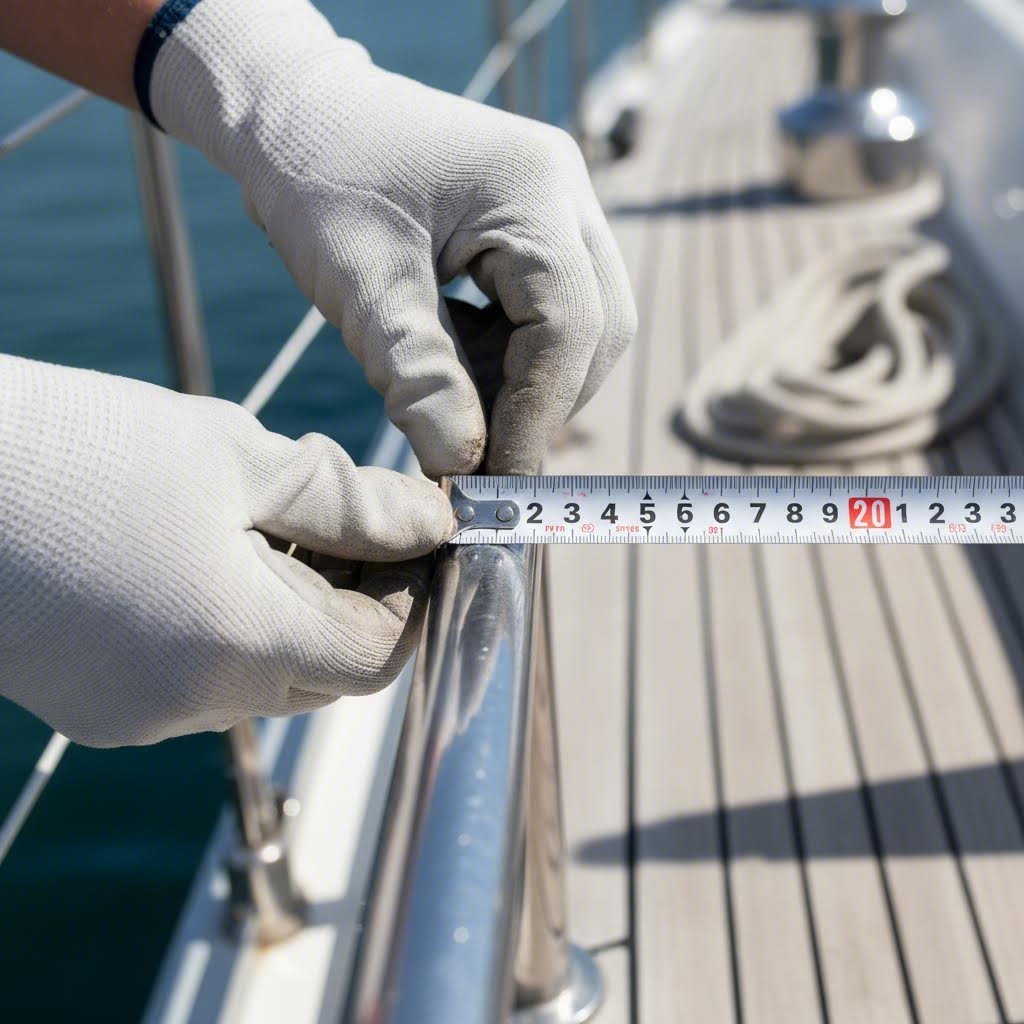
When measuring existing toe rails for replacement, accuracy prevents costly errors. Start by measuring the overall height from deck surface to the top of the rail. Then capture the base width where it contacts the deck. For slotted rails, measure slot width, slot length, and the spacing between slots. Record mounting hole spacing as well, typically ranging from 4 inches to 6 inches on center depending on the manufacturer.
Pro tip: Always measure in both metric and imperial units. A profile listed as 50mm height might measure 1.97 inches, which rounds to 2 inches in catalogs but may not match your existing 1-7/8 inch rail.
Understanding the difference between starboard vs port side installations matters when ordering replacement rails. Some profiles have asymmetrical features or specific slot orientations that require port and starboard versions. When sailing starboard to starboard in passing situations, both vessels need properly mounted rails that won't catch lines or create snag points.
Replacement profiles from manufacturers like Crest Aluminum often serve as exact matches for original equipment from boats built during the 1970s and 1980s. Their #2818HC profiles, for instance, directly replace the toe rails found on Canadian-built C&C sailboats from that era, maintaining the original 4-inch mounting hole spacing and 6.75" x 1.57" slot dimensions.
With your profile type selected, the next consideration becomes ensuring proper fit through accurate sizing and understanding the technical specifications that translate catalog numbers into real-world measurements.
You've selected your profile type. Now comes the measurement work that separates successful installations from frustrating do-overs. Getting aluminum toe rail extrusion sizing right requires more than a tape measure and good intentions. You need to understand how manufacturers communicate dimensions, how your deck's curvature affects fit, and why that specification sheet might list the same measurement two different ways.
Before ordering anything, grab a flexible tape measure, a straightedge, and something to record measurements. Start at the bow and work your way aft along both port and starboard sides. Why both sides? Because boats aren't perfectly symmetrical, especially after decades of use. Warping or swelling in the deck substrate can create variations you won't notice until your new rail doesn't sit flush.
Deck camber presents your first measurement challenge. This intentional curvature allows water to drain outboard rather than pooling on deck. Most production boats feature 1/4 inch to 1/2 inch of camber per foot of beam. When you lay a straightedge across your deck, the gap at center indicates how much your toe rail must twist along its length to maintain consistent contact.
Here's how to capture the critical dimensions:
Take photos as you measure. That slight angle where your deck flares outboard near the transom? You'll want documentation when explaining your project to suppliers or fabricators.
Toe rail dimensions scale with vessel size. Larger boats generate greater loads from crew movement, sail handling, and wave action. The profile must provide adequate foot bracing without creating trip hazards or interfering with sail trim. Reference materials from Goiot marine hardware specifications reveal how manufacturers approach this scaling:
| Boat Length | Recommended Height (A) | Recommended Base Width (B) | Typical Hole Spacing | Approximate Weight |
|---|---|---|---|---|
| Under 25 ft (7.6m) | 44-50mm (1.7-2.0") | 40-45mm (1.6-1.8") | 120mm (4.7") | 4-5 kg per 6m length |
| 25-35 ft (7.6-10.7m) | 55-60mm (2.2-2.4") | 44-47mm (1.7-1.9") | 112-200mm (4.4-7.9") | 6 kg per 6m length |
| 35-45 ft (10.7-13.7m) | 60-67mm (2.4-2.6") | 50-59mm (2.0-2.3") | 112mm (4.4") | 9 kg per 6m length |
| Over 45 ft (13.7m) | 67-80mm (2.6-3.1") | 59-68mm (2.3-2.7") | 112mm (4.4") | 9.6+ kg per 6m length |
Notice how the Goiot 808 toe rail measures 60mm x 47mm with 200mm hole spacing, while their heavier 823 profile measures 67mm x 59mm with tighter 112mm spacing. These aren't arbitrary numbers. Closer hole spacing distributes mounting loads more evenly, reducing stress on both the rail and your deck laminate. Boats over 35 feet benefit from the additional fastener density.
Understanding the difference between a nautical mile vs mile matters for navigation, but here's a measurement difference that matters more for your project: the distinction between nominal and actual dimensions. A profile listed as "2 inch" may actually measure 1.97 inches (50mm) or 2.05 inches (52mm). Always request actual dimensions rather than relying on rounded catalog descriptions.
Technical drawings communicate toe rail specifications through standardized conventions. According to shipbuilding drawing standards from SunCam engineering resources, marine component drawings typically include profile views, plan views, and cross-sections with dimensions referenced to baseline measurements. Understanding these conventions helps you interpret manufacturer specifications correctly.
When reviewing toe rail technical drawings, look for these key elements:
The Goiot specification sheets illustrate this clearly. Their profiles list both metric dimensions and hole patterns, with separate specifications for standard rails versus their accessories like fairleads and stanchion bases. A fairlead end fitting for the 808 profile measures 105mm long with 35mm hole spacing, while the middle fairlead extends 135mm with 85mm spacing. These details matter when planning your installation layout.
Legacy product compatibility deserves attention, especially for boats built before current standards emerged. Many older production sailboats used proprietary toe rail profiles that manufacturers no longer produce. However, the rectangular pitch concept helps here. If your existing rail shows a 70mm long by 155mm spaced slot pattern, you can cross-reference this against current offerings. Several Goiot profiles maintain this exact pattern, providing drop-in compatibility with hardware designed decades ago.
For international boat owners purchasing materials across borders, maintaining consistent measurements in both metric and imperial units prevents costly mistakes. A profile specified as 47mm height translates to 1.85 inches, not the 1-7/8" (1.875") that appears similar. That 0.025" difference compounds over 40 feet of rail, potentially creating alignment issues at joints. Use products like Loctite 243 threadlocker on fasteners to secure connections that might otherwise work loose from these slight dimensional mismatches.
Recording measurements with both unit systems also simplifies communication with suppliers. European manufacturers typically work in metric, while many American boatyards still quote in fractions of inches. When your specifications read "67mm (2.64") height with 112mm (4.41") hole spacing," there's no ambiguity regardless of which standard your supplier prefers.
With accurate measurements and a solid understanding of how specifications translate to real-world fit, you're ready to tackle the installation itself. But proper sizing means nothing if you choose the wrong fasteners or bedding compounds, which brings us to the critical decisions that determine whether your toe rail lasts five years or fifty.
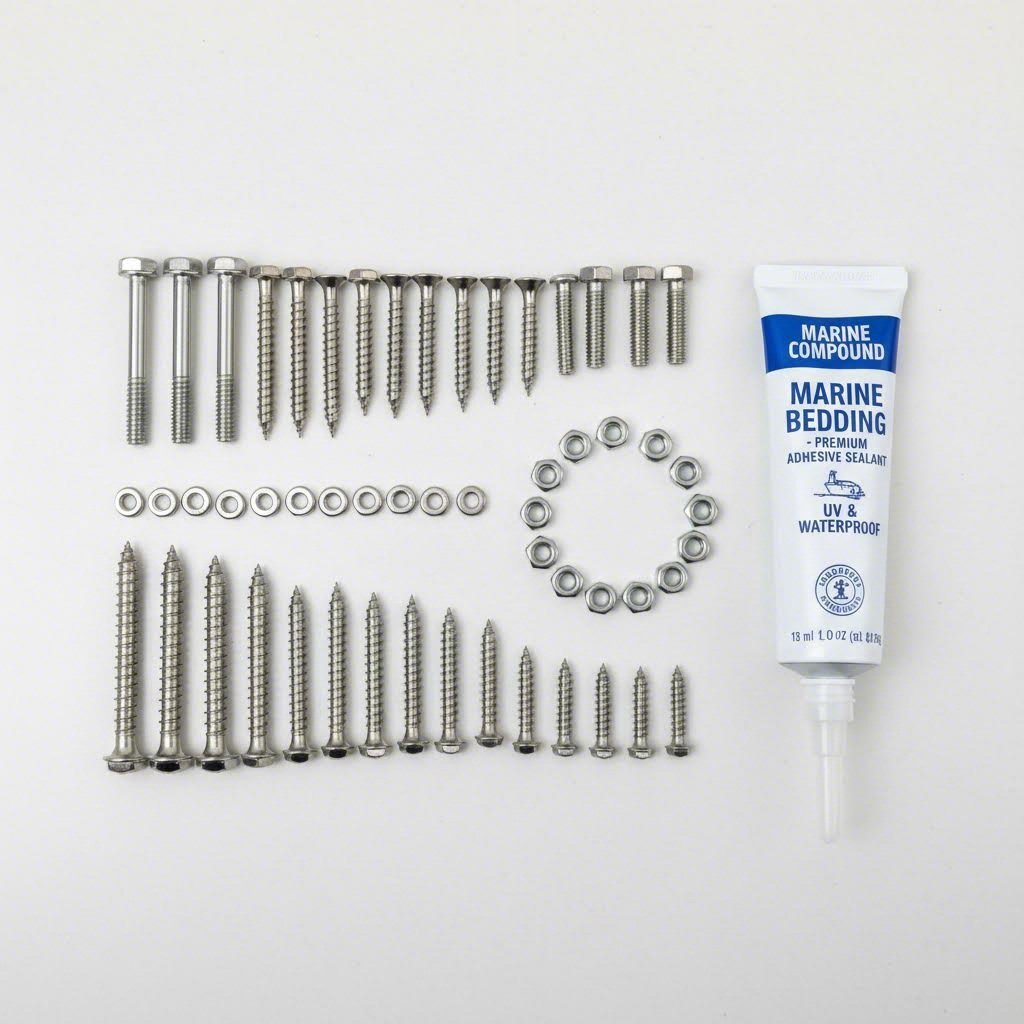
You've measured twice, selected your profile, and the new aluminum toe rail extrusion sits ready on your dock. But here's where many sailors stumble. The installation process involves decisions that affect whether your rail lasts decades or develops corrosion pockets within years. Fastener selection and bedding compounds might seem like afterthoughts, but they're actually the foundation of a successful installation.
Imagine spending a weekend installing beautiful new toe rails, only to watch brown stains weep from every fastener hole within a season. That's galvanic corrosion at work, and it happens when dissimilar metals contact each other in the presence of an electrolyte, which seawater provides in abundance.
According to the Nickel Institute's Practical Guide to Using Marine Fasteners, galvanic effects are of primary importance when selecting fasteners. The fundamental rule? Your fastener should be cathodic to (more noble than) the base plate material. It should never be the anode (less noble) material. When you install stainless steel fasteners in aluminum structures, the aluminum corrodes around the fastener, eventually enlarging the hole until the uncorroded stainless steel fastener simply drops out.
So what materials work safely with aluminum toe rails? The research is clear:
Avoid copper alloy fasteners in aluminum at all costs. The Nickel Institute research confirms that copper alloy fasteners in aluminum result in severe pitting and corrosion of the aluminum and should be avoided. This includes bronze and brass, despite their traditional marine pedigree.
When you're making battery terminal connectors or electrical connections on deck, the same galvanic principles apply. Using liquid electrical tape to seal exposed connections prevents the moisture intrusion that accelerates dissimilar metal corrosion.
Even with compatible fasteners, water intrusion between your toe rail and deck creates problems. Bedding compounds serve dual purposes: sealing against water and providing a barrier that prevents direct metal-to-metal contact.
Not all sealants work equally well for aluminum applications. Here are your primary options:
The Nickel Institute research notes that packing fastener joints with most greases is not effective since moisture wicks up between the grease and metal surface, thus increasing crevice attack. However, specially compounded water-repellent lubricants that adhere to and displace water from metallic surfaces can prevent crevice corrosion where stainless steel fasteners meet aluminum structures. This technique has proven successful on large hovercraft operating in ferry service across the English Channel.
Before applying any sealant, prepare surfaces properly. Sand aluminum lightly with 220-grit paper, clean with acetone or denatured alcohol, and apply sealant while surfaces remain pristine. If using an electric sander for larger surface preparation, vacuum thoroughly before sealing. Any debris trapped under the rail becomes a moisture reservoir promoting corrosion.
Successful installation requires attention to details that forum discussions frequently overlook. Start with hole spacing and edge distance. Mounting holes placed too close to the rail's edge concentrate stress and invite cracking. As a general rule, maintain edge distance equal to at least 1.5 times the hole diameter. For 1/4" fasteners, that means keeping holes at least 3/8" from any edge.
Proper hole spacing distributes loads across the deck substrate. Spacing that's too wide creates stress risers between fasteners where the rail can flex and work against the bedding compound. Too tight, and you compromise the deck core with excessive penetrations. Match your original hole spacing when possible, typically 4 to 6 inches on center for most production boats.
Working with curved deck sections demands patience. Your toe rail must twist slightly along its length to follow deck camber. Force-fitting a straight section against significant curvature creates spring tension that fights your fasteners and eventually works the rail loose. For curves exceeding 1/8" over 8 feet, consider:
Alignment consistency matters visually and functionally. Snap a chalk line along your deck edge before drilling any holes. Clamp the rail in position at bow and stern, then walk the length checking for fair curves. Any visible wobble becomes a permanent feature once you drill.
When mounting stanchion bases through your toe rail, consider the load paths. Lifelines under strain pull stanchions outboard. Your fastener pattern must distribute this load without creating a lever arm that peels the rail from the deck. Many experienced sailors reinforce stanchion locations with backing plates below deck, spreading loads across larger areas of the hull-deck laminate.
Epoxy on painting projects requires curing time. Similarly, allow bedding compounds to cure fully before putting toe rails under load. Polysulfide typically needs 24 to 48 hours; polyurethane may require up to 7 days for full cure. Stepping on freshly installed rails or running dock lines before compounds set compromises the seal you worked so hard to create.
Just as learning how to tie a bowline knot takes practice before becoming second nature, developing proper installation technique requires attention to sequential steps. Rush the process, and you'll create problems that surface months later. Take time to dry-fit everything, verify alignment, prepare surfaces properly, and allow adequate cure time. Your toe rail installation should outlast your ownership of the boat.
With your installation complete and fasteners properly torqued, the next chapter of toe rail ownership begins: maintaining that aluminum finish and preventing the oxidation and pitting that gradually degrade even the best installations.
Your aluminum toe rail extrusion looks pristine after installation. But here's the reality: without proper maintenance, that beautiful finish deteriorates faster than you'd expect. The good news? Aluminum is remarkably forgiving when you understand what it needs. The key lies in knowing the difference between helpful oxidation and harmful corrosion, then developing habits that protect your investment for decades.
Sounds simple enough, right? Just wash off the salt and you're done. Unfortunately, aggressive cleaning causes more damage than salt exposure ever could. According to marine aluminum care specialists, avoiding harsh cleaners is critical because acidic or alkaline cleaners, steel wool, sandpaper, or emery paper can scratch or strip the protective layer from anodized surfaces.
Here's the straightforward approach that works:
When you need more cleaning power than soap provides, reach for cleaners specifically formulated for aluminum. A battery powered pressure washer works well for removing stubborn grime without the aggressive force of commercial pressure washers that can damage seals and bedding compounds. Many sailors find that a battery operated pressure washer with adjustable pressure settings offers the perfect balance between cleaning power and surface protection.
What about oxidation that's already formed? For mill-finish aluminum that hasn't been anodized, light oxidation actually protects the underlying metal. Boating Magazine reports that when continuously exposed to oxygen, aluminum develops a film of aluminum oxide so dense and well bonded to the metal that it prevents further corrosion. This is why many commercial and military craft leave aluminum bare from the waterline up.
Understanding the difference between surface oxidation and harmful corrosion saves you from unnecessary panic and misdirected effort. That dull gray film forming on mill-finish aluminum? That's actually good. It's a self-protecting oxide layer. The white powdery deposits around fastener holes or the deep pits eating into your rail's surface? That's the corrosion you need to address.
Different surface finishes require different care approaches:
| Finish Type | Maintenance Needs | Common Issues | Restoration Approach |
|---|---|---|---|
| Anodized | Mild soap cleaning, fresh water rinse | Scratches expose base metal; UV fading | Touch-up pens for scratches; professional re-anodizing for severe damage |
| Powder Coated | Gentle cleaning; avoid solvents | Chalking from UV exposure; chipping at impact points | Wax application for chalking; spot touch-up for chips |
| Mill Finish | Regular cleaning; allow protective oxide to form | Uneven oxidation; water staining | Aluminum polish to restore brightness; protective wax coating |
| PVDF Coating | Minimal maintenance required | Excellent UV and chemical resistance | Rarely needs restoration |
Chalking presents a particular challenge for powder-coated surfaces. This condition appears as a white, powdery residue that dulls the finish over time. UV exposure breaks down the coating's surface layer, releasing pigment particles. You'll notice it most on south-facing surfaces that receive maximum sun exposure. To restore appearance, apply a marine-grade wax after cleaning. The wax fills microscopic surface irregularities and provides temporary UV protection while restoring gloss.
For mill-finish aluminum showing heavy oxidation, aluminum polish removes the oxide layer and restores shine. Work in small sections with a buffing pad, then immediately apply protective wax to slow re-oxidation. This process works well for cosmetic restoration but remember: you're removing that protective oxide layer, so the wax becomes essential for ongoing protection.
Establishing a routine prevents small issues from becoming expensive problems. Marine maintenance experts recommend weekly rinsing after saltwater use, monthly deep cleaning with mild soap, and seasonal inspections for signs of wear or corrosion.
Use this comprehensive checklist to keep your toe rails in top condition:
Fastener point inspection deserves special attention. Water intrusion at mounting holes creates hidden corrosion pockets that expand unseen until structural damage occurs. Look for:
Early corrosion signs demand immediate attention. Remove suspect fasteners, clean the hole thoroughly, apply fresh bedding compound, and reinstall with proper torque. Waiting allows moisture to migrate deeper into the deck core, turning a simple maintenance task into a major repair project.
Your toe rail serves you reliably through heavy weather and lazy afternoons alike. Return the favor with consistent maintenance, and this aluminum extrusion will protect your deck edge for the life of your boat. But what happens when maintenance isn't enough? Sometimes rails reach the end of their serviceable life, and knowing when replacement makes more sense than repair saves both money and frustration.
Even the best-maintained aluminum toe rail extrusion eventually reaches a point where repairs no longer make sense. Hurricane damage, decades of UV exposure, or accumulated corrosion can transform your protective deck edge into a liability. Knowing when replacement becomes the smarter choice, and how to execute the project successfully, saves you from throwing good money after bad.
How do you know when maintenance won't cut it anymore? Experienced sailors on sailing forums share common failure modes that signal replacement time:
One sailor on SailNet described finding his Aphrodite 34's single-piece aluminum toe rail damaged during Hurricane Irene. His dilemma illustrates the common choice: attempt repair on damaged sections or replace rails on both sides entirely.
Before you can install new rails, the old ones must come off without destroying your deck in the process. This is where many projects go sideways. According to sailors who've completed this work, the hull-deck joint beneath your toe rail often conceals decades of compressed sealant, corroded fasteners, and sometimes water-damaged core material.
The removal process demands patience. One cruising couple documented their experience removing toe rails from their SAGA, noting that each side had 60 bolts with 60 corresponding holes. That's 120 fasteners requiring access from both above deck and below.
Here's what the removal process typically involves:
Popping the deck off the hull, as one sailor described it, is freaking scary. Sunlight filtering through the newly opened gap raises legitimate concerns about structural integrity. However, this separation often reveals the true source of leaks and allows proper resealing during reinstallation.
Replacement projects fail when sailors rush into demolition without sourcing materials first. A forum discussion about replacing toe rails on a late-80s Jeanneau highlights the challenge: original extrusion profiles may no longer exist, and matching hole patterns proves nearly impossible across manufacturers.
Follow this planning sequence to avoid mid-project disasters:
When upgrading from original equipment, consider whether improved profiles or materials make sense. Bolt casting quality has improved since many production boats were built. Modern slotted profiles may offer functionality your original solid rails lacked. You might invest in powder coating or custom anodizing that the factory never offered.
Sealant consumption surprises most first-timers. That same cruising couple used 11 tubes of 5200 to properly seal their toe rails and hull-deck joint. At roughly $20 per tube for white and double that for black, sealant costs add up quickly.
For sailors tackling this project in phases, a cordless power washer helps clean exposed deck edges between work sessions. A portable power washer with adjustable pressure removes old sealant residue without the aggressive force that damages fiberglass. Keep surfaces clean between sessions to ensure proper adhesion when you're ready to install.
The most successful replacements treat this as a system upgrade rather than a simple swap. Inspect stanchion bases, genoa track, and all hardware mounting through the toe rail. Replace questionable fasteners with proper marine-grade alternatives. Upgrade bedding compounds to modern formulations. When you're going through this much effort, ensuring every component meets current standards prevents return trips to the same work site.
With replacement rails installed and properly bedded, you might find yourself considering customization options you never knew existed. Surface treatments and custom finishes can transform functional toe rails into distinctive styling elements that complement your boat's overall appearance.
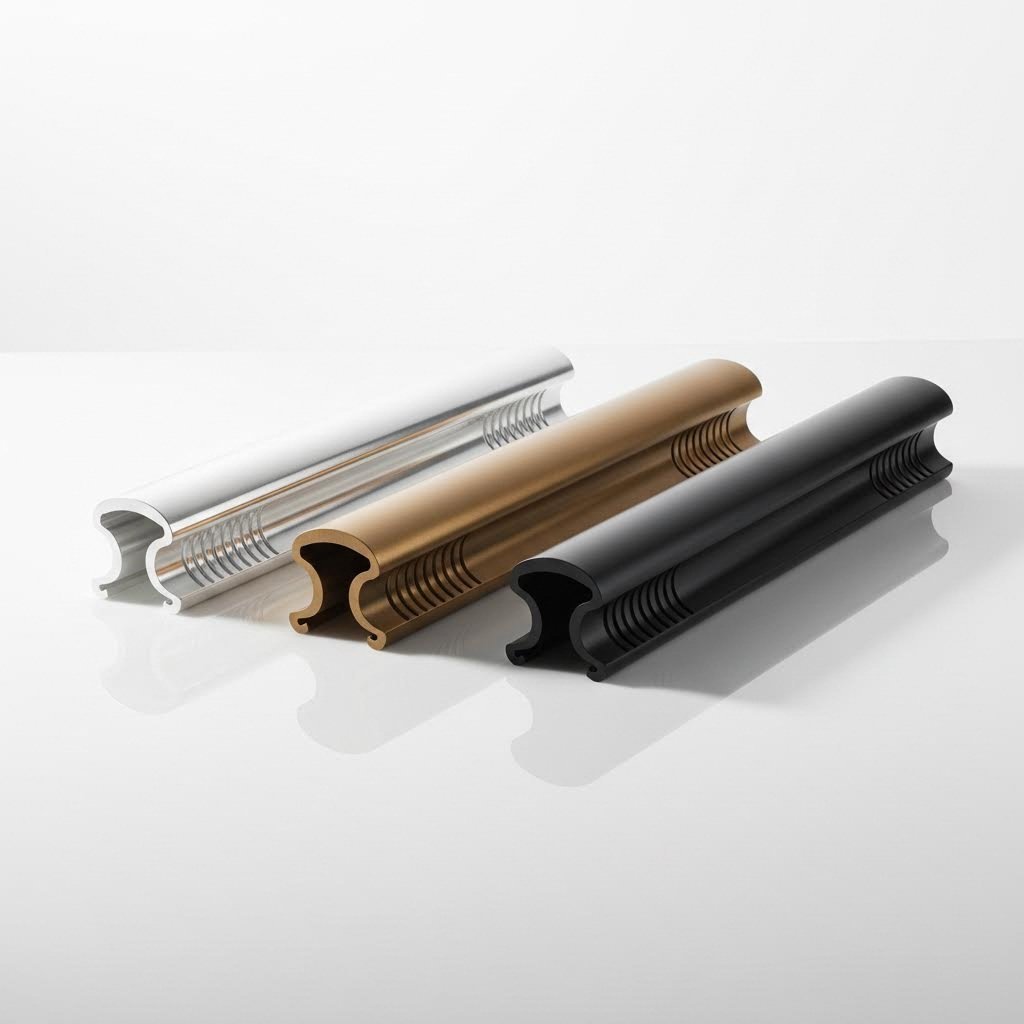
Your aluminum toe rail extrusion doesn't have to look like everyone else's. Beyond the functional decisions of slotted versus solid profiles, surface treatments open a world of customization that affects both durability and aesthetics. Whether you want to match existing deck hardware, create a distinctive styling statement, or simply maximize corrosion resistance, understanding your finish options helps you make choices you'll appreciate for years.
Anodizing transforms your aluminum's surface through an electrochemical process that creates a protective oxide layer far thicker and harder than what forms naturally. According to Green Bay Anodizing, hard coating and anodizing are the best way to protect marine-use aluminum from the elements on the water. Their marine specialists note that anodizing provides corrosion resistance, scratch resistance, and finishes that will not peel or flake off while remaining very easy to clean.
What makes anodizing particularly attractive for toe rails? The finish becomes part of the aluminum itself rather than sitting on top. CNC Cookbook's research confirms that anodized finishes offer superior durability and corrosion resistance compared to powder coat finishes. The benefits include greater hardness than raw aluminum, improved wear resistance, and better adhesion for any subsequent coatings.
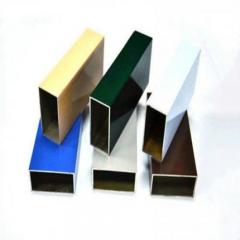
Color options extend beyond the traditional clear and bronze finishes. Many marine anodizers now offer black, champagne, and custom colors that maintain the lustrous metallic appearance while adding distinctive styling. However, there's an important consideration: any imperfections or tooling marks in the original piece will remain visible following anodization. This transparency means your extrusion quality matters as much as your finish choice.
For sailors using thermal imaging equipment like a flir camera during night sailing or searching for heat leaks around deck hardware, anodized surfaces present consistent thermal signatures without the variations that painted surfaces sometimes create.
When you need specific colors that anodizing can't provide, powder coating opens virtually unlimited possibilities. This dry finishing process applies finely ground pigment and resin particles electrostatically, then cures them under heat to form a durable protective layer. The result? Colors ranging from yacht white to racing red, in finishes from matte to high gloss.
Powder coating excels where aesthetics demand precise color matching. Need your toe rail to complement that custom canvas work or match your boat's accent stripe? Powder coating delivers. The process also effectively conceals any underlying material flaws, providing a more uniform and smooth appearance than anodizing can achieve.
However, powder coatings can be more prone to chipping than anodized surfaces. Impact damage from dropped winch handles or dock lines under tension may chip through to bare aluminum. The good news? Powder coating is typically more economical and easier to touch up or recoat than anodizing. For boats seeing heavy use, this repairability offers practical advantages.
Environmental considerations favor both processes over traditional liquid paints. Powder coating is generally more environmentally friendly due to its low VOC emissions and simpler processes. No volatile organic compounds escape into the atmosphere during application or curing.
Your surface treatment choice should complement your vessel's overall aesthetic while meeting performance requirements. Here's how the major options compare:
| Surface Treatment | Durability | Cost Considerations | Best Applications | Color Options |
|---|---|---|---|---|
| Clear Anodizing | Excellent scratch and corrosion resistance | Moderate | Classic styling; maximum UV resistance | Natural aluminum appearance |
| Bronze Anodizing | Excellent; hides wear patterns | Moderate | Traditional yacht aesthetics | Gold to dark bronze tones |
| Black Anodizing | Excellent; shows scratches more than bronze | Moderate to High | Modern styling; racing boats | Matte to semi-gloss black |
| Custom Color Anodizing | Excellent | Higher | Distinctive styling; brand matching | Champagne, Rose Gold, custom shades |
| Powder Coating | Good; more chip-prone than anodizing | Lower to Moderate | Exact color matching; budget projects | Virtually unlimited |
| PVDF Coating | Superior chemical and UV resistance | Higher | Harsh environments; long-term installations | Wide range available |
| Mill Finish | Good with natural oxide layer | Lowest | Working boats; industrial applications | Natural aluminum only |
PVDF coating deserves special attention for demanding applications. According to coating specialists, PVDF (polyvinylidene fluoride) coating is a high-performance finish known for its chemical resistance and UV stability. It forms a tough, protective barrier that protects against harsh weather, corrosion, and fading over time. For boats spending extended periods in tropical climates or industrial harbors, PVDF's exceptional durability justifies its premium pricing.
How do you choose? Consider your sailing environment, maintenance preferences, and aesthetic goals. Racing sailors often prefer clear or black anodizing for its hardness and weight efficiency. Cruisers heading offshore may prioritize PVDF's long-term weather resistance. Weekend sailors might find powder coating's affordability and color options perfectly suited to their needs.
For boat owners seeking custom extrusion profiles with specialized finishes, manufacturers like Shengxin Aluminium offer comprehensive surface treatment capabilities. Their options include anodizing in custom colors like Champagne and Rose Gold, standard and specialty powder coating, PVDF application, and Micro-arc Oxidation for enhanced surface properties. With 30+ years of aluminum extrusion experience, they provide end-to-end support from die development through mass production, making custom toe rail projects feasible for individual boat owners rather than just production builders.
Remember that surface treatments interact with your maintenance approach. Warm white light bulb illumination in your workshop reveals finish imperfections that harsh fluorescent lighting might hide. When fairy lights and deck lighting create evening ambiance aboard, your toe rail finish contributes to the overall aesthetic, whether that's gleaming bronze anodizing or custom-colored powder coating that complements your boat's personality like art about the sea.
With surface treatment options understood, the final piece of the puzzle involves finding suppliers who can deliver quality extrusions with the finishes you want. That sourcing decision affects everything from pricing to lead times to the technical support available when questions arise.
You've done the homework. You know whether slotted or solid profiles suit your sailing style, understand the surface finishes available, and have accurate measurements in hand. Now comes the question that determines whether your project succeeds or stalls: where do you actually source quality aluminum toe rail extrusion that meets your specifications? Finding the right supplier matters as much as selecting the right profile.
Not all aluminum extrusion suppliers understand marine applications. A manufacturer producing window frames or industrial conveyor components may lack the specialized knowledge needed for toe rail projects. According to industry evaluation guidelines, assessing supplier capability requires looking beyond price lists to examine actual manufacturing infrastructure and technical competence.
When evaluating potential suppliers, prioritize these key criteria:
Strong technical communication differentiates professional manufacturers from simple traders. A capable supplier proactively prevents issues rather than reacting after defects occur. They share inspection photos, reports, and documentation before shipment, giving you confidence in what's arriving at your dock.
Here's the decision that shapes your project timeline and budget: should you pursue custom extrusion or select from standard catalog profiles? Each approach offers distinct advantages depending on your specific situation.
Standard profiles work well when:
Custom extrusion makes sense when:
According to industry cost analysis, tool costs for extrusion dies in normal architectural and industrial applications range from $400 to $1,000, with larger parts requiring dies costing up to $2,000. Normal tool turnaround time runs 3-4 weeks, with production following within a week of sample approval. Some manufacturers refund tool costs if a stipulated amount is purchased within 2 years, and most don't charge for replacement tools after their useful life if orders continue.
The custom route enables design optimization that standard profiles can't offer. You might incorporate specific slot dimensions, integrate mounting features, or achieve exact aesthetic proportions that catalog options approximate but never quite match. For one-off projects or small fleets, custom extrusion delivers profiles precisely suited to your requirements rather than compromises dictated by available inventory.
When navigating your boat using a navionics chart viewer, you expect precision. Apply that same expectation to your toe rail sourcing. Whether you're charging an 18650 rechargeable battery for your handheld electronics or replacing decades-old deck hardware, attention to detail matters throughout the process.
Requesting quotes without adequate preparation wastes everyone's time. Suppliers need specific information to provide accurate pricing, and vague inquiries generate vague responses. Before contacting manufacturers, compile the following details:
Factory-direct pricing offers significant advantages for larger projects. Bypassing distributors and marine chandleries eliminates markup layers that can add 30-50% to your final cost. For a 45-foot sailboat requiring 90+ feet of toe rail with custom finishing and machining, direct manufacturer relationships translate into substantial savings.
Reference materials from industry guides emphasize the value of working with manufacturers who control every stage from die design through finished product. Facilities combining extrusion, CNC machining, and surface finishing deliver components ready for installation, eliminating coordination between multiple vendors and reducing transportation damage risks.
For boat owners seeking comprehensive aluminum extrusion and deep processing services, Shengxin Aluminium exemplifies the vertically integrated approach that simplifies complex projects. With over 30 years of industry experience, their facility houses 35 advanced extrusion presses ranging from 600T to 5500T, covering everything from delicate precision profiles to heavy structural sections. Their state-of-the-art CNC machining centers handle precise cutting, drilling, and bending to meet exact specifications.
Surface treatment options at Shengxin include anodizing in custom colors like Champagne and Rose Gold, standard and specialty powder coating, PVDF for maximum durability, and Micro-arc Oxidation for enhanced surface properties. Whether you need custom 6063 aluminum toe rails or complex industrial profiles, their technical team provides end-to-end support from die development through mass production. This comprehensive capability means your project stays under one roof from initial concept to final shipment.
Before finalizing any supplier relationship, request samples of their surface finishes and verify dimensional accuracy against your specifications. The small investment in samples prevents costly surprises when full production arrives at your dock.
Choosing boat names might inspire creativity, and some sailors spend hours debating funny boat names or searching for funny names to name a boat. But supplier selection deserves equally serious consideration. The manufacturer you choose affects product quality, project timeline, and ultimately the safety and functionality of your vessel's deck edge for years to come.
Whether you're sourcing from European specialists, North American distributors, or Asian manufacturers like those featuring Victron Holland power systems, evaluate each option against the criteria that matter for marine applications. Your aluminum toe rail extrusion represents a long-term investment in your boat's safety and functionality. Choose suppliers who understand that responsibility and deliver accordingly.
Slotted toe rails feature continuous T-track openings that accept adjustable hardware like genoa cars, spinnaker blocks, and pad eyes without drilling new holes. Non-slotted (solid) profiles offer cleaner aesthetics, simpler maintenance, and work well for cruising sailors who rarely adjust sail trim. Racing sailors typically prefer slotted rails for maximum versatility, while weekend cruisers often find solid profiles more practical for their sailing style.
Start by measuring total run length from bow to stern along the deck edge, adding 6 inches for joint overlap. Capture the base contact width where the rail meets the deck, and record existing mounting hole spacing (typically 4-6 inches on center). For curved sections, use a straightedge to measure deck camber. Always document measurements in both metric and imperial units to avoid costly sizing errors when ordering from international suppliers.
Use 316 stainless steel fasteners with proper bedding compound isolation, or aluminum fasteners from 5000 or 6000 series alloys for same-metal compatibility. Avoid copper alloy fasteners (bronze, brass) as they cause severe galvanic corrosion with aluminum. Monel and titanium offer excellent compatibility but at premium prices. Always apply polysulfide or polyurethane bedding compounds to prevent water intrusion and create a barrier between metals.
Rinse with fresh water after saltwater exposure and clean monthly with mild soap. Avoid acidic cleaners, steel wool, or abrasive pads that damage anodized surfaces. For mill-finish aluminum, allow the natural protective oxide layer to form. Inspect fastener points seasonally for white powdery deposits indicating corrosion. Apply marine-grade wax to powder-coated surfaces showing UV chalking, and address any water staining around screw heads immediately.
Replace your toe rail when you observe stress cracks near high-load areas, severe pitting deeper than 1/16 inch, elongated oval-shaped fastener holes, irreversible bending from storm damage, or widespread white corrosion deposits across multiple fastener points. Document existing dimensions before removal, source replacement material early (custom profiles may take weeks), and consider drilling entirely new holes rather than matching existing patterns that accumulate alignment errors.



 خدمة الإنترنت
 0086 136 3563 2360
 sales@sxalu.com
 +86 136 3563 2360
 العربية
 English
 français
 Deutsch
 русский
 español
 português
 ไทย
ไทย Việt
Việt Українська