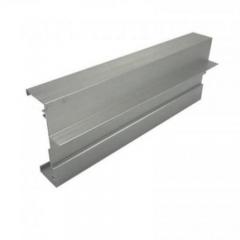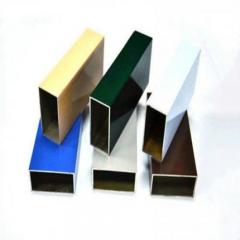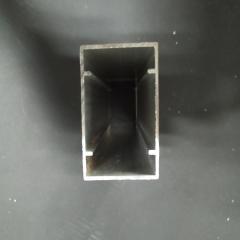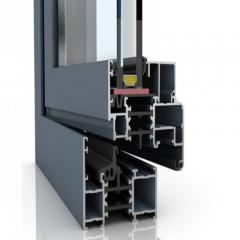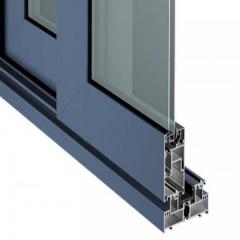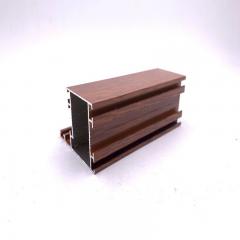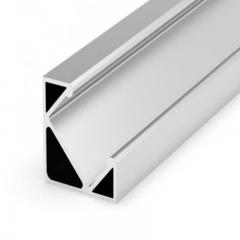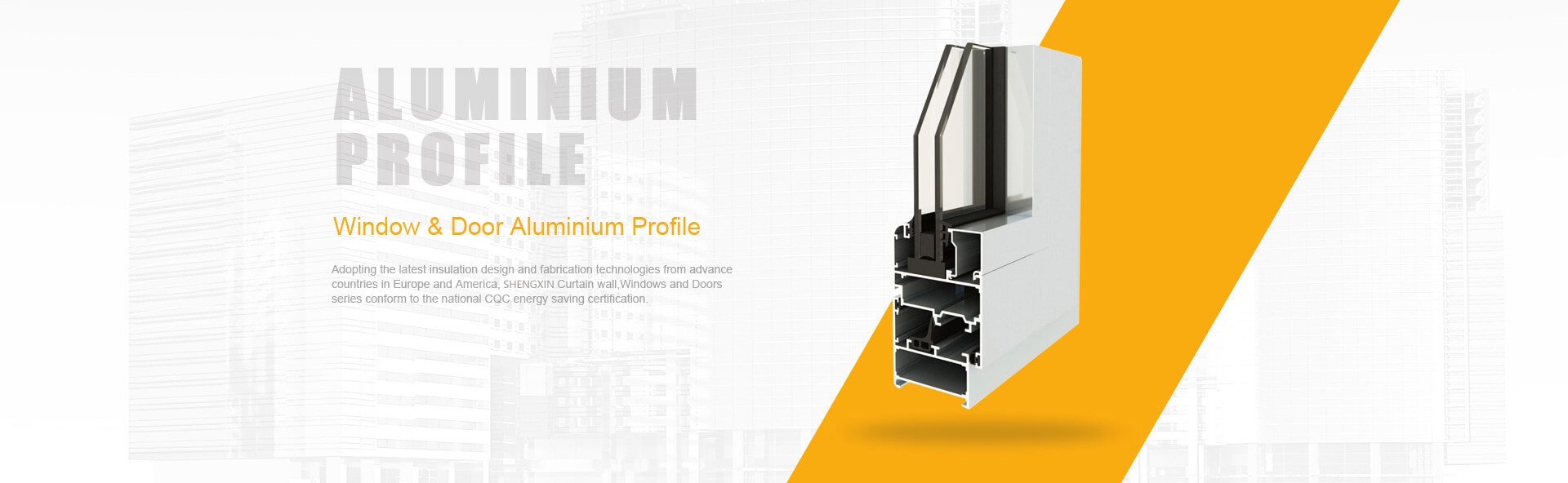
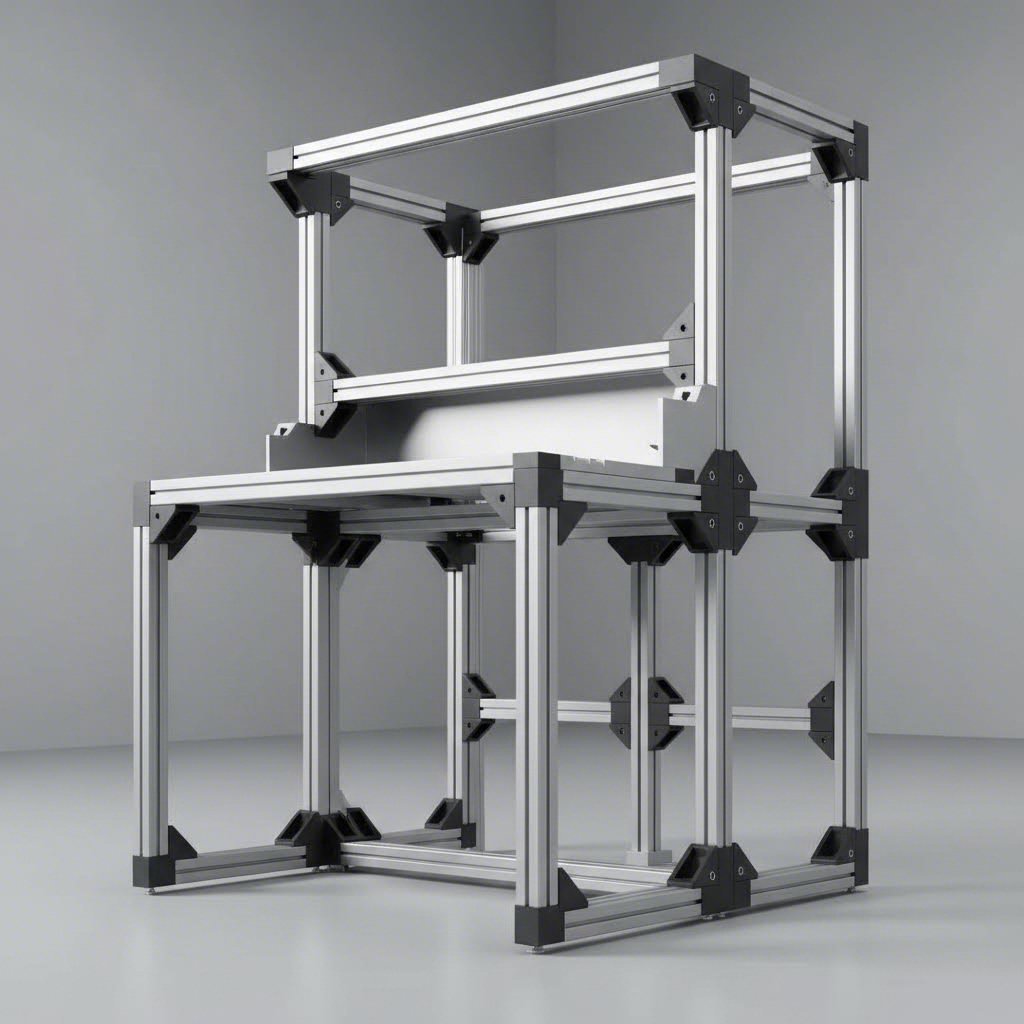
When you think about building a machine frame, workstation, or industrial enclosure, you might immediately picture heavy steel components. But what if you could achieve comparable—or even superior—load-bearing performance at roughly half the weight? That's exactly where aluminum structural extrusions come into play.
Aluminum structural extrusions are engineering-grade aluminum profiles manufactured through the extrusion process, specifically designed for load-bearing applications requiring precise dimensional tolerances, verified mechanical properties, and predictable performance under stress.
Unlike decorative trim or general-purpose aluminum extrusion profiles used for aesthetic applications, these structural components must meet rigorous specifications. They're engineered to handle compressive forces, support dynamic loads, and maintain dimensional stability over time—making them fundamentally different from standard aluminum shapes you might find in picture frames or window casings.
Imagine squeezing toothpaste through a shaped nozzle—that's essentially the aluminum extrusion process in its simplest form. However, the actual manufacturing involves considerably more engineering precision.
The process begins with a cylindrical aluminum billet, which is a cast log of extrusion feedstock. This billet gets preheated in a furnace to temperatures between 700°F and 930°F (375°C to 500°C), depending on the specific alloy. At these temperatures, the aluminum becomes soft and malleable—but remains solid.
Here's what happens next:
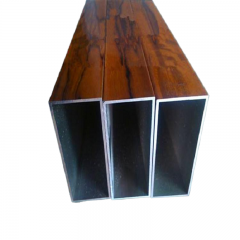
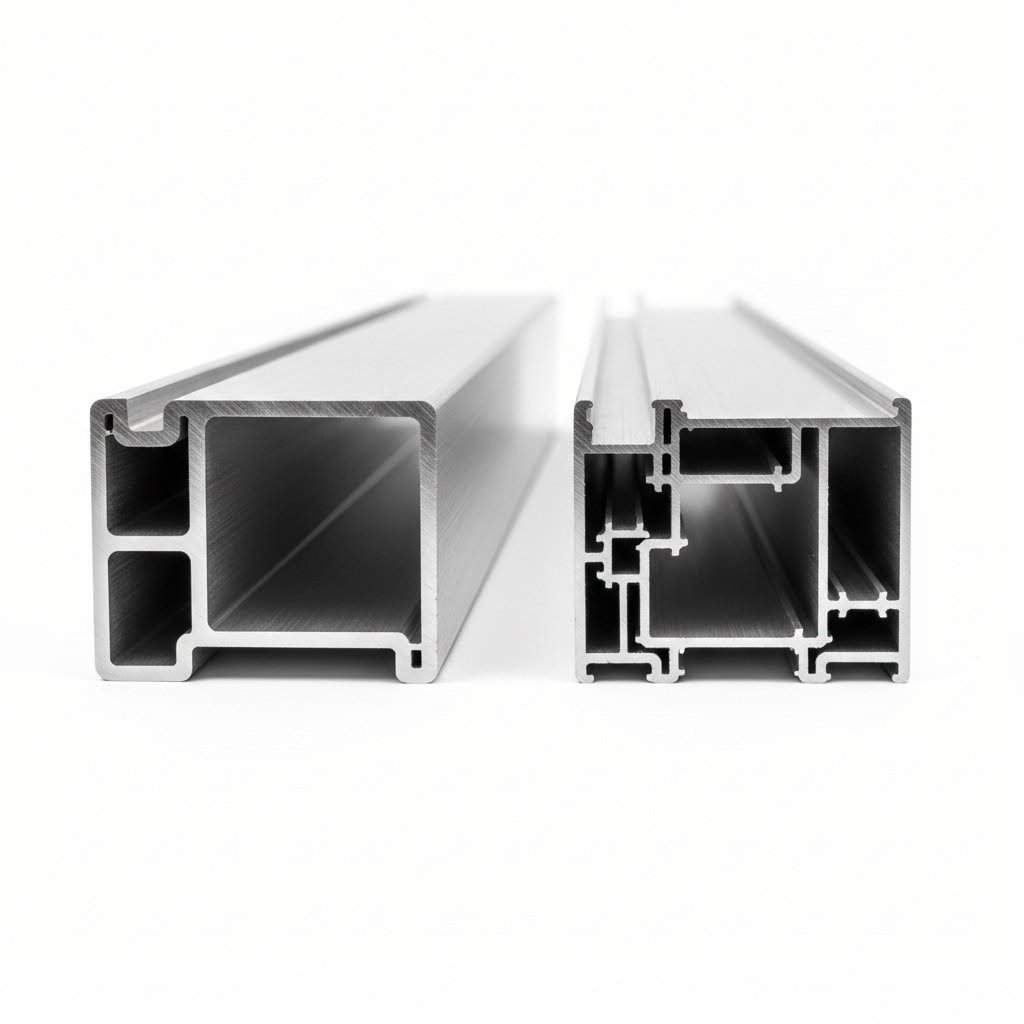
For hollow profiles—like square tubes commonly used in structural framing—the process involves a die with an internal mandrel. The aluminum actually separates and "welds" back together under pressure as it flows around the mandrel supports, creating seamless hollow aluminium extrusion shapes.
So what distinguishes structural aluminum extrusions from standard decorative profiles? The differences go far beyond simple labeling.
Structural profiles typically use specific alloys—most commonly from the 6000 series—that have been heat-treated to achieve maximum strength. The 6061-T6 grade, for example, delivers tensile strength around 45,000 psi with yield strength of 40,000 psi. That's strong enough for aerospace brackets and heavy machinery frames.
Standard extrusions, by contrast, might prioritize surface finish quality or ease of fabrication over raw strength. They're perfectly suitable for trim work, signage, or light-duty applications—but you wouldn't want to build a load-bearing assembly with them.
The key takeaway? When specifying extruded aluminium for structural applications, you're selecting components engineered to predictable performance standards. These profiles undergo testing, carry documented mechanical properties, and integrate into systems where failure isn't an option. That engineering-grade distinction is what makes aluminum extrusions capable of replacing steel in applications where weight reduction matters without sacrificing structural integrity.
You've learned how aluminum structural extrusions are made—but here's a question that trips up many engineers and designers: which alloy should you actually specify? The answer depends entirely on your application's demands, and getting it wrong can mean compromised performance or unnecessary costs.
The 6000 series aluminum alloys dominate structural extrusion applications for good reason. These alloys contain magnesium and silicon as their primary alloying elements, creating a versatile balance of strength, corrosion resistance, and workability. Their face-centered cubic (FCC) crystal structure provides excellent ductility and malleability—making them ideal for the extrusion process while delivering reliable mechanical performance.
But within this series, two grades stand out for structural work: 6061-T6 and 6063-T5. Understanding when to choose each one separates informed specifiers from those who simply default to whatever their supplier recommends.
When your project involves serious load-bearing requirements—machine frames, aerospace components, automotive structures, or industrial equipment—6061-T6 is typically your go-to alloy. The "T6" temper designation indicates this aluminum extruded material has undergone solution heat treatment by artificial aging, maximizing its strength characteristics.
What makes 6061-T6 the workhorse of structural applications?
The higher copper content in 6061 (0.15% to 0.4%) contributes to its strength through precipitation hardening. When you're specifying aluminum tubing for structural frames or aluminum flat bar for brackets and supports, 6061-T6 handles the demanding applications where failure isn't acceptable.
Now, what if your priority is achieving complex cross-sectional shapes with excellent surface finish? That's where 6063-T5 shines. This alloy extrudes more easily through intricate dies, producing cleaner profiles with tighter tolerances on thin-walled sections.
6063-T5 offers distinct advantages for specific applications:
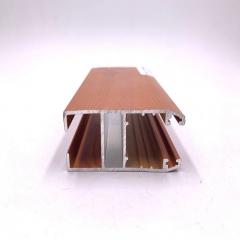
Architectural aluminum extrusions, window framing, decorative angle aluminum trim, and furniture components commonly use 6063-T5. While its lower strength limits heavy structural applications, it's perfectly adequate for light-to-medium load-bearing where aesthetics and manufacturability take priority.
| Property | 6061-T6 | 6063-T5 | Best Choice For |
|---|---|---|---|
| Ultimate Tensile Strength | 310 MPa | 180 MPa | 6061-T6: Heavy loads |
| Yield Strength | 270 MPa | 140 MPa | 6061-T6: Stress resistance |
| Shear Strength | 210 MPa | 120 MPa | 6061-T6: Fastened joints |
| Fatigue Strength | 96 MPa | 70 MPa | 6061-T6: Cyclic loading |
| Elongation at Break | 10% | 11% | 6063-T5: Slight edge in ductility |
| Thermal Conductivity | 170 W/m-K | 210 W/m-K | 6063-T5: Heat dissipation |
| Electrical Conductivity | 43% IACS | 55% IACS | 6063-T5: Electrical applications |
| Corrosion Resistance | Excellent | Excellent | Both: Marine/outdoor use |
| Surface Finish Quality | Good | Excellent | 6063-T5: Visible applications |
| Complex Profile Extrudability | Moderate | Excellent | 6063-T5: Intricate shapes |
Here's a practical decision framework: if you're building something that primarily needs to support weight, resist impact, or handle mechanical stress—choose 6061-T6. If your application involves aluminum plate elements, visible architectural components, or complex extruded shapes where appearance and fine detail matter—6063-T5 is likely your better option.
Both alloys share excellent corrosion resistance thanks to their aluminum oxide layer formation. They also carry identical base metal pricing and similar environmental footprints, so cost and sustainability factors won't typically drive your decision. The choice comes down to performance requirements: strength versus surface quality, structural demands versus manufacturing complexity.
With your alloy selection understood, the next consideration becomes equally important—what profile configuration best suits your structural needs? From modular T-slot systems to traditional tubes and angles, each shape offers distinct advantages worth exploring.
Now that you understand which alloy to specify, here's the next critical decision: what shape should your aluminum structural extrusions actually take? The cross-sectional profile you choose determines not just strength characteristics—it fundamentally affects how your structure goes together, how easily you can modify it later, and whether you'll need specialized fabrication equipment.
Two broad categories dominate structural applications: modular T-slot framing systems and traditional extruded shapes like tubes, angles, and channels. Each serves distinct purposes, and many projects benefit from combining both approaches strategically.
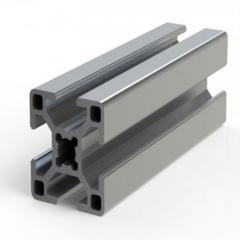
Imagine building with adult-sized LEGO blocks—that's essentially what T-slot aluminum framing offers. These profiles feature longitudinal grooves (the "T-slots") running along their faces, accepting specialized hardware that allows bolt-together assembly without welding or drilling.
The 80/20 aluminum brand name has become almost synonymous with this category, though numerous manufacturers produce compatible systems. Whether you're working with 80 20 aluminum profiles or alternatives from Parco, Item, or Bosch Rexroth, the fundamental concept remains identical: drop a T-nut into the slot, slide your bracket or connector into position, and tighten the fastener.
What makes T-slot systems so popular for industrial applications?
T-slot profiles come in both fractional (inch-based) and metric sizes. Parco's 10 Series profiles range from 1"x1" to 2"x4" with .255" slot widths, while their 15 Series spans 1.5"x1.5" to 3"x6" with .322" slots. Metric options include the popular 4040 aluminum extrusion (40mm x 40mm) with 8mm slots—a workhorse size for machine guards and workstations worldwide.
The 4040 profile deserves special mention because it hits a sweet spot between structural capability and cost efficiency. At 40mm square, it handles substantial loads while remaining easy to cut and assemble with standard tools. You'll find 4040 aluminum extrusion framing supporting everything from 3D printer enclosures to full-scale industrial safety guarding.
Common T-slot applications include:
While T-slot systems excel at modular construction, traditional extruded shapes remain essential for many structural applications. These profiles—aluminum square tube, rectangular tube, aluminum angle, and aluminum u channel—offer advantages that bolt-together framing simply can't match.
Consider the differences:
When should you choose traditional profiles over T-slot systems? The decision often comes down to several factors:
Many experienced designers combine both approaches. A primary frame might use welded aluminum square tube for maximum rigidity, while adjustable mounting points, guards, and accessories attach via T-slot extrusions. This hybrid strategy captures the strength advantages of traditional fabrication alongside the flexibility of modular systems.
8020 aluminum profiles also include non-T-slot options like their 9000 series square tube profiles, recognizing that even modular system users sometimes need simpler shapes for specific applications.
Of course, choosing the right profile is only half the equation. How you connect those profiles—whether through mechanical fasteners, specialized hardware, or welded joints—determines whether your structure performs as designed or fails prematurely under load.
You've selected your alloy and chosen your profile configuration—but here's where many projects succeed or fail: how you actually connect those aluminum structural extrusions together. A frame is only as strong as its weakest joint, and understanding your connection options transforms you from someone who simply assembles parts into an engineer who builds reliable structures.
The good news? Aluminum extrusions offer more joining flexibility than almost any other structural material. You can bolt them, weld them, or even bond them with adhesives—each method serving different performance requirements and practical constraints.
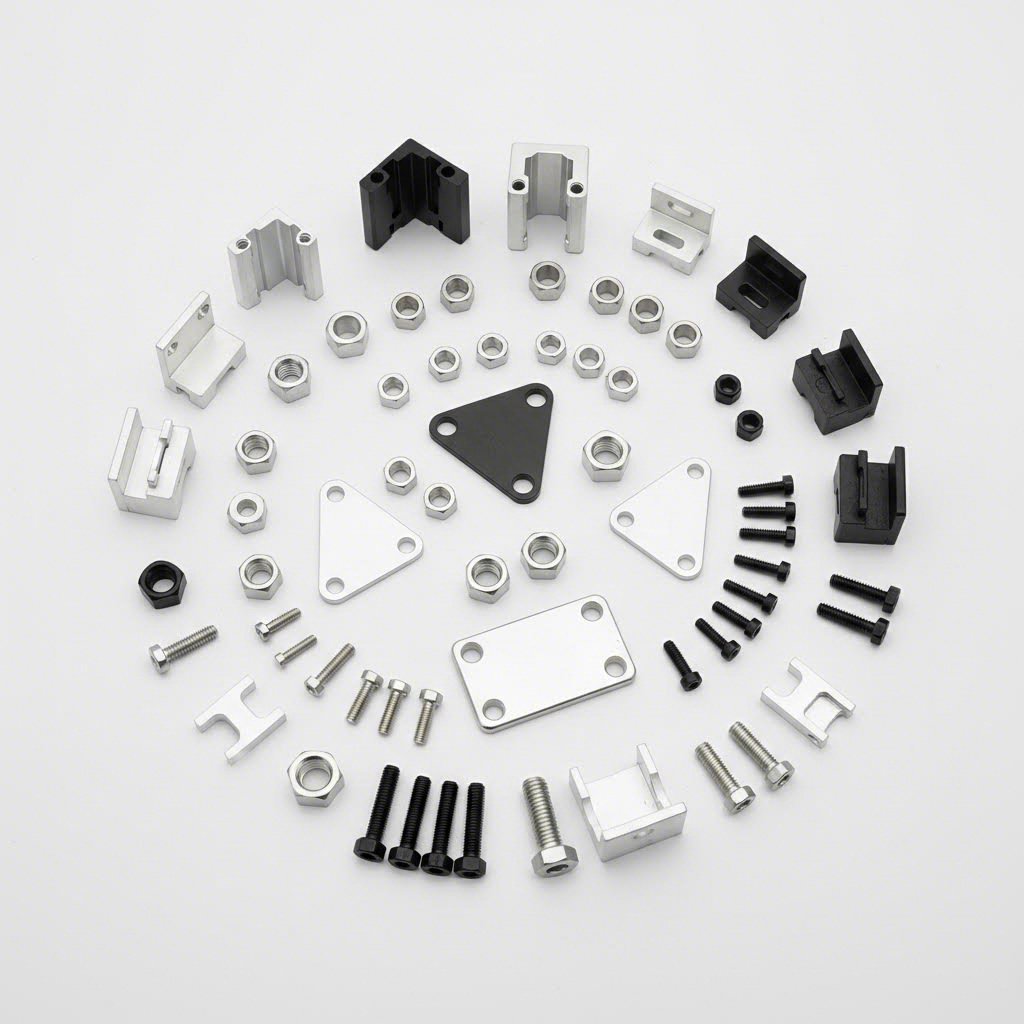
Mechanical fastening remains the most common and versatile way to connect aluminum extrusions. This approach uses hardware—screws, bolts, brackets, T-nuts, and specialized joining plates—to create secure connections without permanent modification to the profiles.
Why do most builders prefer mechanical fastening?
For T-slot framing systems, the T-nut serves as your primary fastening anchor. These specialized nuts fit into the profile's grooves, providing threaded attachment points anywhere along the extrusion's length. Several T-nut variations exist for different situations:
Corner brackets and l shaped brackets form the backbone of frame assembly. These components transfer loads between perpendicular profiles, and their design significantly impacts structural rigidity. Standard corner braces work well for light-duty applications, while heavy-duty gusset plates reinforce joints in structures where vibration creates durability risks.
When selecting fastening hardware, match your bolt grade to the application demands. Here's a practical insight: an M6-size bolt with a 12.9 strength rating often matches the performance of an M8 bolt with a 10.9 rating. Don't assume bigger automatically means stronger—proper engineering of connections matters more than oversized hardware.
For projects involving wood-to-aluminum connections—like mounting aluminum frames to wooden posts—you might encounter hardware similar to bolts for 4x4 posts or 4x4 post brackets. The same principles apply: ensure adequate thread engagement, use appropriate washers to distribute load, and torque fasteners to specification without over-tightening.
Assembly best practices that prevent field failures:
When permanence and maximum joint strength matter most, welding provides the ultimate connection method. Welded aluminum frames eliminate hardware costs, create seamless joints, and achieve the highest possible structural integrity—but they demand proper technique and equipment.
Two welding processes dominate aluminum structural work:
Critical considerations before welding aluminum extrusions:
One important reality: welding heat-treated alloys like 6061-T6 affects the temper in the heat-affected zone. The material adjacent to the weld essentially reverts toward a softer condition, reducing strength locally. For critical structural joints, post-weld heat treatment can restore properties—but this adds cost and complexity.
For mixed-material assemblies—like attaching aluminum extrusions to steel studs in construction applications—mechanical fastening typically works better than welding. Screws for metal studs designed for steel framing create reliable connections without the galvanic corrosion concerns that direct aluminum-to-steel welding would introduce.
The choice between mechanical fastening and welding often comes down to this: will you ever need to modify, relocate, or disassemble this structure? If yes, mechanical connections preserve that flexibility. If the structure is truly permanent and maximum strength justifies the fabrication investment, welding delivers unmatched joint integrity.
With your connection methods selected, the natural next question becomes: how do aluminum structural extrusions actually compare to steel framing in real-world performance? The answer involves more than just weight savings.
Here's the question every structural designer eventually faces: should you build with aluminum or steel? Both materials dominate industrial and commercial construction, yet the comparison often stops at vague generalizations. Let's dig into the actual engineering differences—because choosing the right material can mean the difference between a structure that performs flawlessly for decades and one that becomes a maintenance headache.
The reality? Neither material wins universally. Steel delivers greater sheer strength and overall durability, while aluminum structural extrusions offer weight advantages that fundamentally change what's practical to build, transport, and install. Understanding where each excels helps you specify confidently rather than defaulting to habit.
Imagine you're designing a machine frame that workers will need to relocate periodically. Or a mobile workstation. Or an elevated platform where every pound of structure means reduced payload capacity. Suddenly, weight becomes a primary engineering constraint—and this is where aluminum dramatically outperforms steel.
The numbers tell the story clearly: stainless steel is approximately 2.5 times denser than aluminum. A section of 2 square tubing in steel weighs roughly two and a half times what an equivalent aluminum profile weighs. For structures where weight matters—transportation equipment, portable systems, overhead installations—this density difference translates directly into practical advantages.
But here's where the comparison gets nuanced: steel's higher density correlates with higher absolute strength. What aluminum might lack in structural strength it more than makes up for in its durability and versatility. Based on weight alone, aluminum actually delivers a superior strength-to-weight ratio. You can engineer aluminum components that weigh significantly less than steel while still meeting required strength specifications.
Consider the practical implications:
For applications like metal stud framing in interior construction, standard stud spacing and metal stud dimensions often favor steel because the weight remains manageable and cost matters more than weight savings. But for custom industrial applications—machine guards, workstations, automation fixtures—aluminum's weight advantage frequently tips the balance.
Steel stud framing maintains its position in construction precisely because building codes and standard practices evolved around its properties. However, when you're engineering custom structural solutions rather than following prescriptive code requirements, aluminum often emerges as the smarter choice.
Here's where aluminum structural extrusions deliver perhaps their most compelling advantage: they simply don't rust. While steel buildings require ongoing protection against corrosion, aluminum naturally forms a protective oxide layer that shields the underlying metal from environmental attack.
Aluminum is highly resistant to rust and corrosion, making it a great choice for outdoor applications or in areas with high humidity. Steel, despite its strength advantages, remains susceptible to rust—especially in environments with moisture, salt, or fluctuating temperatures. Those framing corners and connection points where water can collect become particularly vulnerable over time.
The maintenance implications compound over a structure's lifetime:
For marine applications, outdoor installations, food processing environments, or anywhere moisture is present, aluminum's inherent corrosion resistance often justifies its higher initial material cost. The structure you build today won't gradually weaken as oxidation attacks from within.
| Property | Aluminum Structural Extrusions | Steel Framing | Advantage |
|---|---|---|---|
| Relative Density | 1x (baseline) | 2.5x heavier | Aluminum |
| Strength-to-Weight Ratio | Superior | Good | Aluminum |
| Absolute Shear Strength | Good | Superior | Steel |
| Corrosion Resistance | Excellent (self-protecting) | Requires coatings/galvanizing | Aluminum |
| Initial Material Cost | Higher per kg | Lower per kg | Steel |
| Lifetime Maintenance Cost | Minimal | Ongoing treatments required | Aluminum |
| Recyclability | Infinite (no quality loss) | Limited cycles before degradation | Aluminum |
| Production Energy | Higher initial | Lower initial | Steel |
| Thermal Conductivity | High | Moderate | Application-dependent |
| Cold Temperature Performance | Maintains strength | Can become brittle | Aluminum |
Sustainability considerations increasingly influence material selection. Aluminum is infinitely recyclable—it can be recycled over and over again without losing its quality. Nearly 75% of all aluminum ever produced is still in use today. Steel can only be recycled a limited number of times before material degradation occurs. For organizations tracking Environmental Product Declarations (EPDs) and Life Cycle Assessments (LCAs), aluminum's recyclability provides documented environmental benefits.
The production side tells a more complex story: aluminum extraction requires significant energy. However, recycled aluminum uses only about 5% of the energy needed for primary production—and aluminum's longevity means structures often outlive multiple steel equivalents before replacement becomes necessary.
Insurance considerations sometimes favor steel buildings for fire resistance and impact durability. However, for applications where weight reduction, corrosion resistance, and minimal maintenance drive the specification, aluminum structural extrusions deliver compelling lifecycle economics that initial price comparisons miss entirely.
With the aluminum-versus-steel question answered for your application, the next consideration becomes equally practical: where will these structural extrusions actually be used? The range of industries and applications might surprise you.
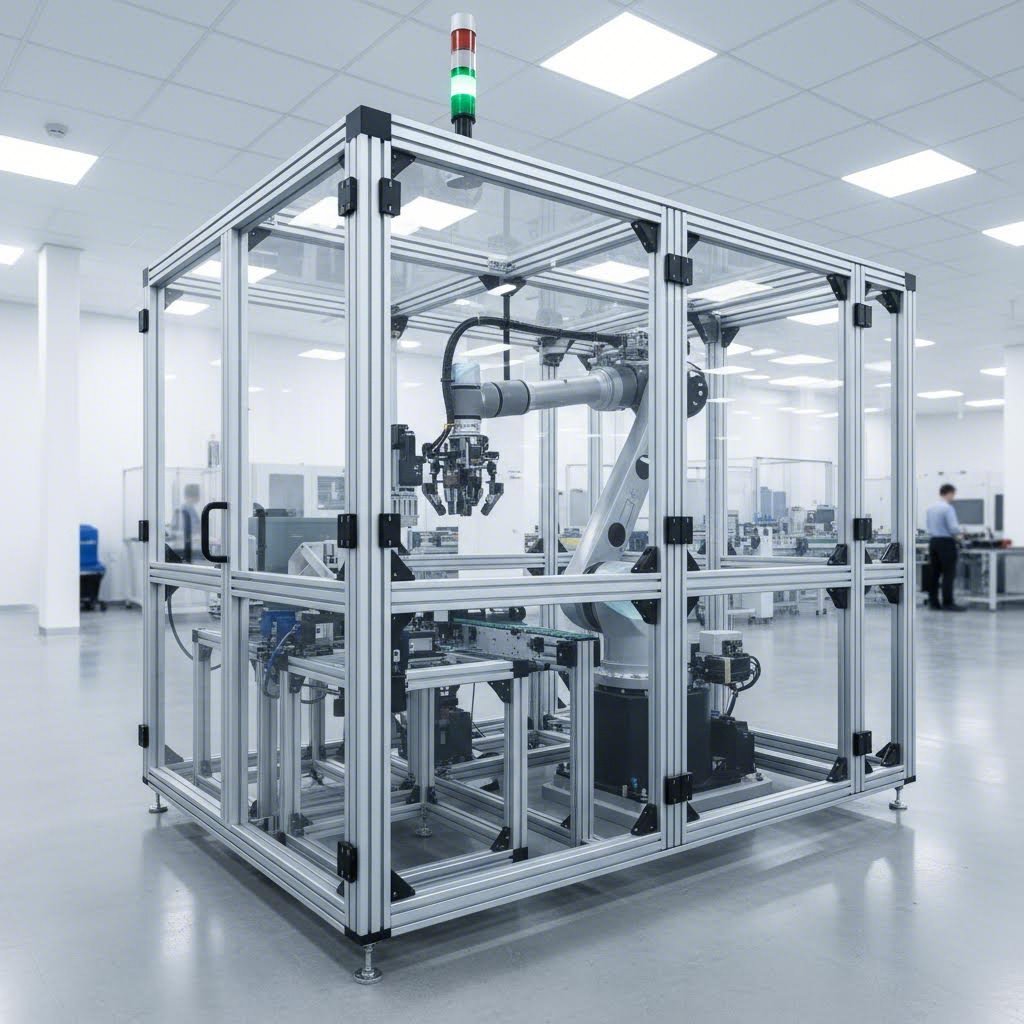
So where do aluminum structural extrusions actually end up? The answer spans virtually every industry where strength, precision, and weight efficiency matter. From factory floors to building facades, from cargo ships to solar farms—these versatile profiles have quietly become the structural backbone of modern manufacturing and construction.
What makes aluminum extrusions so universally applicable? Their unique combination of formability, strength-to-weight ratio, and corrosion resistance allows engineers to solve problems that would be impractical or impossible with other materials. Let's explore the major application categories where these profiles deliver measurable value.
Walk through any modern manufacturing facility and you'll encounter aluminum structural extrusions everywhere. They've become the default choice for industrial automation infrastructure—and for good reason.
Machine building applications include:
The 6061-T6 alloy dominates heavy-duty machine frames where vibration resistance and load capacity matter most. For lighter applications—like instrument enclosures or control panel frames—6063-T5 provides adequate strength with superior surface finish for anodizing.
Seismic solutions represent a specialized structural consideration worth mentioning. In earthquake-prone regions, aluminum framing systems can incorporate engineered flexibility that steel structures lack. The material's ductility allows controlled deformation without catastrophic failure—a critical safety feature for enclosures protecting sensitive equipment or personnel.
Beyond the factory floor, aluminum structural extrusions have transformed modern architecture and construction. Their corrosion resistance and aesthetic versatility make them ideal for applications where appearance matters as much as performance.
Common architectural applications include:
The shift toward sustainable construction has accelerated aluminum adoption. Architects specifying materials for LEED certification appreciate aluminum's recyclability and documented environmental credentials through Environmental Product Declarations.
Post and beam brackets designed for aluminum construction allow timber-aluminum hybrid structures—combining the warmth of wood with aluminum's corrosion resistance at critical connection points. This approach appears increasingly in coastal residential and commercial projects.
Weight reduction translates directly into fuel efficiency for anything that moves. Transportation industries have embraced aluminum structural extrusions for applications ranging from recreational vehicles to commercial shipping.
Key transportation uses include:
Marine applications deserve special attention. Saltwater environments destroy unprotected steel rapidly, but aluminum's natural oxide layer provides inherent protection. Marine-grade aluminum angles and structural profiles serve in boat construction, dock systems, offshore platforms, and port infrastructure where corrosion resistance isn't optional—it's essential for safety.
The marine industry particularly values the 5000 and 6000 series alloys for their seawater corrosion resistance. While 6061-T6 handles most structural requirements, specialized marine alloys offer enhanced performance for continuous submersion applications.
The explosive growth of solar installations has created massive demand for aluminum structural extrusions. Solar panel mounting systems require structures that withstand decades of outdoor exposure while maintaining precise panel alignment.
Solar applications leverage aluminum's advantages perfectly:
The renewable energy sector's growth shows no signs of slowing, and aluminum structural extrusions will remain fundamental to solar infrastructure. Their combination of corrosion resistance, recyclability, and structural performance aligns perfectly with the environmental values driving renewable adoption.
Each application category demands specific alloy and profile combinations. Industrial automation typically uses T-slot framing in 6063-T5 for flexibility, while marine structures require 6061-T6 for maximum strength. Understanding these application-specific requirements—rather than defaulting to one-size-fits-all specifications—separates effective engineering from guesswork.
Of course, raw aluminum profiles rarely install directly from the mill. Surface treatments enhance both performance and appearance, opening additional possibilities for how these structural components perform in service.
Raw aluminum profiles offer impressive natural corrosion resistance—but what if you need specific colors, enhanced durability, or superior weather protection? Surface treatments transform standard aluminum structural extrusions into finished components ready for demanding applications. Understanding your finishing options helps you specify profiles that perform flawlessly while meeting aesthetic requirements.
The treatment you select affects more than just appearance. Each finishing process adds measurable thickness to your aluminum profile, influences how components fit together during assembly, and determines long-term performance in specific environments. Let's examine the primary options available.
Anodizing remains one of the most effective ways to enhance both durability and appearance of aluminum structural extrusions. Unlike paint or powder coating that sits on top of the surface, the anodized layer is bonded at the molecular level and will not peel, flake, or chip.
How does the process work? Technicians immerse aluminum parts into an electrolytic bath and pass electric current through the solution. This creates a controlled oxidation reaction that forms a porous yet durable oxide layer—essentially thickening the natural protective coating that aluminum already produces.
Key benefits of anodized aluminum extrusions include:
Coating thickness varies based on application requirements. Thinner coatings work well for indoor environments, while thicker layers provide added protection for exterior or high-wear applications. A black aluminum extrusion with anodized finish, for example, maintains its appearance in architectural applications where aesthetics matter alongside structural performance.
For aluminum track systems or precision assemblies where dimensional accuracy matters, remember that anodizing adds measurable thickness—typically 0.0002" to 0.003" depending on the specification. Factor this into tolerance calculations when designing close-fitting assemblies.
When you need vibrant colors, unique textures, or maximum weather resistance at competitive cost, powder coating delivers exceptional results. This dry application process uses electrostatically charged powder that adheres to grounded aluminum parts, then cures in an oven to form a uniform, durable layer.
Powder coating advantages for structural applications:
For applications requiring even greater longevity, PVDF (Polyvinylidene fluoride) coatings represent the premium choice. This fluoropolymer-based treatment offers service life of generally more than 20 years—significantly outperforming standard powder coating in demanding environments.
PVDF coatings excel in architectural applications where aluminum trim and structural profiles face constant weather exposure. Curtain walls, metal roofing, and building facades commonly specify PVDF for its exceptional UV resistance, thermal stability, and chemical inertness. The thinner film (35-60μm) also preserves tighter dimensional tolerances than powder coating.
Specialized treatments worth considering for specific applications:
When specifying finishes for 45x45 mm or other metric T-slot profiles, verify that your hardware remains compatible after treatment. The added coating thickness—especially with powder coating—can affect T-nut fit and connector alignment. Quality suppliers account for this by either masking critical surfaces or adjusting base dimensions to accommodate finishing.
The surface treatment you select establishes quality benchmarks that carry through your entire project. Understanding these options prepares you for productive conversations with suppliers—who ultimately determine whether your specified finishes arrive as expected on components ready for installation.
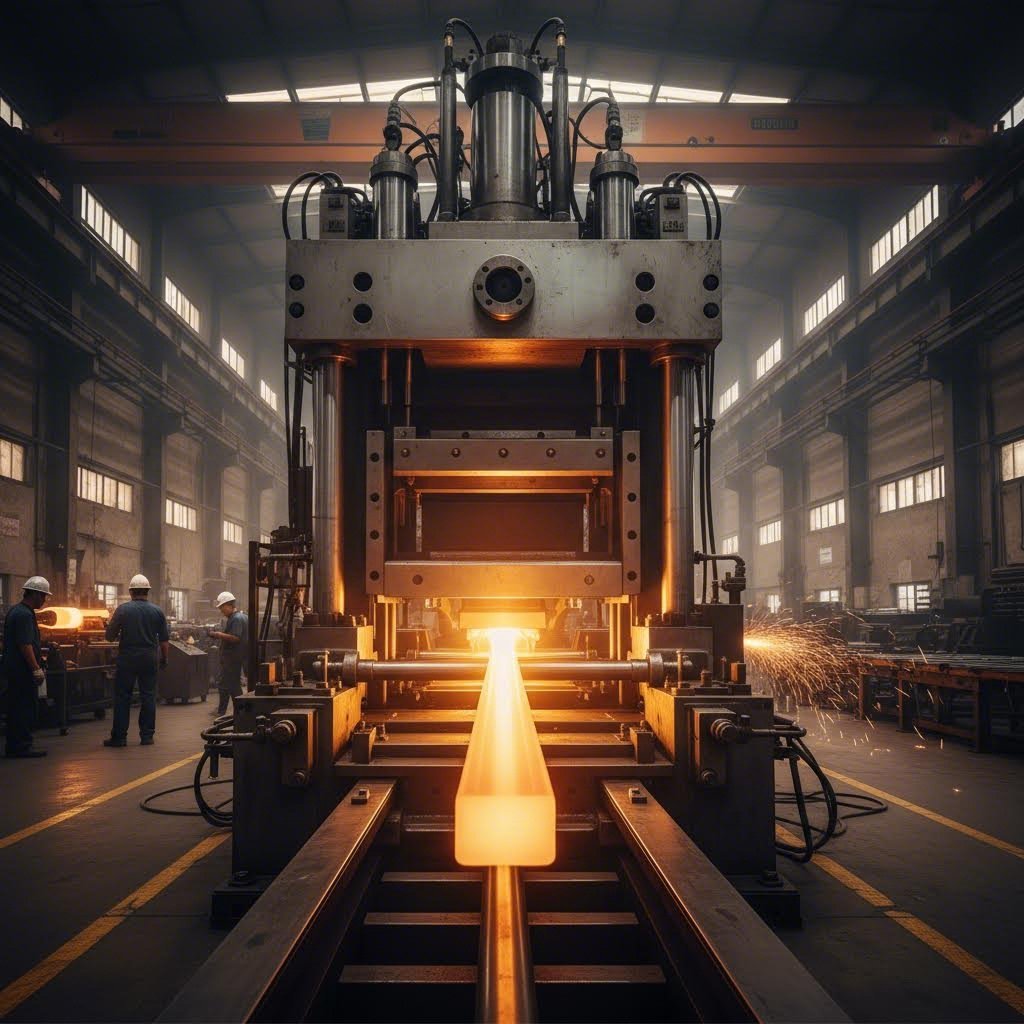
You've identified your alloy, selected your profile type, and determined the right surface treatment—but now comes the practical challenge: where do you actually source quality aluminum structural extrusions? Whether you need standard aluminum extrusions from stock or custom profiles designed specifically for your application, understanding the sourcing process helps you avoid costly delays and quality disappointments.
The difference between a smooth project and a frustrating experience often comes down to supplier selection. Finding the right partner means evaluating capabilities beyond simple pricing—because the cheapest quote rarely delivers the best value when you factor in lead times, quality consistency, and technical support.
When standard aluminum extrusion shapes won't meet your requirements, custom die development opens virtually unlimited design possibilities. The extrusion die—a precision-machined steel tool that shapes aluminum as it's forced through under pressure—determines your profile's exact cross-section.
Here's what the custom die development process typically involves:
Die development timelines vary by complexity. Simple solid profiles might require 2-3 weeks, while intricate hollow sections with tight tolerances can take 4-6 weeks. Digital models allow for faster and more precise quoting, streamlined prototyping, and reduced time to market—so working with suppliers who leverage modern design technology accelerates your project significantly.
What about costs? Custom die investment typically ranges from a few hundred to several thousand dollars depending on profile complexity. However, once your die exists, it remains available for future orders—making the per-part cost highly economical for ongoing production of extruded aluminum profiles.
For projects requiring custom 6063 aluminum tubes, architectural window frames, or complex industrial profiles, the die development phase represents your opportunity to optimize designs before committing to production tooling.
Not all aluminum extrusion suppliers offer equivalent capabilities. Some specialize in high-volume commodity profiles; others focus on precision custom work with integrated finishing. Matching your requirements to supplier strengths prevents frustration and ensures your aluminum extrusion profile meets specifications consistently.
Use this evaluation checklist when assessing potential suppliers:
For projects requiring extruded aluminum channel profiles or aluminum channel extrusions, verify the supplier maintains appropriate die libraries or can develop tooling efficiently. Suppliers with extensive existing die inventories often deliver standard shapes faster and at lower cost than those requiring new tooling for every order.
Experience matters significantly in this industry. Established manufacturers with decades of production history typically deliver more consistent quality and technical expertise than newer operations still refining their processes. Shengxin Aluminium exemplifies this principle with over 30 years of specialized experience, operating 35 extrusion presses ranging from 600T to 5500T capacity. This range of press tonnage means they handle everything from delicate architectural profiles to heavy structural sections—providing end-to-end support from die development through mass production.
What about value-added services? Beyond extrusion, full-service suppliers deliver in-house surface finishing, CNC machining, cutting-to-length, and even welding. These value-added services reduce your coordination costs and improve turnaround times. Suppliers offering comprehensive deep processing capabilities—including precision cutting, drilling, bending, and assembly—eliminate the need to coordinate multiple vendors.
For aluminum tubing for sale or aluminum bar stock requirements, factory-direct sourcing often delivers significant cost advantages over distribution channels. Working directly with manufacturers provides pricing transparency, eliminates markup layers, and enables closer collaboration on specifications. This approach works particularly well for custom or semi-custom profiles where standard distributor inventory won't meet your needs.
Consider requesting samples before committing to large orders. Request physical samples to validate extrusion precision, surface finish, and material consistency. Ask for quality certificates, audit reports, or production videos to verify their claims. This verification step prevents surprises when production quantities arrive.
Finally, evaluate communication responsiveness. A responsive and knowledgeable customer service team is essential, especially when dealing with technical products. The supplier who answers questions thoroughly during quoting typically provides better support when production questions arise.
With your sourcing strategy established and supplier selected, the final consideration becomes ensuring your specifications translate into components that perform as designed. Proper tolerance specifications and load calculations separate successful projects from those requiring costly rework.
You've learned the fundamentals of aluminum structural extrusions—alloys, profiles, connections, finishes, and sourcing strategies. But here's where projects either succeed brilliantly or fail expensively: translating that knowledge into precise specifications that manufacturers can execute correctly. The difference between a structure that performs flawlessly and one requiring costly rework often comes down to details that seem minor during the design phase.
Let's consolidate the critical considerations that prevent common specification mistakes and ensure your aluminum components arrive ready for successful assembly.
Dimensional tolerances represent one of the most frequently misunderstood aspects of aluminum extrusion specification. Expecting machined-part precision from extruded profiles leads to disappointment and delays—but understanding what's achievable helps you design accordingly.
Standard dimensional tolerances for aluminum extrusions are easy to achieve, but can be very difficult for improperly designed extrusion profiles. Standard dimensional tolerances should always be specified when applicable.
The Aluminum Association's ANSI H35.2 standard establishes industry-accepted tolerance ranges based on profile size and complexity. These tolerances account for the realities of the extrusion process—thermal expansion during pressing, cooling variations, and die wear over production runs.
Key tolerance rules of thumb to remember:
When your application demands tighter tolerances than standard specifications allow, communicate this clearly during quoting. Achieving closer tolerances requires die modifications, slower extrusion speeds, increased inspection, and sometimes higher rejection rates—all factors that legitimately increase costs. An experienced supplier can often suggest design modifications that achieve your functional requirements while staying within standard tolerance ranges.
For assemblies involving multiple extruded components—like router bit profiles used in woodworking machinery or precision framing hangers—stack-up tolerance analysis becomes essential. Each component's variation adds cumulatively, potentially creating fit problems that weren't apparent when reviewing individual part drawings.
Structural calculations for aluminum extrusions follow established engineering principles, but several factors specific to aluminum require attention. Getting load calculations right means understanding both the material properties and the application conditions.
The fundamental strength verification process involves several steps. First, determine your maximum bending moment based on span length, load placement, and support conditions. Next, calculate the maximum internal stress at that critical section. Then compare your calculated stress against the allowable stress—which equals the yield strength divided by a safety factor (typically 1.3 to 1.5) for aluminum profiles.
For 6063-T5 aluminum commonly used in T-slot framing, yield strength is approximately 145 MPa. Applying a safety factor of 1.5 gives you an allowable stress of roughly 96.7 MPa—the threshold your calculated maximum stress must stay below.
But strength alone doesn't guarantee acceptable performance. Stiffness requirements often govern structural design more stringently than strength limits. A profile might be strong enough to support a load without failing, yet deflect excessively under that same load—creating functional problems or safety concerns.
Stiffness verification uses deflection span ratios. In general engineering, only the deflection span ratio of the beam is usually limited—typically to values like 1/1000 or stricter depending on application sensitivity. A workstation surface that bounces visibly under normal use feels unstable even if it's nowhere near structural failure.
Practical load calculation considerations:
Referencing a framing square during assembly helps verify that your structure maintains the angular accuracy your load calculations assumed. Out-of-square frames experience stress concentrations at joints that your analysis didn't predict.
Here's a factor that catches many designers off-guard: aluminum expands significantly more than steel when temperatures change. Failing to account for thermal movement leads to buckled panels, binding joints, and structural distress that develops slowly but progressively.
The numbers matter: thermal expansion of aluminum is double the rate of steel. A common rule of thumb for steel expects roughly 1/8" expansion for every 10 feet of length. For aluminum, that becomes 1/4" per 10 feet—twice the movement requiring twice the accommodation.
Design strategies for managing thermal expansion:
For outdoor installations—solar mounting systems, architectural facades, or marine structures—thermal expansion planning isn't optional. Temperature swings of 100°F between winter nights and summer afternoons are common, creating substantial dimensional changes that your connections must accommodate without binding or loosening.
Even perfectly specified components can result in assembly nightmares without proper sequence planning. Before cutting your first profile, think through how everything goes together—and whether you'll have access for fastening at each stage.
Critical assembly planning questions:
Building complex structures in modular sub-assemblies often simplifies installation. Complete and verify each module before joining them into the final structure. This approach localizes dimensional errors and makes corrections manageable.
Documenting your planned assembly sequence—similar to how you might reference a screw dimensions chart for fastener selection—creates a roadmap that prevents costly mistakes. Share this documentation with your fabrication team and installers so everyone understands not just what goes where, but in what order.
The complexity of getting specifications right underscores why supplier selection matters so much. Experienced manufacturers don't just fill orders—they identify potential problems before they become expensive. Technical consultation during the design phase catches tolerance stack-ups, thermal expansion oversights, and assembly complications while changes remain inexpensive.
Working with established suppliers like Shengxin Aluminium provides access to engineering expertise accumulated over 30+ years and countless projects. Their comprehensive deep processing services—precision CNC cutting, drilling, and bending—ensure components arrive ready for assembly rather than requiring additional fabrication. From initial design consultation through mass production, having a knowledgeable partner who understands both the capabilities and limitations of aluminum extrusion technology transforms your specifications into successful structures.
Remember: the goal isn't just ordering aluminum profiles—it's building something that performs reliably for years. Proper dimensioning and tolerancing, verified load calculations, thermal expansion accommodation, and thoughtful assembly planning separate projects that succeed from those requiring expensive corrections. Invest the time in getting specifications right, choose suppliers who support that process, and your aluminum structural extrusions will deliver the steel-beating performance that made them your material choice in the first place.
T-slot aluminum extrusions feature longitudinal grooves that accept specialized hardware like T-nuts and brackets, enabling bolt-together assembly without welding or drilling. This modular design allows easy reconfiguration and tool-free adjustments. Standard aluminum extrusions—including square tubes, angles, and channels—lack these slots and typically require welding or drilling for permanent connections. T-slot systems like 80/20 aluminum or 4040 profiles excel in industrial automation and workstations, while standard profiles suit welded frames where maximum strength and clean aesthetics take priority.
Aluminum structural extrusions come in extensive size ranges for both fractional and metric systems. T-slot profiles range from compact 1"x1" sections up to robust 3"x6" configurations, with popular metric options including 4040 (40mm x 40mm) and 45x45 mm profiles. Traditional extruded shapes—square tubes, rectangular tubes, angles, and channels—are available in dimensions from under 1 inch to several inches across. Custom die development allows manufacturers like Shengxin Aluminium to produce virtually any cross-sectional shape to meet specific project requirements.
Load capacity depends on alloy grade, profile geometry, span length, and support conditions. 6061-T6 aluminum delivers approximately 45,000 psi tensile strength with 40,000 psi yield strength—suitable for heavy-duty machine frames and aerospace applications. A properly designed T-slot frame can support hundreds of pounds per linear foot when correctly configured. Load calculations should verify both strength (stress below allowable limits with 1.3-1.5 safety factor) and stiffness (deflection within acceptable ratios, typically 1/1000 of span). Always consult engineering calculations for critical structural applications.
Aluminum extrusions typically cost more per kilogram than steel initially, but lifecycle economics often favor aluminum. Steel requires protective coatings, galvanizing, and periodic maintenance to prevent rust—costs that compound over time. Aluminum's natural corrosion resistance eliminates these ongoing expenses. Additionally, aluminum's lighter weight (approximately 2.5 times less dense than steel) reduces shipping costs and enables easier installation without heavy lifting equipment. For applications requiring corrosion resistance or frequent reconfiguration, aluminum often delivers superior total value despite higher upfront material costs.
The aluminum extrusion industry includes both modular framing specialists and full-service manufacturers. T-slot system providers include 80/20, Bosch Rexroth, mk North America, and Item. For custom structural extrusions with comprehensive processing capabilities, manufacturers like Shengxin Aluminium offer end-to-end services—operating 35 extrusion presses (600T-5500T capacity) with over 30 years of experience. Key evaluation criteria include production capacity, alloy expertise, ISO 9001 certification, in-house finishing options, CNC machining capabilities, and technical support from die development through mass production.



 خدمة الإنترنت
 0086 136 3563 2360
 sales@sxalu.com
 +86 136 3563 2360
 العربية
 English
 français
 Deutsch
 русский
 español
 português
 ไทย
ไทย Việt
Việt Українська