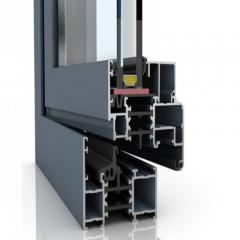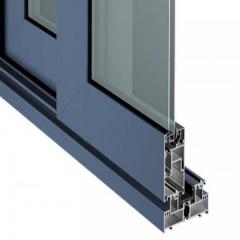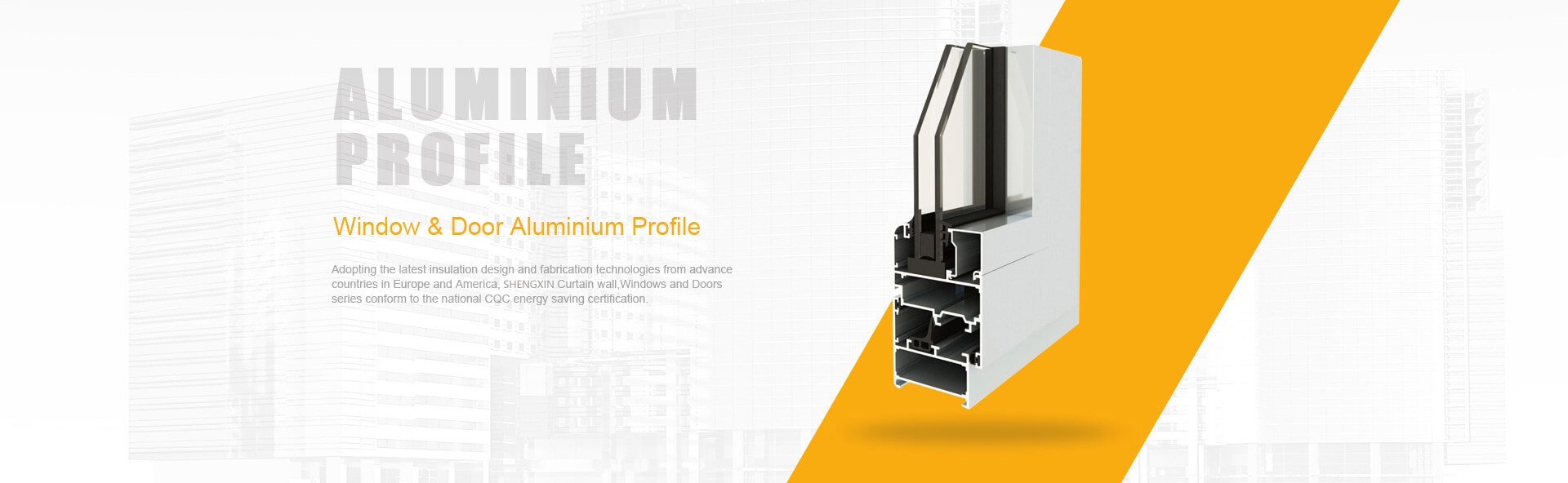
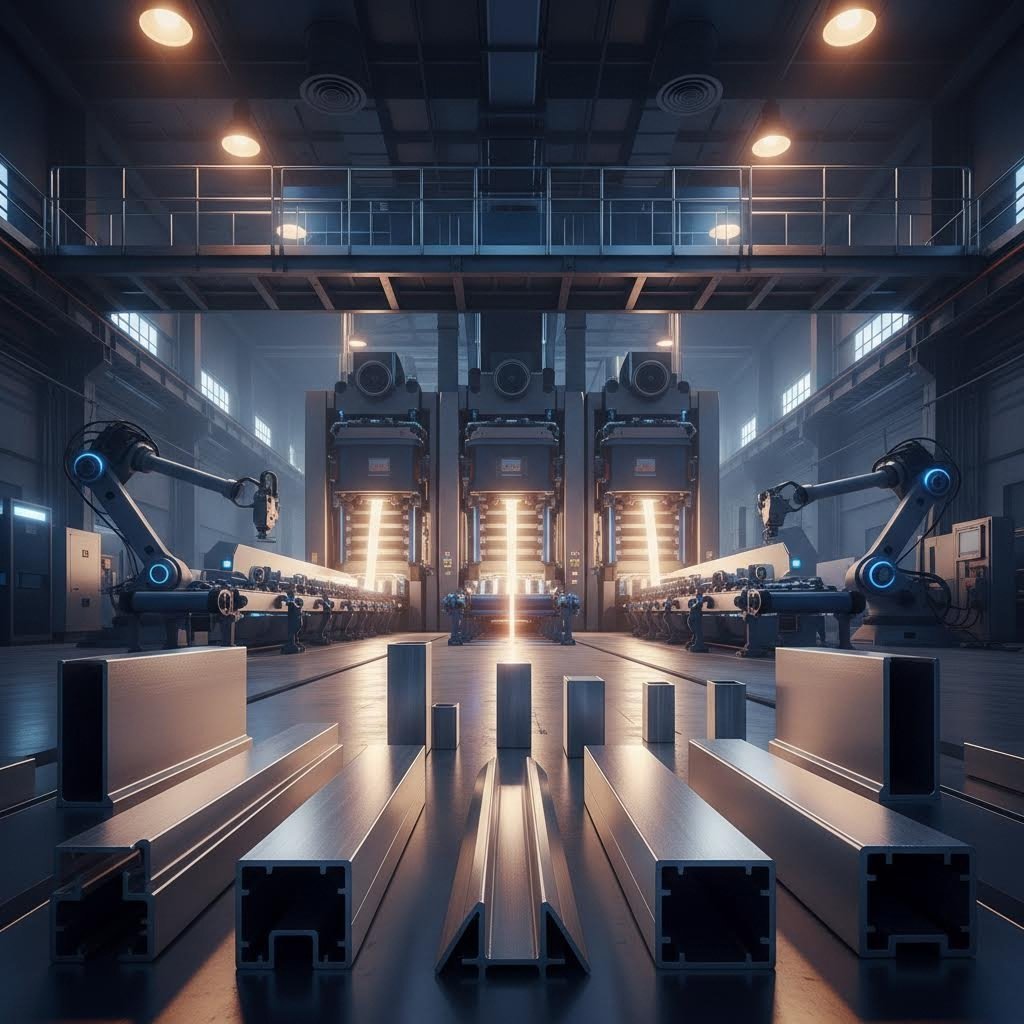
Ever wondered how manufacturers create those perfectly uniform aluminum channels, tubes, and frames you see in everything from window systems to industrial machinery? The answer lies in a remarkably efficient process that transforms raw metal into precisely shaped components.
Aluminum extrusion profiles are continuous lengths of aluminum alloy material shaped by forcing heated metal through a specially designed die opening. This process creates uniform cross-sectional shapes that can be solid, hollow, or semi-hollow, ranging from simple angles to highly complex custom designs.
Think of it like a sophisticated play-dough press, but operating under extreme conditions with industrial-grade precision. The result? Components with exceptional strength-to-weight ratios, outstanding corrosion resistance, and remarkable design flexibility.
The extrusion of aluminium begins with a cylindrical billet, essentially a solid log of aluminum alloy. Here's how manufacturers transform this raw material into finished profiles:
First, the die gets preheated to approximately 450-500°C, which ensures even metal flow and maximizes tooling longevity. Simultaneously, the aluminum billet undergoes heating to 400-500°C in a specialized oven. This temperature makes the metal malleable without melting it completely.
Once prepared, the softened billet enters an extrusion press where hydraulic rams apply tremendous force, sometimes reaching up to 15,000 tons of pressure. This immense force pushes the aluminum through the die opening, causing the metal to emerge fully formed in the desired shape.
After exiting the press, the extruded aluminum undergoes quenching through water baths or specialized fans to cool it uniformly. This controlled cooling preserves the profile's dimensional accuracy and mechanical properties.
The journey doesn't end at extrusion. Once cooled, profiles often require straightening using mechanical stretchers to correct any minor twists or warping. Technicians then cut the continuous lengths into standard sizes, typically ranging from 8 to 21 feet.
What makes aluminum extrude so effectively? The metal's unique combination of malleability at elevated temperatures and structural integrity when cooled creates ideal conditions for this manufacturing method. Heat treatment processes, bringing profiles to T5 or T6 tempers, can further enhance strength properties. For perspective, heat-treated 6061 aluminum achieves tensile strengths of 310 MPa, significantly higher than untreated material.
Why does this manufacturing method matter for your projects? Extruded aluminum delivers three compelling advantages:
Throughout this guide, you'll discover the full spectrum of profile shapes available, learn how to select the right alloys for your application, explore surface finishing options, and gain practical insights for choosing between standard and custom extrusions. Whether you're specifying components for architectural projects, industrial automation, or consumer products, understanding aluminum extrusion profiles empowers you to make informed decisions that optimize both performance and cost.
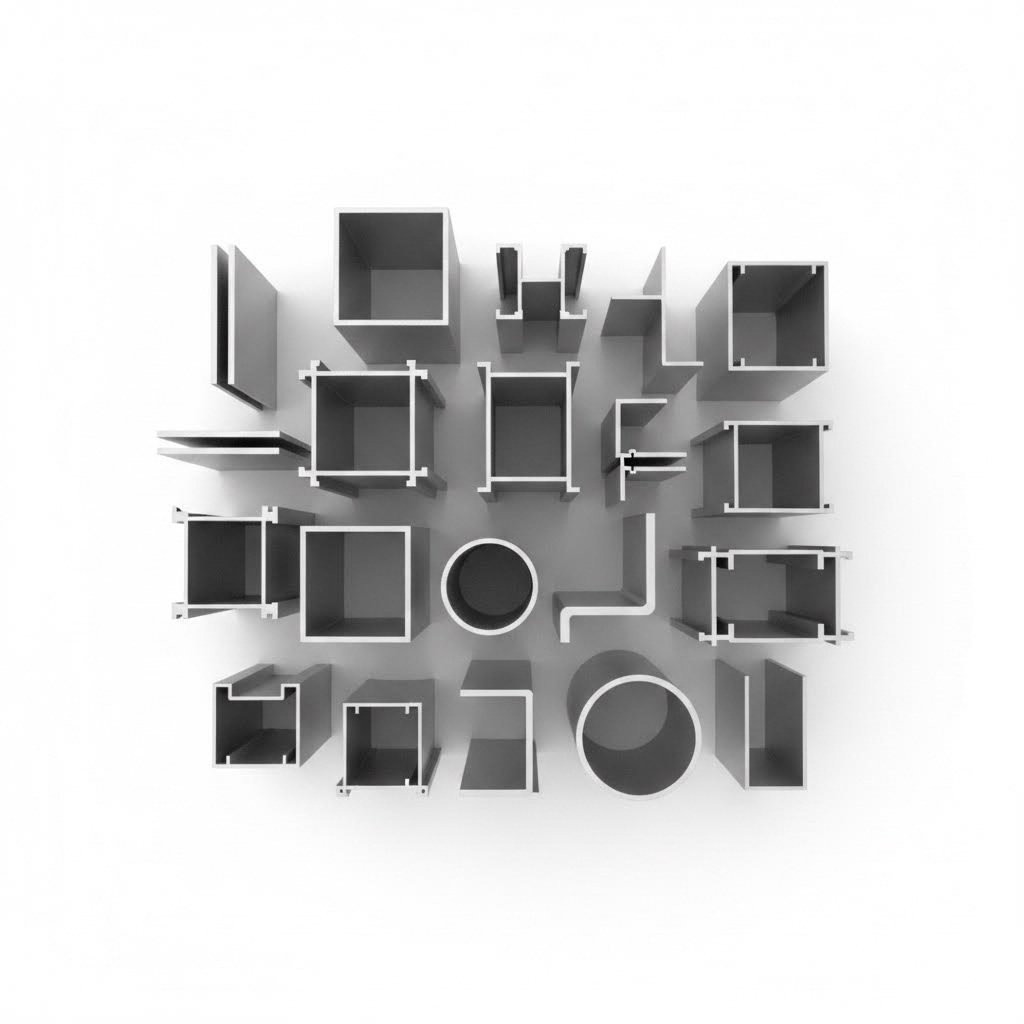
Walk into any hardware store or browse an industrial supplier catalog, and you'll encounter dozens of aluminum extrusion shapes, each designed for specific structural and functional purposes. But how do you know which profile suits your project? Understanding the distinct characteristics of each shape category transforms overwhelming options into informed choices.
Aluminum profiles fall into several fundamental categories, each offering unique advantages based on geometry, load-bearing capacity, and intended application. Let's explore the most common standard shapes you'll encounter in the market.
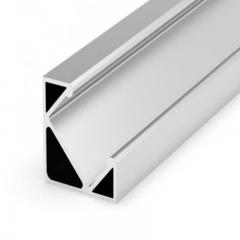
Picture an L-shape formed by two perpendicular legs meeting at a right angle. That's your standard aluminum angle, one of the most versatile extruded shapes in construction and manufacturing. These profiles excel at corner reinforcement, edge protection, and creating rigid 90-degree connections.
Aluminum angles come in two primary configurations:
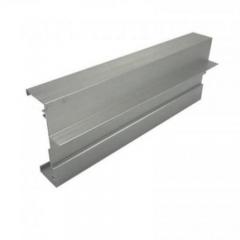
Channels, on the other hand, feature a U-shaped cross-section with two parallel flanges connected by a web. You'll recognize them instantly by their ability to wrap around or contain other components. Aluminum channels serve as structural and framing solutions across construction, manufacturing, automotive, aerospace, and medical device production.
What makes channels particularly valuable? Their geometry provides excellent electrical conductivity while functioning as both heat conductors and heat reflectors, making them ideal for mounting brackets, HVAC components, and lighting fixtures.
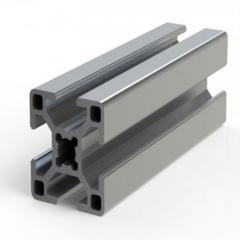
Imagine building structures without welding, drilling, or permanent fastening. T-slot aluminium profiles make this possible through their ingenious design featuring T-shaped grooves running along each face. These channels accept specialized nuts and fasteners that slide into position, allowing rapid assembly and effortless reconfiguration.
T-slot systems revolutionized industrial framing by enabling:
Standard T-slot profiles range from compact 20x20mm sections for light-duty applications to robust 80x80mm or larger profiles capable of supporting substantial loads. The slot width varies by series designation, with common sizes including 6mm, 8mm, and 10mm grooves to accommodate different fastener systems.
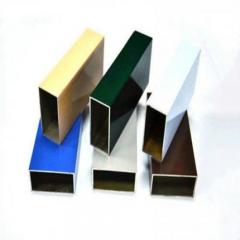
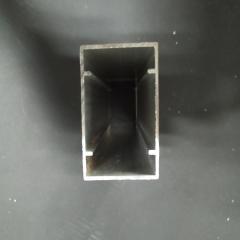
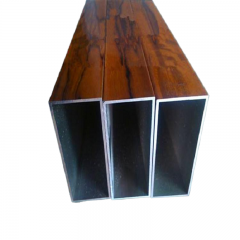
When you need structural strength with minimal weight, hollow aluminum profiles deliver exceptional performance. These extruded shapes include round tubes, square tubes, and rectangular sections, each optimized for different loading conditions.
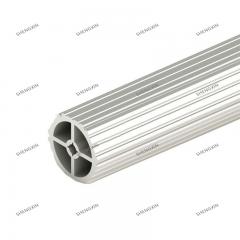
Round tubes offer superior performance under torsional stress and are commonly found in handrails, furniture frames, and fluid transfer systems. An aluminum square tube provides excellent resistance to bending in multiple directions, making it ideal for structural frameworks and machine bases. Rectangular tubes combine the benefits of both, offering directional strength that designers can orient according to load requirements.
Aluminum tubing comes in several manufacturing variations, including extruded, seamless, welded, and drawn types. Extruded tubing offers the best balance of cost-effectiveness and mechanical properties for most applications, while seamless options eliminate weld lines for pressure-critical uses.
| Shape Category | Common Dimensions | Primary Applications | Key Advantages |
|---|---|---|---|
| Angles (L-Shape) | 1" x 1" to 6" x 6"; wall thickness 1/8" to 1/2" | Corner reinforcement, edge protection, trim, structural bracing | Excellent rigidity at corners; easy to cut and install; cost-effective |
| Channels (U-Shape) | 1" to 12" width; depths from 1/2" to 6" | Cable management, mounting tracks, HVAC systems, architectural trim | Contains and protects components; good electrical/thermal conductivity |
| T-Slot Profiles | 20x20mm to 160x160mm; slot widths 6mm, 8mm, 10mm | Machine guards, workstations, enclosures, conveyor frames, automation | Modular assembly; no welding required; infinitely reconfigurable |
| I-Beams | 3" to 12" height; flange widths 2.5" to 8" | Structural supports, bridge components, crane rails, building frames | Maximum strength-to-weight ratio for bending loads; reduced material usage |
| Square Tubes | 1/2" x 1/2" to 8" x 8"; wall thickness 1/16" to 1/2" | Furniture frames, structural frameworks, machine bases, railings | Equal strength in all directions; clean aesthetic; easy joining |
| Round Tubes | 1/4" to 12" diameter; wall thickness 0.035" to 0.5" | Handrails, telescoping assemblies, fluid systems, roll cages | Superior torsional strength; smooth surfaces; pressure-rated options |
| Round Bars | 1/8" to 12" diameter; solid cross-section | Shafts, pins, fasteners, machined components, spacers | Maximum strength; easily machined; excellent for turning operations |
| Custom Shapes | Application-specific; limited by press capacity | Heat sinks, specialized enclosures, integrated mounting features | Optimized for exact requirements; reduced assembly; consolidated parts |
Industry sizing conventions follow either imperial (fractional) or metric standards. In North America, fractional profiles like the 10 Series and 15 Series dominate, with stock lengths typically available at 240 inches, 120 inches, or 92 inches. The 10 Series features 0.255" slot widths compatible with slot 6 hardware, while the 15 Series offers 0.322" slot widths compatible with slot 8 accessories.
Metric profiles, measured in millimeters, include popular 30mm, 40mm, 45mm, and 60mm series. The 30mm and 40mm profiles feature 8mm slots, while 45mm and 60mm sections use 10mm slots for heavier-duty applications.
Understanding these aluminum shapes and their characteristics positions you to select profiles that match your structural requirements, aesthetic preferences, and assembly methods. But shape is only part of the equation. The next critical factor in your selection process involves choosing the right T-slot series and understanding how different framing systems work together.
You've seen those industrial workstations, machine enclosures, and automation frameworks that snap together like sophisticated building blocks. What makes this modular magic possible? The answer lies in understanding T-slot framing systems, and more specifically, the series designations that determine compatibility, strength, and application suitability.
The term "80/20 aluminum" has become nearly synonymous with extruded aluminum framing, much like "Kleenex" represents facial tissues. This naming convention traces back to the Pareto principle, suggesting you can achieve 80% of your results with 20% of your effort when using these modular systems. The 8020 aluminum extrusion system pioneered accessible T-slot framing, establishing standards that countless manufacturers now follow.
But here's where confusion often sets in. Walk into any supplier's catalog, and you'll encounter terms like "10 Series," "40 Series," or "45 Series" without clear explanations of what these designations actually mean for your project. Let's decode these systems so you can make confident selections.
Series numbers indicate the nominal cross-sectional dimension of the profile, typically measured in millimeters for metric systems or referencing slot compatibility for fractional (imperial) systems. A "40 Series" profile, for instance, features a 40mm x 40mm primary dimension.
The naming convention typically follows this pattern: [Series Number]-[Profile Size]x[Profile Size/Shape]-[Additional Features]. Understanding this structure helps you navigate any manufacturer's catalog with confidence.
Why does series selection matter? Each series correlates directly to:
When designing with 80 20 aluminum systems, matching the series to your application requirements prevents both over-engineering (wasting budget) and under-engineering (risking structural failure). A lightweight display stand doesn't need 45 Series profiles, just as a heavy machine base shouldn't rely on 20 Series framing.
Here's a critical distinction that catches many designers off guard: metric and fractional T-slot systems are fundamentally incompatible. Attempting to mix 80x20 metric profiles with fractional 15 Series components leads to misaligned slots, incompatible fasteners, and assembly frustration.
Fractional (Imperial) Series common in North America include:
Metric Series prevalent in global applications include profiles measured in millimeters, from compact 20mm options to robust 60mm and larger sections. The 30 Series and 40 Series are versatile choices for automation, test rigs, and moderate load-bearing structures.
| Series Type | Slot Width | Load Capacity Range | Ideal Applications |
|---|---|---|---|
| 20 Series (Metric) | 6mm | Light duty (up to 50 lbs per connection) | Small enclosures, display frames, prototyping, electronic housings |
| 30 Series (Metric) | 8mm | Medium duty (50-150 lbs per connection) | Workstations, automation frames, guards, test fixtures |
| 40 Series (Metric) | 8mm | Heavy duty (150-300 lbs per connection) | Machine bases, conveyor systems, large enclosures, robotics |
| 45 Series (Metric) | 10mm | Extra heavy duty (300+ lbs per connection) | Industrial machine frames, structural supports, crane systems |
| 10 Series (Fractional) | 0.255" (Slot 6) | Light duty | Lightweight frames, exhibits, DIY projects, furniture |
| 15 Series (Fractional) | 0.322" (Slot 8) | Medium to heavy duty | Versatile industrial applications, machine guards, workbenches |
Compatibility between different manufacturers' systems presents another consideration. While many suppliers produce profiles based on similar nominal dimensions, subtle variations in slot geometry, corner radii, and tolerance specifications can create fitment issues. A v slotted aluminum insert designed for one brand may not seat properly in another manufacturer's profile.
For mission-critical applications, sticking with a single supplier throughout your project ensures consistent compatibility. When budget constraints require mixing sources, always request dimensional specifications and test-fit components before committing to large orders. Some designers find that 8020 slips or minor misalignments occur when combining profiles from different manufacturers, even when nominal dimensions appear identical.
Accessories play an equally important role in T-slot system functionality. A rail button for 8020 aluminum or equivalent fastening hardware must match your chosen series. Common accessories that complete any extruded aluminum framing system include:
Selecting the right T-slot series ultimately comes down to matching your structural requirements with appropriate profile dimensions. Start by identifying your load requirements, then consider available space, project aesthetics, and budget constraints. The 15 Series (fractional) or 30/40 Series (metric) often represents the sweet spot for versatility and cost-effectiveness in general industrial applications.
With your framing system selected, the next critical decision involves choosing the right aluminum alloy. Not all extruded profiles share identical material properties, and understanding alloy designations directly impacts your project's structural performance and longevity.
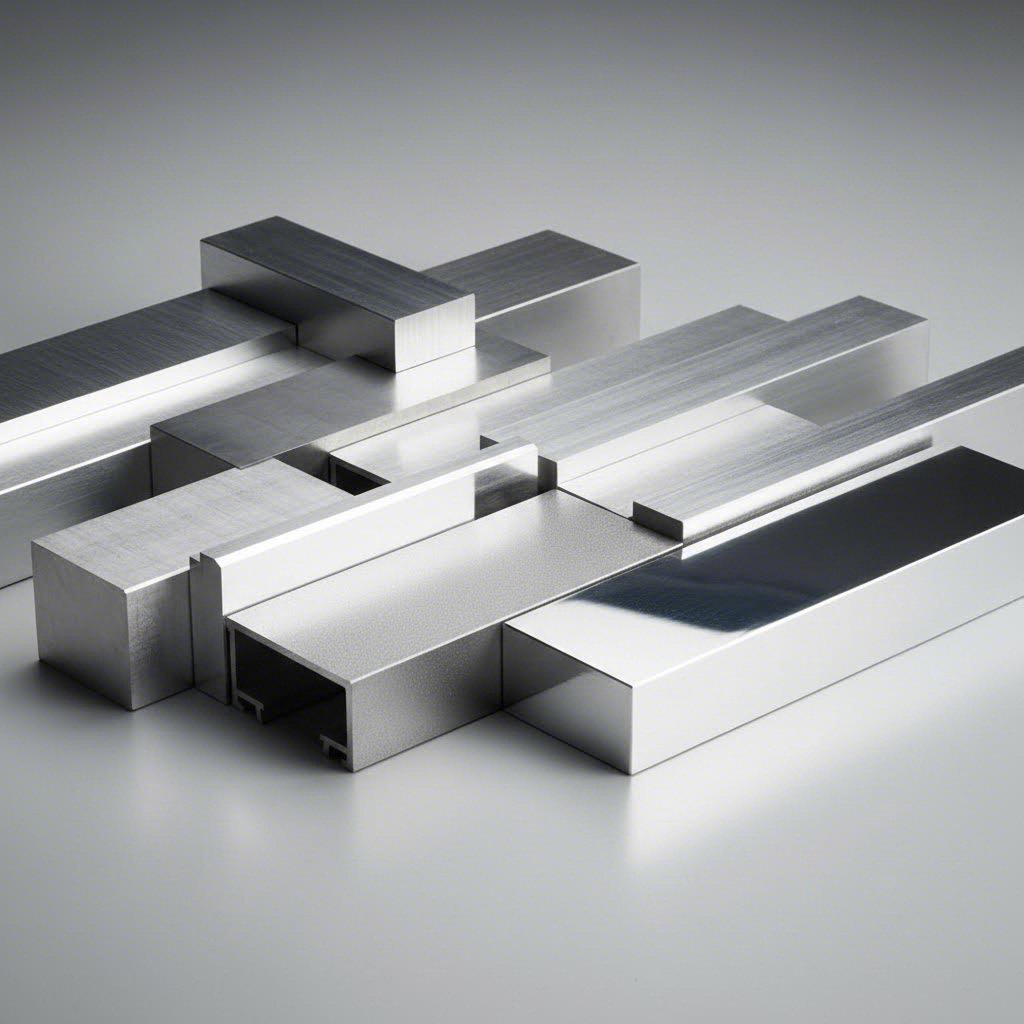
You've selected your profile shape and determined the right T-slot series for your project. But here's a question that often gets overlooked: what's the profile actually made of? The aluminum alloy running through your chosen extrusion dramatically affects everything from structural performance to corrosion resistance and even surface finish quality.
Ever noticed those four-digit numbers stamped on aluminum profiles, like 6063 or 6061? These aren't random codes. They're your roadmap to understanding exactly what you're working with. The 6000 series alloys dominate extrusion applications, accounting for roughly 75% of all extruded aluminum profiles produced worldwide. Why? Because magnesium and silicon, the primary alloying elements in this series, create the perfect combination of extrudability, strength, and corrosion resistance.
Let's decode what these numbers actually mean for your aluminum extrusion profile selection.
Walk past any modern building with aluminum window frames, curtain walls, or decorative trim. Chances are you're looking at 6063 aluminum, often called "architectural aluminum" for good reason.
What makes 6063 the go-to choice for visible applications? This alu profile alloy has been specifically optimized for one thing: extrudability. The lower silicon and magnesium content compared to structural alloys allows the metal to flow smoothly through complex die shapes, producing exceptional surface finishes that anodize beautifully.
Consider these characteristics that make 6063 ideal for architectural work:
The trade-off? Moderate strength. With a T6 temper tensile strength around 30 ksi (compared to 38 ksi for 6061-T6), extrusion aluminum in the 6063 alloy won't satisfy heavy structural demands. But for applications where aesthetics and corrosion performance matter more than maximum load capacity, it's the clear winner.
Now imagine you're designing a machine frame, structural support, or any application where failure isn't an option. This is where 6061 aluminum earns its nickname: "structural aluminum."
The higher magnesium content in 6061 (0.8-1.2% versus 0.45-0.9% in 6063) delivers significantly improved mechanical properties. You'll find extruded aluminum profiles in 6061 alloy supporting everything from aerospace components to heavy industrial machinery.
Why choose 6061 over 6063? The strength-to-weight ratio favors 6061 when structural performance is paramount. This alloy also offers superior machinability, making it ideal for profiles requiring extensive secondary operations like drilling, tapping, or CNC machining.
However, 6061 presents some challenges. Its reduced extrudability compared to 6063 means:
| Alloy | Strength Rating (T6 Tensile) | Corrosion Resistance | Extrudability | Best Applications |
|---|---|---|---|---|
| 6063 | 30 ksi (moderate) | Excellent | Excellent | Window frames, curtain walls, railings, decorative trim, furniture, lighting fixtures |
| 6061 | 38 ksi (high) | Good | Good | Structural frames, machine bases, aerospace components, truck bodies, marine fittings |
| 6005/6005A | 38 ksi (high) | Good | Very Good | Rail car bodies, truck trailers, ladder components, structural tubing |
| 6082 | 45 ksi (very high) | Good | Moderate | Bridge structures, crane components, offshore platforms, heavy machinery |
Notice 6005 and 6082 in the comparison? These aluminium extrusion alloys fill specific niches. The 6005 alloy bridges the gap between 6063 and 6061, offering structural strength with better extrudability than 6061. Meanwhile, 6082 delivers the highest strength among common extrusion alloys, with T6 tensile strengths reaching 45 ksi, ideal for demanding structural applications.
Selecting the right alloy is only half the equation. The temper designation following the alloy number tells you how the aluminum was heat-treated, and this directly impacts the mechanical properties you'll receive.
Sounds complex? It's actually straightforward once you understand the basics. The "T" indicates thermal treatment, and the number describes the specific process applied.
T5 Temper: The profile is cooled from the extrusion process and then artificially aged. This single-step process skips solution heat treatment, saving energy and cost while delivering medium strength and good formability.
T6 Temper: The profile undergoes both solution heat treatment and artificial aging. This two-step process creates a more uniform internal structure, resulting in maximum strength and hardness.
What does this mean in practice? Consider 6063 aluminum extruded profiles:
The choice between T5 and T6 depends on your application requirements. Need to bend or form the profile after extrusion? T5 provides better ductility. Require maximum strength and surface hardness? T6 delivers superior performance but sacrifices some flexibility.
For architectural applications like window frames and doors, T5 often suffices and keeps costs down. For structural components, machine frames, or applications involving significant loads, T6 temper provides the extra strength margin that ensures safety and longevity.
Understanding these alloy and temper fundamentals empowers you to specify the right material for your specific aluminum extruded requirements. But material selection is just one piece of the puzzle. The surface treatment you apply can enhance both appearance and performance, which brings us to exploring finishing options that protect and beautify your profiles.
You've selected the perfect profile shape and dialed in the right alloy for your project. But here's what many designers overlook: the finish you apply can make or break your aluminum's long-term performance. Think of surface treatment as your profile's armor, protecting it from corrosion, wear, and environmental exposure while delivering the exact aesthetic your application demands.
Every aluminium profile leaves the press with what's called a "mill finish," the raw, as-extruded surface showing the natural aluminum appearance. While acceptable for hidden structural components, most applications benefit from additional treatment. The options range from simple mechanical texturing to sophisticated multi-layer coating systems, each offering distinct advantages.
Here's a quick overview of the primary finish categories you'll encounter:
Imagine taking aluminum's natural corrosion resistance and amplifying it significantly. That's exactly what anodizing accomplishes. This electrochemical process thickens the natural oxide layer on aluminum, transforming a thin passive film into a robust protective barrier.
During anodizing, technicians submerge the aluminium extruded profile in an electrolytic bath and run electrical current through it. Using aluminum as the anode in this circuit causes controlled oxidation on the surface, building up a layer far thicker than what forms naturally.
What does this enhanced oxide layer deliver? Several performance benefits beyond aesthetics:
Anodizing comes in several variations based on thickness and application. Class I anodizing (0.7 mils or thicker) meets requirements for exterior architectural applications, while Class II (0.4 mils minimum) serves interior uses adequately. Hardcoat anodizing pushes thickness even further, creating extremely durable surfaces for industrial components.
Color options? You'll find clear anodizing that showcases aluminum's natural metallic appearance, plus bronze and black tones popular in commercial architecture. Custom colors are achievable through dye absorption before sealing, though color consistency requires careful process control.
When your project demands vibrant colors, unique textures, or cost-effective protection, powder coating delivers. Unlike traditional liquid paints, this dry application process uses electrostatically charged powder particles attracted to grounded aluminum surfaces.
After application, the coated profile enters a curing oven where heat melts and flows the powder into a uniform, solid layer. The result? A finish that's tougher than conventional paint, available in virtually unlimited colors, and more environmentally friendly since no solvents are involved.
Standard aluminum trim profiles often receive powder coating for these reasons:
Keep in mind that powder coatings may not match anodized aluminum's hardness, but they provide excellent corrosion protection as long as the coating remains intact. For aluminum extrusion trim applications like window surrounds and architectural accents, powder coating offers the ideal balance of protection, appearance, and economy.
Some applications push beyond what standard finishes can handle. Coastal buildings face relentless salt spray. Industrial facilities expose profiles to chemical fumes. High-traffic areas subject surfaces to constant abrasion. For these demanding environments, specialty finishes provide the extra performance margin your project needs.
PVDF (Polyvinylidene Fluoride) Coatings: When aluminum extrusion trim faces extreme weather exposure, PVDF coatings deliver exceptional long-term performance. These fluoropolymer finishes resist chalking, fading, and chemical attack far better than standard powder coats. Architectural specifications like AAMA 2605 require PVDF coatings for high-performance building envelopes.
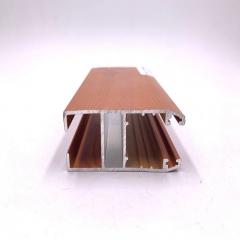
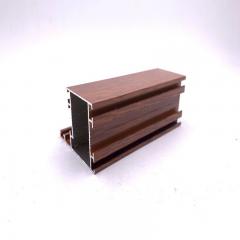
Wood Grain Transfer: Want the warmth of natural wood without the maintenance headaches? Sublimation transfer technology embeds detailed wood patterns directly into powder-coated aluminum surfaces. High-quality films resist UV fading while eliminating the staining, sealing, and insect damage concerns that plague real wood.
Mechanical Finishes: Sometimes texture matters more than color. Brushed finishes create linear textures that reduce glare and hide fingerprints, ideal for handrails and high-touch surfaces. Polished finishes deliver mirror-like reflectivity for decorative accents. Bead-blasted surfaces provide uniform matte textures that conceal minor imperfections.
| Finish Type | Durability Rating | Color Options | Cost Level | Recommended Applications |
|---|---|---|---|---|
| Mill Finish | Low | Natural aluminum only | Lowest | Hidden structural components, interior non-visible parts |
| Brushed/Polished | Low-Medium | Natural metallic tones | Low-Medium | Decorative trim, signage, furniture, architectural accents |
| Clear Anodizing | High | Natural aluminum appearance | Medium | Architectural panels, window frames, exposed structural members |
| Color Anodizing | High | Limited (bronze, black, gold, custom) | Medium-High | Curtain walls, storefronts, premium architectural applications |
| Hardcoat Anodizing | Very High | Gray/dark tones only | High | Industrial components, wear surfaces, machinery parts |
| Powder Coating | Medium-High | Unlimited (any RAL color) | Medium | Doors, windows, railings, outdoor furniture, general trim |
| PVDF Coating | Very High | Wide range, excellent retention | High | High-rise facades, coastal buildings, harsh environments |
| Wood Grain Transfer | Medium-High | Various wood species patterns | Medium-High | Residential siding, fencing, pergolas, decorative cladding |
Selecting the right finish for your profile aluminum components comes down to matching environmental exposure, aesthetic requirements, and budget constraints. For interior applications with moderate handling, standard aluminum or brushed mechanical finishes often suffice. Exterior architectural projects typically demand anodizing or powder coating at minimum, with PVDF coatings justified for premium facades or harsh climates.
With your material and finish selections complete, you're ready to explore how these profiles perform across different industries. Understanding real-world applications reveals why aluminum extrusion profiles have become the material of choice for such diverse sectors.
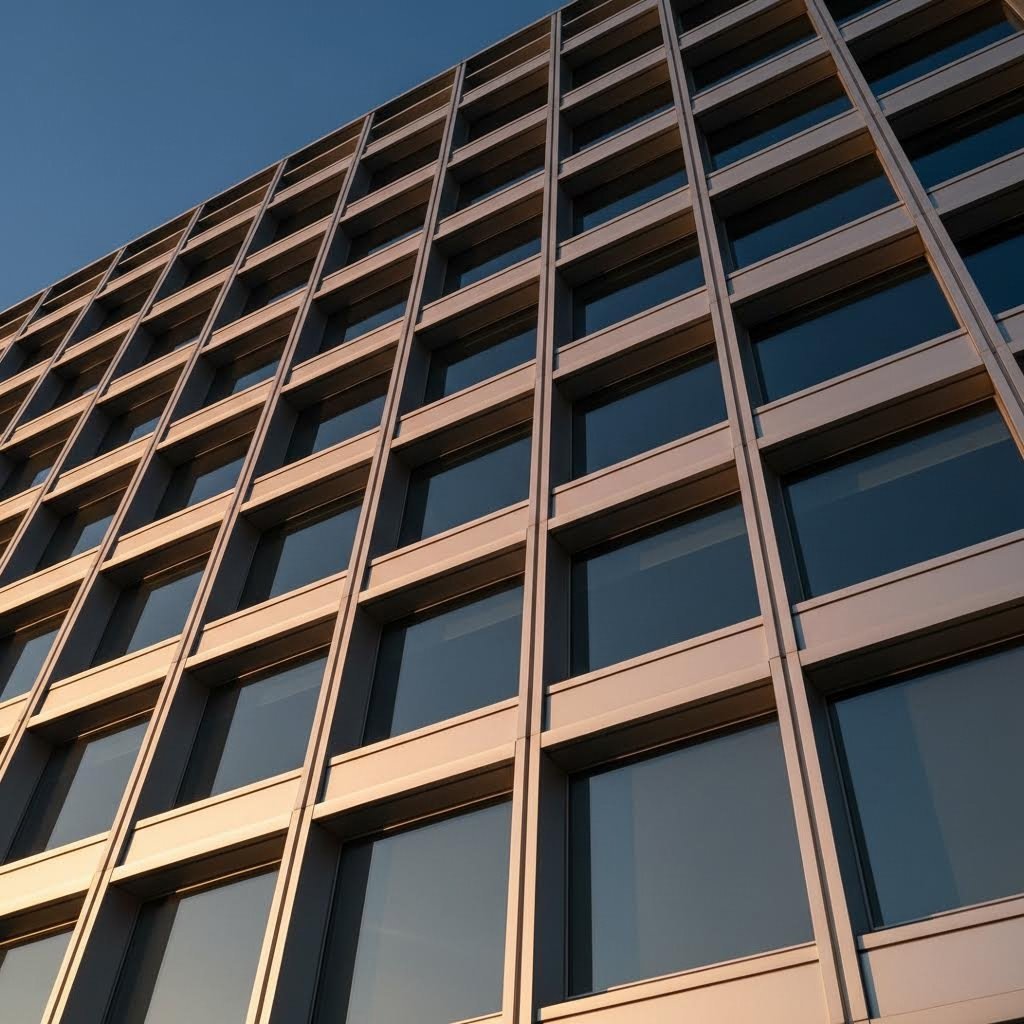
Now that you understand profile shapes, alloy options, and surface treatments, here's the exciting part: seeing how aluminum extrusions actually perform in the real world. From the skyscraper towering over your city to the trailer hauling cargo down the highway, these versatile profiles solve engineering challenges across virtually every industry imaginable.
The global aluminum extrusion market exceeded USD 90 billion in 2022, with strong growth projections through the next decade. What drives this demand? The unique combination of properties that aluminum extrusions offer, specifically lightweight strength, corrosion resistance, and nearly unlimited design flexibility, makes them indispensable across diverse sectors.
Let's explore how different industries leverage aluminum extrusions to solve their specific challenges.
Walk through any modern commercial district, and you're surrounded by aluminum extrusions. The building and construction industry currently utilizes the largest share of extruded aluminum products, and for compelling reasons.
Consider what architects and builders need: materials that combine structural strength with visual appeal, resist weather exposure for decades, and install quickly on job sites. Aluminum tubing and profiles deliver on all counts while weighing roughly one-third of equivalent steel components.
Common architectural applications include:
Why do architects prefer aluminum over alternatives like steel stud framing for many visible applications? Beyond the weight advantage, aluminum's natural corrosion resistance eliminates the painting and maintenance that metal stud systems require in exposed environments. The design flexibility of extrusion also enables integrated channels for drainage, thermal breaks, and hardware mounting that would require multiple components in other materials.
Step inside any modern manufacturing facility, and you'll find aluminum extrusions forming the backbone of production systems. The industrial sector prizes these profiles for their modular nature, enabling rapid assembly, reconfiguration, and expansion as production needs evolve.
Machine builders and automation engineers rely on extruded aluminum for:
The T-slot framing systems discussed earlier dominate industrial applications precisely because they eliminate welding. When production requirements change, engineers can unbolt, reconfigure, and reassemble frames in hours rather than days. This flexibility provides tremendous value compared to welded steel structures that require cutting and re-fabrication for modifications.
Industrial pipe shelving and storage systems also benefit from aluminum construction. Unlike steel alternatives that rust in humid environments, aluminum shelving maintains its appearance and structural integrity even in challenging warehouse conditions.
Every pound matters in transportation. Whether you're designing passenger vehicles, commercial trucks, or rail cars, reducing weight directly translates to improved fuel efficiency, increased payload capacity, or extended battery range in electric vehicles.
Automotive manufacturers increasingly turn to aluminum extrusions for chassis components, body structures, heat sinks, and engine parts. The lightweight nature of aluminum helps improve fuel efficiency and overall vehicle performance while maintaining the structural integrity required for safety.
Transportation applications span multiple sectors:
Electric vehicle battery enclosures represent a growing application where aluminum plate and extruded framing combine to create protective housings that also assist with thermal management. The excellent thermal conductivity of aluminum helps dissipate heat from battery cells, extending their lifespan and improving safety.
Look at your smartphone, laptop, or LED light fixture. Aluminum extrusions likely play a role in keeping those electronics cool and protected. The electrical and electronics industry benefits from aluminum's high thermal and electrical conductivity at a much lower cost and weight than copper.
Heat sinks represent one of the most technically demanding extrusion applications. These finned profiles must dissipate heat efficiently from processors, LED arrays, and power electronics. The extrusion process enables complex fin geometries that maximize surface area within compact envelopes.
Electronics and consumer applications include:
The furniture and display industry particularly values aluminum's strength-to-weight ratio combined with attractive finishes. Retail environments demand fixtures that look premium, resist daily wear, and can be reconfigured for seasonal displays. Aluminum profiles deliver on all these requirements while remaining cost-competitive with alternative materials.
Beyond mainstream industries, aluminum extrusions enable innovation in specialized sectors:
The renewable energy sector particularly benefits from aluminum's corrosion resistance and lightweight properties. Solar installations expose mounting hardware to decades of weather, making aluminum's durability essential. The natural corrosion resistance eliminates maintenance concerns while reducing structural loads on rooftops.
Understanding how different industries apply aluminum extrusions helps you evaluate whether standard profiles will meet your needs or whether custom extrusions might deliver better value. That decision, weighing standard versus custom options, represents the next critical step in your profile selection process.
You've identified your ideal profile shape, selected the right alloy, and determined the perfect finish. Now comes a decision that directly impacts both your budget and project timeline: should you specify standard aluminum extrusions from an existing catalog, or invest in custom tooling for profiles designed specifically for your application?
This choice isn't as straightforward as it might seem. Standard aluminum extrusion profiles offer compelling advantages for many projects, while custom solutions unlock performance benefits that off-the-shelf options simply cannot match. Understanding when each approach makes economic and technical sense helps you avoid both overspending on unnecessary custom tooling and compromising your design with inadequate standard options.
Browsing through an aluminum extrusion profiles catalog reveals hundreds of ready-made shapes covering most common applications. These standard profiles exist because manufacturers produce them in high volumes, spreading tooling costs across countless customers and keeping per-unit prices low.
Standard aluminum extrusions deliver maximum value when your project meets these criteria:
Think of an extruded aluminum shapes catalog as your first stop, not your last resort. Many successful projects combine standard profiles creatively, using brackets and fasteners to achieve results that might initially seem to require custom extrusions. A skilled designer can often adapt standard shapes through secondary machining operations at lower total cost than developing new dies.
When standard options fall short, custom extrusions open possibilities that prefabricated profiles cannot match. Imagine consolidating multiple components into a single profile, integrating mounting features that eliminate hardware, or optimizing wall thicknesses to reduce weight without sacrificing strength.
Factors that favor investing in custom extrusion tooling include:
The custom die development process typically follows a predictable sequence. First, engineers work with your drawings or concepts to create an optimized profile design. Next, toolmakers manufacture the die from hardened steel, a process taking 2-3 weeks for most profiles. After die completion, trial extrusions verify dimensional accuracy before production begins.
What about costs? Extrusion die tooling for standard architectural and industrial applications typically ranges from $400 to $2,000, with larger or more complex shapes requiring dies on bigger presses costing more. Compare this to production tooling for rolled steel shapes, which can easily exceed $30,000 with lead times of three months. Aluminum extrusion's relatively low tooling costs and quick turnaround make custom solutions accessible even for moderate-volume projects.
Here's the practical question every engineer faces: at what volume does custom tooling pay for itself? The calculation involves comparing the total cost of a custom approach against adapting standard profiles.
Consider these factors in your analysis:
Most extruders require minimum orders of 1,000-2,000 pounds per shape, though some suppliers with smaller presses accommodate lower quantities. Lead times for custom production typically run 3-5 weeks including die development, compared to days for standard shapes. However, once your custom die exists, reorders proceed as quickly as standard profiles.
Many manufacturers offer tooling cost refunds when stipulated purchase volumes are reached within a specified period, often two years. Some suppliers also provide free die replacement when original tooling wears out, provided orders continue. These policies effectively eliminate tooling costs for long-running production programs.
The break-even calculation often surprises designers who assume custom always costs more. When a custom profile eliminates multiple assembly steps, consolidates several standard shapes into one, or enables thinner walls that reduce material costs, the custom solution frequently wins on total cost even at moderate volumes.
With your standard versus custom decision framework established, the next step involves selecting the right profile characteristics for your specific requirements. Understanding tolerance specifications, quality standards, and how to work effectively with suppliers ensures your chosen profiles, whether standard or custom, deliver the performance your application demands.
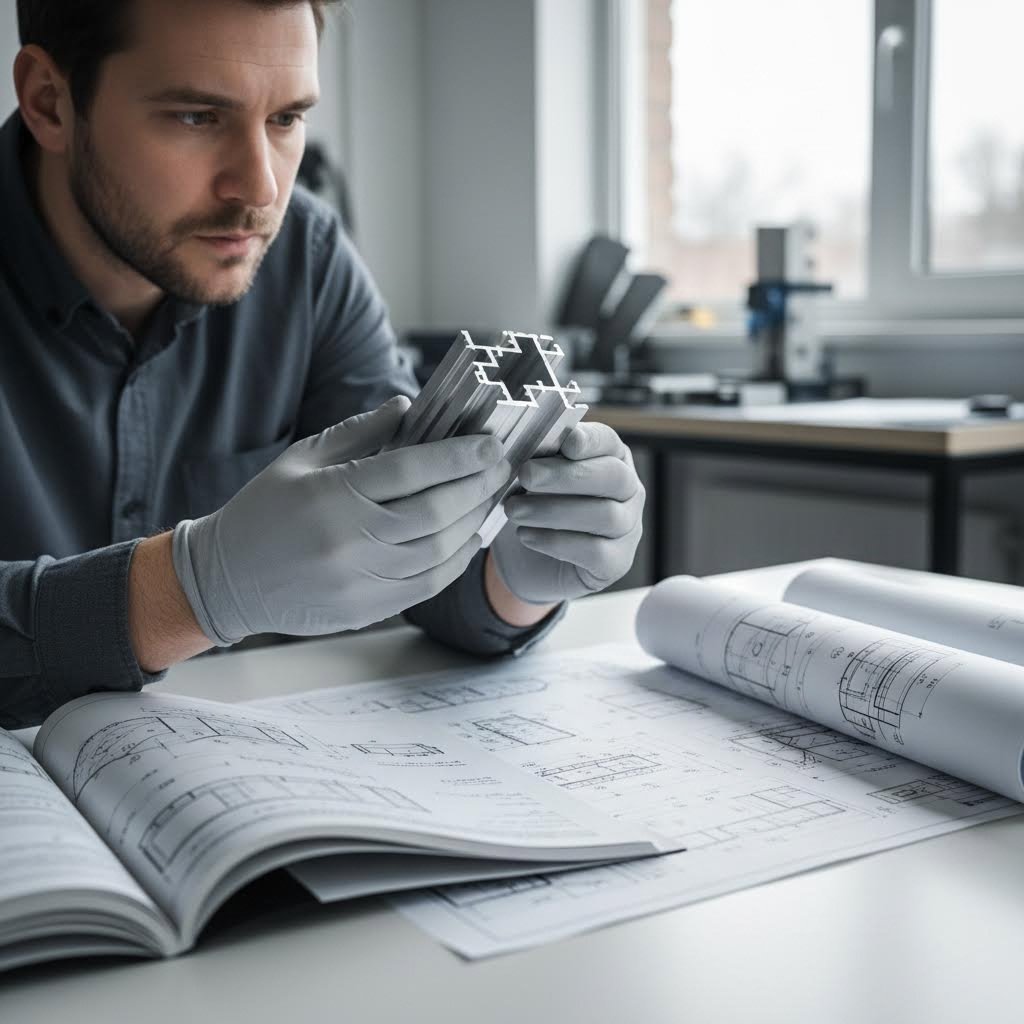
You've explored profile shapes, decoded alloy specifications, and weighed the standard versus custom decision. Now it's time to pull everything together into a practical selection process that ensures your aluminum extrusion profiles perform exactly as intended.
Selecting the right aluminum profile type isn't about finding a single "best" option. It's about systematically matching profile characteristics to your specific application requirements. Whether you're browsing an aluminum profile catalog or working with engineers on custom development, following a structured approach prevents costly mistakes and ensures optimal results.
Ready to build your selection framework? Here's a step-by-step methodology that professionals use to specify extruded aluminum sizes and characteristics with confidence.
When reviewing types of extruded aluminum for your application, think beyond the obvious. A profile that looks right might fail on critical specifications hidden in the details.
Consider wall thickness carefully. Thinner walls reduce weight and material cost but sacrifice stiffness and load capacity. For structural applications, calculate minimum wall thickness based on expected loads rather than defaulting to standard dimensions. Many designers reference a screw dimensions chart when planning fastening locations, ensuring adequate thread engagement depth in profile walls.
Cross-sectional moment of inertia determines bending resistance. Two profiles with identical weight can have dramatically different stiffness depending on how material distributes across the section. Hollow profiles typically outperform solid shapes for bending applications because material concentrates further from the neutral axis.
Don't overlook thermal expansion. Aluminum expands approximately 13 micrometers per meter for each degree Celsius of temperature change. Long profiles in outdoor applications may require expansion joints or slotted mounting holes to prevent buckling or connection stress.
Here's where many specification errors occur: assuming all aluminum extrusion sizes meet identical precision standards. In reality, tolerances vary significantly based on profile complexity, alloy, and manufacturer capabilities.
The Aluminum Association publishes industry-standard tolerance tables in their Aluminum Standards & Data reference, covering both standard and precision tolerances. Key tolerance tables include Tables 11.5 through 11.14 and Tables 12.2 through 12.14, addressing dimensional variations for different profile categories.
Standard tolerances accommodate most general applications, but precision-critical projects may require tighter specifications. Many extruders can achieve tighter tolerances than indicated in standard tables if required, making tolerance requirements an important discussion topic between designer and supplier early in the specification process.
Critical tolerance considerations include:
If precision is crucial, such as in automotive or aerospace applications, ensure that the aluminum extrusion manufacturer can meet strict tolerance specifications before committing to production orders. Request capability documentation and consider requiring first-article inspection for critical dimensions.
Finding the right supplier matters as much as selecting the right profile. Not all manufacturers are equal, and evaluating capabilities before committing protects your project from delays, quality issues, and unexpected costs.
When reviewing an aluminum shapes catalog or requesting quotes, assess these supplier capabilities:
Before making a final decision, request samples of the profiles you're considering. Physical samples allow you to evaluate surface quality, dimensional accuracy, and overall suitability far better than catalog specifications alone.
Timing also influences supplier selection. Inquire about lead times for production and delivery, especially for custom profiles requiring new tooling. Stock aluminum extrusions ship quickly, while custom orders require die development time. Choose a supplier who can meet your schedule without compromising quality.
Finally, compare quotes from multiple suppliers, but look beyond unit pricing. Consider overall value including quality, customization capabilities, technical support, and delivery reliability. Sometimes investing slightly more upfront prevents costly problems downstream.
With your selection methodology established and supplier evaluation criteria defined, you're equipped to make confident decisions about aluminum extrusion profiles for any application. The final step involves identifying suppliers capable of delivering the quality, capabilities, and support your project demands.
You've navigated profile shapes, decoded alloy specifications, explored surface treatments, and built a systematic selection framework. Now comes the most consequential decision of all: choosing the manufacturer who will transform your specifications into reality. The right partner doesn't just deliver aluminum extrusions for sale. They become an extension of your engineering team, providing technical guidance, quality assurance, and reliable production support throughout your project lifecycle.
Finding where to buy aluminum extrusion that meets your exact requirements involves more than comparing prices in an aluminum extrusion catalog. It requires evaluating capabilities, verifying quality systems, and assessing whether a potential supplier can genuinely support your application from initial concept through ongoing production.
When researching aluminium extrusion profiles suppliers, what separates adequate vendors from exceptional partners? A qualified aluminum extrusion supplier offers much more than extruded profiles. They provide engineering collaboration, quality assurance, and integrated production capabilities that align with your business goals.
Start your evaluation by examining these critical capability areas:
Quality control deserves particular attention. Inquire about the manufacturer's quality control procedures and certifications. A reputable manufacturer should perform quality checks at various stages of the extrusion process to ensure that the final products meet industry standards and your specifications. ISO certifications indicate commitment to consistent processes and continuous improvement.
The journey from initial design concept to finished aluminum frame extrusions involves multiple stages where supplier capability directly impacts your results. Understanding this workflow helps you identify partners equipped to support each phase.
Design and engineering collaboration: Early collaboration between engineers and manufacturers helps optimize the design for performance and manufacturability. The best suppliers review your CAD files, suggest design modifications that improve extrudability, and help you avoid tooling issues before production begins.
Die development: For custom profiles, die quality determines dimensional accuracy and surface finish. Experienced suppliers maintain in-house die shops or long-standing relationships with precision toolmakers. They understand how to balance die complexity against production efficiency.
Production scaling: For B2B clients with fluctuating demand, capacity planning is critical. Confirm that the supplier can scale output or introduce new dies without excessive lead times. Facilities with multiple extrusion lines and automated systems often outperform smaller shops in meeting delivery windows.
Logistics and delivery: Evaluate the supplier's raw material sourcing, inventory control, and logistics planning. Suppliers with diversified material sources, automated tracking systems, and warehousing options are typically more reliable and scalable.
When exploring stock aluminum extrusions or custom solutions, consider suppliers offering end-to-end support. Shengxin Aluminium's deep processing services exemplify this integrated approach, providing everything from initial die development through mass production and secondary machining. This single-source accountability eliminates finger-pointing between vendors and streamlines your supply chain.
Before committing to a supplier relationship, verify these essential factors based on everything covered throughout this guide:
| Evaluation Criteria | What to Verify | Why It Matters |
|---|---|---|
| Press Capacity | Range of available tonnages (e.g., 600T-5500T) | Determines profile size range and complexity capability |
| Alloy Expertise | Experience with 6063, 6061, and specialty alloys | Ensures proper material selection for your application |
| Surface Treatment | In-house anodizing, powder coating, PVDF options | Maintains quality control and reduces lead times |
| Secondary Processing | CNC cutting, drilling, bending, assembly capabilities | Delivers ready-to-install components, not raw profiles |
| Quality Certifications | ISO 9001, industry-specific certifications | Validates consistent processes and quality commitment |
| Technical Support | Engineering assistance, design optimization | Prevents costly mistakes and optimizes manufacturability |
| Lead Time Reliability | Track record for on-time delivery | Keeps your production schedule on track |
Building a structured evaluation checklist allows you to assess suppliers objectively across all relevant dimensions. Define benchmarks for each category and score potential partners accordingly. A weighted scoring system helps prioritize factors most important to your specific application.
Armed with the comprehensive knowledge from this guide, you're now equipped to specify extruded aluminium profiles with confidence. You understand how profile shapes, alloy selection, temper designations, and surface treatments combine to create solutions optimized for your specific requirements.
Whether you need standard profiles from an existing catalog or custom extrusions designed specifically for your application, the selection methodology outlined here ensures you'll make informed decisions. Remember these key takeaways:
Before committing to a full contract, request physical samples to validate extrusion precision, surface finish, and material consistency. Physical evaluation reveals quality characteristics that specifications alone cannot convey.
For projects requiring custom profiles, comprehensive deep processing, or specialized surface treatments, exploring suppliers with factory-direct pricing and integrated manufacturing creates significant value. Manufacturers like Shengxin Aluminium demonstrate how three decades of experience, extensive press capacity, and complete in-house capabilities translate into reliable partnership for demanding applications.
The aluminum extrusion industry continues evolving with new alloys, surface technologies, and manufacturing capabilities. By understanding the fundamentals covered in this guide, you're positioned to leverage these advances as they emerge, ensuring your projects benefit from the best that modern aluminum extrusion technology offers.
The most common aluminum extrusion profile shapes include angles (L-shapes), channels (U-shapes), T-slot profiles, I-beams, square tubes, round tubes, and round bars. Each shape serves specific structural and functional purposes. Angles excel at corner reinforcement, channels work well for cable management and mounting tracks, while T-slot profiles enable modular framing systems that can be assembled without welding. Manufacturers like Shengxin Aluminium produce these standard shapes across various sizes, with capabilities ranging from compact 20x20mm T-slots to heavy structural sections.
The primary difference lies in strength versus surface quality. 6063 aluminum, often called architectural aluminum, offers excellent extrudability and produces superior surface finishes that anodize beautifully, making it ideal for visible applications like window frames and decorative trim. Its T6 temper tensile strength is approximately 30 ksi. In contrast, 6061 aluminum delivers higher strength (38 ksi in T6 temper) and better machinability, making it the preferred choice for structural applications, machine frames, and components requiring extensive secondary machining operations.
Choose standard profiles when you need common geometric shapes, have smaller order quantities (under 1,000-2,000 pounds), face tight timelines, or work with limited budgets. Standard profiles ship within days and require no tooling investment. Opt for custom extrusions when you need unique cross-sections, want integrated features that reduce assembly steps, plan high-volume production, or require weight optimization. Custom die costs typically range from $400 to $2,000, with lead times of 3-5 weeks including die development. Many suppliers offer tooling cost refunds when purchase volumes are met.
Aluminum extrusion profiles can receive various surface treatments including mill finish (raw aluminum), mechanical finishing (brushed, polished, bead-blasted), anodizing (clear, colored, or hardcoat), powder coating (unlimited RAL colors), PVDF coatings for extreme weather resistance, and wood grain transfer for realistic wood-look patterns. Anodizing enhances corrosion and wear resistance while maintaining a metallic appearance. Powder coating offers vibrant colors at moderate cost. Suppliers like Shengxin Aluminium provide comprehensive surface treatment options including custom anodizing colors and micro-arc oxidation for demanding applications.
Aluminum extrusion profiles serve diverse industries. Construction and architecture utilize them for window frames, curtain walls, railings, and fence panels. Industrial automation relies on T-slot profiles for machine guards, workstations, and conveyor frames. Transportation sectors use them in automotive chassis, trailer bodies, and rail car components for weight reduction. Electronics manufacturers specify heat sinks and enclosures benefiting from aluminum's thermal conductivity. Additional applications include solar panel mounting systems, medical equipment frames, and furniture components where the strength-to-weight ratio and corrosion resistance provide significant advantages.



 خدمة الإنترنت
 0086 136 3563 2360
 sales@sxalu.com
 +86 136 3563 2360
 العربية
 English
 français
 Deutsch
 русский
 español
 português
 ไทย
ไทย Việt
Việt Українська