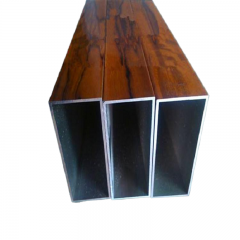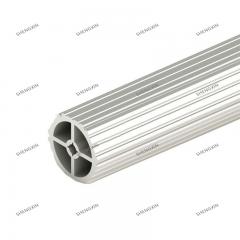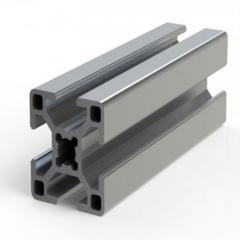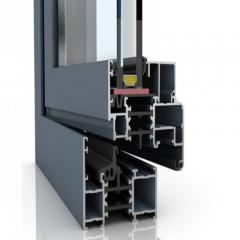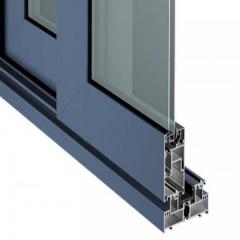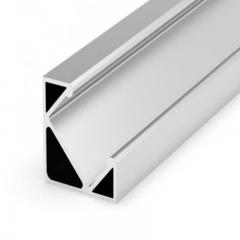
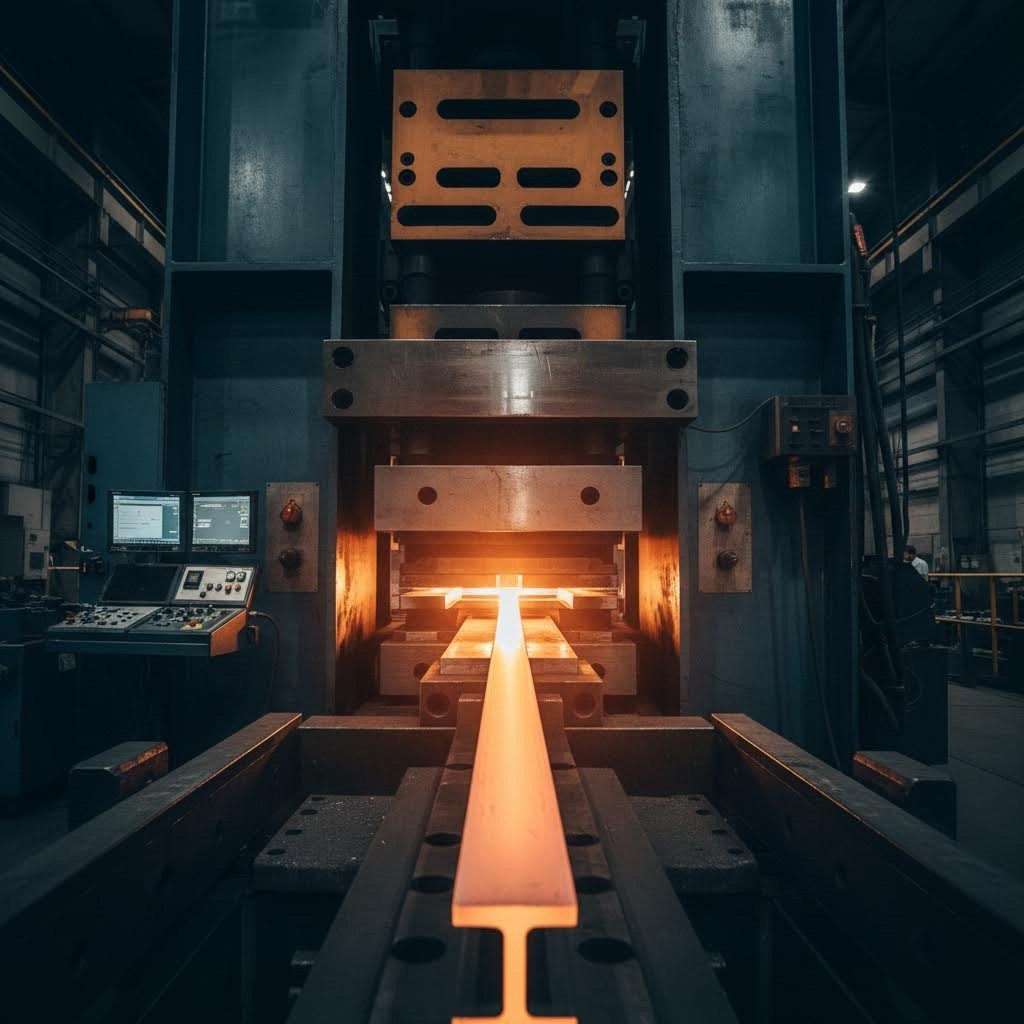
Ever squeezed toothpaste from a tube? You've already grasped the basic concept behind aluminum extrusion processing. Now imagine that same principle applied with hydraulic forces reaching up to 15,000 tons, temperatures exceeding 700°F, and precision-engineered steel dies—that's how manufacturers transform solid aluminum into the complex profiles surrounding us every day.
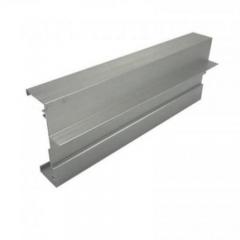
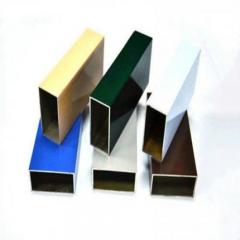
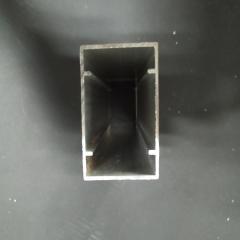
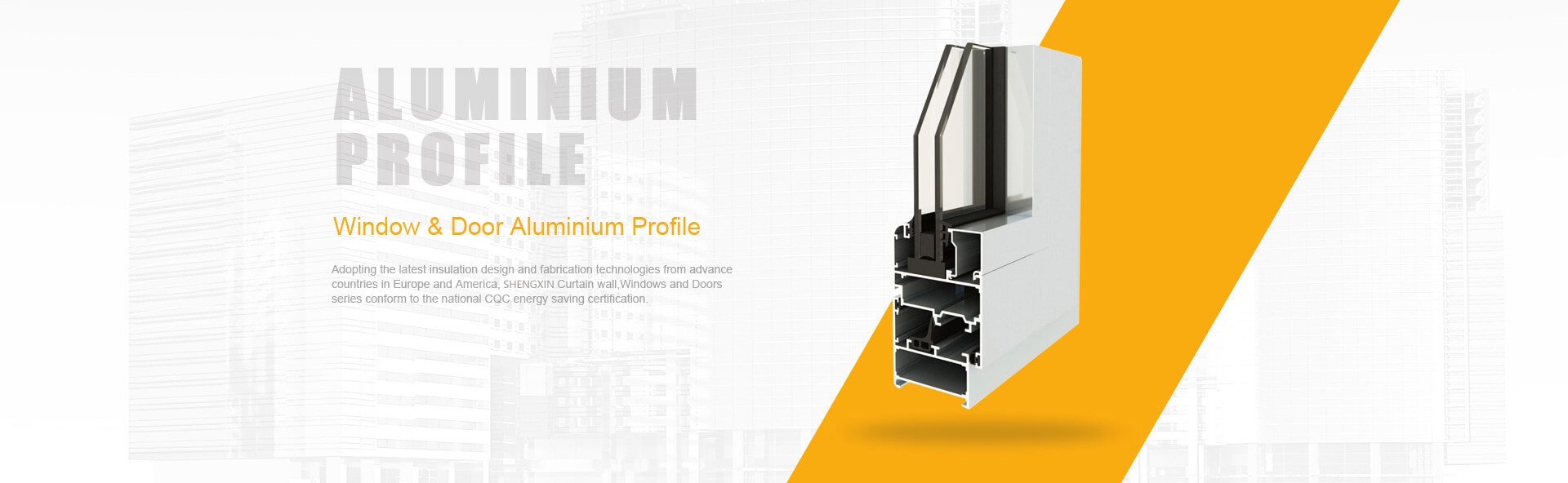
So, what is aluminum extrusion exactly? It's a manufacturing technique where heated aluminum billets are forced through a shaped die opening to create continuous lengths of material with a uniform cross-section. The result is extruded aluminum profiles that can be solid, hollow, or semi-hollow—ranging from simple rectangular bars to intricate multi-channel designs that would be impossible to achieve through other forming methods.
To define extrude in manufacturing terms: it means pushing material through a die to create a specific shape. When we ask "what is extrusion?" in the context of metalworking, we're describing a process that converts a cylindrical aluminum ingot into a continuous length of precisely shaped material.
Unlike machining, which removes material to create shapes, extrusion forms profiles by plastic deformation. The aluminum flows through the die opening much like modeling clay through a press—except under carefully controlled temperatures typically ranging from 700°F to 930°F (375°C to 500°C) depending on the alloy being processed.
Aluminum is particularly well suited to the extrusion process due to its excellent plasticity at extrusion temperature. Only a minor degree of work-hardening takes place at this temperature, and sufficient hot work is performed to improve the metallurgical structure of the extruded shape.
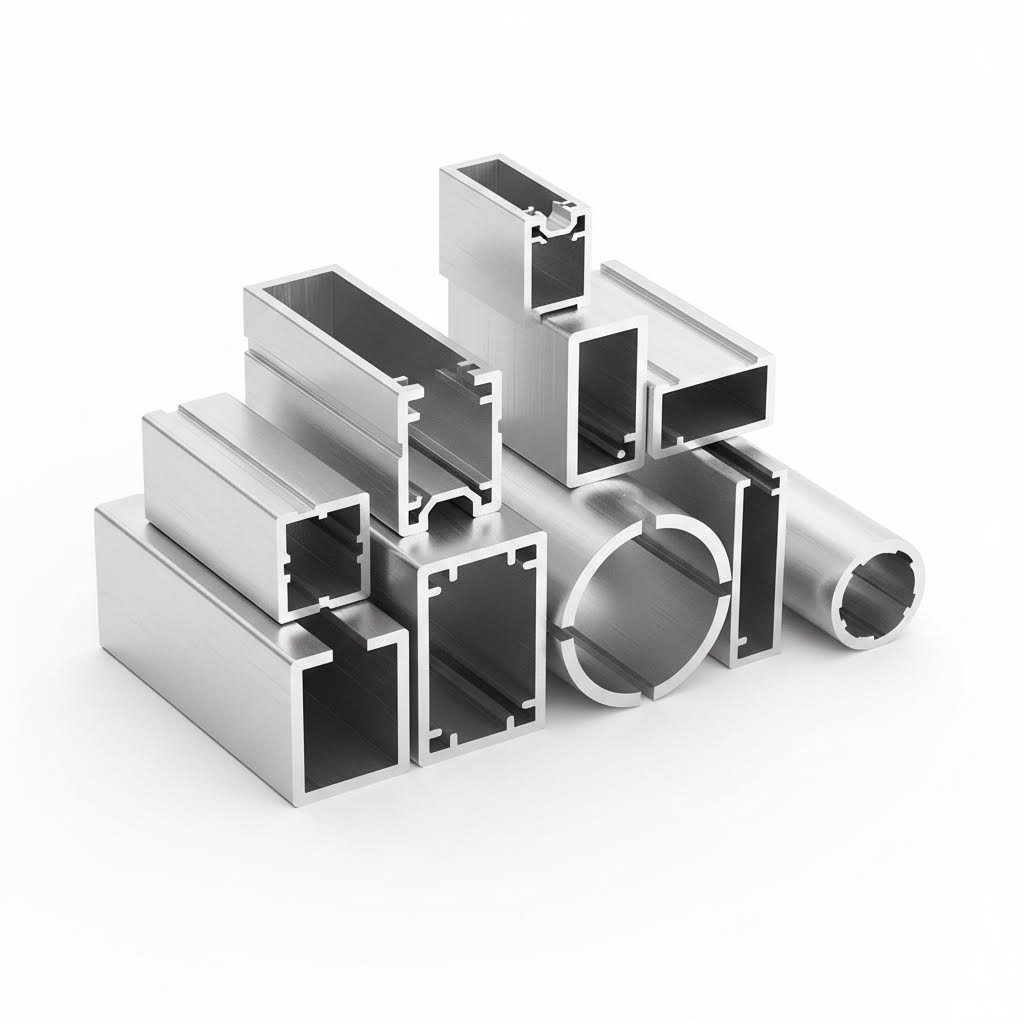
What is extruded aluminum in practical terms? It's the end product of this remarkable transformation—profiles that emerge from the die fully formed and ready for further processing. These shapes can incorporate features like tongue-and-groove connections, snap-fit joints, screw channels, and integrated structural reinforcements that would require complex assembly operations with other manufacturing methods.
The versatility of aluminum extrusion explains its widespread adoption across industries. From architectural window frames to automotive structural components, from electronics heat sinks to industrial machinery frames, this process delivers solutions that combine design flexibility with manufacturing efficiency.
In the sections ahead, you'll discover exactly how this process unfolds—from billet preparation through die design, alloy selection, quality control, and finishing operations. Whether you're an engineer evaluating manufacturing options or a procurement specialist sourcing custom profiles, understanding these fundamentals will help you make informed decisions for your next project.
Understanding how aluminum extrusion is made requires walking through each stage of the production sequence. While the basic concept seems straightforward—push heated metal through a shaped opening—the reality involves precise coordination of temperature, pressure, speed, and timing. Each step directly influences the quality, dimensional accuracy, and mechanical properties of the finished profile.
So how does extrusion work in practice? The aluminum extrusion process follows a carefully orchestrated sequence where every variable must be controlled within tight parameters. Let's break down the extruding process from start to finish.
Before any aluminum touches the extrusion press, two critical preparation steps must occur: die preheating and billet conditioning. These steps set the foundation for everything that follows.
Temperature is the most critical variable in extrusion manufacturing. It affects everything from metal flow characteristics to final mechanical properties. Here's what happens once the prepared billet enters the press:
During extrusion, liquid nitrogen often flows around sections of the die. This cooling extends die life and creates an inert atmosphere that prevents oxide formation on the emerging profile surface.
The profile emerging from the die is far from finished. Critical post-extrusion steps determine the final straightness, mechanical properties, and dimensional accuracy of the product.
| Process Stage | Critical Parameters | Impact on Quality |
|---|---|---|
| Die Preheating | 450-500°C (840-930°F) | Ensures even metal flow; extends die life |
| Billet Heating | 800-925°F (425-495°C) | Provides optimal malleability without melting |
| Ram Pressure | Up to 15,000 tons | Forces metal through die at controlled speed |
| Exit Temperature | 930-980°F (varies by alloy) | Develops proper mechanical properties |
| Stretching | 1-3% elongation | Straightens profile; increases hardness |
| Aging | Controlled time/temperature | Achieves specified temper (T5/T6) |
Each stage of the extrusion process builds upon the previous one. Rushing billet heating compromises metal flow. Incorrect exit temperatures affect mechanical properties. Skipping or shortening the aging cycle leaves profiles below specification. This interconnected nature explains why experienced extruders emphasize process control at every step—it's the only path to consistent, high-quality results.
With the fundamental extrusion sequence understood, the next consideration becomes which extrusion method—direct or indirect—best suits your application requirements.
Not all extrusion presses work the same way. When you're evaluating metal extrusion options for your project, understanding the mechanical differences between direct and indirect methods can significantly impact your final product quality, cost, and production timeline. These two approaches represent fundamentally different solutions to the same challenge: forcing heated aluminum through a shaped die.
Think of it this way—both methods accomplish the same goal, but they take opposite paths to get there. The distinction matters because it affects friction, surface finish, dimensional consistency, and which profiles you can economically produce.
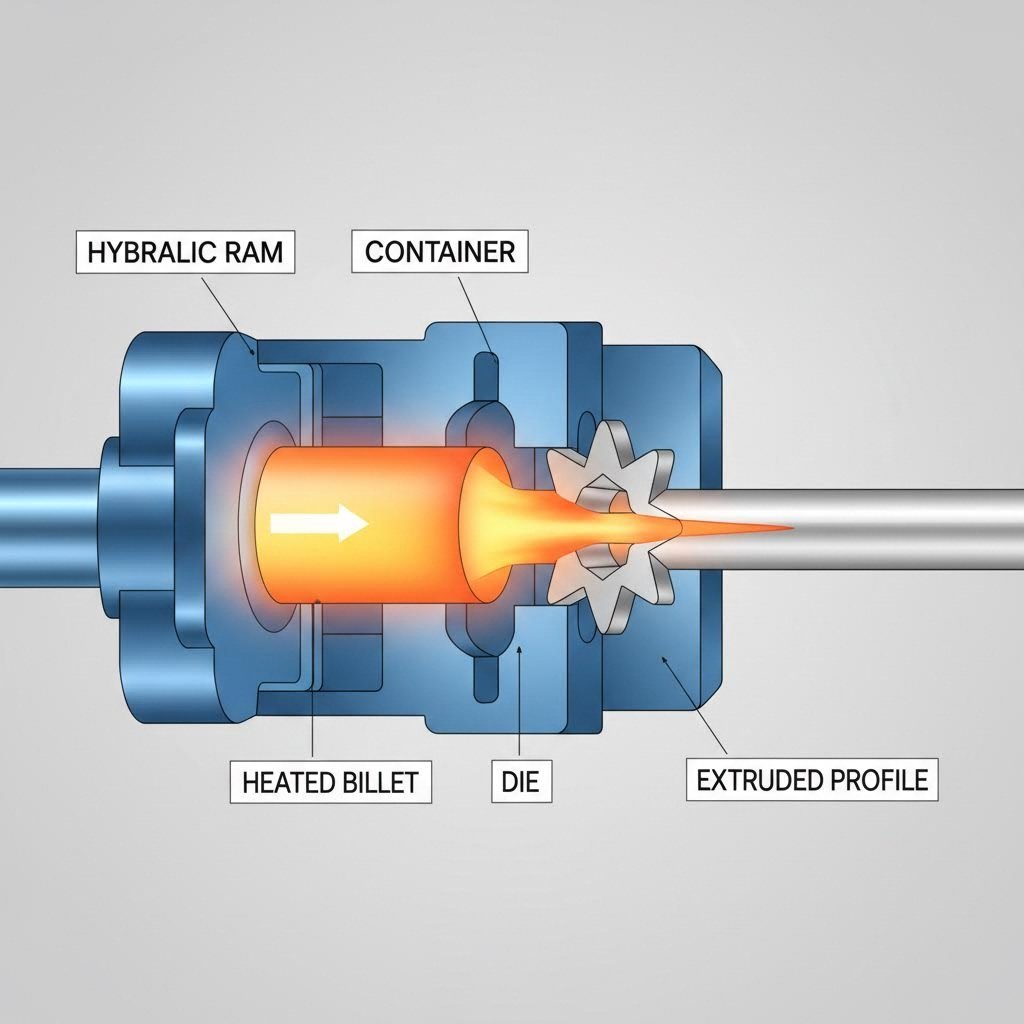
Direct extrusion—also called forward extrusion—is the workhorse of the aluminum extrusion industry. In this metal extrusion process, a hydraulic ram pushes the heated billet through a stationary die. Both the ram and the aluminum move in the same direction, with the billet traveling the full length of the container before emerging as a finished profile.
Here's what happens mechanically: the heated billet sits inside a cylindrical container with the die fixed at one end. As the ram advances, it compresses the aluminum against the container walls and forces it through the die opening. An extrusion press using this method can exert anywhere from 100 to 15,000 tons of pressure—and it's that capacity that determines how large and complex a profile can be produced.
The direct method dominates the industry for good reasons:
However, there's a trade-off. Because the billet slides against the container walls as it moves forward, significant friction develops. This friction generates heat unevenly throughout the billet—the trailing end experiences more friction than the leading portion. The result? Potential variations in material flow and surface quality from the beginning to the end of each extrusion cycle.
Indirect extrusion—sometimes called backward extrusion—flips the process around. Instead of pushing the billet toward a stationary die, the die itself moves into a stationary billet. The container and billet remain fixed while a hollow stem carries the die forward into the aluminum.
This mechanical reversal eliminates most of the friction between the billet and container walls. Why? Because the billet doesn't slide against the container—it stays in place while the die does the moving. The reduction in friction delivers several notable benefits:
According to industry sources, the indirect method allows for larger billets to be extruded at faster speeds while exposing containers to less wear. With better temperature consistency, grain structure and mechanical properties tend to be of higher quality than direct extrusion can achieve.
But indirect presses aren't without limitations. The hollow stem required to carry the die restricts profile size. Equipment costs run higher, and few extruders in North America even have indirect capabilities. Surface imperfections on the billet also transfer more readily to the finished product, requiring additional preparation steps like chemical cleaning or scalping before extrusion.
When comparing drawing and extrusion methods for your project, the decision often comes down to balancing precision requirements against cost and availability. Here's how the two extrusion metal approaches stack up across key performance factors:
| Factor | Direct Extrusion | Indirect Extrusion |
|---|---|---|
| Friction Level | High—billet slides against container walls | Low—billet remains stationary |
| Surface Finish Quality | Good for most applications; some variation possible | Superior consistency; ideal for precision parts |
| Force Requirements | Higher due to friction (100-15,000 tons typical) | Lower for equivalent profiles |
| Profile Complexity | Excellent—handles intricate multi-hollow shapes | Limited by hollow stem diameter |
| Typical Applications | Construction, transportation, industrial profiles | Aerospace, electronics, precision components |
| Equipment Cost | Lower initial investment | Higher setup and maintenance costs |
| Die Wear | Faster wear due to higher pressure and heat | Extended die life |
| Production Speed | Faster for large, simple sections | Can be slower for complex shapes |
For most commercial and industrial applications, direct extrusion delivers the right combination of capability, cost-effectiveness, and availability. It's the practical choice for construction materials, transportation components, and general industrial profiles where profile complexity matters more than absolute surface perfection.
Indirect extrusion shines when you need exceptional dimensional consistency, superior mechanical properties, or the finest surface finishes—think aerospace components, precision electronic enclosures, or thin-walled tubing where quality tolerances are extremely tight.
The reality? Most projects work beautifully with direct extrusion, which explains why it remains the dominant method worldwide. However, knowing that indirect alternatives exist helps you make informed decisions when your specifications demand that extra level of precision.
With extrusion method selection understood, the next critical decision involves choosing the right aluminum alloy—a choice that directly shapes the mechanical properties, surface treatment options, and ultimate performance of your finished profiles.
Choosing the right aluminum alloy for your extrusion project isn't just a technical formality—it fundamentally determines what your finished profiles can do. The alloy you select influences tensile strength, corrosion resistance, surface finish quality, machining characteristics, and even how well your parts accept anodizing or powder coating. Get this decision right, and your aluminum extrusion profiles will perform exactly as intended for years to come.
Here's the good news: you don't need to evaluate dozens of options. The 6000 series dominates the extrusion world, accounting for roughly 75% of all extrusion applications. Within this series, two alloys handle the vast majority of projects—6063 and 6061. Understanding when to use each one gives you the foundation for virtually any extrusion decision you'll face.
What makes the 6000 series so universally popular? These alloys share a common foundation: magnesium and silicon as their primary alloying elements. According to the Aluminum Extruders Council, this combination delivers an exceptional balance of strength, corrosion resistance, machinability, weldability, and formability—all while remaining heat treatable.
Alloy 6063, often called "architectural aluminum," is the most popular aluminum alloy for extrusions worldwide. Its chemical composition includes magnesium content between 0.45-0.9% and silicon content between 0.2-0.6%—deliberately lower percentages than its structural cousin, 6061. This composition has been optimized specifically for extrudability, meaning it flows through dies more readily and produces superior surface finishes.
Why does surface finish matter so much? If you're producing extruded aluminium profiles for architectural applications—window frames, curtain walls, storefronts, railings—the visual appearance is critical. Alloy 6063 provides a high-quality surface that accepts anodizing exceptionally well, producing consistent, attractive finishes in clear or colored variations. You'll typically find 6063 in applications where exposure to weather or water is expected, since it resists corrosion better than 6061.
Typical 6063 applications include:
When your application demands higher strength, alloy 6061—commonly referred to as "structural aluminum"—becomes the preferred choice. Its magnesium content ranges from 0.8-1.2% and silicon from 0.4-0.8%, both higher than 6063. The increased magnesium boosts strength significantly, while the additional silicon lowers the melting point for easier processing.
According to industry specifications, 6061-T6 delivers ultimate tensile strength of 38.0 ksi minimum with yield strength of 35.0 ksi—compared to 6063-T6's 30.0 ksi ultimate and 25.0 ksi yield. That's a meaningful difference when structural integrity matters.
Where 6063 excels in surface finish and corrosion resistance, 6061 offers better machinability and a superior strength-to-weight ratio. Design engineers use 6061 across diverse aluminum extruded shapes in applications ranging from structural building components to aerospace engineering.
Typical 6061 applications include:
Beyond 6061 and 6063, several other 6000 series alloys serve specialized needs. Alloy 6082 offers even higher strength (45.0 ksi ultimate tensile in T6 temper), making it suitable for heavy structural applications. Alloy 6005 provides a middle ground between 6063's extrudability and 6061's strength. Alloy 6463 mirrors 6063's properties but offers enhanced surface brightness for decorative applications.
The following comparison covers key performance factors across the most commonly specified extrusion alloys:
| Property | 6063-T6 | 6061-T6 | 6005-T5 | 6082-T6 |
|---|---|---|---|---|
| Ultimate Tensile Strength | 30.0 ksi min | 38.0 ksi min | 38.0 ksi min | 45.0 ksi min |
| Yield Strength (0.2% offset) | 25.0 ksi min | 35.0 ksi min | 35.0 ksi min | 38.0 ksi min |
| Elongation | 8-10% | 8-10% | 8-10% | 6-8% |
| Corrosion Resistance | Excellent | Good | Good | Good |
| Weldability | Very Good | Good | Good | Good |
| Surface Finish Quality | Excellent | Good | Good | Good |
| Machinability | Fair | Good | Good | Good |
| Anodizing Response | Excellent | Good | Good | Good |
| Primary Applications | Architectural, decorative | Structural, aerospace | Transportation, structural | Heavy structural |
Temper designation plays an equally important role in final properties. The "T" by a number indicates how the alloy was thermally treated after extrusion:
The difference between T5 and T6 tempers often determines whether a profile meets your mechanical specifications. For example, 6063-T5 delivers 22.0 ksi ultimate tensile strength, while 6063-T6 reaches 30.0 ksi—a 36% improvement from the additional heat treatment step.
When planning your project, consider downstream processing requirements alongside mechanical needs. If your aluminum extrusion shapes require extensive CNC machining, 6061's superior machinability may outweigh 6063's surface advantages. If anodizing is essential for corrosion protection or aesthetics, 6063's excellent anodizing response becomes the deciding factor. For welded assemblies, both alloys perform well, though proper filler wire selection and post-weld heat treatment protocols vary by alloy.
The most suitable alloy ultimately depends on your specific application. Both 6061 and 6063 can be formed using virtually any aluminum processing technique and deliver excellent results. When strength is paramount, lean toward 6061. When surface finish and corrosion resistance matter most, 6063 is your answer. And remember—your extrusion partner can provide guidance tailored to your exact requirements.
With alloy selection clarified, the next critical factor influencing your project's success is the extrusion die itself—the precision tool that transforms molten aluminum into your exact profile specifications.
The extrusion die is where your aluminum profile truly takes shape. This precision-engineered steel disk—containing a carefully machined opening that matches your exact cross-sectional requirements—represents the heart of the entire process. Without a properly designed and maintained aluminium extrusion die, even the best alloy selection and process parameters won't deliver the results you need.
Understanding what is die manufacturing and how extrusion tooling works gives you insight into why some profiles cost more than others, why lead times vary, and what separates a mediocre extrusion from a precision component. Let's explore the critical factors that determine die performance and longevity.
Every aluminum extrusion die starts as a block of tool steel—most commonly H13 steel, chosen for its excellent thermal conductivity, wear resistance, and toughness under extreme conditions. From this raw material, die makers create three distinct types based on profile requirements:
The most critical design challenge? Ensuring uniform material flow velocity. According to industry experts, this factor matters most for both extrusion quality and die life. When aluminum flows unevenly through different sections of the die opening, you get turbulence, dead zones, and defects like warping or inconsistent wall thickness.
Die designers achieve balanced flow through several techniques:
How aluminium extrusion dies are manufactured directly impacts their performance and your project costs. The process typically involves CNC machining for initial shaping, wire EDM (electrical discharge machining) for precision aperture cutting, and various surface treatments to enhance durability.
Several factors influence extrusion die cost and complexity:
The relationship between die design and final product quality cannot be overstated. According to industry research, die quality directly affects dimensional accuracy, surface finish, and overall profile consistency. A well-designed die operating under proper conditions can produce thousands of feet of precision extrusions. A poorly designed or maintained die creates scrap, rework, and frustrated customers.
Extrusion dies face brutal operating conditions—temperatures reaching 600°C at the surface, pressures up to 15,000 tons, and continuous friction against flowing aluminum. Under these circumstances, proper maintenance becomes essential for maximizing die life and minimizing production disruptions.
Key die maintenance practices include:
When dies do wear or suffer damage, correction and repair processes can often restore them to service. Common interventions include resurfacing or repolishing bearing areas, adjusting pocket depths to rebalance material flow, and repairing minor cracks before they propagate. According to extrusion specialists, implementing comprehensive preventive maintenance programs significantly extends die life and reduces unplanned downtime.
The bottom line? Your extrusion die represents a significant upfront investment, but proper design and maintenance practices multiply that investment's value over thousands of production feet. Working with an extrusion partner who understands die engineering—and maintains their tooling accordingly—directly impacts the quality, consistency, and economics of your finished profiles.
With die fundamentals covered, the next step is understanding where these precision profiles actually end up—and why aluminum extrusion has become the manufacturing method of choice across so many industries.

Where do all these precision aluminum extrusions actually end up? The answer is everywhere—from the window frames in your office building to the heat sink cooling your laptop's processor. Aluminum extrusion applications span virtually every industry sector, each leveraging specific properties that make this manufacturing method uniquely suited to their requirements.
What makes aluminum extrusions so universally adopted? The combination of design flexibility, excellent strength-to-weight ratios, natural corrosion resistance, and thermal conductivity creates solutions that alternative materials simply cannot match. Let's explore how different industries put these types of extruded aluminum to work.
Building and construction represents the largest market for aluminum extrusions—and for good reason. When architects and engineers need to combine structural performance with aesthetic flexibility and long-term durability, extruded aluminum profiles deliver on all fronts.
Common architectural and construction applications include:
Why aluminum? Construction applications demand materials that resist corrosion without protective coatings, maintain structural integrity across temperature extremes, and offer design flexibility for complex architectural visions. Extruded aluminum tube sections and custom channels meet these requirements while enabling prefabricated assembly that reduces on-site labor costs.
Every pound saved in vehicle construction translates to improved fuel efficiency and reduced emissions. This weight-saving imperative has made aluminum extrusions indispensable across transportation sectors—from passenger vehicles to rail systems and commercial trucks.
Key transportation applications include:
Small aluminum extrusions also play critical roles in transportation—think seat tracks, window channels, trim moldings, and interior mounting rails. These components may be individually modest, but they add up to significant weight savings across thousands of vehicles.
When equipment needs protection from environmental hazards while dissipating internal heat, aluminum extrusions provide ideal solutions. The electronics and industrial machinery sectors rely heavily on extruded profiles for both thermal management and structural housing applications.
Industrial and electronics applications include:
Consumer products also incorporate aluminum extrusions extensively. Furniture frames, sporting goods, appliance housings, and display systems all leverage the material's lightweight durability and design flexibility. From bicycle frames to laptop housings to shower enclosure frames—extruded aluminum shapes appear wherever designers need to combine strength, aesthetics, and manufacturing efficiency.
| Industry Sector | Key Properties Leveraged | Common Profile Types |
|---|---|---|
| Architecture & Construction | Corrosion resistance, surface finish, thermal breaks | Window mullions, curtain wall sections, T-slot framing |
| Transportation | Weight savings, crashworthiness, recyclability | Structural beams, crash rails, floor planks |
| Electronics | Thermal conductivity, EMI shielding, precision | Heat sinks, enclosures, chassis rails |
| Industrial Machinery | Modularity, strength, corrosion resistance | T-slot framing, conveyor rails, guard panels |
| Consumer Products | Aesthetics, lightweight, durability | Furniture frames, sporting goods, appliance trim |
The versatility of aluminum extrusion explains its continued growth across these sectors. Unlike casting or fabrication from sheet, extrusion enables designers to create profiles with optimized cross-sections—placing material exactly where strength or function is needed while minimizing weight elsewhere. Add in the ability to integrate multiple features into a single profile—snap-fit connections, screw bosses, wire channels, thermal breaks—and you understand why engineers increasingly specify extruded aluminum for applications ranging from massive structural members to intricate small aluminum extrusions measured in millimeters.
Of course, producing perfect extrusions consistently requires understanding what can go wrong—and how to prevent it. The next section addresses common defects, their root causes, and the quality control strategies that separate reliable extrusions from problematic ones.
Even the best-designed aluminum extrusion process can produce imperfect parts. When defects appear, understanding their root causes—and knowing how to prevent them—separates frustrating production problems from manageable quality control. Whether you're evaluating incoming extruded profiles or working with a supplier to resolve issues, this troubleshooting guide covers the defects you're most likely to encounter.
What causes extrusion defects in the first place? The answer typically involves one or more process variables drifting outside optimal ranges: temperature fluctuations, excessive speed, worn tooling, or contaminated materials. Extrusion technology has advanced significantly, but the physics of forcing heated metal through precision dies still demands careful control at every stage.
Surface imperfections are often the most visible quality problems—and frequently the most concerning for applications where appearance matters. Here's what to look for and why these defects occur:
Die Lines: These longitudinal grooves or marks running parallel to the extrusion direction result from imperfections on the die bearing surface. According to industry experts, die lines typically indicate wear and tear on dies or improper die maintenance. Even microscopic scratches or deposits on the bearing transfer directly to every foot of extrusion that passes through.
Surface Tearing (Extrusion Cracks): Small arc-shaped cracks at profile edges—sometimes hidden beneath the surface, sometimes forming visible serrated patterns—indicate the metal surface was torn by excessive tensile stress during extrusion. Common causes include extrusion speeds that are too fast, temperatures that are too high, or sudden speed fluctuations.
Blistering (Bubbles): Raised bubbles on the surface occur when gases become trapped between the metal and the base material. This defect often results from moisture or oil contamination in the extrusion barrel, inadequate billet preheating, or high moisture content in raw materials.
Pick-Ups and Scratches: Small aluminum particles adhering to the surface create rough textures, while scratches appear as mechanical abrasions from contact with sharp objects during handling. Both indicate either die contamination or improper handling procedures post-extrusion.
When extrusion profiles don't meet dimensional specifications, the consequences extend beyond aesthetics—parts may not fit assemblies, structural performance may suffer, and machined aluminum extrusion operations downstream become problematic.
Twisting and Bending: Profiles that curve or twist along their length typically result from uneven metal flow through the die. According to manufacturing data, causes include improperly arranged die holes, working belt size distribution issues, improper extrusion temperature and speed, or uneven cooling during heat treatment.
Uneven Wall Thickness: When the same cross-section shows varying wall thickness, the problem usually traces to die design issues, misalignment between extrusion barrel and needle, or excessive liner wear. Proper aluminum extrusion design accounts for these factors during tooling development.
Internal Voids (Shrinkage): At the tail end of extrusions, trumpet-shaped discontinuities in the cross-section indicate shrinkage defects. These form when surface oxides or inclusions flow into the product, or when residual material is insufficient. Prevention requires adequate residual material length and proper extrusion speed control toward the end of each cycle.
The most effective defect prevention strategy addresses multiple process variables simultaneously. Here's how the key control factors influence outcomes across different extrusion shapes:
| Defect Type | Visual Indicators | Common Causes | Prevention Methods |
|---|---|---|---|
| Die Lines | Longitudinal grooves parallel to extrusion direction | Die bearing wear; deposits on die surface | Regular die inspection and polishing; proper nitriding treatment; scheduled maintenance |
| Surface Tearing | Arc-shaped cracks at edges; serrated patterns | Excessive speed; high temperature; speed fluctuations | Control extrusion speed and temperature; modify die edge radius design |
| Blistering | Raised bubbles on surface | Moisture/oil contamination; inadequate billet preheat | Keep tools dry; proper billet preheating; verify lubricant quality |
| Scratches | Superficial abrasions or grooves | Foreign particles; poor handling; worn guides | Clean die working belt; smooth guide paths; careful handling protocols |
| Twisting/Bending | Profile curves or deflects longitudinally | Uneven metal flow; improper die design; uneven cooling | Balanced die design; uniform cooling; proper stretching |
| Wall Thickness Variation | Inconsistent thickness in same cross-section | Die/barrel misalignment; liner wear; design issues | Center alignment checks; liner inspection; optimized die design |
| Shrinkage/Voids | Trumpet-shaped discontinuities at tail | Insufficient residual material; contaminated billet surface | Adequate butt length; clean billet surfaces; controlled end-stage speed |
Quality control checkpoints throughout the process catch problems before they multiply into large batches of defective material:
According to precision extrusion manufacturers, implementing robust quality management systems—including documented procedures, calibrated equipment, and traceability protocols—enables consistent production of defect-free extruded profiles meeting customer specifications.
Understanding defect causes empowers better supplier conversations and smarter specification decisions. But quality comes with costs—and understanding the economics of extrusion projects helps you balance performance requirements against budget realities.
How much will your aluminum extrusion project actually cost? It's the question everyone asks—and the one most suppliers dance around. The reality is that extrusion pricing involves multiple interacting variables, each affecting your final per-unit cost differently depending on project specifics. Understanding these cost drivers helps you make smarter decisions, negotiate effectively, and avoid budget surprises.
Unlike commodity purchases with fixed price lists, aluminum extrusion economics depend on your unique combination of profile design, alloy selection, order volume, and finishing requirements. Let's break down exactly what goes into that quote you'll receive.
Every extrusion project includes five primary cost components that combine to determine your total investment. Some are one-time expenses; others scale with volume. Knowing which is which helps you plan budgets accurately.
Raw Material Costs: The base price of aluminum represents the largest variable in most projects. According to industry sources, aluminum prices have fluctuated anywhere from $1,500 to $3,500 per metric ton in recent years—driven by global demand, energy costs, and geopolitical factors like environmental restrictions in China or supply disruptions from major producers. The London Metal Exchange (LME) sets baseline pricing, with regional surcharges and alloy premiums added on top.
Alloy selection directly impacts material costs. Standard alloys like 6063 and 6061 are readily available and competitively priced. Specialty alloys with enhanced properties may require special stock procurement, increasing both cost and lead time.
Die and Tooling Investment: Custom profiles require custom dies—and this one-time expense varies dramatically based on complexity. For normal architectural and industrial applications, die costs typically range from $400 to $1,000. Large parts requiring 2,000-4,000 ton aluminum extrusion press machine capacity could push die costs as high as $2,000.
Processing Costs: Labor, overhead, equipment operation, and production efficiency all factor into per-unit processing charges. These vary by region—facilities in countries with lower labor rates often offer competitive pricing, though this may involve trade-offs in lead time or oversight.
Secondary Operations: Finishing, machining, and fabrication add measurable costs. According to industry data, anodizing and powder coating typically run $1,200 to $1,400 per metric ton, while simpler finishes like Alodine cost around $800 per metric ton. Machining operations range from $200-$300 per metric ton for simple drilling to significantly more for complex CNC work.
Logistics and Shipping: Transportation costs—especially for international sourcing—can substantially impact total landed cost. Container shipping from Asia to North America has ranged from $8,000 to $20,000 for a 40-foot container depending on market conditions.
Understanding how die costs affect your project economics is crucial—especially for custom profiles. Here's what influences this one-time investment:
Factors that increase die and tooling costs:
Factors that reduce overall tooling impact:
The key insight? Die costs are fixed regardless of order size—meaning they amortize differently across volumes. A $2,000 custom die adds $0.20 per unit when spread across 10,000 parts, but $2.00 per unit for a 1,000-piece order. This math drives many minimum order quantity decisions.
Order volume affects extrusion economics more dramatically than most buyers initially expect. Here's why scale matters:
Setup and changeover costs remain relatively constant whether you're running 500 feet or 50,000 feet of a profile. The extrusion line must be prepared, dies loaded and preheated, and quality parameters verified regardless of run length. Larger orders spread these fixed costs across more units.
Material purchasing efficiency improves with volume. According to industry practice, buyers with ongoing production needs sometimes pay for large metal quantities upfront to lock in favorable rates—making extrusion costs more predictable over time.
Secondary operation efficiency also scales favorably. Fabrication setups, anodizing bath processing, and CNC programming time get amortized across larger batches.
When evaluating custom versus standard profiles, consider the total economics:
| Factor | Standard Profiles | Custom Profiles |
|---|---|---|
| Die Investment | None or minimal (shared tooling) | $400-$2,000+ depending on complexity |
| Lead Time | Often available from stock | 3-4 weeks for tooling plus production |
| Minimum Orders | Typically lower | Higher to justify tooling investment |
| Per-Unit Cost at Low Volume | Lower | Higher (tooling amortization) |
| Per-Unit Cost at High Volume | May be higher | Often competitive or lower |
| Design Optimization | Limited to available shapes | Tailored to exact requirements |
For budget planning, request itemized quotes that separate die costs, material costs, processing, finishing, and shipping. This transparency enables meaningful cost analysis and identifies optimization opportunities. Consider whether your design complexity truly requires custom extrusion tooling, or whether standard profiles with secondary machining might deliver comparable results at lower total cost for smaller quantities.
Working with vertically integrated suppliers—those combining extrusion, fabrication, and finishing under one roof—often reduces overall project costs compared to coordinating multiple vendors. The logistics simplification and reduced handling translate directly to your bottom line.
With project economics understood, the next consideration becomes what happens after extrusion—the secondary processing and surface treatment options that transform raw profiles into finished, ready-to-install components.
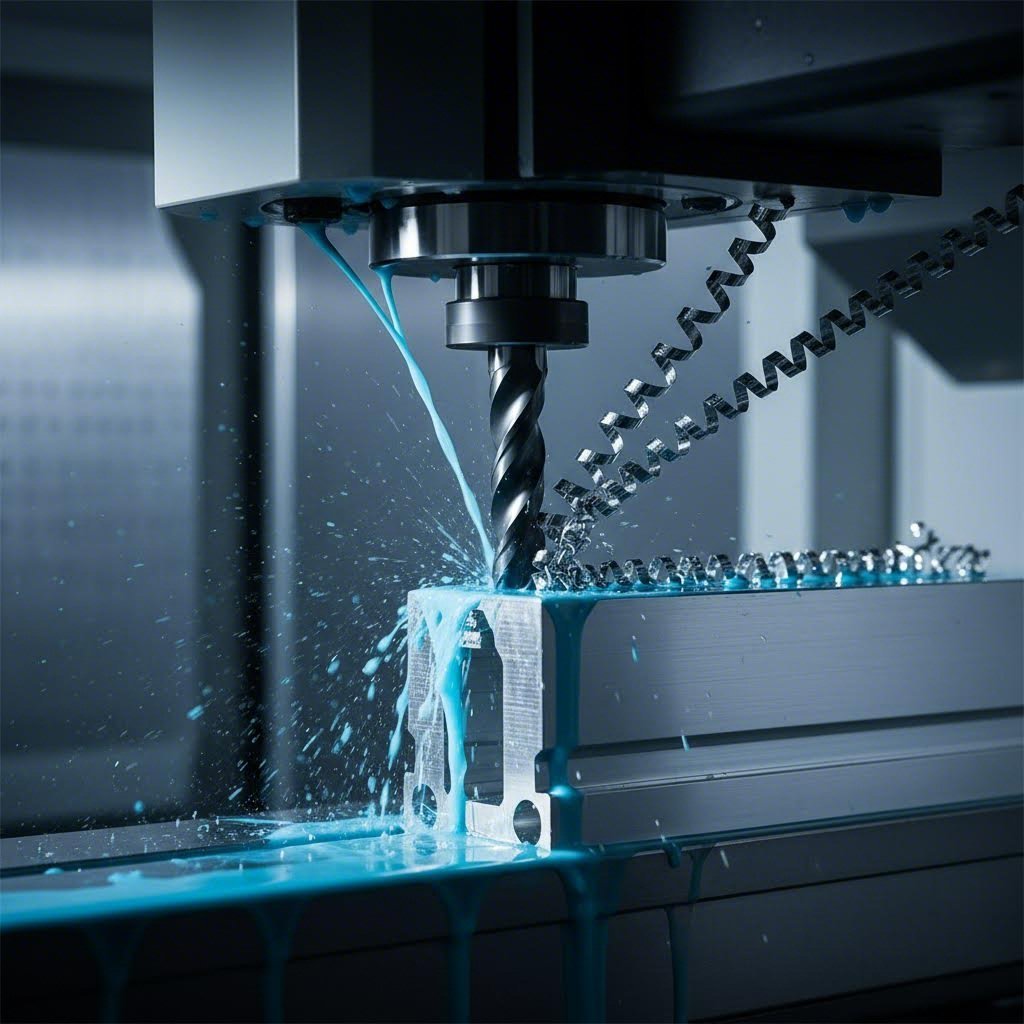
Raw extrusions emerging from the press are just the starting point. To become finished components ready for installation or assembly, aluminum extrusion parts typically require additional processing—cutting to precise lengths, drilling mounting holes, milling complex features, or bending into curved shapes. Beyond fabrication, surface treatments transform functional profiles into durable, visually appealing products that resist corrosion and wear for decades.
Understanding your options for aluminium extrusion machining and finishing helps you specify complete solutions rather than raw material. Whether you need simple cuts or complex multi-axis CNC operations, the right secondary processing turns extruded aluminum parts into ready-to-use components.
The aluminium extrusion process delivers consistent cross-sections, but most applications require additional fabrication to create finished parts. Post-extrusion operations range from basic to highly complex:
Cutting aluminum extrusion seems straightforward, but precision matters. How to cut aluminum extrusion properly depends on your tolerance requirements and volume. Options include:
Drilling and tapping create mounting holes and threaded connections. CNC drilling centers handle everything from simple through-holes to complex multi-angle patterns. According to industry experts, aluminum's excellent machinability makes it easier to form and machine than other metals—you can use machine tools to cut aluminum easily and quickly since it is soft and chips easily.
Milling operations remove material to create pockets, slots, contours, and complex 3D features. Modern CNC machining centers with 4th-axis capabilities can mill extrusions on multiple axes without changing tooling, significantly increasing productivity for complex parts.
Bending and forming transform straight extrusions into curved components—handrails following staircase geometry, curved window frames, or architectural features with compound curves. Rotary draw bending, stretch forming, and roll bending each suit different radii and profile geometries.
The distinct advantage of CNC machining versus hard tooling like punching or stamping? Lower startup costs for tooling and fixtures, plus faster production setup for custom configurations.
While aluminum naturally resists corrosion through its oxide layer, modern applications demand more—enhanced durability, specific colors, improved abrasion resistance, or specialized functional properties. Surface treatments deliver these characteristics while protecting your investment for years of service.
Anodizing remains the most popular finish for architectural and industrial applications. This electrochemical process thickens aluminum's natural oxide layer, creating a hard, durable, weather-resistant surface integral to the metal itself—it cannot peel or flake. According to coating specialists, anodizing gives aluminum a deeper, richer metallic appearance than organic coatings because the translucent coating allows you to see the base metal underneath.
Powder coating applies dry, ionized powder electrostatically before baking in an oven. The result is a uniform, crack-resistant finish in virtually unlimited colors and textures.
PVDF coating (polyvinylidene fluoride) represents the premium choice for long-term exterior exposure. Formulated as 70% PVDF resin, these coatings dominate curtain wall and metal roofing markets because of exceptional weather resistance.
Micro-arc oxidation (MAO) creates ceramic-like coatings with exceptional hardness and wear resistance through plasma electrolytic oxidation. This specialty treatment suits demanding applications requiring extreme durability, thermal barrier properties, or electrical insulation.
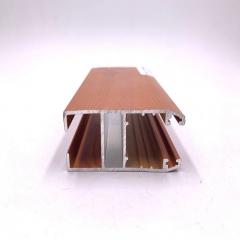
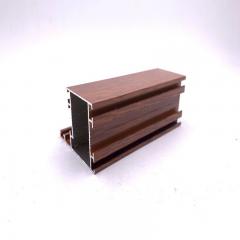
Wood-grain and decorative films use sublimation to transfer detailed patterns onto aluminum through heat and pressure. The result? Profiles that look nearly identical to real wood without the maintenance requirements—no staining, painting, or sealing needed.
The most efficient path from design concept to finished component runs through a single partner capable of handling every step—from die development through extrusion, fabrication, and finishing. Coordinating multiple vendors introduces delays, handling damage, and communication gaps that add cost without adding value.
What should you look for in a comprehensive processing partner? Consider capabilities like those offered by Shengxin Aluminium, whose facility houses 35 advanced extrusion presses ranging from 600T to 5500T capacity, complemented by CNC machining centers capable of precise cutting, drilling, and bending operations. With over 30 years of industry experience, their technical team provides end-to-end support from die development through mass production.
Integrated capabilities worth evaluating include:
Whether you need custom 6063 aluminum tubes, architectural window frames, or complex industrial profiles, working with a vertically integrated supplier simplifies logistics, reduces lead times, and ensures consistent quality across all processing stages. Factory-direct pricing eliminates middleman markups, while comprehensive capabilities mean your projects stay on schedule without coordination headaches.
With secondary processing and finishing options clarified, the final consideration becomes selecting the right extrusion partner—the decision that ultimately determines whether your project delivers the quality, value, and performance your application demands.
You've navigated the technical landscape of aluminum extrusion processing—from understanding what is an aluminum extrusion to evaluating alloys, die design, and finishing options. Now comes the decision that ties everything together: choosing the right manufacturing partner. This choice directly impacts whether your aluminum profile extrusion project delivers on time, within budget, and to specification.
What are aluminum extrusions worth if your supplier can't consistently produce them? The answer: frustration, delays, and compromised end products. Whether you're sourcing standard aluminium extrusion profiles or developing custom aluminum extrusion systems for specialized applications, your partner's capabilities determine your project's success.
Not all extrusion suppliers operate at the same level. According to industry experts, a qualified aluminum extrusion supplier offers much more than extruded profiles—they provide engineering collaboration, quality assurance, and integrated production capabilities that align with your business goals.
When evaluating potential partners, focus on these critical capability areas:
Technical Equipment and Capacity: Does the supplier have the press tonnage range to handle your profile specifications? Larger, more complex profiles require higher-tonnage presses—typically 2,000 tons or more. Look for facilities with multiple extrusion lines that can accommodate demand fluctuations without creating bottlenecks in your supply chain.
Die Expertise: According to supplier evaluation guidelines, the caliber of the finished product depends significantly on what the manufacturer uses to make it—and that includes tooling. Partners with in-house die design and manufacturing capabilities can optimize your profiles for both performance and manufacturability, often identifying cost-saving opportunities during the design phase.
Value-Added Processing: The extrusion manufacturing process rarely ends at the press. Top-tier suppliers deliver in-house surface finishing, CNC machining, cutting-to-length, and assembly services. These integrated capabilities reduce coordination costs and improve turnaround times compared to managing multiple vendors.
Quality Management Systems: Look for internationally recognized certifications like ISO 9001 or IATF 16949 (for automotive applications). According to quality management experts, these standards verify process control, traceability, and continuous improvement practices that minimize rejects and downstream production interruptions.
Before committing to any supplier, use this comprehensive evaluation framework to assess each candidate objectively:
According to supplier selection research, one of the most common mistakes is choosing based solely on price without verifying technical capability or quality consistency. Request physical samples to validate extrusion precision and surface finish. Ask for quality certificates, audit reports, or production documentation. If possible, conduct a factory audit—either on-site or virtual—to assess machinery, cleanliness, and workflow organization firsthand.
The importance of end-to-end support cannot be overstated. When design assistance, die development, extrusion, fabrication, and finishing all happen under one roof, you eliminate the coordination headaches and quality inconsistencies that plague multi-vendor supply chains. Your project moves faster, communication stays clearer, and accountability rests with a single partner.
For engineers and procurement specialists seeking a comprehensive manufacturing partner, Shengxin Aluminium exemplifies what integrated capabilities look like in practice. With over 30 years of industry experience and 35 advanced extrusion presses ranging from 600T to 5500T capacity, they handle everything from custom 6063 aluminum tubes to complex industrial profiles requiring precision machining and premium surface finishes.
Their facility combines extrusion capacity with state-of-the-art CNC machining centers for precise cutting, drilling, and bending operations. Surface treatment options include anodizing in custom colors like champagne and rose gold, powder coating, PVDF, and micro-arc oxidation for specialized applications. This vertical integration—from die development through mass production—delivers factory-direct pricing while ensuring consistent quality across every processing stage.
Whether you're developing architectural window frames, transportation components, or specialized industrial aluminum extrusion systems, working with a capable partner transforms raw aluminum billets into finished, ready-to-install components. The technical knowledge you've gained throughout this guide positions you to ask the right questions, evaluate capabilities effectively, and ultimately select a partner whose expertise matches your project requirements.
Ready to explore custom extrusion solutions for your next project? Visit Shengxin Aluminium's deep processing services to discover how end-to-end support from experienced engineers can bring your aluminum extrusion vision to reality.
Aluminum extrusion is a manufacturing technique where heated aluminum billets (typically 800-925°F) are forced through precision-engineered steel dies using hydraulic pressure up to 15,000 tons. The process includes billet preheating, die loading, ram pressure application, profile emergence, quenching, stretching for straightness, cutting to length, and artificial aging to achieve the final temper designation (T5 or T6). Each stage directly influences dimensional accuracy, surface quality, and mechanical properties of the finished profile.
Common aluminum extrusion problems include surface defects like die lines (from worn bearing surfaces), surface tearing (from excessive speed or temperature), and blistering (from moisture contamination). Dimensional issues include twisting from uneven metal flow, wall thickness variations from die misalignment, and shrinkage voids at extrusion tails. Prevention requires proper temperature control, die maintenance, billet quality verification, and systematic quality checkpoints throughout production.
In direct extrusion, the hydraulic ram pushes the heated billet toward a stationary die, creating friction between the billet and container walls. In indirect extrusion, the die moves into a stationary billet, virtually eliminating this friction. Indirect extrusion offers superior surface finish, better temperature control, and extended die life, but requires more expensive equipment and limits profile size. Direct extrusion remains dominant for its versatility, lower equipment costs, and ability to produce complex profiles.
The 6000 series dominates aluminum extrusion, with 6063 and 6061 being most common. Alloy 6063 (architectural aluminum) offers excellent surface finish and anodizing response, ideal for window frames and decorative applications. Alloy 6061 (structural aluminum) delivers higher tensile strength (38 ksi vs 30 ksi) for demanding structural, automotive, and aerospace applications. Selection depends on your priorities: choose 6063 for aesthetics and corrosion resistance, 6061 for strength and machinability.
Custom aluminum extrusion costs include die tooling ($400-$2,000+ depending on complexity), raw material (fluctuating with LME aluminum prices), processing charges, and secondary operations like anodizing ($1,200-$1,400 per metric ton) or CNC machining ($200-$300+ per metric ton). Die costs are fixed and amortize across order volume—a $2,000 die adds $0.20 per unit at 10,000 pieces but $2.00 at 1,000 pieces. Working with vertically integrated suppliers offering factory-direct pricing reduces coordination costs.



 خدمة الإنترنت
 0086 136 3563 2360
 sales@sxalu.com
 +86 136 3563 2360
 العربية
 English
 français
 Deutsch
 русский
 español
 português
 ไทย
ไทย Việt
Việt Українська