
You're here because you need a straight answer. So let's skip the fluff and get right to it.
The current aluminum extrusion cost per pound typically ranges from $1.35 to $3.65, with standard architectural profiles sitting at the lower end and custom or specialty extrusions pushing toward the higher range.
If that range seems frustratingly wide, you're not alone. Most buyers searching for pricing information encounter vague estimates or hidden costs that only surface after requesting quotes. Understanding why this spectrum exists—and where your specific project falls within it—can save you thousands of dollars and countless headaches.
When you convert the latest market data, standard aluminum extrusion pricing breaks down like this:
These figures reflect 2024–2025 market conditions, where global aluminum ingot prices hover around $2.52–$2.53 per kilogram on the London Metal Exchange (LME). Raw material costs alone account for 60–75% of your final per-pound price, which explains why market volatility directly impacts what you pay.
Here's what many vendors won't tell you upfront: the cheap aluminum quote you receive might only cover base metal costs. Surface treatments, tooling amortization, and secondary operations often appear as surprise line items later in the process.
Imagine two buyers both ordering aluminum extrusion. One pays $1.50 per pound while another pays $3.50 for seemingly similar material. What accounts for this 130% difference?
The answer lies in a complex web of interconnected factors:
Each of these elements layers additional cost onto the base aluminum price. A cheap aluminum extrusion quote that ignores finishing or tooling fees isn't actually cheaper—it's just incomplete.
Throughout this article, you'll discover exactly how each factor influences your bottom line. We'll break down the core cost components, compare alloy pricing, expose hidden costs in vendor quotes, and reveal strategies that procurement professionals use to optimize their custom aluminum extrusions spending. By the end, you'll have the knowledge to evaluate quotes accurately and negotiate from a position of strength.
Ever wonder why two extrusion suppliers quote wildly different prices for what appears to be the same product? The secret lies in understanding the building blocks that make up every per-pound price. Once you grasp these fundamentals, you'll never look at a quote the same way again.
Think of aluminum extrusion pricing like a layer cake. Each layer adds cost, and vendors structure their quotes differently depending on which layers they include or exclude. Let's peel back each one so you know exactly what you're paying for.
The foundation of every extrusion price starts with the base metal cost. This isn't a number your vendor invents—it's derived from global commodity markets that anyone can track.
The London Metal Exchange (LME) serves as the primary benchmark for aluminum pricing worldwide. As of late 2025, the LME aluminum price hovers around $2,874.50 per metric ton, which translates to approximately $1.30 per pound. However, this number represents only the starting point.
Here's where it gets interesting. If you're buying in the United States, you'll encounter something called the Midwest Premium—a regional surcharge that reflects domestic supply conditions, transportation costs, and warehousing expenses. This premium currently adds roughly $0.77–$0.81 per pound, pushing the effective raw material cost to approximately $2.10 per pound before any manufacturing even begins.
Regional pricing differences can significantly impact your bottom line:
| Region | Base Price (USD/lb) | Regional Premium (USD/lb) | Effective Price (USD/lb) |
|---|---|---|---|
| Global Average (LME) | $1.30 | — | $1.30 |
| U.S. Midwest | $1.30 | $0.80 | $2.10 |
| Europe | $1.33 | $0.55 | $1.88 |
| China (SHFE) | $1.36 | — | $1.36 |
Smart buyers monitor these indices to understand when their quotes reflect genuine market conditions versus inflated margins. You can check LME prices daily and hold your vendors accountable when commodity costs drop but their quotes don't follow.
Raw aluminum doesn't transform itself into precise extrusion parts. The conversion process—heating billets to 800–900°F, forcing metal through hardened steel dies at tremendous pressure, and cooling profiles to exact specifications—requires significant capital equipment, skilled labor, and energy consumption.
This manufacturing overhead, often called the conversion premium, typically adds $0.50–$1.50 per pound depending on profile complexity and production volume. Extruders must recoup their investments in press equipment, maintain climate-controlled facilities, and employ trained technicians who ensure dimensional accuracy.
Every aluminum extrusion quote you receive incorporates these five core cost components:
Understanding aluminium extrusion tooling costs deserves special attention. Custom extrusion dies typically range from $400 to $2,000 depending on profile complexity and press size requirements. For standard architectural applications, expect tooling between $400–$1,000. Large-format dies for 2,000–4,000 ton presses can reach $2,000 or higher.
Here's what vendors rarely explain upfront: die costs become virtually invisible at high volumes but dominate your per-pound price at low quantities. A $1,500 die spread across 10,000 pounds adds just $0.15 per pound. That same die on a 500-pound order adds $3.00 per pound—transforming an economical project into an expensive one.
The aluminium extrusion tooling decision essentially determines whether custom profiles make financial sense for your application. Many buyers discover that selecting existing standard profiles eliminates this cost entirely while still meeting their functional requirements.
With these foundational cost elements clear, you're now equipped to dissect any quote you receive. But alloy selection introduces another layer of complexity that can shift your per-pound cost by 20% or more—a factor we'll examine next.
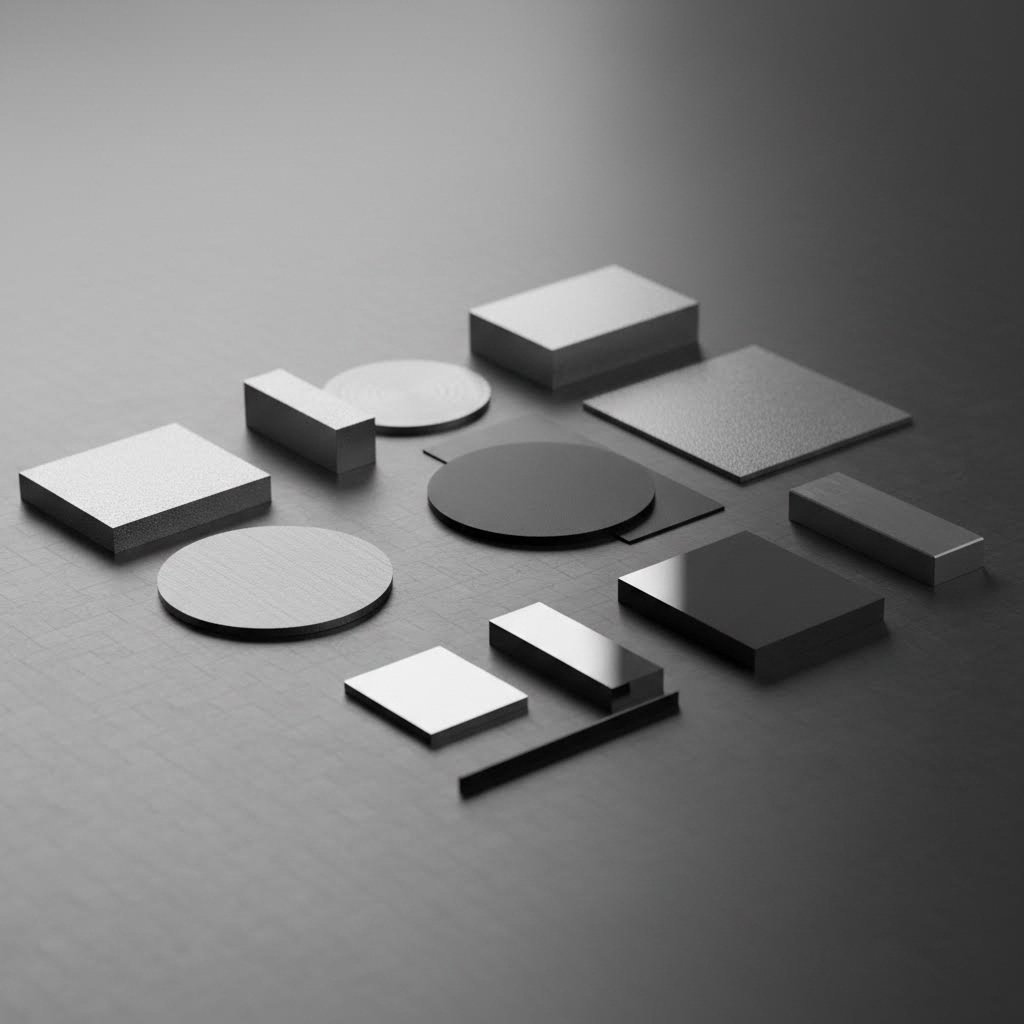
You've probably seen alloy designations like 6061 or 6063 scattered across spec sheets and quotes. But do you actually understand how these four-digit numbers impact your wallet? The difference between choosing the right alloy versus defaulting to whatever a vendor recommends can mean a 15–40% swing in your per-pound cost.
Here's the reality most buyers miss: alloy selection isn't just a technical decision—it's a financial one. The aluminum 1000 series (commercially pure aluminum) behaves completely differently than 6000 or 7000 series alloys, and each carries distinct pricing implications that ripple through your entire project budget.
When it comes to aluminum extrusion, two alloys dominate the conversation: 6063 and 6061. Understanding their cost differences could save you thousands on your next order.
6063 aluminum is the undisputed workhorse of the extrusion industry. Often called "architectural aluminum," this alloy offers excellent extrudability, meaning it flows smoothly through aluminium extrusion dies with minimal wear on tooling. This translates directly to lower manufacturing costs—and lower prices for you.
According to industry pricing data, 6063 aluminum typically costs between $3.20–$4.00 per kilogram ($1.45–$1.81 per pound) for raw material, positioning it at the economical end of the spectrum. Its smooth surface finish and high corrosion resistance make it ideal for window frames, curtain walls, and decorative trim where appearance matters.
6061 aluminum steps up the strength game. With higher concentrations of magnesium and copper in its composition, 6061 delivers superior mechanical properties—roughly 40% stronger than 6063 in typical temper conditions. However, this enhanced performance comes at a premium.
Raw material costs for 6061 run approximately $3.50–$4.50 per kilogram ($1.59–$2.04 per pound), representing a 10–15% increase over 6063. But the cost difference extends beyond material pricing. The harder alloy creates more wear on aluminium extrusion dies, potentially shortening die life and increasing your amortized tooling costs over time.
Here's the question every buyer should ask: does my application actually require 6061's extra strength? For structural frames, load-bearing components, and machined parts, the answer is often yes. For decorative profiles, standard enclosures, and architectural applications, 6063 typically delivers everything you need at a lower price point.
Beyond the 6000 series, specialty alloys occupy the premium tier of aluminum pricing. The 7075 alloy—often called "aerospace aluminum"—exemplifies the quality versus cost tradeoff that defines material selection.
According to aerospace industry sources, specialty alloys with elements like copper, chromium, titanium, and magnesium can push costs into the $9–$11 per pound range. That's roughly 5–6 times the cost of standard 6063 extrusions. These prices reflect not just the expensive alloying elements, but also the specialized processes, certifications, and testing required for aerospace-grade materials.
The 1 aluminum series (commercially pure aluminum at 99%+ purity) occupies a different niche. While not used for structural extrusions, understanding its existence helps contextualize the alloy spectrum. Each step toward higher-performance alloys adds cost through material composition, processing complexity, and quality control requirements.
| Alloy Type | Typical Applications | Relative Cost Factor | Key Properties |
|---|---|---|---|
| 6063-T5/T6 | Window frames, curtain walls, decorative trim, heat sinks | 1.0x (baseline) | Excellent extrudability, smooth finish, high corrosion resistance |
| 6061-T6 | Structural frames, machine parts, automotive components | 1.1–1.2x | Higher strength, good machinability, weldable |
| 5052 | Marine applications, outdoor cladding, chemical tanks | 1.15–1.25x | Very high corrosion resistance, excellent formability |
| 7075-T6 | Aerospace structures, high-stress components, military applications | 4.0–6.0x | Very high strength, limited formability, moderate corrosion resistance |
| 3003 | Decorative panels, roofing, non-structural applications | 0.85–0.95x | Excellent formability, low strength, economical |
So when does paying premium prices make sense? Consider these scenarios:
For the vast majority of commercial, architectural, and industrial applications, however, 6063 remains the smart choice. It sits at the lower end of the per-pound price spectrum while delivering the corrosion resistance, surface quality, and structural integrity that most projects require.
The takeaway? Don't let vendors upsell you on premium alloys unless your engineering requirements genuinely demand them. A well-designed 6063 profile often outperforms an over-engineered 6061 alternative—at 10–15% lower cost.
With alloy selection clarified, another major cost driver awaits: the decision between standard catalog profiles and custom extrusions. This choice can either eliminate tooling costs entirely or add significant upfront investment to your project.
Here's a scenario that plays out constantly in procurement offices: a buyer finds the perfect aluminum extrusion profile in a catalog, only to discover their application needs slightly different aluminum extrusion dimensions. Should they modify their design to fit an existing profile, or invest in custom extrusion tooling?
This decision represents one of the most significant cost inflection points in any extrusion project. Choose wisely, and you'll optimize your per-pound economics. Choose poorly, and you could pay 30-50% more than necessary for your finished parts.
Standard catalog extrusions—like the popular 1010 aluminum extrusion and 80 20 10 series profiles used in modular framing systems—offer an immediate advantage: zero tooling investment. These profiles exist because manufacturers have already absorbed die development costs across millions of pounds of production. You simply select from established aluminum extrusion dimensions, specify your length, and place your order.
The economics are straightforward. When you order standard profiles, your per-pound price reflects only material, conversion, and finishing costs. There's no die amortization to calculate because the tooling already exists and has long since paid for itself.
Custom aluminium extrusion flips this equation entirely. According to industry data from Gabrian International, aluminum extrusion tooling costs typically break down as follows:
Here's what makes this decision consequential: these tooling costs must be recovered somewhere. Either you pay them upfront as a separate line item, or they're buried in your per-pound pricing across your order volume.
Consider the contrast with rolled steel shapes, where production tooling can easily exceed $30,000 with lead times of three months. The Aluminum Extruders Council notes that extrusion tooling offers among the lowest costs and fastest lead times of any metal forming process—typically 2-3 weeks for die production by production within a week of sample approval.
Want to know the real cost of custom extrusion? You need to think beyond the quoted per-pound price and calculate your total landed cost including tooling amortization.
Imagine you're evaluating a custom profile for an equipment enclosure. The extruder quotes $2.25 per pound with a $1,500 die charge. Your first production run calls for 2,000 pounds. Here's how the math works:
| Order Volume | Die Cost | Amortized Die Cost/lb | Base Price/lb | True Cost/lb |
|---|---|---|---|---|
| 500 lbs | $1,500 | $3.00 | $2.25 | $5.25 |
| 1,000 lbs | $1,500 | $1.50 | $2.25 | $3.75 |
| 2,000 lbs | $1,500 | $0.75 | $2.25 | $3.00 |
| 5,000 lbs | $1,500 | $0.30 | $2.25 | $2.55 |
| 10,000 lbs | $1,500 | $0.15 | $2.25 | $2.40 |
Notice how dramatically the economics shift? At 500 pounds, tooling more than doubles your effective per-pound cost. At 10,000 pounds, it becomes nearly invisible. This is why volume projections are critical when evaluating custom extrusion versus standard alternatives.
Some manufacturers offer tooling cost refunds if you purchase a stipulated amount within 2 years. Gabrian notes that most manufacturers don't charge for replacement tools after their useful life if orders continue—a significant benefit for ongoing production relationships.
When deciding between standard 1010 extrusion profiles and custom alternatives, follow this decision framework:
Minimum order quantities add another layer to this calculation. Most extruders require minimum orders of 1,000 to 2,000 pounds per shape. This threshold exists because press setup, die installation, and process qualification consume fixed time regardless of order size. Smaller orders don't generate enough margin to justify the overhead.
For prototyping or small-batch needs, this minimum can present challenges. Solutions include working with extruders operating smaller-diameter presses (which use less expensive tooling and smaller billets per push) or accepting a minimum charge alternative. Early conversations with your aluminum extrusion tooling supplier can often yield creative solutions that meet both parties' needs.
The bottom line? Custom aluminium extrusion makes financial sense when your volume justifies the tooling investment, your design requirements genuinely cannot be met by standard profiles, or the performance advantages—such as integrated features that eliminate assembly steps—offset the additional cost.
But tooling costs represent just one piece of the pricing puzzle. Surface finishing and secondary operations can easily double your base extrusion cost, adding layers of expense that many buyers underestimate.
Picture this: you've secured a competitive quote for mill-finish aluminum extrusion at $1.80 per pound. Your budget looks solid. Then reality hits—your application requires anodizing, precision drilling, and custom cutting. Suddenly that $1.80 per pound transforms into $3.50 or more. What happened?
Surface finishing and secondary operations represent the hidden multipliers in aluminum extrusion pricing. These post-extrusion processes can account for 10–30% of your total project cost—or significantly more for complex finishing requirements. Understanding these additions upfront prevents budget surprises and enables smarter specification decisions.
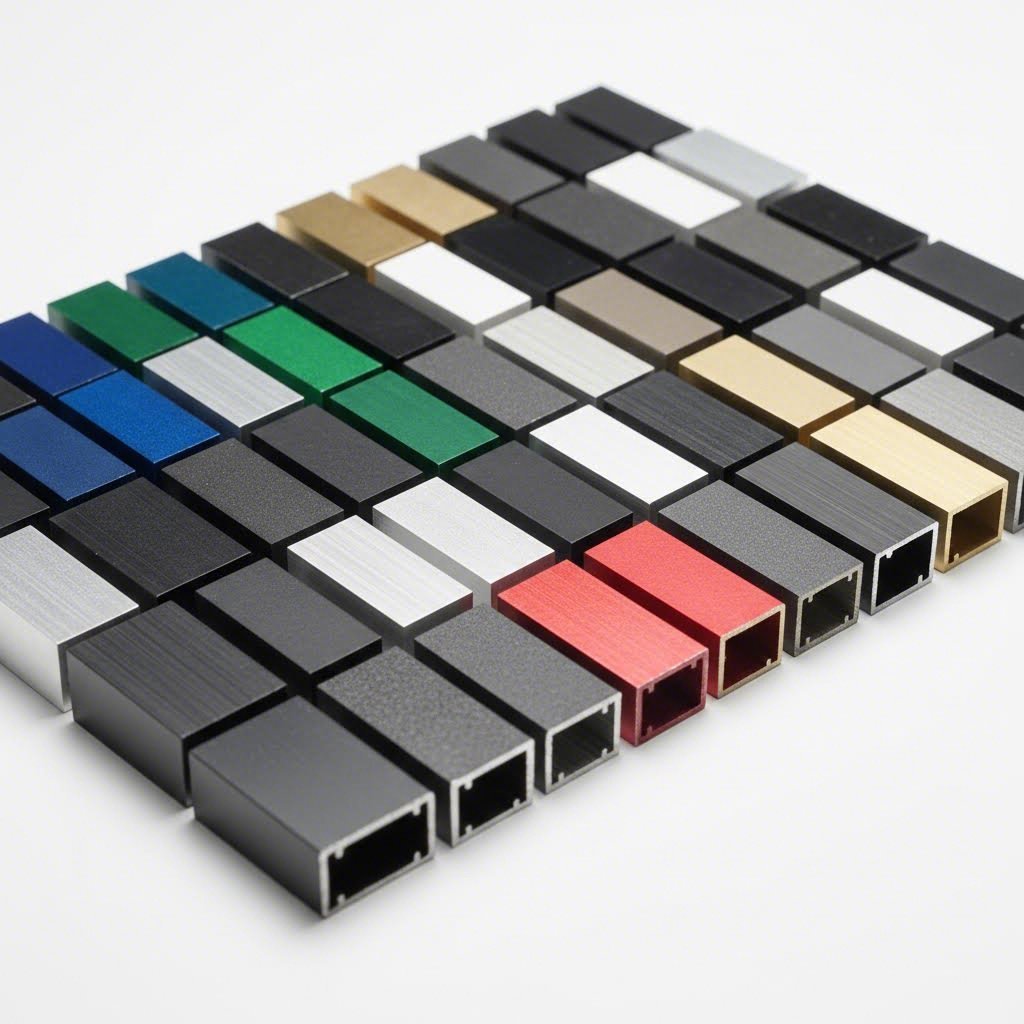
Raw aluminum extrusions leave the press with a smooth, silver-gray appearance called mill finish. While perfectly functional for concealed applications, most visible or exposed components require protective or decorative treatments. Each finishing option carries distinct cost implications.
Anodizing remains the most popular surface treatment for aluminum extrusions. This electrochemical process thickens the naturally-occurring oxide layer on aluminum's surface, creating enhanced corrosion resistance and enabling dye absorption for color options. According to industry pricing data, anodizing typically adds $1,200 to $1,400 per metric ton—roughly $0.54–$0.64 per pound—depending on profile complexity and coating thickness.
Powder coating delivers exceptional durability and color flexibility. Applied electrostatically and cured under heat, powder coatings create a hard, uniform finish resistant to chipping, scratching, and fading. Cost additions fall in a similar range to anodizing, with the added advantage of virtually unlimited color matching. For applications requiring both protection and specific brand colors, powder coating often proves the most cost-effective solution.
PVDF (polyvinylidene fluoride) coatings—commonly known by brand names like Kynar—occupy the premium tier of architectural finishes. These fluoropolymer coatings deliver exceptional UV resistance and color stability over decades of outdoor exposure. However, this performance comes at a premium, with costs typically 40–60% higher than standard powder coating.
Alodine (chromate conversion coating) offers a budget-friendly protective option at approximately $800 per metric ton ($0.36 per pound). While less durable than anodizing or powder coating, this chemical treatment provides adequate corrosion resistance for many industrial applications and serves as an excellent base for subsequent painting.
| Finish Type | Typical Cost Addition | Durability Rating | Best Applications |
|---|---|---|---|
| Mill Finish (baseline) | $0.00/lb | Low–Medium | Concealed components, interior frames, cost-sensitive projects |
| Clear Anodize | $0.54–$0.64/lb | High | Architectural trim, electronics enclosures, decorative applications |
| Color Anodize | $0.60–$0.75/lb | High | Consumer products, signage, premium housings |
| Powder Coating | $0.55–$0.70/lb | Very High | Outdoor furniture, window frames, industrial equipment |
| PVDF/Kynar Coating | $0.90–$1.20/lb | Very High | Curtain walls, exterior cladding, long-term outdoor exposure |
| Alodine/Chromate | $0.36–$0.45/lb | Medium | Military/aerospace primer, industrial parts, paint preparation |
| Brushed/Polished Finish | $0.80–$1.50/lb | Medium | Decorative panels, retail displays, architectural accents |
Mechanical finishes like brushing or polishing deserve special mention. These labor-intensive processes create attractive surface textures but add substantial cost—often $0.80–$1.50 per pound depending on profile geometry and required uniformity. For cosmetic perfection, budget accordingly.
Beyond surface treatments, most aluminum extrusions require fabrication before they're ready for assembly. These secondary operations transform raw profiles into finished components—and each step adds cost.
Precision cutting and sawing represents the most common secondary operation. While basic cut-to-length services add minimal cost, tight-tolerance cuts or angled cuts require specialized equipment and add processing time. Complex cutting patterns can add $0.15–$0.30 per pound to your final price.
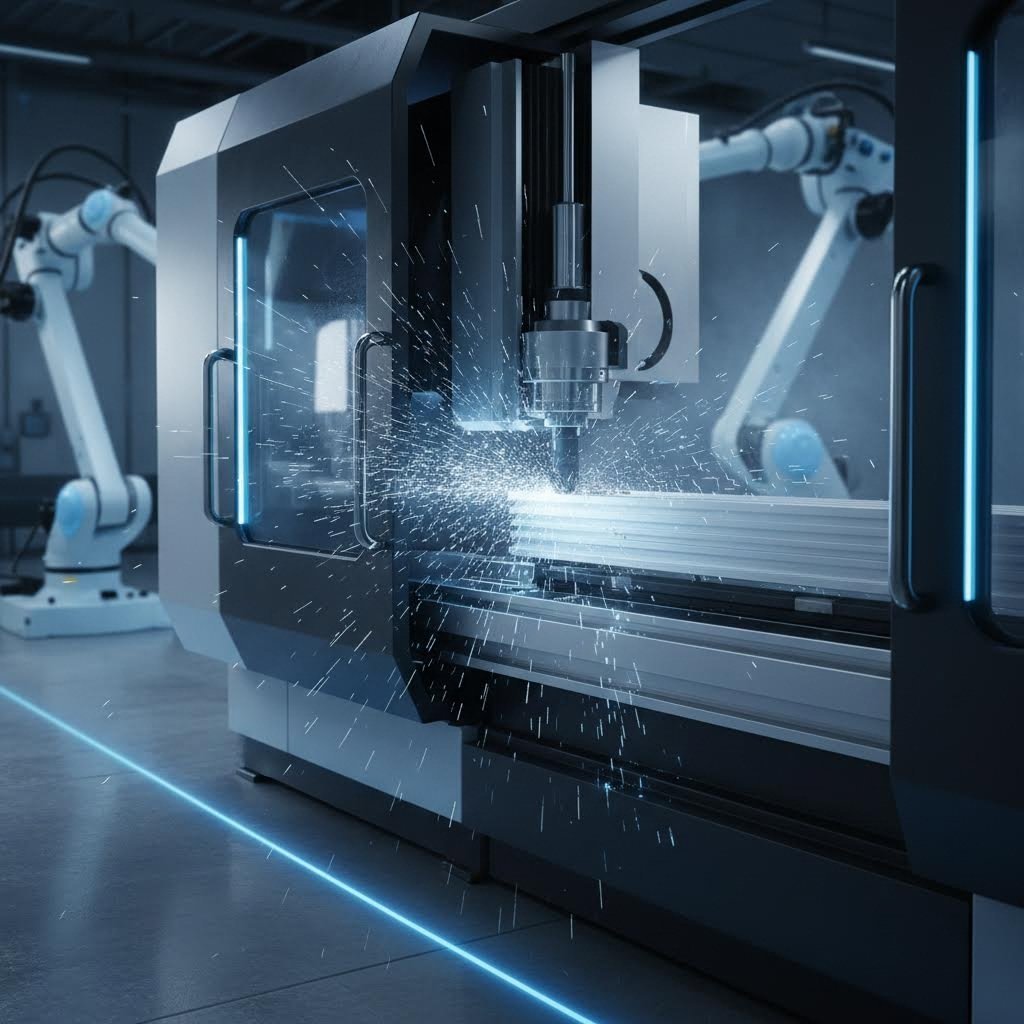
CNC machining enables holes, slots, pockets, and features that cannot be achieved through extrusion alone. According to Gabrian's industry analysis, simple drilling operations range from $200–$300 per metric ton ($0.09–$0.14 per pound). However, complex 5-axis machining or tight-tolerance drilling can significantly exceed these figures, with additional tooling charges for specialized fixtures.
Bending and forming transforms straight extrusions into curved or angled profiles. This process requires specialized equipment and careful process control to prevent cracking or surface damage. Costs vary widely based on bend complexity, radius requirements, and material thickness.
Here's a practical example of how secondary operations compound costs:
When finishing requires surface preparation—such as cleaning oxide layers or removing contaminants from prior processing—additional steps enter the picture. While understanding how to remove rust from metal applies more to steel than aluminum, similar surface preparation principles affect finishing costs. Contaminated or damaged surfaces require pre-treatment before quality finishes can be applied, adding both time and expense.
Cleaning methods like dry ice blasting have emerged as effective surface preparation techniques. Unlike abrasive methods, a dry ice blasting machine removes contaminants without damaging the underlying aluminum surface—an important consideration when preparing profiles for precision anodizing. Some fabricators also use penetrating oil or specialized solvents to remove stubborn residues, though these require thorough cleaning before finishing can proceed.
The key insight? Your per-pound cost calculation must incorporate every finishing and fabrication step your application requires. A vendor quoting only base extrusion pricing—without accounting for the anodizing, machining, and cutting your drawings specify—isn't providing a realistic project cost.
Selecting a manufacturer with vertically integrated capabilities minimizes these cost additions. Facilities combining extrusion, fabrication, and finishing under one roof eliminate inter-vendor logistics, reduce handling damage, and typically offer better per-pound economics than coordinating operations across multiple suppliers.
With finishing costs now transparent, another variable demands attention: where your extrusions are manufactured. Regional pricing differences and sourcing strategies can shift your per-pound cost by 20% or more—a topic that merits careful analysis.
You've done your homework on alloys, tooling, and finishing costs. But here's a question that could swing your project budget by 20% or more: where should you actually buy aluminum extrusion?
The sourcing decision has grown increasingly complex. A decade ago, the calculus was simple—whoever quoted the lowest per-pound price typically won the business. Today? That approach can backfire spectacularly. With evolving tariff structures, supply chain disruptions, and compliance requirements reshaping the landscape, smart buyers now evaluate total landed cost rather than chasing the cheapest quote.
Let's start with the numbers everyone wants to see. Overseas manufacturers—particularly those in China—often quote per-pound prices 15–30% below domestic suppliers. Sounds like easy savings, right?
Not so fast. According to Monarch Metal's 2025 sourcing analysis, the cheapest quote rarely translates to the cheapest project. The sourcing decision now hinges on lead time, compliance risk, quality control, and total landed cost—not just the line item on a quote sheet.
Here's what each sourcing region typically offers:
Domestic (U.S.) Suppliers:
Asian Suppliers (China, Southeast Asia):
European Suppliers:
Where you choose to buy aluminum extrusion depends heavily on your specific project requirements. For federally funded infrastructure projects or applications requiring strict documentation, domestic sourcing isn't just faster—it's often mandatory. Conversely, wholesale aluminum extrusions for high-volume, price-sensitive applications may still benefit from established overseas manufacturers with proven quality systems.
Ever wondered why that attractive overseas quote didn't deliver the savings you expected? The answer lies in Total Landed Cost (TLC)—a calculation that captures every expense required to get usable parts into your facility.
According to MIT supply chain research cited by EVS Metal, offshore sourcing projects consistently underestimate hidden costs by 30–60% once risk, logistics, and rework are factored in. Those numbers transform a seemingly attractive 20% savings into actual losses.
The true TLC formula looks like this:
TLC = Ex-works price + Freight + Duties + Tariffs + Compliance + Carrying Cost + Risk Buffer
Let's break down where overseas sourcing costs accumulate:
Transportation and Logistics:
Duties and Tariffs:
Carrying and Opportunity Costs:
Quality and Coordination Overhead:
If you're wondering where to buy aluminum extrusion near me, the answer often comes down to project specifics. Distributors like McMaster-Carr offer convenience for small quantities of standard profiles—their mcmaster carr aluminum extrusion catalog provides quick access to common shapes with fast shipping. Similarly, specialty suppliers like Tnutz focus on modular framing components, making tnutz aluminum extrusion a popular choice for automation and workstation applications.
However, for custom extrusions or high-volume production, these distributors typically don't offer the economies of scale that direct manufacturer relationships provide. The markup for convenience can exceed 40–60% compared to factory-direct pricing.
Here's the bottom line: the lowest per-pound quote is not always the best value when total landed cost and quality assurance are considered. According to AL Circle's importing guide, successful international sourcing requires thorough supplier vetting, quality inspections, and accurate landed cost calculations that account for freight, duties, and potential rework.
Many sophisticated buyers now run dual-source models—using domestic suppliers for speed-critical, low-volume, or compliance-sensitive work while leveraging established overseas manufacturers for steady, high-volume programs where the extended pipeline is manageable. This approach balances cost optimization with supply chain resilience.
The smartest sourcing strategy recognizes that transparent pricing from established manufacturers—whether domestic or international—delivers better long-term value than chasing the lowest initial quote. When a supplier clearly itemizes material costs, conversion fees, tooling amortization, and finishing charges, you gain the visibility needed to make informed decisions and avoid budget-busting surprises.
Understanding regional pricing dynamics prepares you for the next critical step: evaluating vendor quotes and identifying the red flags that signal hidden costs ahead.

You've requested quotes from three different aluminum extrusion suppliers. One comes in at $2.10 per pound, another at $2.65, and the third at $3.15. Which one offers the best value? If you answered the cheapest option, you might be walking into a costly trap.
Here's what experienced procurement professionals know: the lowest per-pound quote often signals corners being cut—whether through missing line items, quality compromises, or terms that shift risk onto you. Evaluating vendor quotes requires looking beyond the headline number to understand what you're actually getting for your money.
A complete aluminum extrusion quote should provide transparency across every cost component we've discussed. Unfortunately, many suppliers structure quotes to appear competitive while burying additional charges in footnotes or omitting them entirely until you're committed.
Before comparing any quotes, ensure each one addresses these fundamental elements:
Beyond these core elements, look for documentation of alloy certification, tolerance specifications, and lead time commitments. Vague language around any of these points often signals problems ahead.
After reviewing hundreds of aluminum extrusion quotes, certain patterns emerge that reliably predict budget overruns or quality issues. Watch for these warning signs:
"Subject to Availability" Clauses: This language gives suppliers flexibility to fill other orders first—leaving your production schedule hostage to their priorities. According to purchasing experts, this represents "the most common bait-and-switch" in metal procurement. Always request confirmed inventory commitment or production slot reservation.
Quote Validity That Doesn't Match Reality: A quote expiring in 24 hours when die production takes 2–3 weeks creates confusion. If you can't lock in pricing through your internal approval process and production start, the quoted price becomes meaningless. Tie quote validity to realistic PO issuance windows.
Vague Freight Terms: Phrases like "plus applicable charges" or "freight TBD" signal surprise costs ahead. Some quotes exclude fuel surcharges, accessorial fees, or liftgate charges that can add significant per-pound cost. Demand all-in delivered pricing before comparing options.
Missing Specification Details: A quote that doesn't explicitly confirm alloy, temper, tolerance class, and surface finish isn't a complete quote. You might receive cheaper aluminium extrusion that technically meets the quote—but not your actual requirements. Get every specification confirmed in writing.
No Quote Documentation: Verbal pricing speeds things up initially but provides no protection when problems arise. Always get quotes in writing with all terms clearly defined, including specifications, delivery terms, and conditions.
If you've explored suppliers like Misumi for extruded aluminum components or compared tnutz extrusion pricing for modular framing, you've likely noticed significant price variation even for standardized profiles. The differences often trace back to these quote structure variations rather than genuine cost differences.
To normalize quotes for true apples-to-apples comparison, create a standardized spreadsheet that breaks down:
Only when all these elements are visible can you determine which quote actually delivers the best value. The supplier quoting $2.65 per pound with everything included often beats the $2.10 quote that excludes finishing, adds tooling separately, and ships FOB origin.
Remember this principle: in aluminum extrusion pricing, you rarely get more than you pay for. A quote significantly below market rates typically indicates missing scope, quality compromises, or terms that create hidden costs down the road. The goal isn't finding the cheapest quote—it's finding the most complete and transparent quote that delivers your required specifications at a fair price.
With quote evaluation skills sharpened, you're ready to explore proactive strategies for optimizing your per-pound costs without sacrificing the quality your application demands.
You've learned how to decode quotes and spot hidden costs. Now comes the question every budget-conscious buyer asks: how do I actually reduce my per-pound cost without compromising quality?
The answer isn't finding a cheaper supplier—it's making smarter decisions across design, ordering, and partnership selection. Understanding how aluminum extrusion is made reveals multiple leverage points where informed choices translate directly to cost savings. Let's explore the tactics that procurement professionals and design engineers use to extrude aluminum more economically.
Volume remains the single most powerful lever for reducing aluminum extrusion costs. The economics are straightforward: fixed costs like die setup, press changeover, and quality verification get spread across more pounds when order quantities increase.
But here's what many buyers miss—you don't necessarily need massive individual orders to capture volume benefits. Consider these approaches:
According to Howard Precision Metals, custom length ordering represents another volume optimization tactic. Ordering 1010 extruded aluminum or aluminum extruded rail profiles in lengths matched precisely to your cut requirements—rather than accepting standard 144-inch master lengths—eliminates scrap and reduces your effective per-pound cost. Their analysis shows that custom lengths starting at 72 inches can yield 10-15% material savings compared to cutting standard lengths with inevitable waste.
Your design choices impact manufacturing costs before you ever request a quote. Engineers who understand extrusion constraints can achieve significant per-pound savings through thoughtful profile specification.
According to American Douglas Metals' design guide, raw material expenses constitute approximately 90% of basic extrusion costs. This means design decisions affecting material usage—wall thickness, profile complexity, and dimensional specifications—directly drive your bottom line.
The most significant cost optimization often comes from partnering with full-service manufacturers who offer capabilities spanning die development through finishing. When a single supplier handles extrusion, surface treatment, and fabrication, you eliminate inter-vendor logistics, reduce handling damage, and benefit from streamlined communication.
Consider the difference: coordinating separate vendors for extrusion, anodizing, and CNC machining requires three sets of quality approvals, three shipping cycles, and three potential points of failure. A vertically integrated manufacturer delivers your finished custom aluminium extrusions ready for assembly—often at lower total cost despite potentially higher per-pound rates.
Manufacturers with comprehensive capabilities can also provide valuable engineering input early in your design process. Experienced extrusion engineers identify cost drivers before tooling is cut, suggesting modifications that reduce manufacturing difficulty without compromising performance. This collaborative approach—from die development through mass production—typically delivers better outcomes than adversarial quoting across multiple suppliers.
For projects requiring precision cutting, drilling, bending, or complex surface treatments, partnering with a manufacturer offering end-to-end service streamlines both costs and timelines. Shengxin Aluminium's custom extrusion and processing services exemplify this integrated approach—with 35 extrusion presses ranging from 600T to 5500T capacity, plus CNC machining centers and comprehensive finishing options including anodizing, powder coating, and PVDF treatments. This factory-direct model eliminates intermediary markups while ensuring consistent quality across all processing stages.
The bottom line? Optimizing aluminum extrusion cost per pound requires looking beyond quoted prices to evaluate total project economics. Volume consolidation, design optimization, and strategic partnerships each contribute to reducing your true per-pound cost—without sacrificing the quality your application demands.
With these optimization strategies in your toolkit, you're prepared to make informed decisions that balance cost efficiency with performance requirements. The final step is synthesizing everything into a clear decision framework for your specific project needs.
You've now journeyed through the complete landscape of aluminum extrusion pricing—from raw commodity costs to finishing operations, from alloy selection to regional sourcing strategies. The question remaining is straightforward: how do you apply this knowledge to your specific project?
The answer depends on where you fall along the volume and complexity spectrum. A buyer ordering 500 pounds of standard architectural profiles faces entirely different economics than someone commissioning 50,000 pounds of custom aluminum extruders with precision machining requirements. Let's build a decision framework that addresses both scenarios—and everything in between.
Think of your extrusion project through three lenses: volume, complexity, and timeline. Each combination points toward different sourcing strategies and partnership approaches.
Low Volume (Under 2,000 lbs) + Standard Profiles:
Low Volume + Custom Requirements:
Medium Volume (2,000-10,000 lbs):
High Volume (10,000+ lbs):
Understanding the full cost structure—from base metal to delivered parts—empowers better vendor negotiations and accurate project budgeting. The buyer who grasps every layer of extrusion pricing holds the leverage to demand transparency and fair value.
Here's the synthesis of everything we've covered:
| Cost Factor | Typical Impact | Your Control Level |
|---|---|---|
| Raw aluminum (LME + regional premium) | 40-60% of base cost | Low—track markets for timing |
| Alloy selection (6063 vs 6061 vs specialty) | 10-400% variation | High—specify appropriately |
| Tooling/die costs | $0.15-$3.00/lb depending on volume | High—volume planning critical |
| Profile complexity | $0.25-$1.00/lb for conversion premium | Medium—design optimization helps |
| Surface finishing | $0.35-$1.50/lb addition | High—specify only what's needed |
| Secondary operations | $0.15-$0.50/lb per operation | Medium—integrate features in extrusion |
| Sourcing region | 15-30% variation plus tariff exposure | High—evaluate total landed cost |
Armed with this knowledge, you're ready to approach your next extrusion project with clarity. Here's your action plan:
For projects requiring extruded aluminium rails, precision-cut components, or complex machining, manufacturer capabilities matter as much as quoted prices. A partner with 30+ years of experience understands how to optimize your die for aluminium extrusion performance, select appropriate alloys for your application, and deliver finished parts ready for assembly.
Shengxin Aluminium's custom extrusion and deep processing services exemplify this integrated approach. With CNC machining centers capable of precision cutting, drilling, and bending—plus comprehensive surface treatments including anodizing, powder coating, and PVDF—their factory-direct model delivers complete solutions for buyers seeking both quality and value. Their 35 extrusion presses and decades of technical expertise enable support from initial design consultation through volume production.
The aluminum extrusion cost per pound you ultimately pay reflects every decision discussed in this article—from alloy selection to finishing specifications, from order volume to manufacturing partnership. Buyers who understand these dynamics don't just get better prices; they get better outcomes. Projects stay on budget, timelines hold, and finished parts perform as intended.
You now possess the knowledge that separates informed buyers from those who simply accept whatever vendors quote. Use it wisely, and your next extrusion project will deliver exactly the value you expect—no surprises, no hidden costs, and no compromises on quality.
As of 2025, aluminum extrusion typically costs between $1.35 and $3.65 per pound. Basic mill-finish profiles start around $1.35-$1.80/lb, standard architectural extrusions run $1.80-$2.50/lb, and custom extrusions with finishing can reach $2.50-$3.65/lb or more. The wide range reflects variables including alloy selection, profile complexity, order volume, surface treatments, and sourcing region. Raw aluminum commodity prices account for 40-60% of the final cost, with the remainder covering extrusion conversion, tooling amortization, finishing, and logistics.
Raw primary aluminum costs approximately $1.30 per pound based on London Metal Exchange (LME) pricing. However, buyers in the United States face an additional Midwest Premium of roughly $0.77-$0.81/lb, bringing the effective raw material cost to about $2.10/lb before any manufacturing. This base metal price represents just the starting point—extrusion processing, alloy premiums, surface treatments, and fabrication add to the final per-pound cost. Scrap aluminum prices range from $0.45 to over $1.20/lb depending on grade and market conditions.
Aluminum extrusion scrap prices fluctuate based on market conditions, typically ranging from $0.70 to $0.90 per pound in the U.S. market. The 6063 alloy, commonly used in architectural applications, commands competitive scrap values due to its widespread use and recyclability. International markets show varying prices—Indian markets report approximately $136,000 per metric ton for 6063 extrusion scrap. These scrap values reflect aluminum's high recyclability, with recycled aluminum requiring only 5% of the energy needed to produce primary metal.
Custom aluminum extrusion dies typically range from $400 to $5,000+ depending on profile complexity and size. Standard architectural profiles with 7-10 inch circle sizes cost $400-$1,000 for solid shapes, while hollow profiles run $1,200-$4,000. Large-format dies requiring 12-14 inch circle sizes start at $2,000+. The tooling cost significantly impacts per-pound economics at low volumes—a $1,500 die adds $3.00/lb at 500 pounds but only $0.15/lb at 10,000 pounds. Many manufacturers offer die cost refunds when customers purchase stipulated quantities within 2 years.
The answer depends on total landed cost rather than quoted per-pound price. Overseas manufacturers often quote 15-30% below domestic suppliers, but hidden costs frequently erode savings. International sourcing adds ocean freight (32-52 days), Section 232 tariffs (50-100% on certain imports), customs fees, extended inventory carrying costs, and quality verification expenses. MIT research shows offshore projects underestimate hidden costs by 30-60%. Domestic sourcing offers 3-8 week lead times, same-timezone communication, and full compliance with federal procurement requirements. Many buyers now use dual-source strategies—domestic for speed-critical work and overseas for high-volume, price-sensitive programs.



 خدمة الإنترنت
 0086 136 3563 2360
 sales@sxalu.com
 +86 136 3563 2360
 العربية
 English
 français
 Deutsch
 русский
 español
 português
 ไทย
 Việt
 Українська